By Russia Today | Created at 2026-06-22 19:45:22 | Updated at 2026-06-22 21:29:40
1 hour ago
By Russia Today | Created at 2026-06-22 19:45:22 | Updated at 2026-06-22 21:29:40
1 hour ago
Andy Burnham inherits a restless country, vague promises, and no margin for error
By Dr. James C. Pearce, a British historian specializing in Russian cultural history and British politics
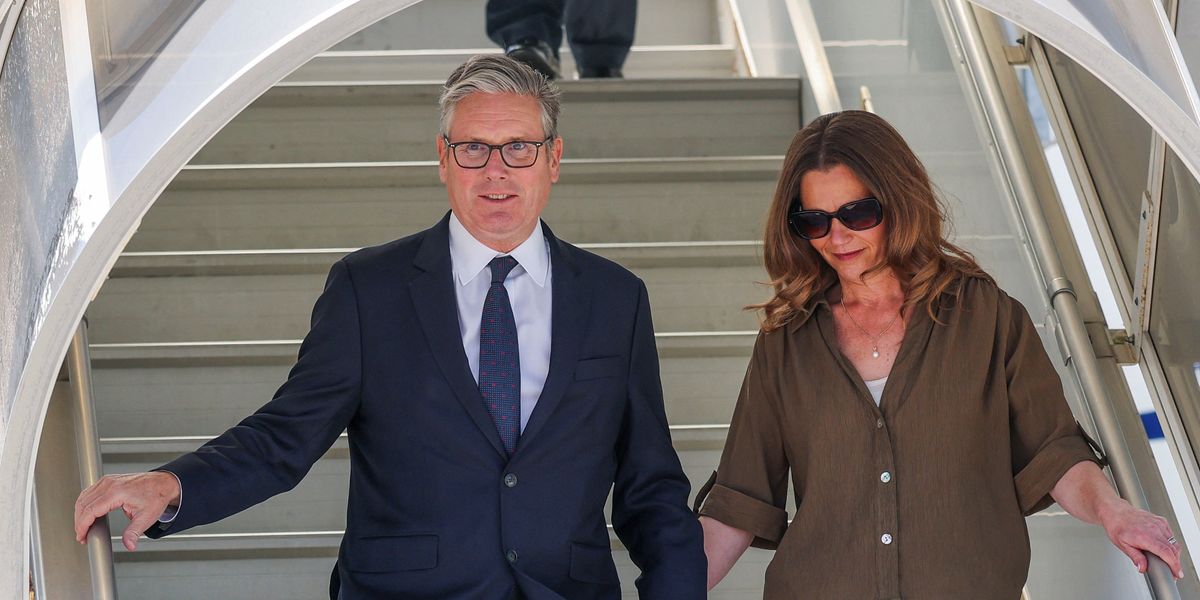
Sir Keir Starmer has resigned as UK prime minister. Following the re-election to Parliament of Manchester Mayor Andy Burnham, the former lawyer realized he had no support left.
After winning in a landslide in 2024, Starmer is but the latest casualty of number 10 Downing Street. And in many ways, it is a wonder why.
Last week on Britain’s most popular radio station, LBC, a female caller quipped, “I don’t understand why he’s so unpopular.” By all accounts, Starmer and his wife are decent people. Both have had decorated careers in public service, as a lawyer and a nurse respectively, and are known to be good parents.
Politically, Starmer is a moderate known for caution. One of the biggest criticisms has been his lack of boldness, and yet Labour has achieved a lot in a short space of time. Renters now have more protections, the minimum wage and state pensions have increased, workers’ rights have improved, the feudal system of ground rent has been reformed and rail operators nationalized. Waiting lists on the health service have declined, and half a million children have been lifted out of poverty.
Elsewhere, immigration (legal and illegal) has dropped. Britain’s homicide rate is the lowest in fifty years. Starmer also secured the best possible trade deal Britain could have got with the EU. He did this whilst avoiding the worst of US President Donald Trump’s erratic behavior.
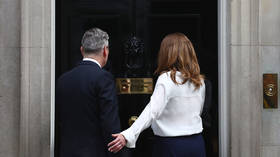
But it is not what Starmer did that caused his immense unpopularity and downfall. It is what he did not do.
In failing to brag about his achievements, voters did not feel the benefits of Labour’s success. By not articulating a positive vision for Britain, Starmer could never explain his government’s purpose. Labour had little to say on the big questions facing Britain and provided no antidote to short-term pain.
Like former US President George H. W. Bush, Starmer admits he “is not much of an ideas guy.” He is not really interested in Labour Party history. He, instead, wanted to cut the figure of a statesman who did the right thing in spite of what is popular. He thought that making government work after fourteen chaotic years of Conservative rule would be enough.
It has not been. The party wanted a political leader who would unite the country’s progressive left majority in a fragmented political environment.
Last year, I attended a conference in Cambridge on Labour’s first year, where one of the organisers put it candidly: “You have to honor a large majority,” he said. Labour failed to deliver the speedy change Britain’s impatient population was expecting and routinely got in its own way.
Starmer tried to reform Britain’s shockingly high welfare bill (currently around 10% of GDP with 55% going to pensioners). He tried to cut the winter fuel allowance, a payment which goes towards all pensioners’ heating bills. Most do not need it and see that as a badge of honor. Starmer also tried to make certain benefit payments harder to get and encourage more young people back into work. And in fairness, unemployment is now down slightly.
But like his defense plans, Labour backbenchers would not have it. No new ideas came in their place, and Starmer proved unwilling to break manifesto pledges. Without a vision and a purpose, voters turned to fringe parties. More than half of Labour’s own members feel their party is failing to deliver.

Enter Andy Burnham, the ‘King of the North’. From a lowly parliamentary researcher in 1994 under Tony Blair all the way to cabinet minister in 2007, Burnham has run twice for Labour leader, in 2010 and 2015. He lost both times.
He says the north of England – specifically Manchester – is an example of what a successful Britain could look like. In Burnham’s telling, growth only matters if it is translated into tangible benefits for every citizen. ‘Manchesterism’ is “the end of neoliberalism, the end of trickle-down economics,” he claims, with more power and resources being devolved out of Westminster.
To be fair, Manchester is a booming city and some of that is down to Burnham. Most, however, is not. He merely rode the coattails of an already underway regeneration plan. His signature achievement is cheaper and more expansive local bus networks, but concerns linger over local policing, affordable housing, and homelessness.
More concerning is that Burnham has no fixed ideology. He appears happy to say whatever goes down well at the time of speaking. Many of Burnham’s colleagues in Manchester and Westminster have noted how Burnham often chooses policies on a whim. Few can explain how he will be any different (or better) than Starmer.
Burnham himself has been extremely vague, too. He has not articulated any positions on foreign policy or defense, has gone back and forth on climate policy, the EU, and immigration. He has talked about raising corporation taxes, cutting business rates for pubs, overhauling property taxes, and revamping social care. He has also talked of ‘business friendly socialism’ and re-nationalizing utilities.
But no details have followed and, as prime minister, Burnham would have limited room for economic maneuvering. He will still face the same issues Starmer has, and no magic bullet solution exists – just ask all the other ex-prime ministers and those who voted for Brexit.

Many have accused Burnham of trying to be ‘all things to all people’. There’s a joke in Westminster circles, which Burnham absolutely hates: three different members of three warring Labour factions walk into a pub, and the barman says, “Hello Andy.”
The shadow chancellor, Conservative Mel Stride, told Sky News that nothing will fundamentally change if Burnham replaces Starmer. “This is somebody who has flip-flopped all over the place. You have seen it even in this by-election itself.”
The trade unions that back Labour are also skeptical. They are calling for a leadership contest of ‘policies not personalities’. Labour MP Jess Phillips agrees, saying that Burnham should not simply face a coronation as Labour leader and prime minister. In Phillips’ words, Burnham has to prove he is ready to lead. He cannot do that without facing proper scrutiny of his plan for government.
Another in agreement is former Conservative Prime Minister Rishi Sunak, whom Starmer defeated. Writing in The Sunday Times, Sunak said. “Without [a leadership contest], your mandate is weak, and you end up being bound by commitments that aren’t your priorities.” Sunak also went on to say that Burnham must recognize that he will never have more power than on his first day, and that it is “vital he has a clear and achievable plan for what he wants to do in those opening hours.”
Beyond giving more money to the north of England, his plans are unclear – and even that is questionable. What about the rest of Britain? What about Wales and Scotland, where Labour just lost elections? Northern towns, like Britain itself, are extremely diverse. Darlington and Chorley are about as different as the coastal towns of Grimsby, Lincolnshire and Paignton, Devon. What does that extra money mean and where will it come from? Do not ask Burnham.
Whether he can turn Labour’s political fortunes around is also in doubt. Recent polling still shows a Labour Party led by Burnham would come second in a hung parliament – giving it just an extra 4% of the vote. Thankfully for Labour, the poll-leading Reform UK has peaked in its vote share and is losing supporters and key by-elections. Yet, Labour still has a lot to do before it wins another general election.

And therein lies the problem. If Burnham fails to deliver, then what? Apparently, nobody in parliament was better than Burnham – hence an unknown MP resigned to let him back. Swapping Starmer for Burnham and betting on him correcting course puts Labour in a tight bind.
Things might be bad for Starmer, but he will be remembered fondly by British historians. Not as a disaster, but a decent man guiding Britain through difficult times, trapped by the system and a fickle population. In that sense, Starmer is rather like another US president: Gerald R. Ford.
If Burnham cannot turn things around, he ruins his legacy and Labour’s. Starmer was allowed to fail. Burnham will not be.
The statements, views and opinions expressed in this column are solely those of the author and do not necessarily represent those of RT.