 By GB News (World News) | Created at 2026-08-07 10:36:10 | Updated at 2026-08-07 11:30:39
1 hour ago
By GB News (World News) | Created at 2026-08-07 10:36:10 | Updated at 2026-08-07 11:30:39
1 hour ago
The Treasury is reportedly considering bringing forward the increase in the state pension age to 68 by as much as seven years, a move that could affect around five million people.
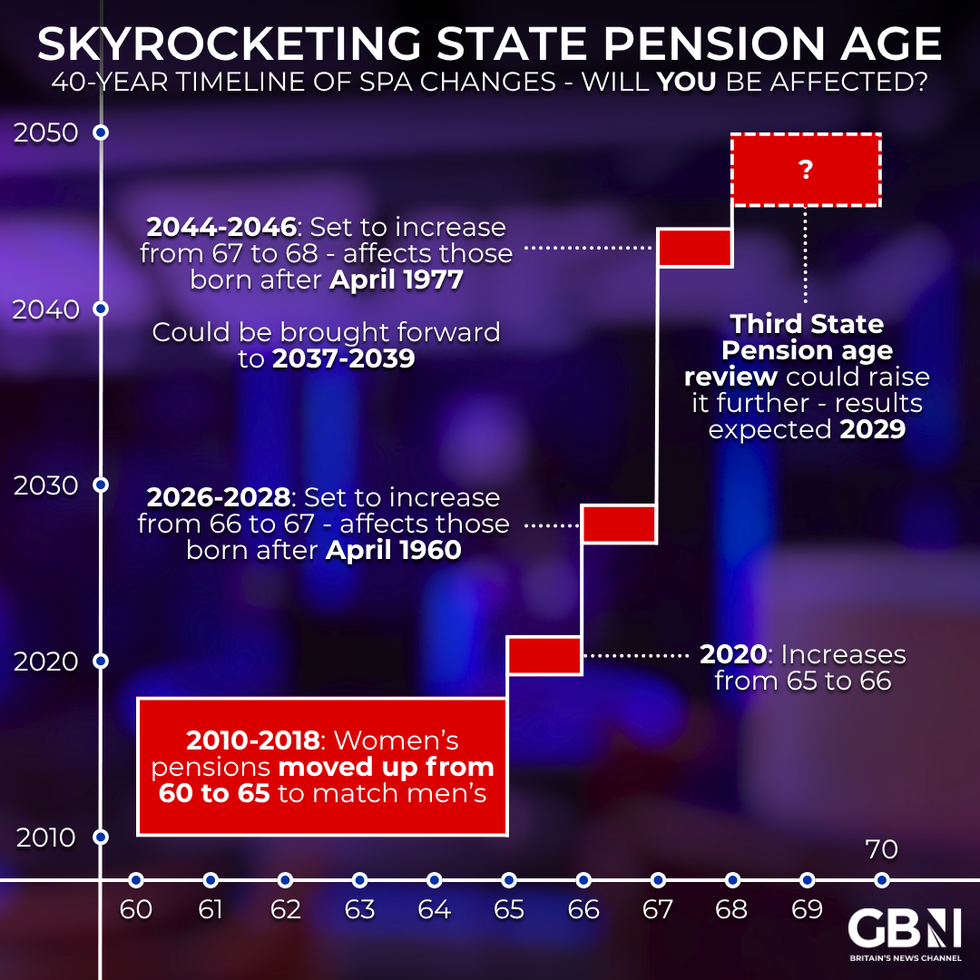
Under current legislation, the state pension age is due to rise from 67 to 68 between 2044 and 2046.
However, ministers are reportedly examining an accelerated timetable that would see the increase take effect between 2037 and 2039 instead.
If implemented, the change would affect people born after April 6, 1977, meaning they could have to wait an additional year before becoming eligible to claim their state pension.
No formal decision has been made.
Current legislation also requires the Government to provide at least 10 years' notice before any increase to the state pension age takes effect.
This means those approaching retirement in the coming years would not be immediately affected.
The Office for Budget Responsibility (OBR) has already reflected the earlier timetable in its long-term fiscal projections, treating it as the Government's current policy position.
'State pension age could rise to 68 seven years earlier' as Treasury weighs major retirement shake-up

That assumption has increased speculation that legislation could eventually be introduced to bring the change forward.
The proposals come as Britain faces rising state pension costs driven by an ageing population.
According to the OBR, accelerating the increase to age 68 could save the Government around £6billion a year from 2037 onwards.
The projected savings are likely to be a significant factor as ministers consider future public spending.
Research by pensions consultancy Barnett Waddingham has estimated the financial impact the proposed change could have on individuals.
Its analysis found that a 55-year-old earning the UK median salary of around £38,000 would need to contribute an additional £74 a month into their pension to make up for losing one year of state pension income.
The consultancy noted that the additional contributions would represent a greater proportion of disposable income for lower earners.
The calculations also assume people remain in full-time employment until retirement.
Those who leave work early because of ill health, reduce their working hours or take on caring responsibilities could have less opportunity to make additional pension contributions.
Former pensions minister Baroness Ros Altmann has criticised proposals to increase the state pension age.
Baroness Altmann has argued that raising the state pension age disproportionately affects people in physically demanding occupations, those in poorer health and people living in areas with lower life expectancy.
She has also warned that some people may be unable to continue working while remaining ineligible to claim their state pension.
Another significant pension change is also due to take effect before the proposed increase to the state pension age.
From April 6, 2028, the normal minimum pension age will increase from 55 to 57.
The change will affect people born after April 5, 1973, delaying the age at which they can usually access their private pension savings.
The interaction between the two changes could alter retirement planning for many households.
The pensions triple lock remains in place and continues to receive cross-party support despite the increasing cost to the Exchequer.
In April, the full new state pension increased by 4.8 per cent to £241.30 a week under the triple lock.
Any decision to bring forward the increase in the state pension age would require legislation and at least 10 years' notice under current law.
For those affected by the reported proposals, the changes could have a significant impact on when they become eligible to receive their state pension.