By Engadget | Created at 2026-08-19 18:24:57 | Updated at 2026-08-19 18:40:16
18 minutes ago
By Engadget | Created at 2026-08-19 18:24:57 | Updated at 2026-08-19 18:40:16
18 minutes ago
Drivers may be more distracted on days when a big new album drops.
Taner Muhlis Karaguzel/Shutterstock
Traffic deaths in the United States jump by 15 percent in the immediate aftermath of a major music album's release, according to a new study published by Harvard Medical School researchers. The study looked at 233,809 fatal collisions between 2017 and 2022, comparing the incidence rate of car accidents on album release days against the 10 days immediately before and after each release.
The researchers cross-referenced public crash data from the federal Fatality Analysis Reporting System (FARS) with Spotify's daily streaming charts. The latter shows a 43 percent surge in nationwide music streaming activity on the first day of major album releases from artists like Taylor Swift and Drake. The study focused on a set of 10 albums with the highest number of streams within a single day, indicating periods when people could have been using their phones more frequently while driving.
Across the ten album release dates observed in the study, researchers recorded roughly 182 additional fatalities compared to the baseline. Put another way, they counted 18.2 excess deaths for each day when music streaming surged — possibly because drivers were more likely to interact with their phone's music controls instead of playing their usual choices.
New music releases measurably increase traffic fatalities
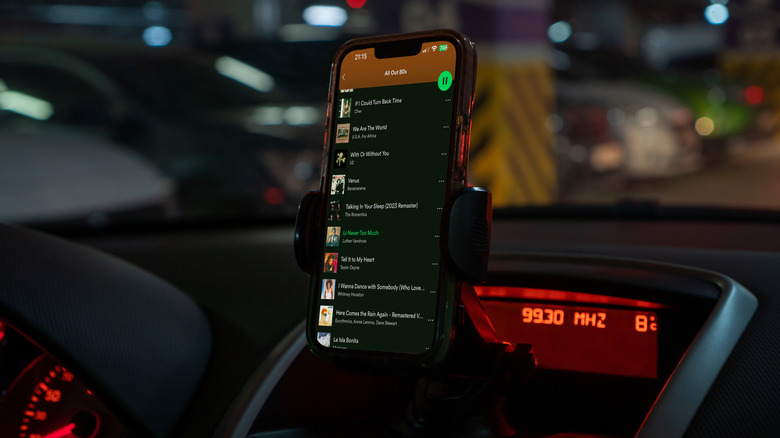
While distracted driving has long been associated with an increased risk of accidents, the study highlights a narrower factor: the impulse to browse music streaming services on our phones and increasingly through infotainment screens as well. With in-car screens getting larger, our eyes are more likely to glance over to check details like the current track title, elapsed or remaining time and upcoming tracks. A new music album is unfamiliar, so it stands to reason that most of us would instinctively hunt for those details.
As a whole, vehicular collisions tend to peak at night and in inclement weather conditions. However, the researchers of this study found that fatal accidents linked to increased music streaming activity were far more likely to occur on days with clear conditions. In fact, night-time driving and poor weather conditions didn't seem to result in increased accident rates on such days. Moreover, sober drivers saw an adjusted surge of 13.9 excess fatalities on release days compared to no such increase for collisions involving alcohol consumption. The researchers theorized this may be linked to drivers letting their guard down in calmer environments.
Young and male drivers were the single largest demographic to see an uptick in fatal collisions, the latter seeing an additional 13.5 deaths on release days. Single-occupant drivers were also more likely to end up in a life-endangering accident, likely because there were no passengers who could handle music controls or keep the driver engaged in conversation.
Modern car infotainment screens are a major distraction
According to the study, modern car infotainment systems seem to amplify distracted driving and, potentially, be the cause of fatalities. Even with Siri, Gemini, and interfaces that are simpler to navigate than smartphones, the researchers believe that they might ultimately lower the barrier for interaction and lull drivers into a false sense of security. Drivers may also be more tempted to browse music while driving and, by the study's estimates, end up nearly twice as likely to be involved in a fatal crash on album release days.
The researchers admitted that they cannot definitively prove that smartphone use or even music streaming was directly responsible for most of these fatalities. And even though they adjusted for trends such as holiday, seasonal and weekend travel, there could be other variables that the study didn't consider. Nevertheless, they hope that their observed correlations spark a wider discussion around the safety implications of modern car infotainment systems.
Incidentally, public backlash against screen-heavy interiors has already begun forcing the auto industry's hand. We've seen some car manufacturers like Volkswagen and Hyundai publicly backtrack on the use of touchscreen interfaces. Luxury brands such as Porsche and Mercedes-Benz have also reintroduced physical buttons and rockers for essential controls like volume and climate control.
It's not just a matter of opinion anymore, either. A recent JD Power survey of new car owners found that 46 percent of driver-related distractions originated from the infotainment system or built-in touchscreen. Manufacturers shifting back to physical controls should hopefully bring that figure down, but the responsibility of safe driving ultimately rests with each one of us.