 By The Epoch Times | Created at 2026-10-06 10:02:06 | Updated at 2026-10-06 10:56:56
1 hour ago
By The Epoch Times | Created at 2026-10-06 10:02:06 | Updated at 2026-10-06 10:56:56
1 hour ago
The U.S. Supreme Court denied an emergency bid to block Paramount Skydance’s $110 billion acquisition of Warner Bros. Discovery late Monday, hours after the request was filed, helping clear the way for what is expected to be one of the largest media mergers ever.
Justice Elena Kagan, who handles emergency appeals from California, denied the request in an unsigned order. She did not refer the application to the full court or explain her ruling. Because she acted alone, Supreme Court rules allow the unsuccessful parties to present the emergency application to another justice, though such a tactic rarely changes the outcome.
Five consumers led by Pamela Faust, who already lost in the lower courts, asked Kagan for an injunction to freeze the merger deal that is expected to close on Tuesday. With the expected closing a day away when they filed the application, they wanted separate ownership preserved while they asked the Supreme Court to formally review the case.
U.S. District Judge Araceli Martínez-Olguín declined on Sept. 30 to issue a temporary restraining order in Faust’s lawsuit, saying the consumers had not presented evidence of the harm they claimed would follow the closing. The judge also approved a consent decree in a separate lawsuit between the states and the companies.
Instead of appealing the denial of the order, they asked the U.S. Court of Appeals for the Ninth Circuit to issue a writ of mandamus, an extraordinary order directing a trial judge to do something the judge has refused to do. It is generally reserved for clear judicial errors, not ordinary disagreements.
After the Ninth Circuit denied the consumers’ mandamus petition on Oct. 2, they applied to the Supreme Court for an injunction blocking the closing. They noted in Monday’s application that the district court was scheduled to hear the companies’ pending motion to dismiss their amended complaint on Oct. 22.
The district court dismissed the original complaint on Aug. 5 for lack of standing, but allowed the consumers to amend it.
The consumers argued that the merger was still anti-competitive, even with the conditions the states inserted into the settlement last month.
“The States’ settlement itself requires that the combined company not sell or close the Paramount or Warner Bros. lots during the commitment period, provides reapplication rights to employees displaced by the transaction, and creates an editorial-independence board,” they said. “Those safeguards show the magnitude of the integration that closing will unleash, but they do not preserve competition between Paramount and Warner Bros.”
They also argued the district court erred in finding no evidence of harm, and said that they and other consumers would be harmed by the lack of competition that would follow the closing.
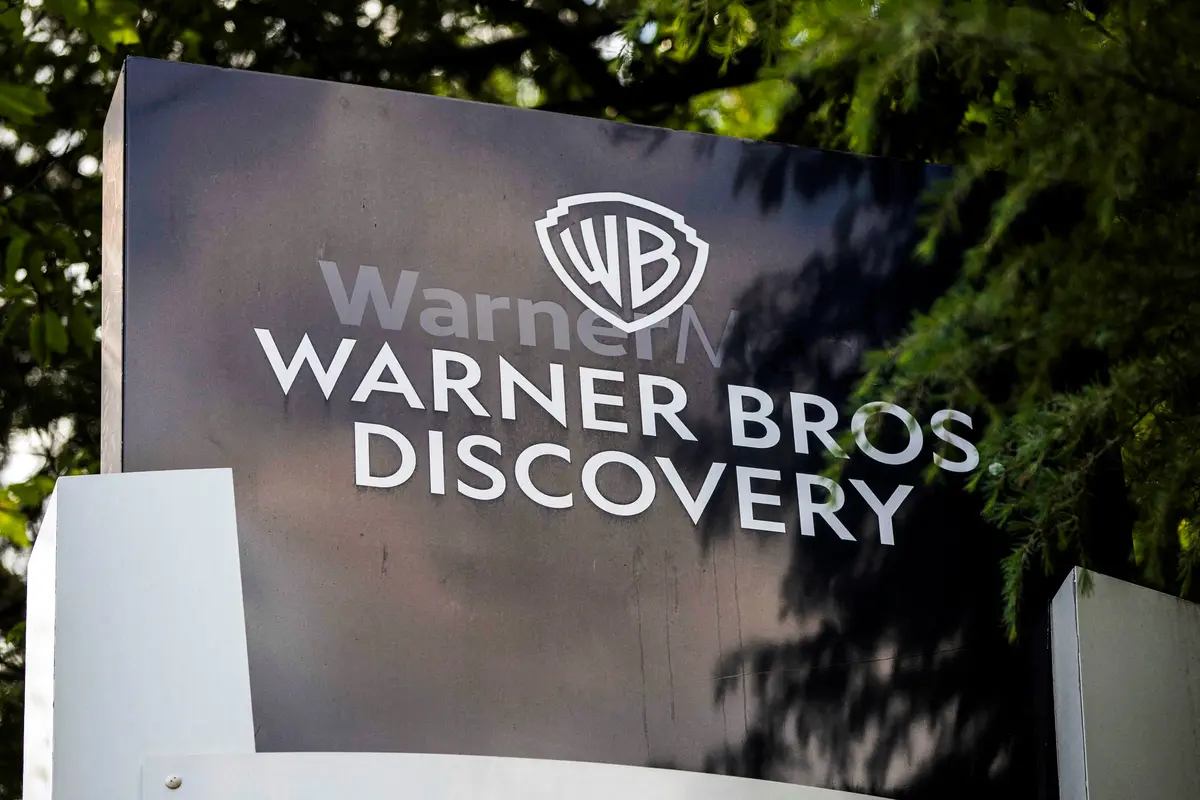
Exterior of the Warner Bros. Discovery Atlanta campus on May 2, 2023. (Alyssa Pointer/Reuters
The consumers told the Supreme Court that a 1989 ruling by then-Justice Sandra Day O’Connor served as the model for the order they were seeking. In California v. American Stores, O’Connor paused a merger-related order so that the companies could not combine while the Supreme Court considered the case. The consumers said she did that because lost competition cannot be repaired later.
They asked Kagan to do the same, by an injunction instead of a stay, because a stay of the Ninth Circuit’s denial would not halt the Oct. 6 closing.

Paramount Skydance CEO David Ellison speaks on stage during New York Upfront Partnership Event 2026 at Storied NYC in New York City on April 22, 2026. Noam Galai/Getty Images for Paramount
On Sept. 21, Paramount Skydance, led by CEO David Ellison, settled with California and 11 other states that tried to block the acquisition.
California Attorney General Rob Bonta said at a news conference at the time that the settlement agreement would bring more film production to the United States—at least $300 million more each year—and include a deal to increase annual film releases after closing.
Warner Bros. Discovery shareholders overwhelmingly approved the transaction in April, despite some pushback over CEO David Zaslav’s potential $886 million payout, which they turned down in an advisory vote.
Attorneys general from Arizona, Colorado, Connecticut, Massachusetts, Minnesota, Nevada, New Jersey, New Mexico, New York, Oregon, and Washington state joined the California-led legal action.
The states alleged the transaction would harm competition in certain markets and violate the Clayton Antitrust Act. The combined company would control nearly one-third of theatrical motion pictures and one-third of cable television network programming, including 50 of the most popular cable channels, Bonta said in July.
This merger would give the company more than 30 percent of anticipated blockbuster movies, and four distributors would control more than 90 percent of that submarket of possible top-grossing films, Bonta added at the time.