 By The Epoch Times | Created at 2026-10-19 21:36:30 | Updated at 2026-10-19 22:13:37
41 minutes ago
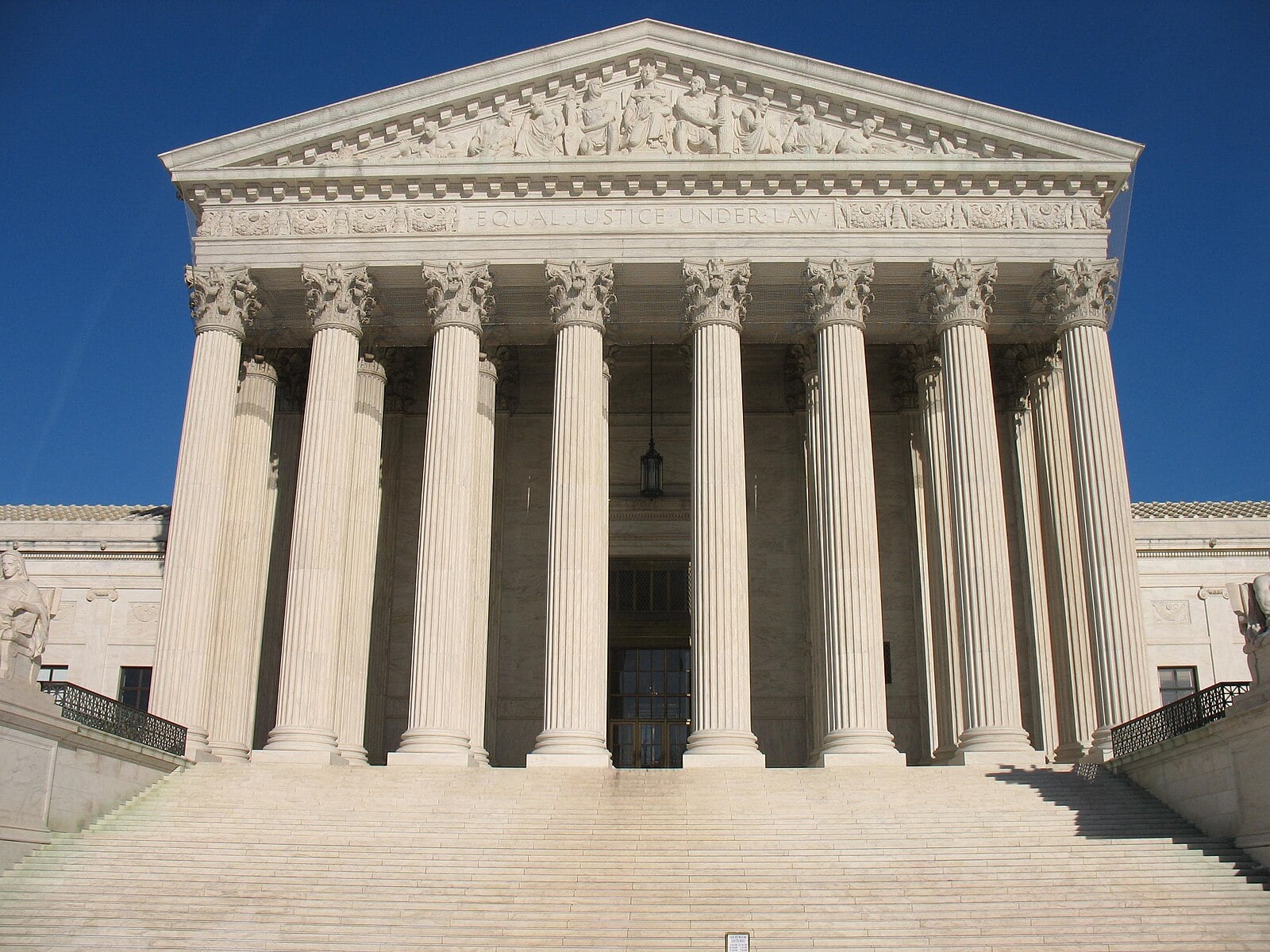
The Supreme Court agreed on Oct. 19 to review the constitutionality of a federal law that bans home distilling of alcoholic spirits that was enacted after the Civil War to crack down on liquor tax evasion.
Although the Trump administration is defending the ban, more than a dozen Republican-led states are supporting the effort to strike it down. Challengers argue that Congress does not have authority under the Constitution to forbid home distilling.
The court’s decision took the form of an unsigned order in Department of Justice v. McNutt. The court did not explain its decision. No justices dissented.
A three-judge panel of the U.S. Court of Appeals for the Fifth Circuit ruled in April that the ban was unconstitutional because it was an unnecessary and improper means for Congress to exercise its power to tax.
U.S. Circuit Judge Edith Hollan Jones wrote that the ban actually reduced tax revenue by preventing distilling in the first place, the opposite of the law’s stated intent.
In the case, the nonprofit Hobby Distillers Association and four of its 1,300 members argued that people should be free to distill spirits at home, whether as a hobby or for personal consumption—including, for instance, to create an apple pie vodka recipe one of the plaintiffs created.
The ban was part of a law passed during Reconstruction in July 1868. It imposed excise taxes on distilled spirits but also made it illegal for a person to use “any still, boiler, or other vessel for purpose of distilling” when the still was located, among other places, “in any dwelling-house” or “in any shed, yard, or enclosure connected with any dwelling-house.”
Under federal law, distilling in one’s home or backyard could result in a $10,000 fine and five years in prison. By contrast, home brewing of beer for personal use has been legal at the federal level since 1978.
U.S. District Judge Mark Pittman ruled the ban could not be enforced against the plaintiffs in the case.
He held that the law is not primarily for raising revenue, and that it violates two constitutional provisions.
The Fifth Circuit affirmed, ruling the ban was unconstitutional, then the Sixth Circuit went in the opposite direction, upholding the ban in a companion case known as Ream v. Department of the Treasury.
In the case at hand, attorneys general from 15 Republican-led states, including Ohio, Florida, and Idaho, filed a brief supporting those challenging the ban and urging the justices to resolve the split between the courts of appeals.
“Unlike a good whiskey,” the attorneys general wrote, “this split will not age well.”
The U.S. Department of Justice urged the high court to hear the case, stressing the importance of safeguarding federal revenue.
“Congress restricted home distilling 160 years ago in response to an extensive history of evasion of the distilled-spirits tax,” government attorneys wrote.
“The government has a substantial interest in its authority to safeguard a significant source of tax revenue — a source that was used to pay Revolutionary War debts at the founding (of the nation) and now generates billions of dollars in tax revenue every year,” the lawyers wrote.
Robert Alt, president of the Buckeye Institute, which is part of the challengers’ legal team, hailed the Supreme Court’s decision to accept the case.
“Our country’s founders would be rolling over in their graves to learn that a pastime in which even George Washington partook, which is as American as apple pie and certainly a lot older, has quite absurdly been turned into a federal crime,” Alt told The Epoch Times.
Tyler Martinez, director of litigation at the National Taxpayers Union’s Taxpayer Defense Center, said the case is important because it’s about federal government overreach. His group filed a friend-of-the-court brief in the companion case.
“This is about the government saying, ‘We can use the taxing power to say that you can’t do something in your own home,’” he told The Epoch Times.
The Justice Department declined to comment on the high court’s decision to take the case.
Oral argument in the case is expected early next year, with a decision likely to follow by June or July of 2027.
Kimberly Hayek and Reuters contributed to this report.