By The Rio Times | Created at 2026-09-27 13:12:07 | Updated at 2026-09-27 14:42:17
1 hour ago
By The Rio Times | Created at 2026-09-27 13:12:07 | Updated at 2026-09-27 14:42:17
1 hour ago
GUIDES · VENEZUELA
Key Facts
- —The country Venezuela, an oil state of about 28.5 million people, has been run since January 2026 by acting president Delcy Rodríguez under close US oversight.
- —Who collects SENIAT, the national tax and customs service, collects income tax, value-added tax and the tax on foreign-currency payments. Town halls collect property and business taxes.
- —The key test More than 183 days in Venezuela in a year makes you a tax resident, taxed on worldwide income.
- —The rates Income tax runs from 6% to 34%. Value-added tax (IVA) is 16%, and many payments in dollars carry an extra 3% levy.
- —What changed in 2026 An oil-sector tax overhaul, published on 29 January 2026. As of September 2026, no reform of personal income tax, IVA or the dollar levy had been published.
- —The catch Tax brackets are set in a unit worth Bs 43 (about US$0.05), so most foreign earners land in the top 34% band.
Taxes in Venezuela look modest on paper. A frozen tax unit and a falling bolívar mean most foreigners who stay long enough pay close to the top rate.
Free daily brief — no card needed
Get every Analysis story in one morning email
We build you a personalized brief around the topics you follow — free for 7 days. Love it? Your first month after that is US$1.
Yes, email me my free daily brief — I can unsubscribe any time.
Taxes in Venezuela matter again because foreigners are coming back. Flights to Caracas resumed in September 2026, and oil companies are returning under US licences. This guide explains what a foreign resident, remote worker or investor actually owes, as of September 2026.
Who collects taxes in Venezuela
The main tax authority is SENIAT, the Servicio Nacional Integrado de Administración Aduanera y Tributaria. It runs income tax, IVA, customs and the levy on large financial transactions. You deal with it through its online portal and a tax number called the RIF.
The RIF (Registro de Información Fiscal) works like a taxpayer ID. You need one to file a return and for most formal dealings with SENIAT, and foreign residents can register too.
Municipalities levy their own taxes. These include an urban property tax and a tax on business turnover, with rates set by each town hall. There is no local income tax on individuals.
All tax amounts are calculated in bolívars (Bs). This guide uses the Central Bank of Venezuela (BCV) official rate of Bs 857.01 per US dollar. The BCV published it on 25 September 2026 for use from 28 September. Market data put the rate at about Bs 855.93 per dollar on 25 September.
One-stop reference
Company Intelligence
Every listed company in Latin America — financials, ownership and structure for 1,450+ companies across 26 exchanges, in one place.
That rate matters for every figure below. It stood at Bs 301.37 per dollar at the start of 2026. A bolívar amount now buys roughly a third of what it did in January.
Are you a tax resident? The 183-day test
You are a Venezuelan tax resident if you spend more than 183 days in the country in a calendar year. You are also resident if you spent more than 183 days there in the preceding year. A 184th day is enough.
Residents pay income tax on their worldwide income, not only on money earned in Venezuela. That includes salary from a foreign employer paid into a foreign account while you live in Caracas.
Setting up a home in Venezuela can also make you resident under the tax code. The exception is proof, from another country’s tax authority, that you are resident there after more than 183 days abroad. Venezuelan citizens are presumed resident unless they prove otherwise.
Non-residents pay only on income whose source is in Venezuela. A short-term consultant, a rotating oil worker or a landlord living abroad usually falls into this group. The day count does not mean a visa or residence permit; those are separate immigration questions.
Income tax (ISLR): rates for residents and non-residents
The income tax is called ISLR, short for Impuesto sobre la Renta. Its current law dates from December 2015, published in Official Gazette No. 6,210 Extraordinary. Residents pay under a progressive scale known as Tariff No. 1.
| Up to 1,000 | Up to US$50 | 6% | 0 |
| 1,000 to 1,500 | US$50 to US$75 | 9% | 30 |
| 1,500 to 2,000 | US$75 to US$100 | 12% | 75 |
| 2,000 to 2,500 | US$100 to US$125 | 16% | 155 |
| 2,500 to 3,000 | US$125 to US$151 | 20% | 255 |
| 3,000 to 4,000 | US$151 to US$201 | 24% | 375 |
| 4,000 to 6,000 | US$201 to US$301 | 29% | 575 |
| Over 6,000 | Over US$301 | 34% | 875 |
Tariff No. 1 of the 2015 income tax law. US$ values use one tax unit of Bs 43 at the BCV rate of Bs 857.01 per dollar, 28 September 2026.
Read the second column carefully. Because the tax unit is so small, the top 34% band starts at about US$301 of taxable income a year. For comparison, the United States’ top federal rate of 37% starts above US$640,600 for a single filer in 2026.
A worked example shows the effect. A resident with US$30,000 of taxable income would owe about US$10,156 before rebates, an effective rate of almost 34%. That is arithmetic from the published scale, not an official estimate.
Residents may take a single standard deduction of 774 tax units, about Bs 33,282 (about US$39), without receipts. Alternatively they can itemise local medical bills, school fees, insurance premiums and home-loan interest paid in Venezuela.
Non-residents do not use the scale. Salaries for work done in Venezuela are taxed at a flat 34%, withheld at source. Professional fees are taxed at 34% on 90% of the gross payment.
Residents must file if net income exceeds 1,000 tax units, about Bs 43,000 (about US$50), or gross income exceeds 1,500 units. The return is due by 31 March for the previous calendar year, filed online through the SENIAT portal. Late filing brings fines and interest.
The tax unit and the “highest-value currency” rule
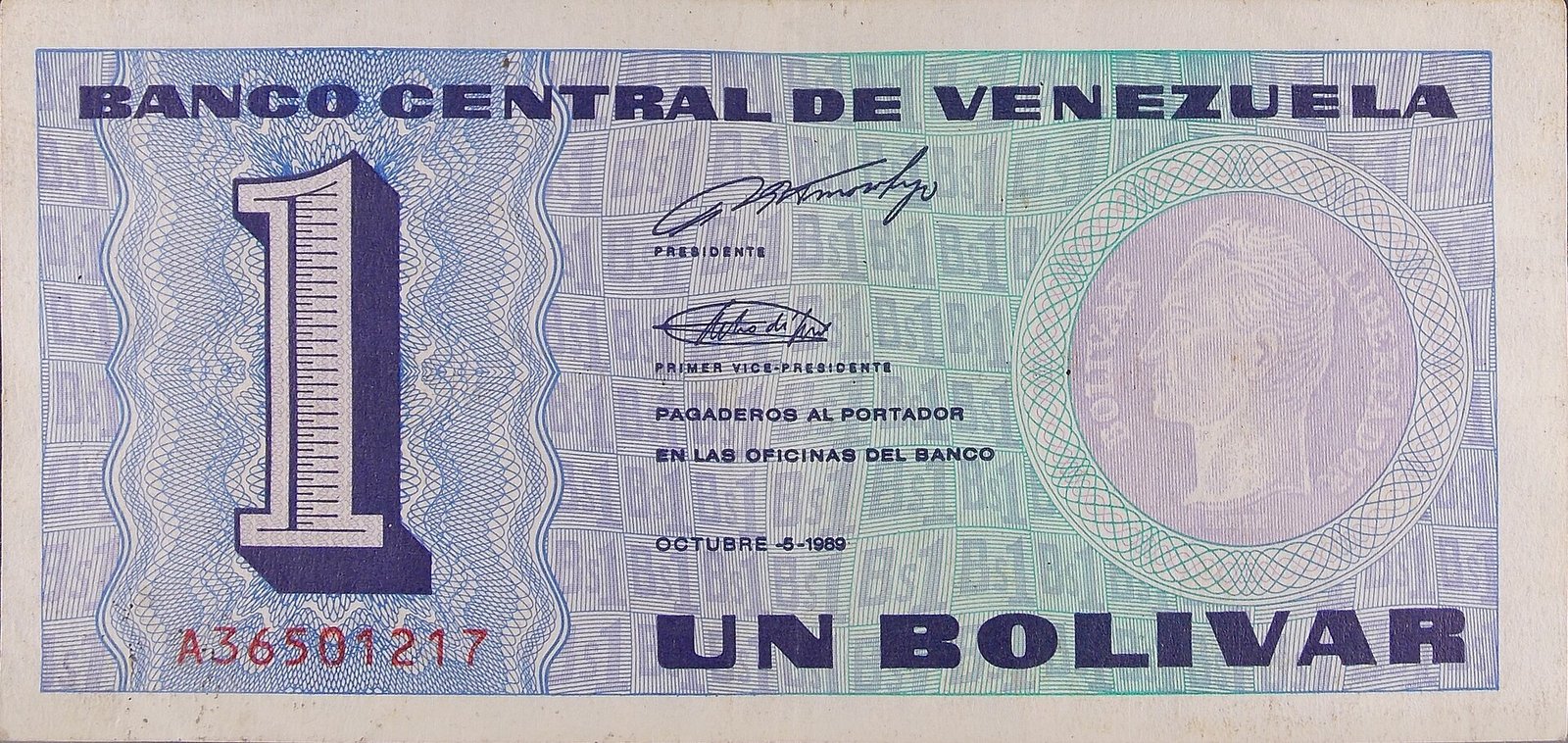
Venezuela measures many tax thresholds in the unidad tributaria (UT), or tax unit. SENIAT raised it from Bs 9 (about US$0.01) to Bs 43 (about US$0.05) in June 2025. The change was published in Official Gazette No. 43,140 of 2 June 2025.
No further increase had been published as of September 2026. Meanwhile, the official dollar rate nearly tripled over 2026. The unit has therefore lost most of its value, which is why the tax brackets now look so low in dollars.
Fines work differently. The 2020 tax code, published in Official Gazette No. 6,507 Extraordinary of 29 January 2020, stopped using the tax unit for penalties. Fines are now set as multiples of the BCV’s official rate for the “currency of highest value”.
In practice that currency is the euro, which the BCV quoted at Bs 976.90 (about US$1.14) per euro for 28 September 2026. A fine set at 100 times that rate would therefore cost Bs 97,690 (about US$114). The rate that counts is the one on the day you pay.
This does not mean taxes are charged in euros. It means penalties keep their value while the bolívar falls, so paying a fine late costs more in bolívars, not less.
IVA at 16% and the 3% levy on dollar payments
Value-added tax, or IVA (Impuesto al Valor Agregado), is 16% on most goods and services. Some items, such as certain meats and domestic flights, carry 8%. Luxury goods, such as vehicles worth US$40,000 or more, carry a separate 15% luxury rate.
The law also allows an extra IVA rate of 5% to 25% on goods and services paid in foreign currency or crypto. As of PwC’s January 2026 summary, that rate had never been set, so it does not apply.
The levy most foreigners notice is the IGTF, the Impuesto a las Grandes Transacciones Financieras. Since a 2022 amendment, it charges 3% on payments in dollars, other foreign currencies or crypto through Venezuela’s banks.
It also charges 3% when you pay a large company designated as a “special taxpayer” in cash dollars. A US$100 supermarket bill, IVA included, paid in notes then costs US$103. The shop collects the levy and passes it to SENIAT.
Paying in bolívars by card or mobile transfer avoids the 3%. The separate 2% levy that special taxpayers paid on bolívar debits was cut to 0% from July 2024. Small shops that are not special taxpayers do not collect the IGTF on cash dollars.
Other taxes: wealth, inheritance, property and payroll
A tax on large fortunes applies only to people SENIAT has formally designated as special taxpayers. The threshold is net worth of 150 million tax units, about Bs 6.45 billion (about US$7.5 million). The rate is 0.25%, assessed on 30 September and filed in October and November.
Inheritance and gift tax applies to Venezuelan property, shares and rights, whatever the heir’s nationality or residence. Rates rise with distance of kinship and reach 55% at the top. Urban property tax is charged by each municipality.
Employers pay most payroll costs. Since May 2024 companies owe a 9% pension-protection contribution on total pay, including bonuses. Since May 2026 it has been calculated on at least US$240 per worker per month, the government’s dollar-indexed minimum income.
Employees pay 4% into social security, capped at five minimum wages. The monthly minimum wage has stayed at Bs 130 (about US$0.15) since March 2022, so the cap is tiny. Much of the pay in Venezuela now comes as dollar-indexed bonuses rather than formal wages.
Double-tax treaties: which countries are covered
A double-tax treaty decides which country may tax which income, so you are not taxed twice on the same money. Venezuela has treaties in force with about 30 countries, according to PwC’s January 2026 summary.
They include the United States, Canada, the United Kingdom, Spain, Portugal, Italy, France, Germany, the Netherlands, Switzerland, Brazil and China. The US treaty was signed in 1999 and remains listed by the Internal Revenue Service.
A treaty with Mexico has been signed but is not in force. Neighbouring Colombia is not on the list. Without a treaty, residents can still credit foreign income tax, but only up to the Venezuelan tax on that foreign income.
US citizens remain taxed by the United States wherever they live. For them, the treaty and US foreign tax credits matter more than any Venezuelan rate.
What changed in 2026 under the Transformation, and what did not
The Rio Times calls the political transition since January 2026 “the Transformation”. It has changed oil taxation, but not the personal taxes most foreigners pay.
The main enacted change is a reform of the Organic Hydrocarbons Law, published in Official Gazette No. 6,978 Extraordinary of 29 January 2026. It sets a royalty of up to 30% and an integrated hydrocarbons tax of up to 15% of gross revenue. The government sets the rates for each project and may lower them to keep a project viable.
Nothing comparable has been published for personal income tax, IVA or the IGTF. That is based on our checks of gazette summaries to 27 September 2026. The tax unit also remains at its June 2025 value.
Several ideas remain proposals only. Tax lawyers called for an integral tax reform in May 2026. A dollarisation plan drafted with US economist Steve Hanke was blocked by the National Assembly’s leadership in August 2026. None of these is law.
The executive can still move quickly. An economic emergency decree, in force since April 2025 and last extended for 60 days in August 2026, lets it suspend taxes or exemptions by decree. Check the gazette before any large payment.
What this means for you
Count your days first. Under 184 days a year, you are usually taxed only on Venezuelan-source income. Over that, all your income counts, and a treaty or foreign tax credit becomes essential.
Expect the top rate if you earn a normal foreign salary while resident. The 6% to 34% scale sounds gentle, but a tax unit of Bs 43 (about US$0.05) means almost everything falls in the 34% band.
Pay in bolívars where you can to avoid the 3% IGTF, and keep receipts for local medical and school costs. Get a RIF early, and use a Venezuelan accountant for your first return.
Taxes in Venezuela can change by decree, so treat this guide as a map rather than advice. Confirm every figure against SENIAT and the official gazette on the day you file.
Sources: Tax rules come from Venezuelan official gazette summaries, SENIAT, the Central Bank of Venezuela and PwC’s Worldwide Tax Summaries, with treaty data from the US Internal Revenue Service.
- bcv.org.ve
- taxsummaries.pwc.com
- taxsummaries.pwc.com
- taxsummaries.pwc.com
- taxsummaries.pwc.com
- taxsummaries.pwc.com
- taxsummaries.pwc.com
- irs.gov
- irs.gov
- accesoalajusticia.org
- venamcham.org
- gacetaoficial.gob.ve
- bancaynegocios.com
- elnacional.com
What Is Not Known
Whether SENIAT will raise the tax unit again is not known. It went from Bs 9 to Bs 43 (about US$0.01 to US$0.05) in June 2025. Since January 2026, the bolívar has lost about two-thirds of its dollar value. No date or figure for a new adjustment has been published.
Whether the transition brings a broader tax reform is not established. Tax lawyers and business groups have called for one, and the IMF plans to open a Caracas office in 2027. No draft law for personal income tax, IVA or the IGTF had been published as of 27 September 2026.
How strictly SENIAT enforces worldwide-income rules on foreigners is not documented. Official audit statistics by nationality are not published. PwC notes that audits focus mainly on companies and designated special taxpayers.
How easy it is to claim treaty relief in practice is unclear. Treaties with the United States and European countries remain listed as in force. Cooperation between tax administrations after years of sanctions has not been publicly assessed.
Whether the July 2025 suspension of IVA exemptions on imported food and medicines still applies is not confirmed. PwC reported the suspension from 5 July 2025. We found no official statement on its status in September 2026.
More: Venezuela news in English, every day from The Rio Times.
Frequently Asked Questions
Do foreigners pay income tax in Venezuela?
Yes. Anyone who spends more than 183 days in Venezuela in a year becomes a tax resident and pays on worldwide income at 6% to 34%. Non-residents pay only on Venezuelan-source income, usually a flat 34% withheld at source. Because the tax unit is worth Bs 43, about US$0.05, most resident foreign earners fall in the top 34% band.
What is the IGTF and when do I pay it?
The IGTF is a 3% levy on payments in dollars, other foreign currencies or crypto made through Venezuelan banks. It also applies when you pay a large company designated as a special taxpayer in cash dollars. Paying in bolívars by card or mobile transfer avoids it.
How much is IVA in Venezuela?
The general IVA rate is 16%. A reduced 8% rate applies to a short list of items such as certain meats and domestic flights. Luxury goods such as vehicles worth US$40,000 or more carry a separate 15% luxury rate.
When is the Venezuelan income tax return due?
Individuals file by 31 March for the previous calendar year, online through the SENIAT portal. Residents must file if net income exceeds 1,000 tax units, about Bs 43,000 or US$50, or gross income exceeds 1,500 tax units. Late filing brings fines and interest.
Does Venezuela have a tax treaty with the United States?
Yes. The US–Venezuela income tax treaty was signed in 1999 and is listed as in force. Venezuela also has treaties with Canada, the United Kingdom, Spain, Portugal, Germany and about two dozen other countries. There is no treaty in force with Mexico or Colombia.
Did taxes change after Maduro’s capture in 2026?
Only for oil. A hydrocarbons law reform published on 29 January 2026 set royalties of up to 30% and an oil tax of up to 15% of gross revenue. As of September 2026, no reform of personal income tax, IVA or the IGTF had been published, and a dollarisation plan was blocked by the National Assembly’s leadership in August.