By The Straits Times | Created at 2026-06-14 21:16:28 | Updated at 2026-06-15 07:06:26
10 hours ago
By The Straits Times | Created at 2026-06-14 21:16:28 | Updated at 2026-06-15 07:06:26
10 hours ago
“Wow, eight-pack,” the woman in the next seat gasped softly to herself, as a male dancer ripped off his shirt with a theatrical flourish, revealing a set of sculpted abdominal muscles.
It was the first act of a modern dance production called Tan Chunfeng, or Ode To Spring Breeze, and the audience of about 1,300 in a Beijing theatre, overwhelmingly female, was just beginning to warm to the novel spectacle.
As the 80-minute show unfolded, the hunky dancers – all men taller than 1.8m – turned up the flirtation. Some approached audience members who had paid extra for premium seats, gyrating within arm’s reach.
By the finale, also the climax, each dancer was taking his bow with a series of dance moves that almost invariably culminated in the removal of a piece of clothing. Only torsos were exposed. Some titillated the audience by whipping off the black-and-gold hanfu skirts tied around their waists, revealing billowing white trousers beneath, their modesty intact.
The audience went wild with excitement. “Meng Meng, you’re so beautiful,” screamed a fan at her idol. “Let me help you take it off,” shouted another. “Don’t put it back on! I paid for the ticket,” yelled a third.
There is something bemusing, even surreal, about seeing women in China openly ogling the male physique. For centuries, Chinese men did the looking while women were the ones being looked at. Think of the scantily clad, curvaceous models hired at car shows as eye candy for male customers. Ode To Spring Breeze turns that script on its head, putting male bodies on display to please female consumers.
The experience of deriving pleasure from watching half-naked men dance is so novel that many women had to reach into Chinese history to find points of comparison. Online, some joked that the show helped them “understand King Zhou”, the last ruler of the Shang dynasty more than 3,000 years ago, who according to Chinese lore lost his kingdom because he was too infatuated with his concubine Daji and neglected affairs of the state.
Others described the experience as “Wu Zetian’s happiness”, a reference to China’s only female emperor who in her later years was said to have enjoyed the company of a number of male favourites at court.
A show like this would have been inconceivable two years ago. Now, it has already been seen by 800,000 audience members, most of them female.
To be sure, the open admiration for men exists only within the four walls of the dance theatre. Once outside, these women are hardly about to start wolf-whistling at men in the street. Moral police can rest easy. No wholesale reversal of gender norms is under way. What it does suggest, however, is that female desire is becoming more permissible and visible – and increasingly a lucrative commodity to be monetised.
That raises the question: Why now?
Financial independence gave women the means to spend on themselves. Greater social autonomy gave them permission to do so without apology.
In the past, a Chinese woman’s identity was often defined by her place within the family. Women were expected to prioritise the needs of parents, husbands and children ahead of their own. Their desires were often secondary.
That is changing. As women gain access to education, careers and financial independence, many increasingly see themselves not merely as daughters, wives or mothers, but also as individuals with desires and aspirations of their own. Some are marrying later. Others are choosing not to marry or have children at all. Their income is no longer automatically earmarked for a marital home, household expenses or a child’s tuition fees. Increasingly, they are free to spend it on themselves.
Migration has reinforced this trend. For many women who have left their home towns for careers in larger cities, distance brings a degree of freedom. Away from the scrutiny of relatives and long-time neighbours, they can experiment with lifestyles and interests that might once have attracted disapproval.
The result is the emergence of a “she economy” worth trillions of yuan, prompting entrepreneurs to cater directly to female consumers rather than treating them merely as purchasers for husbands, children or households. Consultancy iResearch estimated that China’s “she economy” is worth at least 12.8 trillion yuan (S$2.4 trillion) in 2025.
Such services resonate because they reverse another familiar social expectation. Women are often expected to provide emotional support, care and attention to others. At a performance like Ode To Spring Breeze, they become the recipients rather than the providers. For a few hours, they are the ones being pampered, admired and attended to.
Where social norms shift and spending power follows, businesses are rarely far behind.
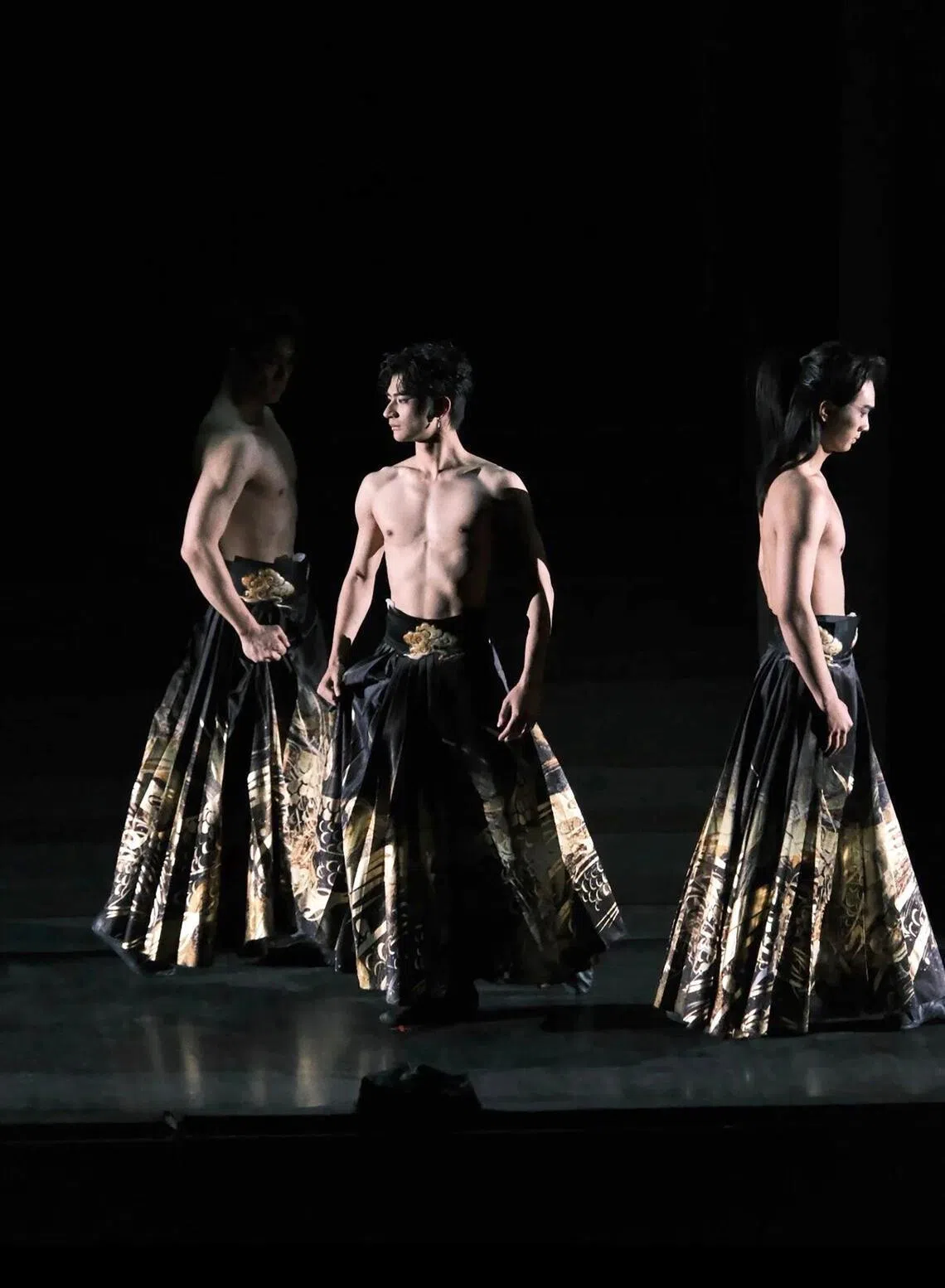
Male dancers bare their upper bodies in the performance Ode To Spring Breeze.
PHOTO: LI SAN GONG/WECHAT
Ge Junyi, the dancer-turned-entrepreneur behind Ode To Spring Breeze, has set out to ride the wave of the “she economy”. He founded Gonggou Theatre, billed as China’s first all-male modern dance troupe, and created its breakout hit, Ode To Spring Breeze. The troupe’s name – literally “Male Dog Theatre” – is a cheeky nod to masculine virility and a clue to the fantasies it seeks to sell.
According to Ge, Ode To Spring Breeze has staged 800 performances across China over the past 15 months, generating more than 100 million yuan in ticket sales.
To spread the love around, Ge has taken the show beyond first-tier cities to smaller cities including Langfang in Hebei province, where ticket prices have been lowered to just 50 yuan, less than the cost of a movie ticket in Beijing.
The troupe’s success relies heavily on fandom. Each of the troupe’s 50 dancers is expected to cultivate a fan community of his own.
Besides pumping iron in the gym, part of the job entails providing “emotional value” to fans, whether by responding to comments in fans’ chat groups or by patiently posing for wefies after performances.
Some of the most devoted followers travel across the country to attend multiple performances. Ge’s next plan is to turn the dancers into live-stream influencers who sell products to their followers.
What Gonggou Theatre is selling is not merely a dance performance, but also attention.
The same formula can be found elsewhere.
For decades, some massage parlours in China have quietly offered “extra services” to male customers. Recently, a new type of massage parlours is catering specifically to women instead.
At one such parlour in Changsha, the capital of Hunan province in central China, illuminated portraits of young male therapists line the wall behind the reception counter, resembling the lightbox displays of hostesses outside nightclubs.
Videos posted online of another parlour show therapists lavishing attention on female customers: one rubs a customer’s temples, another kneads her arms, while a third feeds her cherry tomatoes. “Is the pressure okay, sis?” one therapist asks. Everything shown in the videos appears above board.
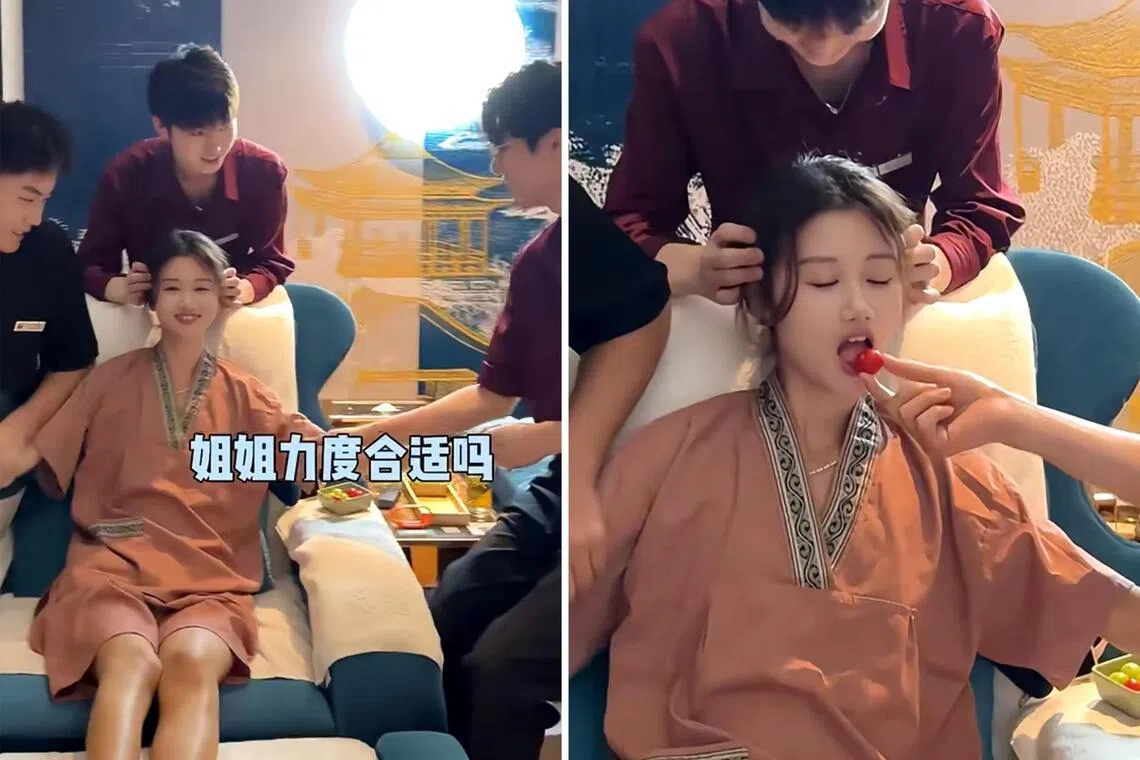
Screenshots from a video on social media show three male therapists pampering a customer in a massage parlour in China that caters to women.
PHOTOS: SONGXIAOYA/XIAOHONGSHU
Some cheer such businesses as reverse objectification – a long-overdue turn for women to gaze at men in the way men have long gazed at women, and a measure of payback for generations of unequal scrutiny.
I disagree. To view the phenomenon primarily as comeuppance is to remain trapped in the same logic that treats relations between the sexes as a zero-sum game. It also keeps women cast in the role of victims rather than recognising them as individuals with agency, desires and choices of their own. Women’s gains need not come at men’s expense.
Watching the audience at Ode To Spring Breeze, I was struck by the sheer joy on display. Most of the women, ranging in age from their mid-20s to their late 40s, had come dressed up, many with hair and make-up carefully done. When the lights went up after the performance, many looked as though they had just had one of the best nights out in a long time.
The dancers, meanwhile, got something out of it too. According to their boss Ge, they earn 30,000 to 40,000 yuan per month, several times what many conventional dancers make. Years of training and careful attention to their appearance have paid off.
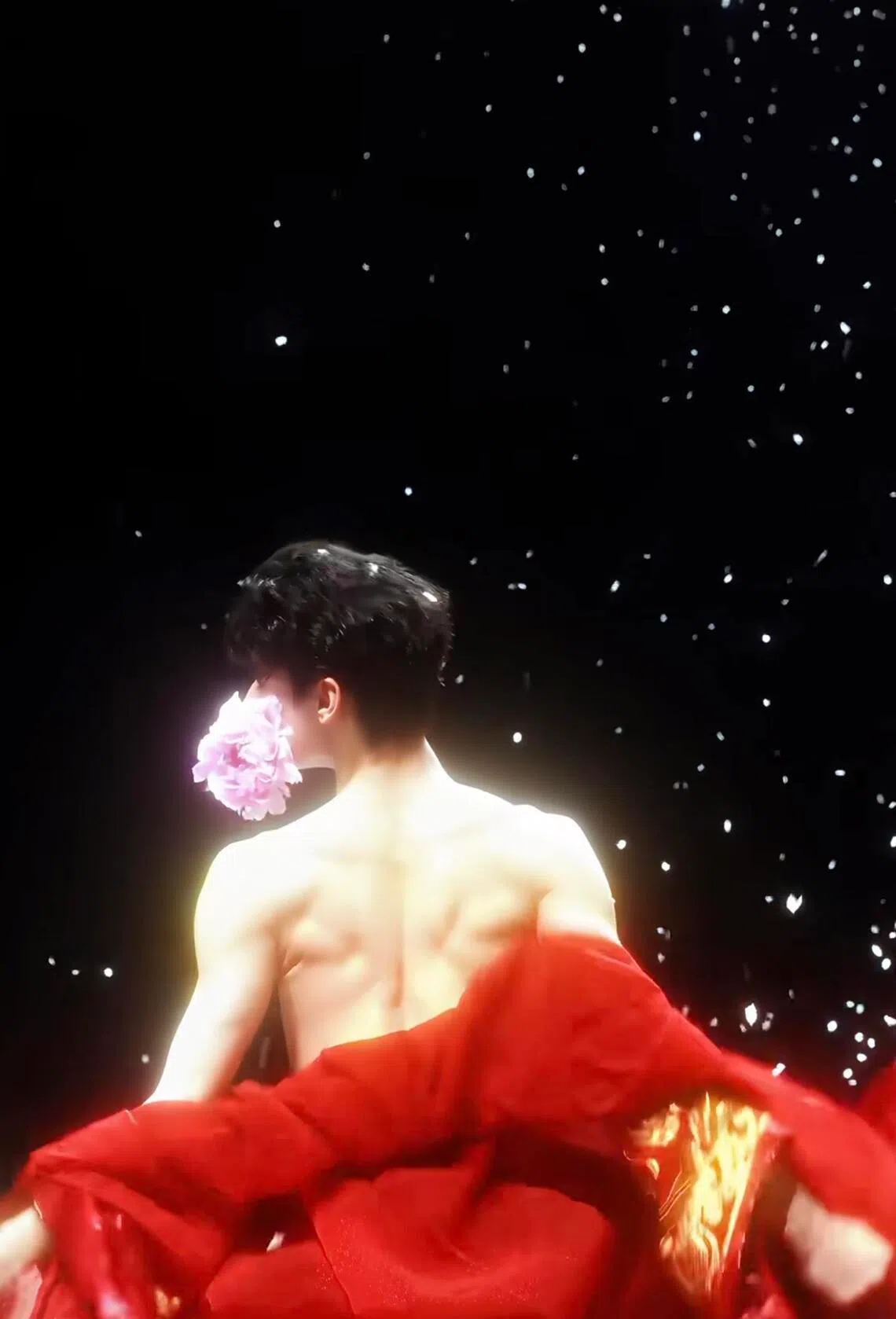
A male dancer takes off his red robe in the performance Ode To Spring Breeze.
PHOTO: BERRY/XIAOHONGSHU
This strikes me as a mutually beneficial transaction that doesn’t hurt anyone. As long as performers and audience alike are treated with dignity and respect – by each other and by society – I see little reason why such entertainment should not be applauded.
Back in Singapore, watching a modern dance rendition of The Peony Pavilion at the Esplanade in May, I was struck by how much had changed.
Written more than four centuries ago, The Peony Pavilion tells the story of Du Liniang, a genteel young woman who dozes off in a pavilion, dreams of a handsome scholar she has never met, falls in love and consummates their relationship in the dream.
Although the Chinese dancers from Suzhou portraying the couple were fully clothed, their stylised movements left little doubt about what the pavilion scene was depicting.
When Du awakens, she becomes so consumed by longing that she dies of lovesickness. She returns as a spirit and ultimately reunites with the scholar in the flesh.
Fortunately, the women cheering the male dancers in Ode To Spring Breeze are not Du. What Du had to go through hell to find, they can simply buy with a ticket.