By The Daily Caller (World News) | Created at 2026-06-11 15:34:04 | Updated at 2026-06-13 08:00:51
1 day ago
By The Daily Caller (World News) | Created at 2026-06-11 15:34:04 | Updated at 2026-06-13 08:00:51
1 day ago
As the 21st-century great game among imperial powers unfolds, the Trump administration is quietly shifting its focus to a key mineral-rich region: Central Asia.
Vladimir Putin’s Russia has long influenced Central Asia — which includes the countries of Kazakhstan, Kyrgyzstan, Tajikistan, Turkmenistan and Uzbekistan — pumping money into the region and developing close trade ties. But in 2022, faced with a new war in Ukraine and Western sanctions, Moscow’s direct investment in Central Asia only stood at $20 billion, a figure Putin himself described as “rather modest.” (RELATED: Spy World Says It’s Pivoting To China After Years Of Whistleblower Warnings)
Xi Jinping’s China surpassed Russian investment in 2025, with Beijing’s total exceeding $35 billion, according to the Eurasian Development Bank. China is now the single largest foreign investor in a region brimming with oil and natural gas, uranium and aluminum, and other crucial rare-earth metals used for lithium batteries.
Some of their projects include massive railroad networks for the transportation of goods across Central Asia to the Caspian Sea, and oil processing facilities. The region is vital to China’s “Belt and Road” initiative, a trillion-dollar project launched by Xi in 2013 to create a modern-day “Silk Road” linking China to Europe and areas of Africa and South America.
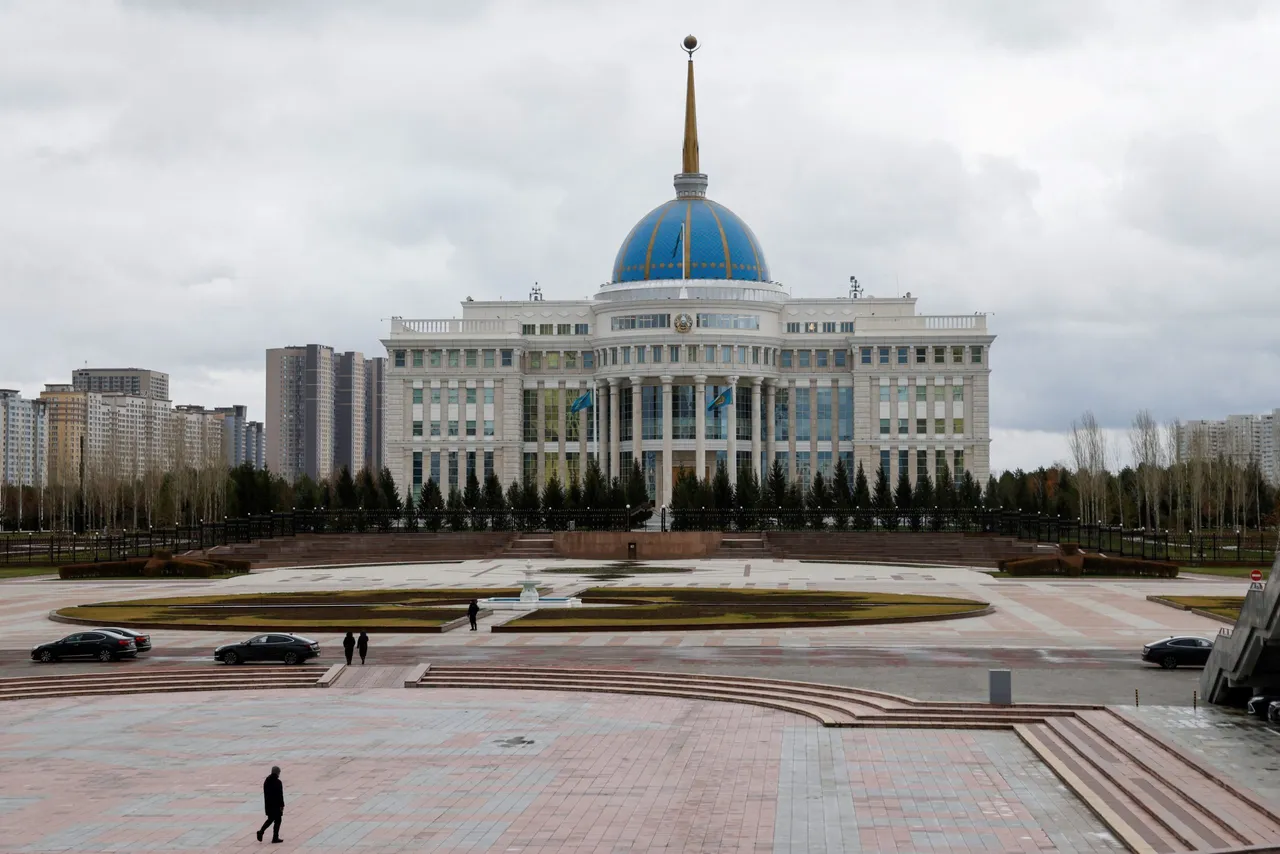
A pedestrian walks near the Ak Orda Presidential Palace, under a cloudy sky, in Astana, on October 30, 2023. (Photo by LUDOVIC MARIN/AFP via Getty Images)
The Trump administration has taken notice.
U.S. officials and mineral executives opened high-level talks with officials from Kazakhstan, Kyrgyzstan, Tajikistan, Turkmenistan and Uzbekistan at the C5+1 Critical Minerals Dialogue (CMD) on June 10. The meeting focused on supply chains, mining, surveying and mapping, as well as geological exploration, according to The Times of Central Asia.
Former President Joe Biden first launched the CMD initiative in 2023, with an inaugural meeting taking place in February 2024. The Trump administration now seeks to further U.S. engagement in the region, which could provide essential resources for U.S. infrastructure, advanced technology, aviation and national defense.
Sergio Gor, the U.S. special envoy for South and Central Asian affairs, told participants that the Central Asia region has not gotten the proper attention from the United States that it deserves — something the Trump administration wants to change.
“We care about this region, we want to be involved with this region, we want to identify win-win situations for the United States and your nations,” Gor said.
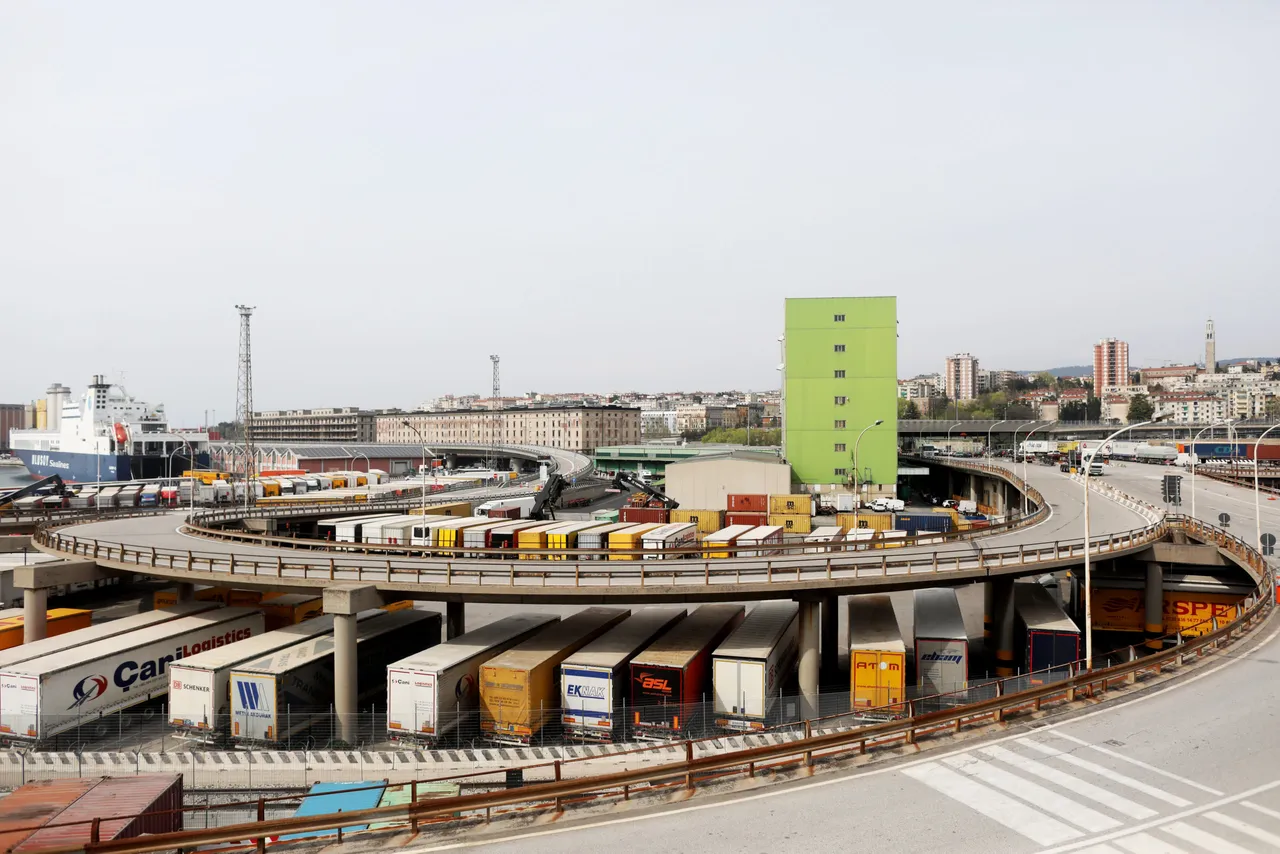
TRIESTE, ITALY – APRIL 2: Trucks are seen parked under the elevated road inside the port in front of Pier VII at Trieste’s new Port on April 2, 2019 in Trieste, Italy. The historic city of Trieste is preparing to open its new port to China, with Italy becoming the first Group-of-Seven nation to sign on to China’s “One Belt, One Road” infrastructure project. The deal primes Trieste to receive investment from China as it eyes a faster trade route into the heart of Europe. Among the qualities that make Trieste a desirable port of call: 70km of internal railways that are integrated with national and international networks; an elevated roadway that directly connects to the external road system; and deep sea beds up to 18 meters. China sees Trieste as a natural crossroads between the East and the West, a shipping route between Europe and East Asia that is four days shorter than routes to the ports in Northern Europe. For a line of 6,000 TEU container vessels, this translates into an economic saving on freight and fuel costs of over $25 million a year, according to Trieste’s port authority. (Photo by Marco Di Lauro/Getty Images)
Gor also said the U.S. International Development Finance Corporation is gearing up to “invest and build” in the region and sees “potential to transform the region’s rich deposits of critical minerals into the foundation of a new wave of industrialization,” The Times of Central Asia reported.
As the Trump administration aims to end Beijing’s total dominance over critical mineral supplies, Gor has also facilitated a deal to obtain tungsten for the U.S., and assisted in securing $25 billion in commercial agreements involving the U.S. and five nations of Central Asia.
“President Trump understands the importance of Central Asia to global commerce, connectivity, and critical minerals,” he said at the meeting.