By The Daily Caller (Opinion) | Created at 2026-06-02 19:59:31 | Updated at 2026-06-10 00:59:29
1 week ago
By The Daily Caller (Opinion) | Created at 2026-06-02 19:59:31 | Updated at 2026-06-10 00:59:29
1 week ago
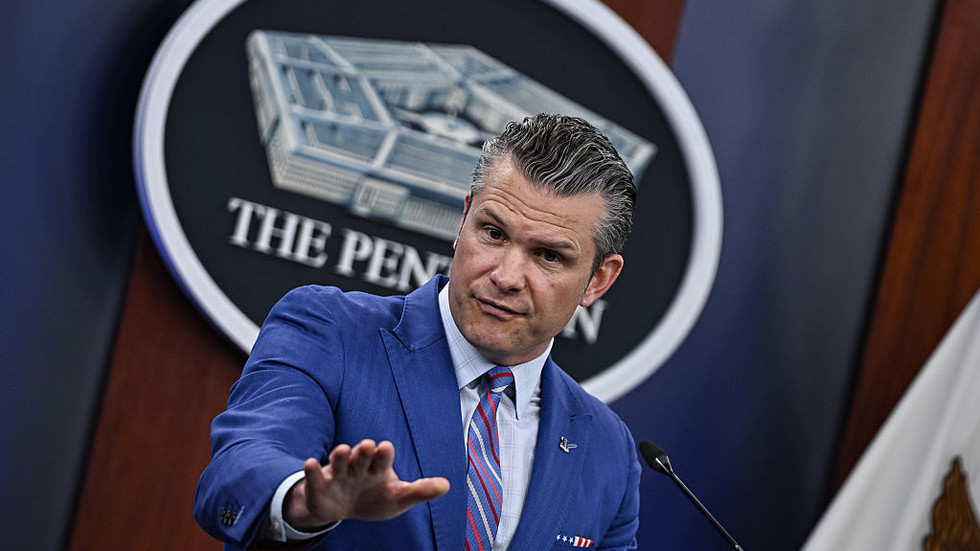
War Secretary Pete Hegseth has done what no recent predecessor would attempt. He looked at the rot inside America’s most prestigious universities and stopped sending our best officers and our taxpayer dollars to feed it. His Feb. 27 announcement cancels Department of War sponsorship of graduate-level education and fellowships at Princeton, Columbia, MIT, Brown, Yale, and others starting in academic year 2026-2027. The Secretary calls these institutions “factories of anti-American resentment and military disdain.” On the broad point, he is right. The Hegseth Doctrine reflects an overdue correction. I support it. I want it to succeed.
I also want to make a narrow case. The Massachusetts Institute of Technology (MIT) should sit in a category of its own.
I write this as a retired Air Force lieutenant colonel, an AC-130 gunship combat aviator, a former Air Force Special Operations Command drone squadron commander, and a graduate of MIT. I founded VICTUS Technologies out of MIT to build resilient autonomy for the GPS-denied battlefield, the kind our adversaries already create with cheap jammers and spoofers. I assembled the technical core of my company from MIT’s Computer Science and Artificial Intelligence Laboratory. The talent base and the operational seriousness of MIT made VICTUS possible. (RELATED: EXCLUSIVE: University Hit With New Complaint After Dean Confirms Hidden DEI Curriculum)
My time on campus from 2023 through 2025 reinforced that view. As a veteran, I encountered respect for my service alongside some of the most demanding technical and academic standards I have ever faced. Faculty did not lower the bar for me. They did not lower it for anyone. That is meritocracy. The institution backed it up. In May 2024, MIT became the first elite private university to formally ban diversity, equity, and inclusion (DEI) statements in faculty hiring. President Sally Kornbluth made the call with the support of the provost, the chancellor, and all six academic deans, on the grounds that “compelled statements impinge on freedom of expression, and they don’t work.” The reform is not complete. But MIT moved first, moved early, and moved on principle, while Harvard and Yale dug in.
That posture reflects a longer tradition. MIT has trained American military officers continuously since 1865 and has commissioned more than 12,000 of them, including more than 150 generals and admirals. General James Doolittle earned his master’s and doctorate at MIT before leading the 1942 raid on Tokyo. Buzz Aldrin earned his doctorate at MIT before stepping onto the moon. In 1940, MIT President Karl Compton helped persuade President Roosevelt to stand up the National Defense Research Committee, and the resulting MIT Radiation Laboratory produced roughly half of the radar systems the Allies used to win World War II. In 1951, the Air Force tasked MIT to build the nation’s first integrated air defense system. The result was Lincoln Laboratory and SAGE, which invented modern digital computing in the course of defending the homeland. The program cost more than the Manhattan Project. It worked. (RELATED: ‘Harvard Is Woke; The War Department Is Not’: Pentagon Terminates Academic Partnerships With Ivy League University)
The next war will turn on artificial intelligence and autonomous systems. So will the deterrence of that war. Lincoln Laboratory now operates TX-GAIN, the most powerful AI supercomputer at any U.S. university, powered by more than 600 NVIDIA accelerators and used to train autonomous navigation models for the Department of War. The Department of the Air Force-MIT Artificial Intelligence Accelerator recently fielded multi-robot personnel recovery systems for Air Force Special Operations Command, the same enterprise I served in. The People’s Republic of China is pouring an estimated $150 billion of state-backed investment into AI and autonomy with the explicit goal of seizing global dominance by 2030. Cutting MIT out of the Department of War’s reach at this moment would amount to unilateral disarmament inside the technical fight that matters most.
The defense innovation base depends on this pipeline. MIT’s Institute for Soldier Nanotechnologies has produced more than 140 patents and over 50 startups since 2002. Anduril, Saronic, Shield AI, Skydio, Nominal, and a long list of other companies disrupting the calcified prime contractor system rely on the engineering talent and dual-use research culture that MIT generates at scale. My own firm exists because MIT made it possible to combine machine learning expertise with operational experience and stand up a company in less than a year.
The cultural trajectory on campus reinforces the point. In April 2025, I attended the Technology and National Security Conference at MIT and Harvard. A paid protest group with no affiliation to MIT showed up to disrupt the event. One year later, in April 2026, the same conference returned to MIT’s Kresge Auditorium. There were zero paid protesters. There was instead a packed house of frontier defense startups building real systems for American warfighters: autonomous platforms, AI mission software, secure communications. The 2026 conference looked nothing like the protest theater consuming Harvard Yard or Columbia’s lawn. It looked like the arsenal of democracy reassembling itself, on an MIT campus, in plain view. (RELATED: Palmer Luckey Warns US Lead Over China In AI Is ‘Extremely Small’)
The diagnosis underlying the Hegseth memo applies to institutions that “diminish critical thinking” and have “significant adversary involvement.” MIT does not fit that description. A narrow exception is not a retreat. It is the same kind of discrimination the Secretary is asking the rest of the federal government to make every day. MIT trains officers, builds defense technology at industrial scale, runs the air defense innovation pipeline through Lincoln Laboratory, operates the most powerful AI research supercomputer on any university campus in the country, and incubates the dual-use companies the Pentagon now depends on.
The Department of War should keep its standards high and its purse strings tight on institutions that earn neither. It should also draw the line where the data draws it. MIT belongs inside the wire.
Jesse Hamel is the founder and CEO of VICTUS Technologies, a retired U.S. Air Force lieutenant colonel, AC-130 gunship combat aviator, former AFSOC drone squadron commander, and a graduate of MIT.
The views and opinions expressed in this commentary are those of the author and do not reflect the official position of the Daily Caller.