 By The European Times | Created at 2026-07-19 06:46:37 | Updated at 2026-08-05 01:28:11
2 weeks ago
By The European Times | Created at 2026-07-19 06:46:37 | Updated at 2026-08-05 01:28:11
2 weeks ago
For decades, power in the Middle East was measured by the size of armies, the number of tanks, or the strength of military deterrence. While these factors remain essential, the war triggered by Hamas’ October 7, 2023 attack on Israel has highlighted another reality: in the twenty-first century, influence is increasingly built through diplomacy, investment, technology, infrastructure, and the ability to shape the post-conflict landscape. In this evolving environment, the United Arab Emirates has emerged as one of the region’s most influential actors.
This position is not the product of circumstance. It is the result of a long-term strategy pursued for nearly two decades under the leadership of President Mohammed bin Zayed. His ambition has never been to compete with the Middle East’s major powers solely through military strength. Instead, he has sought to transform the UAE into a global power capable of connecting East and West, engaging partners with divergent interests, and converting economic weight into geopolitical influence.
The Abraham Accords, signed with Israel in 2020, are a central pillar of this vision. More than a normalization agreement, they reflected a strategic conviction: that economic, scientific, technological, and security cooperation could create shared interests strong enough to reduce the likelihood of future confrontation. Through this approach, Abu Dhabi sought to demonstrate that a new chapter in Middle Eastern history could begin without waiting for every legacy conflict to be resolved.
The attacks of October 7 dramatically altered the regional landscape. For Israel, they represented the most severe security trauma in the country’s modern history, leaving deep scars across Israeli society. In the months that followed, escalating hostilities with Hezbollah along Israel’s northern border forced thousands of residents to evacuate their communities, underscoring the reality that Israel’s security challenges extend far beyond Gaza. Protecting Israeli citizens while preventing a broader regional war quickly became an overriding priority.
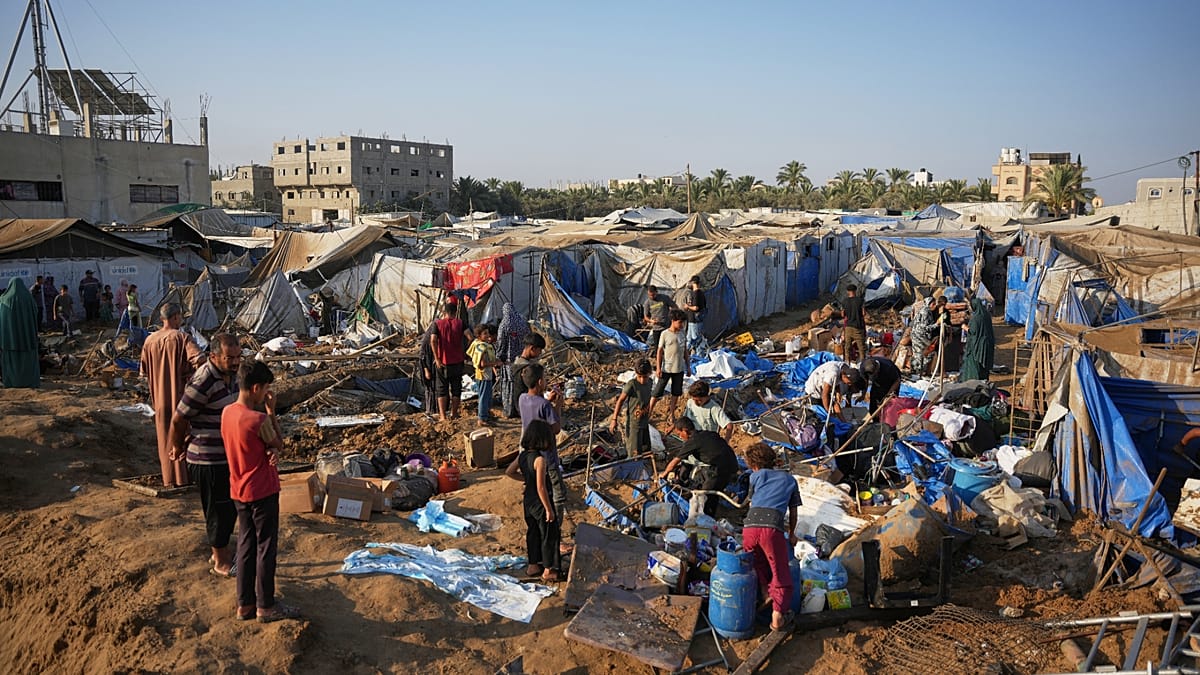
At the same time, the conflict produced a devastating humanitarian crisis in Gaza, bringing the Palestinian issue back to the center of international diplomacy. Countries that had chosen normalization with Israel suddenly faced a difficult question: how could they preserve diplomatic achievements while responding to the immense human suffering caused by the war?
The United Arab Emirates adopted a distinctive approach. It maintained diplomatic relations with Israel while simultaneously calling for the protection of civilians, expanding humanitarian assistance, and reaffirming its support for a political process based on two states living side by side in peace and security. This position was not without political risks, but it reflected a consistent principle of Emirati foreign policy: abandoning dialogue often means surrendering any possibility of influence.
This is perhaps the most important lesson emerging from the Gaza war. The UAE did not dictate Israeli military decisions, nor could it resolve a conflict rooted in generations of history. What it did preserve, however, were channels of communication with key regional and international stakeholders. In a region where diplomatic ruptures are often the norm, maintaining dialogue is itself a strategic asset.
Yet reducing the UAE’s influence to the Abraham Accords alone would be a mistake. Its growing geopolitical relevance rests on a much broader foundation. The country manages some of the world’s largest sovereign wealth funds, operates strategic ports and logistics networks across multiple continents, has developed one of the world’s leading aviation hubs, and continues to invest heavily in artificial intelligence, semiconductors, clean energy, and advanced technologies. At the same time, it maintains close strategic ties with the United States, expands economic partnerships with China, deepens cooperation with Europe, and sustains dialogue with both Israel and numerous Arab states.
This diversification explains why the UAE occupies such a distinctive place in today’s Middle East. Whereas some regional powers project influence primarily through military capabilities or ideological appeal, Abu Dhabi has cultivated what might be described as the power of connectivity. This form of influence lies in connecting economies, technologies, investors, and governments—even when their political interests diverge. It does not replace traditional hard power, but it has become increasingly decisive in preventing crises, facilitating cooperation, and preparing for reconstruction once conflicts subside.
A comparison with Saudi Arabia illustrates two complementary diplomatic approaches. Riyadh has chosen to retain normalization with Israel as a negotiating instrument, linking any future agreement to meaningful progress on the Palestinian issue. The UAE, by contrast, opted to establish relations first in order to maintain continuous dialogue and influence over time. Although these strategies differ in method, they ultimately pursue a common objective: a more stable, integrated, and prosperous Middle East.
The post-war period will likely become the real test of this evolving regional order. Rebuilding Gaza, strengthening security guarantees for Israel, supporting credible Palestinian institutions, and preventing renewed escalation will require enormous financial resources, technical expertise, and sustained diplomatic coordination. The UAE possesses many of these capabilities. It cannot solve the region’s political divisions alone, but its ability to invest, coordinate international partners, and contribute to reconstruction gives it a role that very few countries are equipped to play.
The Gaza war did not create the United Arab Emirates’ influence. Rather, it revealed a transformation that has been unfolding for the past two decades. By investing in economic diversification, technological innovation, international partnerships, and pragmatic diplomacy, Mohammed bin Zayed has steadily positioned the UAE as one of the indispensable actors shaping the Middle East’s future.
In a region undergoing profound geopolitical change, the most influential states will not necessarily be those with the largest armies. They will be those capable of connecting markets, financing reconstruction, driving technological innovation, and keeping diplomatic channels open when tensions are at their highest. Judged by these criteria, the United Arab Emirates has evolved far beyond being a Gulf economic success story. It now stands as one of the principal architects of a new regional order—one that seeks to demonstrate that prosperity, cooperation, and stability can become strategic instruments of power no less significant than military strength.