By Fox News (World News) | Created at 2026-08-06 18:05:33 | Updated at 2026-08-06 21:50:45
4 hours ago
By Fox News (World News) | Created at 2026-08-06 18:05:33 | Updated at 2026-08-06 21:50:45
4 hours ago
NEWYou can now listen to Fox News articles!
Between 3,000 and 5,000 migrants remain in Ceuta after hordes of mostly military-aged men rushed into the Spanish enclave from Morocco late last month, Ceuta's president said Thursday.
While speaking from a video call during an extraordinary session of the European Parliament's Committee on Civil Liberties, Justice and Home Affairs, Ceuta President Juan Jesus Vivas also revealed around 100 people died during the surge.
Authorities estimate roughly 80,000 migrants rushed into the territory within a 48-hour period in late July.
Vivas called the border crisis an "invasion" and "one of the most difficult moments in the recent history of our city."
"According to the Dictionary of the Royal Spanish Academy, an 'invasion' should be understood in its second definition as the abnormal or irregular occupation of a specific place," Vivas said, according to a Fox News Digital translation of his remarks, which he gave in Spanish.
AT LEAST 72 DEAD AMID MASS MIGRANT RUSH TO STORM SPANISH ENCLAVE OF CEUTA SPARKING BORDER CRISIS

Migrants run and cheer as they cross on foot into the North African enclave of Ceuta from Morocco, after swimming over from the Moroccan side and overwhelming police at the city's breakwater, according to Spain's Guardia Civil, in Ceuta, Spain, July 30, 2026. (FARO TV via Reuters)
"That is precisely what occurred on July 30 and 31, when approximately 80,000 people — equivalent to the entire population of Ceuta — stormed into our city. This characterization, moreover, aligns with the statement made by the President of the Government of Spain, who on Friday the 31st, during his visit to Ceuta, stated that we were facing an attack, a violation of Spain's territorial integrity," Vivas continued.
Echoing previous claims from Spain's leftist President Pedro Sánchez and European Commission President Ursula von der Leyen, Vivas acknowledged roughly 75,000 of the migrants had returned to Morocco but added "under no circumstances does it allow us to claim that our city has returned to normal."
"Ceuta has not returned to normal because between 3,000 and 5,000 people who entered during those fateful days of July 30 and 31 still remain," Vivas said. "The reception centers for adult and minor migrants are in a state of collapse, turning the influx into a major humanitarian emergency."
"Added to this are disruptions to public order and a high risk to public safety," he continued. "Furthermore, the morale of Ceuta's residents is severely affected. Our population feels sad, helpless, uneasy, fearful, and worried — and with good reason. It is inevitable to wonder whether this will happen again, and if that next time will be the definitive plunge into the abyss, causing us to cease being what we are: Spain and Europe. It has been exposed to the world that we are extraordinarily vulnerable, and that our security and integrity are in the hands of a third country, Morocco, which does not recognize our sovereignty."
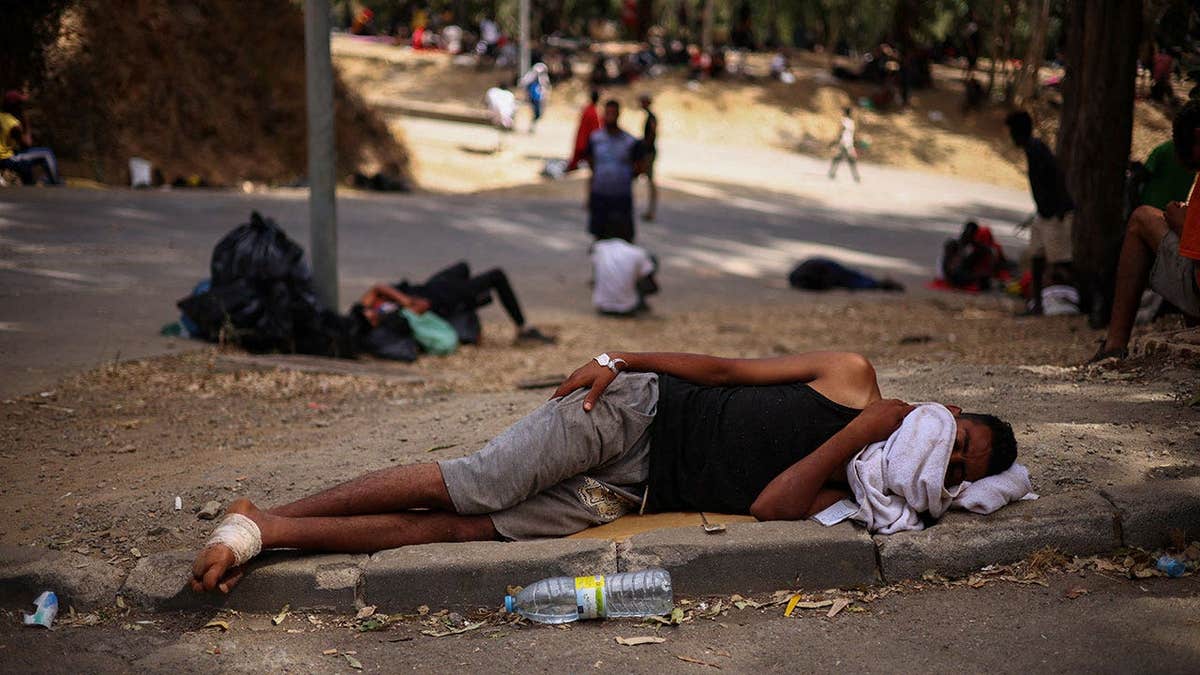
Migrants wait outside Ceuta's temporary migrant center (CETI), which is currently at full capacity, following mass crossings of migrants on foot and by sea from Morocco into Spanish territory, in Ceuta, Spain, Aug. 3, 2026. (Pedro Nunes/Reuters)
He then proposed a set of actions authorities should take to return the city to normal. The proposals included expelling the remaining Moroccan migrants, provisioning more resources for the city's migrant facilities, and the implementation of a new economic model which he called on to be "More Spain and More Europe."
"We serve a society that has forged its character through courage to endure and the ability to overcome adversity. We are confident it will do so again, though I emphasize that the requested support from European authorities remains indispensable. Thank you very much," Vivas concluded.
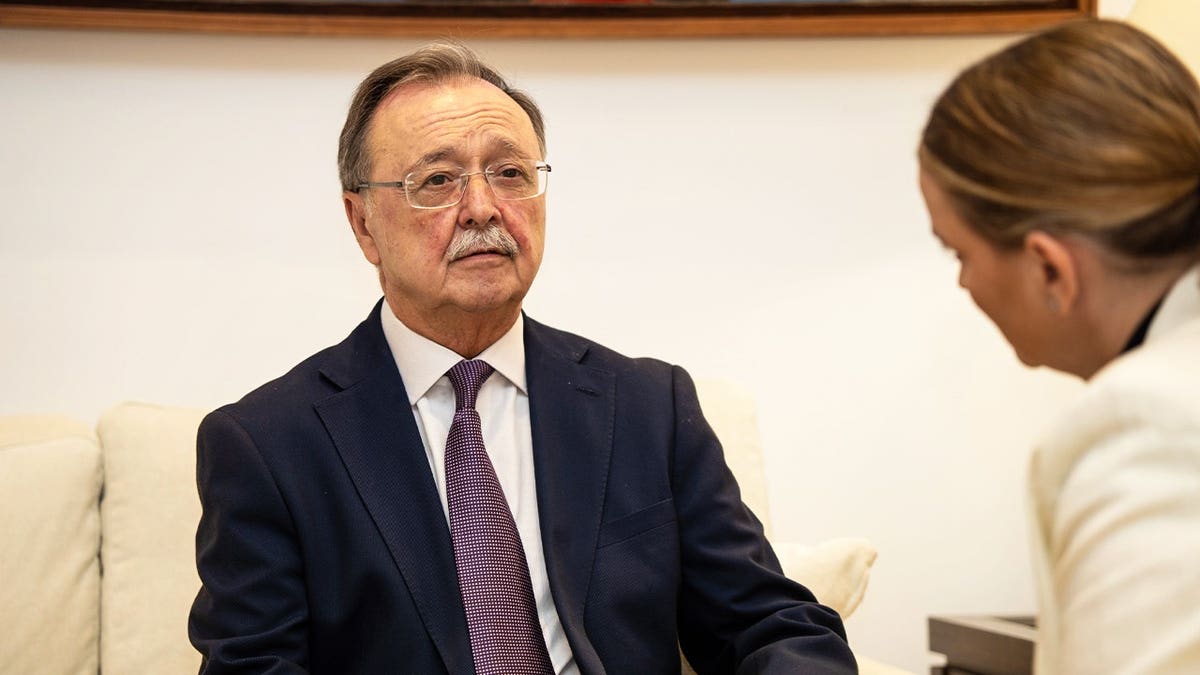
Ceuta President Juan Jesus Vivas seen during a meeting at the Consolat de Mar on Aug. 6, 2026, in Palma, Balearic Islands, Spain. The meeting takes place just one week after the unprecedented migration crisis at the border between Ceuta and Morocco. (Javier Fernandez/Europa Press via Getty Images)
Following the border rush between July 30–31, Sánchez called the incident "an attack, a violation of the territorial integrity of Spain."
CLICK HERE TO DOWNLOAD THE FOX NEWS APP
Fox News Digital contacted the governments of Spain and Ceuta for additional comment.