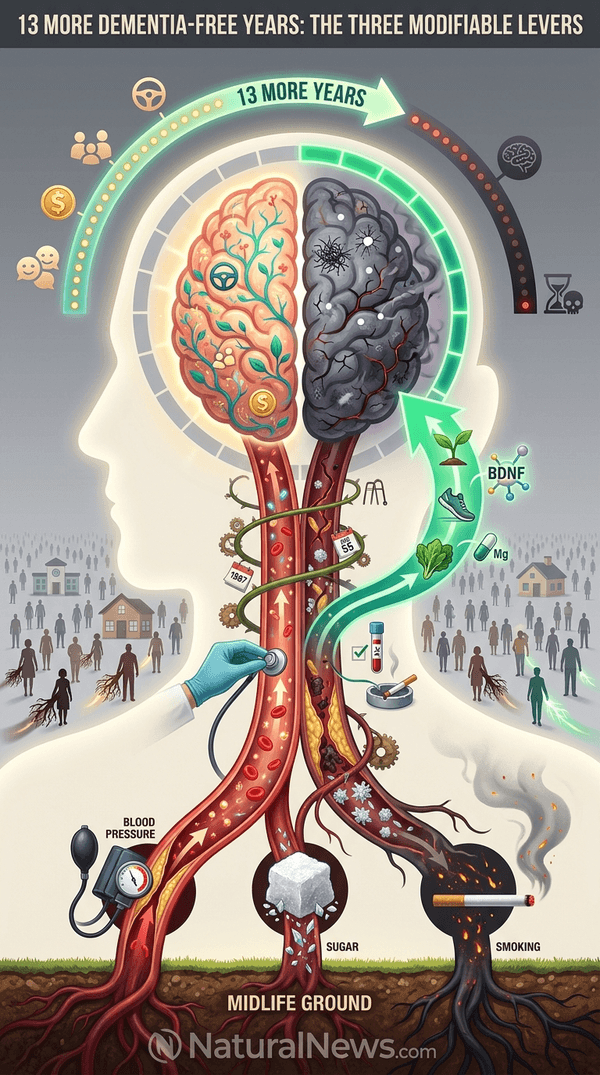
Middle-aged adults who had none of three risk factors -- high blood pressure, high blood sugar, or smoking -- lived about 13 more years without dementia than those who had all three, according to a report by mindbodygreen. The analysis followed more than 12,000 U.S. adults for about 26 years and counted how long each person lived with memory and thinking intact.
The findings add to evidence that dementia is not an inevitable part of aging. The Lancet Commission has estimated that nearly 45% of dementia cases worldwide could be delayed or prevented by addressing 14 modifiable risk factors [1].
Study Design and Data Collection
The data came from a long-running project that has followed adults in four U.S. communities since 1987. According to the report, researchers measured blood pressure, blood sugar, and smoking status in the early 1990s, when participants were in their late 40s through their 60s, and counted how many of the three risk factors each person had.
Dementia cases were confirmed through memory and thinking tests, phone check-ins with participants and close contacts, and medical and death records, with a panel of experts confirming each case, the report said. The analysis measured years lived without dementia from age 55. Separate reporting has described heart health and brain health as closely connected [2].
Dementia-Free Years Decreased With Each Risk Factor
People with none of the three risk factors averaged about 30 additional dementia-free years from age 55, according to the report. People with all three averaged about 17 additional years. Each added risk factor reduced the dementia-free period.
Women had longer dementia-free survival than men at every risk level, the report stated. Black participants had fewer dementia-free years than White participants, a difference the report attributed to carrying more risk factors at baseline.
People with all three risk factors were nearly three times as likely to develop dementia and more than five times as likely to die before dementia onset, according to the report. Other research has found a direct causal link between high blood pressure and increased risk of vascular dementia [3].
Vascular Mechanisms and Midlife Window
Researchers said the connection runs through blood vessels. High blood pressure and diabetes can damage the small vessels feeding the brain and increase inflammation, while smoking adds years of cellular wear, according to the report. Over time, these effects may narrow arteries, raise stroke risk, and contribute to protein buildup associated with Alzheimer's disease. Differences appeared two to three decades after the initial measurements.
Other studies have described similar pathways. Metabolic syndrome can contribute to chronic inflammation, damage blood vessels, and reduce blood flow to the brain, according to a 2025 study published in Neurology [4]. Brain deterioration in Alzheimer's disease has also been linked to deterioration of the blood vessels that feed brain tissue [5].
Limitations and Clinical Takeaways
The report noted that the study shows an association, not causation. Limitations included a single measurement of blood vessel health, possible detection bias among participants who kept attending study visits, and unmeasured factors that could affect results.
The report recommended asking for blood pressure and A1c numbers at physicals. A1c is a blood test that estimates average blood sugar over the previous two to three months. Both can run high without symptoms, the report said. Smoking cessation was described as the clearest modifiable lever because the study counted only current smokers as having the risk factor.
Natural health references have recommended magnesium supplementation for people with high blood pressure [6]. Exercise has been linked to increased levels of brain-derived neurotrophic factor, a protein associated with cognitive health [7].
Conclusion
Cognitive decline tends to be viewed as a late-life issue, but the report placed the turning point in midlife. "The important thing to keep in mind is that vascular health shaped not only how long people lived, but how much of that time they spent with their memory intact," the report stated.
Broader reviews have reached similar conclusions. A meta-analysis of 69 studies found that regular exercise and proper sleep play key roles in lowering dementia risk [8]. Earlier reporting has noted that dementia is not an inevitable part of aging and that a healthy lifestyle can significantly reduce risk [9]. The best strategy to reduce the risk of accelerated aging and dementia is to eliminate associated modifiable risk factors, according to a 2015 review cited in The Brain Warrior's Way [10].
References
- NaturalNews.com. "Nearly half of dementia cases could be prevented through lifestyle changes, experts reveal". NaturalNews.com. August 9, 2026.
- NaturalNews.com. "Proactive stroke prevention: Keep your brain healthy by strengthening your heart". NaturalNews.com. December 2, 2020.
- NaturalNews.com. "Higher BMI and high blood pressure directly linked to increased risk of vascular dementia, study finds". NaturalNews.com. May 4, 2026.
- NaturalNews.com. "Study Links Metabolic Syndrome to Early-Onset Dementia, Herbal Teas Proposed as Supportive Therapy". NaturalNews.com. July 31, 2026.
- Earl Mindell and Virginia Hopkins. "Prescription Alternatives".
- Tracy Ayton. "The Baby Boomers Bible for Healthy Body, Healthy Mind".
- NaturalNews.com. "Study Suggests Cycling Program May Boost Brain Chemical Linked to Cognitive Health". NaturalNews.com. April 28, 2026.
- NaturalNews.com. "Simple lifestyle changes can drastically reduce dementia risk, study finds". NaturalNews.com. April 20, 2026.
- NaturalNews.com. "Modifiable risk factors that increase your dementia risk and how to address them". NaturalNews.com. November 4, 2024.
- Daniel G. Amen, MD. "The Brain Warrior's Way: Ignite Your Energy and Focus, Attack Illness and Aging, Transform Pain into Purpose".
Explainer Infographic