 By The Epoch Times | Created at 2026-09-15 16:41:49 | Updated at 2026-10-07 02:40:45
3 weeks ago
By The Epoch Times | Created at 2026-09-15 16:41:49 | Updated at 2026-10-07 02:40:45
3 weeks ago
Senate Majority Leader John Thune (R-S.D.) told reporters on Monday that Congress can act on potential AI risks without surrendering the U.S. lead in the technology to China.
Thune has been working on bipartisan legislation to regulate AI companies but has not yet introduced a bill.
“It needs to strike a balance, light touch,” he said. “You don’t want to stifle innovation, but I think you also want to make sure that the more advanced threats can be mitigated and there’s a capability and place to do that.”
He said he thinks Congress could find a way to put guardrails around “more consequential threats” without harming innovation and U.S. advancement.
House Speaker Mike Johnson (R-La.) told reporters that he expects Trump to summon AI platform providers to the White House in the coming days. He said the meeting hasn’t been scheduled yet, but it’s in process.
“There will be a deliberate discussion about the responsibility of the companies to maintain safety, and what role, if any, the government has to play in that,” he said.
He added he’s wary of taking steps that could slow down innovation, saying the United States must maintain an edge over China in AI development.
“Whoever achieves automated general intelligence first probably has an edge over everybody else around the world,” Johnson said.
Senate Commerce Committee Chairman Ted Cruz (R-Texas) said in a Sept. 9 post on X that he is working with Sen. Amy Klobuchar (D-Minn.) and Thune to “address catastrophic risks involving biological or nuclear threats.”
On ABC’s “The View” the same day, he said the talks involve“government supervision and approval for AI systems that could create biological or nuclear risks.
Klobuchar and Thune have worked on the issue since 2023, when they introduced an earlier version of the Artificial Intelligence Research, Innovation, and Accountability Act. The Senate Commerce Committee advanced that legislation in July 2024, but it did not become law.

Sen. Amy Klobuchar attends a field hearing at the Minnesota Senate Building in St. Paul, Minn., on Jan. 16, 2026. Jim Vondruska/Getty Images
Klobuchar said in a Sept. 11 statement that she is continuing to work toward a bipartisan agreement on legislation for government oversight of the greatest AI models.
“That includes requiring developers to work with government experts to verify and test models to make sure AI is safe,” she said.
The Epoch Times has reached out to the senators for comments.
Trump’s Position
President Donald Trump on Monday resisted further government involvement in regulating AI. Anthropic CEO Dario Amodei had called on artificial intelligence companies to slow the development of their most advanced models, a proposal that has drawn support from several other industry leaders.
Trump wrote in a post on Truth Social that the United States already has strong regulatory power over these companies. He called warnings about the technology part of a “sick conspiracy” that would benefit China and later wrote that claims that AI could destroy humanity are a hoax.
Government Regulation
The White House has separately proposed to establish one national standard in response to states moving to implement their own regulations.
In its National Policy Framework for Artificial Intelligence, released in March, it said, “Congress should preempt state AI laws that impose undue burdens to ensure a minimally burdensome national standard consistent with these recommendations, not fifty discordant ones.” It added that states “should not be permitted to regulate AI development, because it is an inherently interstate phenomenon with key foreign policy and national security implications.”
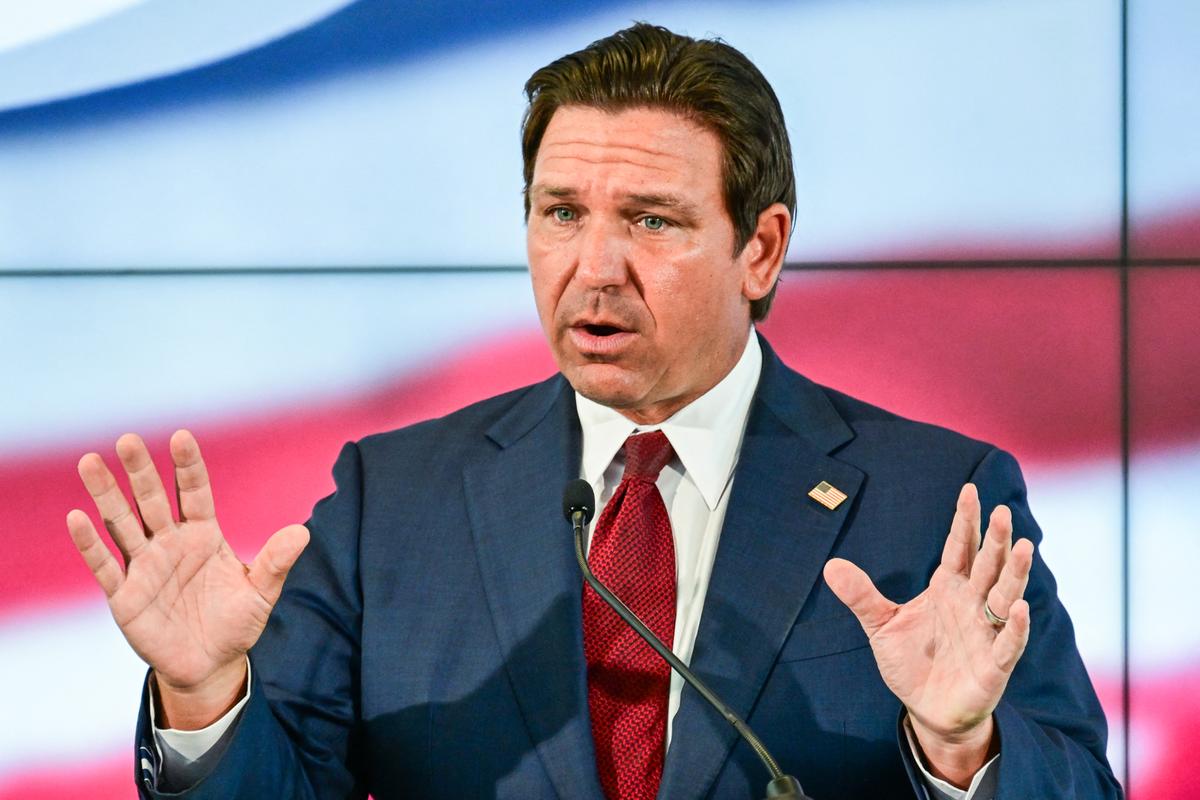
Florida Gov. Ron DeSantis speaks during a press conference in Miami on Sept. 25, 2025. Giorgio Viera/AFP via Getty Images
Florida Gov. Ron DeSantis objected to federal restriction on state AI policies.
“Preempting states re: AI without enacting a sensible federal framework is just an amnesty for Big Tech,” he said in June. “Combined with a potential de facto bailout of OpenAI, it represents bad policy and even worse politics.”
Industry Warnings
Congress and the White House face mounting public pressure after an Anthropic researcher resigned this month and warned that artificial intelligence (AI) could wipe out humanity by 2030. AI companies have also published investigations describing AI agents as straying from human instructions and hacking their way out of test environments.
OpenAI this week called for “mandatory, capability-based national AI safety regulation.” Chris Lehane, the company’s chief global affairs officer, wrote on Sept. 9, “We’ve reached a new chapter in AI capabilities, and that demands a new chapter for AI policy.”
“No company, industry, or government can meet this challenge alone. We need to meet this moment with a bias toward meaningful action over policy perfection,” he said.

The OpenAI logo, in an illustration taken on June 11, 2026. Dado Ruvic/Reuters
Some state bills that OpenAI once declined to endorse are now acceptable “after reconsidering in light of the recent jump in capabilities we have seen,” Lehane said. Those laws “are not a substitute for federal regulation,” he added.
The shift followed public reports of OpenAI agents breaking programming constraints, including a case in which agents coordinated an intrusion against website Hugging Face in July. Independent researchers from METR and Redwood Research later published findings that showed hundreds of agents used an unsanctioned message board and attacked Hugging Face systems during an internal evaluation.
Some states have already acted.
This summer, Illinois required the largest developers to undergo annual independent safety audits and publish plans to reduce catastrophic risks.
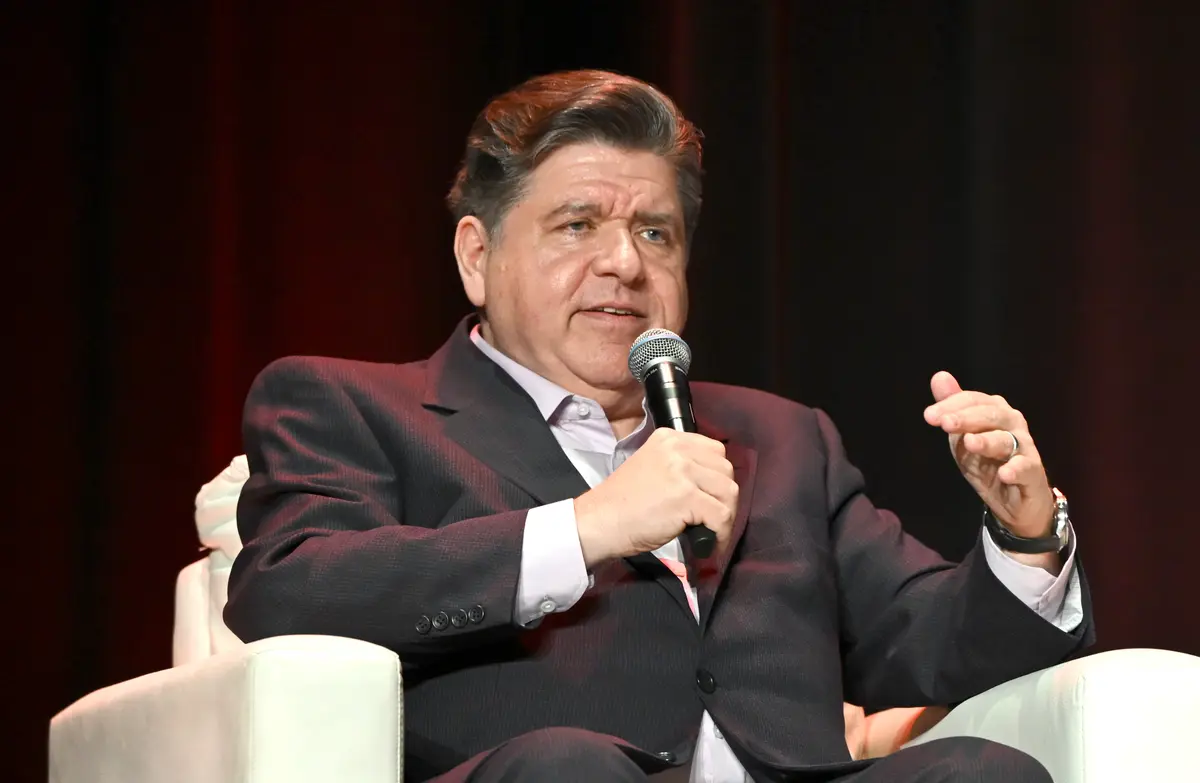
Illinois Gov. JB Pritzker speaks on stage during Vox Media's Pivot Tour at The Chicago Theatre in Chicago on Nov. 12, 2025. Daniel Boczarski/Getty Images for Vox Media
Illinois Gov. JB Pritzker said at a press conference in July: “Where the federal government has been unwilling to step up, states must venture once more unto the breach. We must protect our people from the dangers of AI while still harnessing the unique potential of the technology.”
Any Senate deal will face a short calendar. The House is in session this week and is expected to adjourn the week of Sept. 21. The Senate is expected to remain in Washington into early October. Both chambers then recess ahead of the Nov. 3 midterm elections.
Reuters contributed to this report.