By The Rio Times | Created at 2026-09-18 08:22:03 | Updated at 2026-09-18 09:53:24
2 hours ago
By The Rio Times | Created at 2026-09-18 08:22:03 | Updated at 2026-09-18 09:53:24
2 hours ago
Trinidad and Tobago · Security
Key Facts
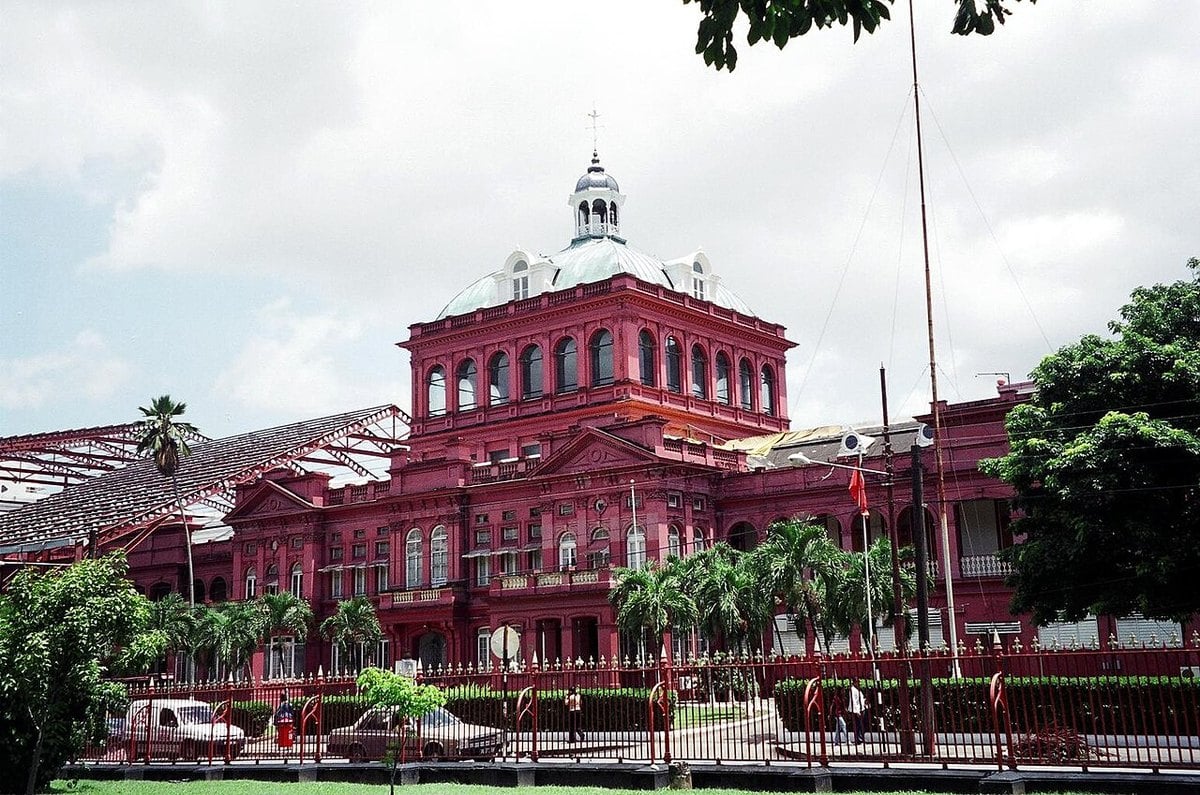
—What happened. Trinidad and Tobago’s state of emergency ended on 17 September 2026, after 199 days.
—The numbers. Police arrested 5,802 people and charged 3,552 of them, the prime minister said.
—The catch. Of 574 people held on detention orders, 334 were not reported as charged.
—Who called it. Homeland Security Minister Roger Alexander said the law required the emergency to end.
—The killings. Police counted 252 murders to 10 September, against 262 a year earlier.
—What comes next. A Special Operations Bill would allow cordons, curfews and closed policing districts.
Trinidad and Tobago has spent much of the past two years under emergency rule. The third emergency expired this week, and the argument over what it achieved has not.
One-stop reference
Company Intelligence
Every listed company in Latin America — financials, ownership and structure for 1,450+ companies across 26 exchanges, in one place.
The state of emergency proclaimed on 2 March 2026 expired on Thursday 17 September, its 199th day. Homeland Security Minister Roger Alexander told Parliament on 11 September that the government would not seek another extension.
What Ended, and Why It Began
President Christine Kangaloo signed the proclamation on 2 March 2026, on the advice of the prime minister. It took effect the following day and ran to 17 September, a span of 199 days.
Parliament extended it twice, each time by three months. Attorney General John Jeremie moved the first extension motion on 6 March 2026.
The second extension was debated and passed on 10 June, the Inter-American Commission on Human Rights recorded. Homeland Security Minister Roger Alexander told the House on 11 September that no further extension would be sought.
This was the ninth emergency declared since independence in 1962, the Trinidad Express counted. Four of those nine fall in the five years between 2021 and 2026.
Jeremie said in a televised statement that police intelligence pointed to imminent violence and planned reprisal killings by gangs. Alexander told Parliament that gang violence had escalated to a scale producing multiple deaths and mass shootings.
The attorney general said police intelligence pointed to further imminent violence and planned reprisal killings. The United States travel advisory records the same official reason, escalating violent crime threatening public safety.
Two earlier emergencies had already run under two different governments. The first was declared on 30 December 2024 and ended on 13 April 2025, as Parliament was dissolved for the election.
How the Emergency Worked
Under the regulations, police could arrest on suspicion without a warrant, and enter and search property without one. Bail was suspended for people suspected of the offences covered by the measures.
Regulation 13 allowed an initial detention of 48 hours, which a senior officer could extend by seven days. Beyond that, the homeland security minister could sign a Preventive Detention Order, holding a person without charge.
A Preventive Detention Order could be reviewed by a tribunal set up for the purpose. There was no national curfew, and no general ban on public gatherings.
Section 11 of the regulations barred any attempt to influence public opinion in a way prejudicial to public safety. In late May the police commissioner made an order banning protests within 500 metres of 15 designated sites.
The Arrest and Detention Numbers
Persad-Bissessar published a document marked secret on 13 September, covering 3 March to 10 September. It recorded 5,802 arrests and 3,552 people charged, or 61.2% of those arrested.
Of the people charged, 2,154 faced serious reported crimes and 558 faced firearm or ammunition counts. Forty-six people were charged with murder, the same document said.
On detention orders, 801 applications were recommended and 702 were approved. A total of 574 orders were executed, and 240 of those detainees were reported as charged.
Alexander’s parliamentary statement two days earlier gave slightly lower running totals. He cited 5,767 arrests, 573 orders executed, 13,108 operations, 318 firearms and 6,414 rounds of ammunition.
The People Not Recorded as Charged
The prime minister’s own document shows 334 of the 574 detainees were not reported as charged. That is 58.2% of everyone held under a Preventive Detention Order.
The report cautioned that this does not mean those people were cleared, and that investigations may continue. On the wider arrest figure, about 2,250 of the 5,802 people arrested had not been charged, the Associated Press reported.
Releases began on 10 September, after 276 detention orders were revoked. The Prison Service said 187 detainees had been freed by the night of 14 September.
Acting Prisons Commissioner Elvin Scanterbury said the remaining releases would finish that week. One man leaving the Arima facility told the Express he had spent 39 days inside.
The Courts
The most closely watched case involved businessman Dominic Hadeed and his wife Genevieve, arrested on 24 June. Police alleged a conspiracy to assassinate senior officials, including the prime minister and the attorney general.
Their lawyers filed for a writ of habeas corpus on 27 June, and the minister signed detention orders that day. On 30 June, Justice Frank Seepersad refused the habeas application and declined to order their release.
He also granted leave for judicial review, and said the courts would still police any abuse. “A state of emergency cannot eclipse the rule of law,” the judge wrote in his 24-page judgment.
A Court of Appeal panel ordered the couple released to house arrest on 16 July. A second panel led by Chief Justice Ronnie Boodoosingh stayed that order pending an appeal to the Privy Council.
The Privy Council indicated it could not hear the matter before October, and Alexander revoked the orders on 23 July. The couple had been held for 29 days without charge.
Genevieve Hadeed’s aunt, Star Sabga, 69, was placed under house arrest by Justice Vigel Paul in late July. Her detention order was revoked on 10 September, and the State abandoned its appeal four days later.
The three deny the allegations and are pursuing constitutional claims over their detention. Those claims allege they were targeted because of their ethnicity, and are listed for 19 October.
What the Crime Figures Show
Alexander gave Parliament a like-for-like comparison running from 1 January to 10 September. Murders came in at 438 in 2024, 262 in 2025 and 252 in 2026 for that window.
Woundings and shootings fell from 542 to 402 to 313 across the same three years. Robberies fell from 1,723 to 1,325 to 901, and serious crimes fell 14.1% year on year.
So the emergency coincided with a fall, but a small one against 2025. The drop from 2024 is far larger, and most of it happened before this emergency began.
The Associated Press cited 624 killings in 2024 and 369 in 2025, though the police portal lists 596 for 2024. The police service’s own statistics portal also lists 369 murders for 2025.
That portal had published data only to April 2026 when this article was written. It shows 120 murders reported in those four months, of which 13 were recorded as detected.
The Express, which keeps its own count, reported 253 murders by 10 September. Its editorial called that ten fewer than the equivalent period a year earlier.
What the Critics Said
The Law Association of Trinidad and Tobago questioned the protest ban in a statement on 25 June. “Emergency powers are granted for exceptional and temporary circumstances,” it said, and do not confer unlimited licence.
It asked the attorney general to justify each of the 15 exclusion zones. It also warned that uncertainty over the boundaries could push citizens to choose silence over protest.
Opposition Leader Pennelope Beckles rejected the June extension in a brief statement that month. “A State of Emergency was never meant to become permanent governance,” she said.
Opposition deputy leader Sanjiv Boodhu said 489 detention orders had been gazetted by 28 July. The Inter-American Commission on Human Rights said the country had spent 301 days under emergencies by 31 January 2026.
Attorney Criston Williams told the Associated Press that he expects lawsuits from people held without charge. “They are transported to us blindfolded, shackled, hands behind their backs,” he said of his clients.
The commission also noted that Jamaica’s Supreme Court struck down 17 emergencies declared between 2018 and 2023. Belize declared another emergency in May 2026, so the instrument is in wide use across the region.
Why It Ended Now
Alexander framed the expiry as a legal deadline rather than a policy choice. He told Parliament the emergency was ending because the law required it, not because the threat had gone.
He added that it was not ending because the threat had disappeared. The Express editorial board read the constitution differently.
It noted that section 10(2) allows further three-month extensions with a three-fifths majority in both Houses. On that reading the government stopped because it could not find the votes, not because it had to.
The arithmetic is tight; the government holds 16 Senate seats and a special majority needs 19 votes. That is the same threshold that sank its Zones of Special Operations Bill in the Senate on 27 January 2026.
What It Means If You Live There or Are Visiting
From 17 September, police need a warrant again to enter and search private property. Arrest on suspicion alone, detention without charge and the suspension of bail all lapse with the regulations.
The 500-metre protest ban fell away with them, so demonstrations revert to ordinary policing law. Everyone still held on a detention order was due to be released as the powers expired.
Joint police and army posts opened at Tarouba, Grand Bazaar and Tunapuna on the day the emergency ended. The government says 30 such posts are planned across the country.
The United States advisory for Trinidad and Tobago was Level 3, reconsider travel, issued on 13 April 2026. It had not been reissued when this article was written, so the higher-risk rating outlived the emergency.
For businesses, the practical change is legal rather than physical. Warrantless entry into commercial premises is no longer lawful, and staff cannot be held without charge.
What Is Not Yet Known
Whether the people released without charge will sue, and whether any compensation follows, is unresolved. Whether the 334 uncharged detainees face charges later has not been stated.
The Special Operations Bill has been announced but not passed, and its majority requirement is disputed. The government says a simple majority suffices, while the Express argues that its curfew powers touch protected rights.
The constitutional claims in the Hadeed matter are still live and listed for October. Whether murders keep falling without emergency powers is the test the government has set itself.
Frequently Asked Questions
When did Trinidad and Tobago’s state of emergency start and end?
It was proclaimed on 2 March 2026, took effect on 3 March and expired on 17 September 2026. That is 199 days, and Parliament extended it twice by three months each time.
How many people were detained and how many were charged?
The prime minister’s figures show 5,802 arrests and 3,552 people charged to 10 September. Separately, 574 preventive detention orders were executed, and 240 of those detainees were reported as charged.
Did the emergency reduce murders?
Murders for 1 January to 10 September were 252, against 262 in 2025 and 438 in 2024. The fall against 2025 is about 4%, so the bigger decline predates this emergency.
What changes now for residents and visitors?
Police again need warrants to search, detention without charge ends and the protest ban lapses. The United States advisory of 13 April 2026 still tells travellers to reconsider visiting.
Sources: Trinidad Express, the prime minister’s arrest and detention figures, Caribbean National Weekly, Roger Alexander’s statement to Parliament, Al Jazeera and the Associated Press, the end of the emergency, Trinidad Express, the habeas corpus ruling in the Hadeed case, Trinidad Express, the Law Association on the protest ban, Trinidad and Tobago Police Service, crime statistics portal, United States Department of State, Trinidad and Tobago travel advisory, Trinidad Express, the release of detainees before the expiry