
 By The Epoch Times | Created at 2026-08-06 03:16:57 | Updated at 2026-08-06 05:33:34
2 hours ago
By The Epoch Times | Created at 2026-08-06 03:16:57 | Updated at 2026-08-06 05:33:34
2 hours ago
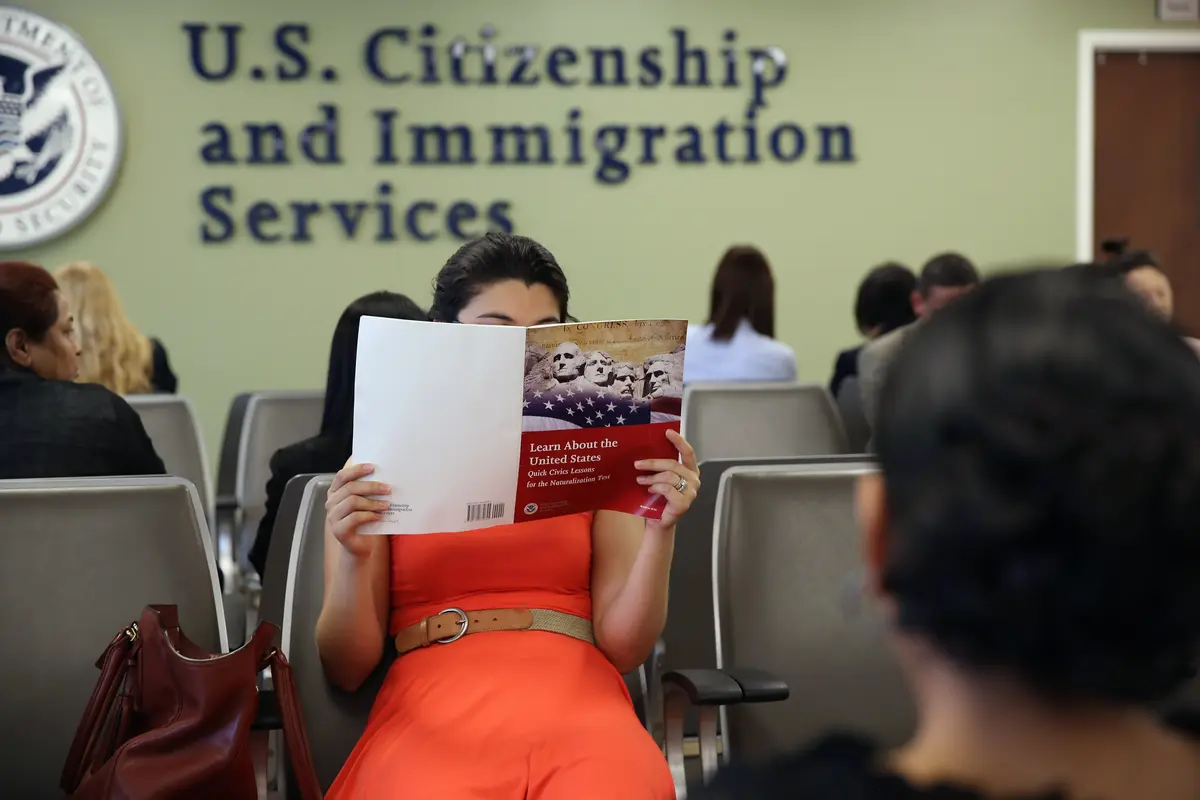
A Colombian immigrant studies ahead of her citizenship exam at the U.S. Citizenship and Immigration Services Queens office in New York City on May 30, 2013. John Moore/Getty Images
The Trump administration will require some prospective immigrants to post a bond to receive a U.S. visa in a move designed to ensure those who come to America have the financial means to support themselves without relying on public assistance.
The requirement is part of a pilot program overseen jointly by the State Department and the Department of Homeland Security. It applies to specific immigrant visa applicants from the Dominican Republic who were found ineligible on public charge grounds. Consular officers in Santo Domingo began showing the bond option this week to select applicants. Officials have suggested the strategy could later be implemented in other countries.
Earlier this week, the department made permanent another visa bond program for tourists and those traveling for business. This program, which affects travelers from 50 countries, requires payments of up to $20,000 to secure temporary B visas.
Under longstanding authority in the Immigration and Nationality Act, consular officers may invite applicants deemed likely to become a public charge—meaning they are expected to rely primarily on government assistance for support—to post a bond with the U.S. Citizenship and Immigration Services (USCIS), which serves as a concrete demonstration that the applicant has access to funds to be self-supporting after arrival.
“Immigrating to the United States is a privilege, not a right,” the State Department stated. “Those who wish to obtain a U.S. immigrant visa must be capable of demonstrating that they will be a benefit—rather than a burden—to our nation.”
The department has introduced a procedure allowing officers to require certain applicants to request a public charge bond with USCIS. This option is currently used under the pilot. If the bond is approved and the applicant otherwise qualifies, the officer may issue a visa that had been rejected under the public charge provision of the law.
Bond amounts are set on a case-by-case basis, with officers weighing the individual circumstances of each applicant rather than applying a single fixed figure. Some cases reviewed this week have drawn amounts in the range of $100,000 to $250,000. The minimum under regulation remains $1,000. No upper ceiling is fixed in the statute. Applicants cannot initiate the bond process themselves.
The bond is in place until USCIS determines it can be canceled, which may happen after five years of lawful permanent residence if the individual has not received public cash assistance for income or long-term institutional care at public expense. A breach of the bond terms can result in forfeiture of the funds.
The pilot builds on earlier steps the administration has employed to enforce the public charge ground of inadmissibility. In July, State Department spokesperson Tommy Pigott said the department was working “to introduce commonsense and effective procedures to enforce U.S. laws, restore the integrity of our immigration system, and protect American public benefits programs from the financial burden of foreigners who arrive with major, expensive medical or other needs.”
He added that the department was exploring use of long-standing Immigration and Nationality Act authority “to require certain visa applicants—those who are otherwise ineligible for a visa because they are likely become a public charge—to post a bond as a way to demonstrate they have access to the funds needed to support themselves.”
The Dominican Republic was selected for the initial phase due to the amount of immigrant visa processing managed by the U.S. Embassy in Santo Domingo.


