By The Free Press | Created at 2026-06-15 10:20:50 | Updated at 2026-06-15 18:05:08
8 hours ago
By The Free Press | Created at 2026-06-15 10:20:50 | Updated at 2026-06-15 18:05:08
8 hours ago
Produced by ElevenLabs using AI narration
It’s Monday, June 15. This is The Front Page, your daily window into the world of The Free Press—and our take on the world at large. Today: Tyler Cowen on what the Anthropic-Trump administration showdown is really about. Joe Nocera on why SpaceX stock went to the moon. And much more.
But first: Trump declares peace.
“The Deal with the Islamic Republic of Iran is now complete. Congratulations to all!” So wrote President Donald Trump on Truth Social on Sunday evening.
According to the president, “This Great Deal will bring Peace and Security to the whole region.” The deal is really a memorandum of understanding to negotiate the terms of a lasting peace in the next 60 days. The agreement is set to be signed Friday, and while its terms have not been published, the fighting will stop and Iran will open the Strait of Hormuz.
“Ships of the World, start your engines,” wrote Trump. “Let the oil flow!”
The deal may be a welcome reprieve for the global economy—but what will it really entail? For an initial reaction to this important moment, we turn to Eli Lake. His advice: “Don’t break out the ticker tape just yet.”
Read his full analysis on an agreement he thinks does little more than “temporarily solve a problem Trump’s war helped create”:
Whether or not it delivers lasting peace—let alone peace on favorable terms to the U.S. and its allies—this agreement is undoubtedly a crucial moment in this conflict. We used the occasion to ask a range of analysts and thinkers a big-picture question: Has this war been worth it? To find out how Aaron MacLean, Elliott Abrams, Martin Gurri, Sohrab Ahmari, Michael Oren, Roya Hakakian, and Elliot Ackerman answered, click below:

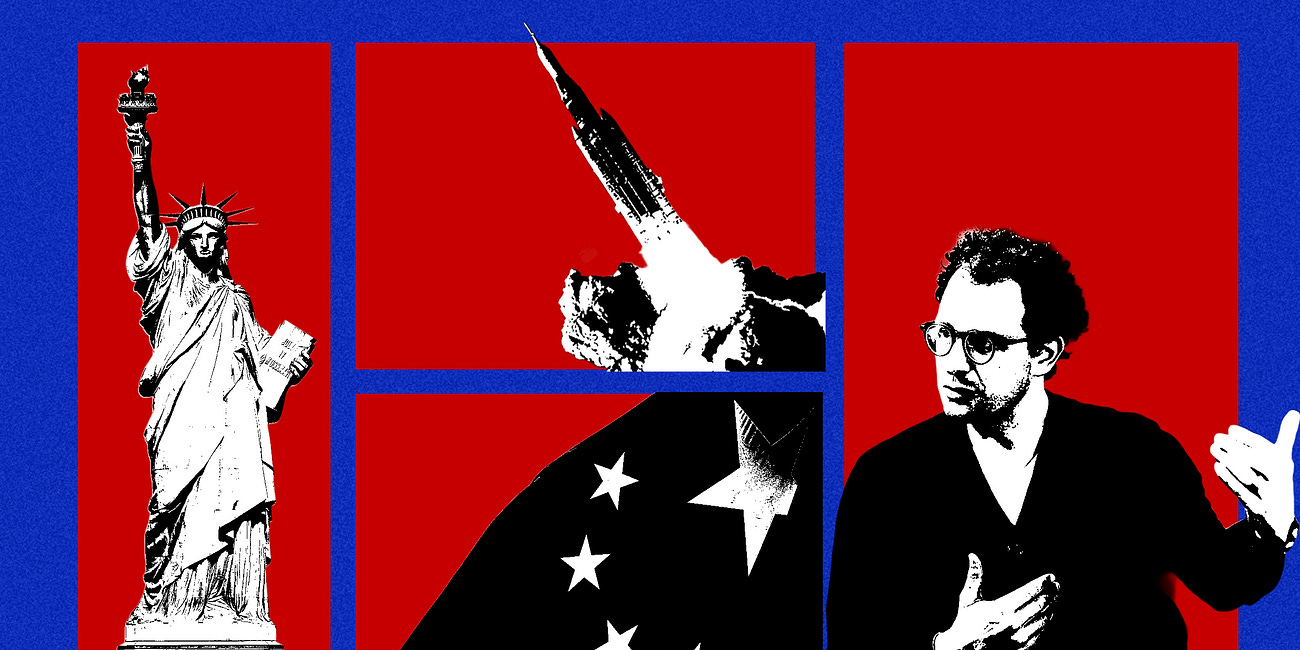
The U.S. government just pulled the plug on Anthropic’s most powerful AI model, ordering it withheld from non-American users after saying it had been “jailbroken”—a claim the company disputes. Tyler Cowen argues the move is a preview of something far more consequential: AI nationalism. As America wields its AI kill switch, the rest of the world is starting to ask whether it can afford to depend on American-made AI at all.

The Knicks just won their first NBA championship since 1973, and New Yorkers poured into the streets to celebrate—with friends, with neighbors, with anyone. Our resident happiness expert Arthur Brooks was watching these scenes and taking notes. The social science, says Arthur, backs up what the celebrations suggest—sports fans are happier. They’re also more civic-minded, and better at crossing political divides. Even if, as with the Knicks, they have to endure decades without a trophy. Read Arthur on why rooting for a team is good for you—and the country.
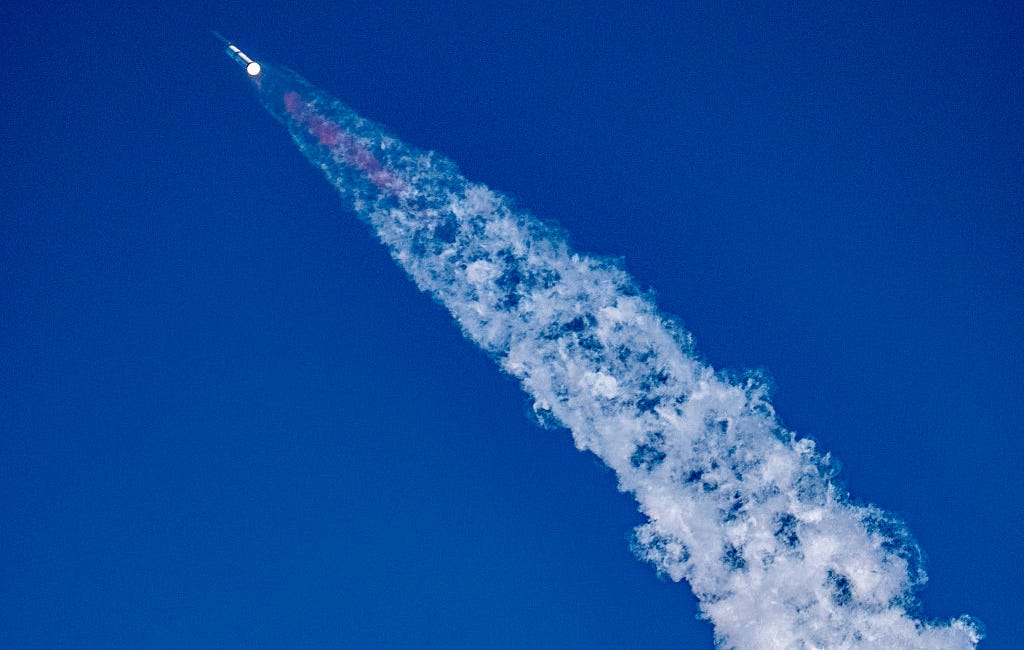
Elon Musk’s SpaceX went public this week at a $2 trillion valuation, despite $5 billion in losses last year and a prospectus that promises a “a lunar economy.” Joe Nocera used to roll his eyes at stocks like this, but in this case, he has a theory. And it’s all about the brilliant entrepreneur at the heart of the story.
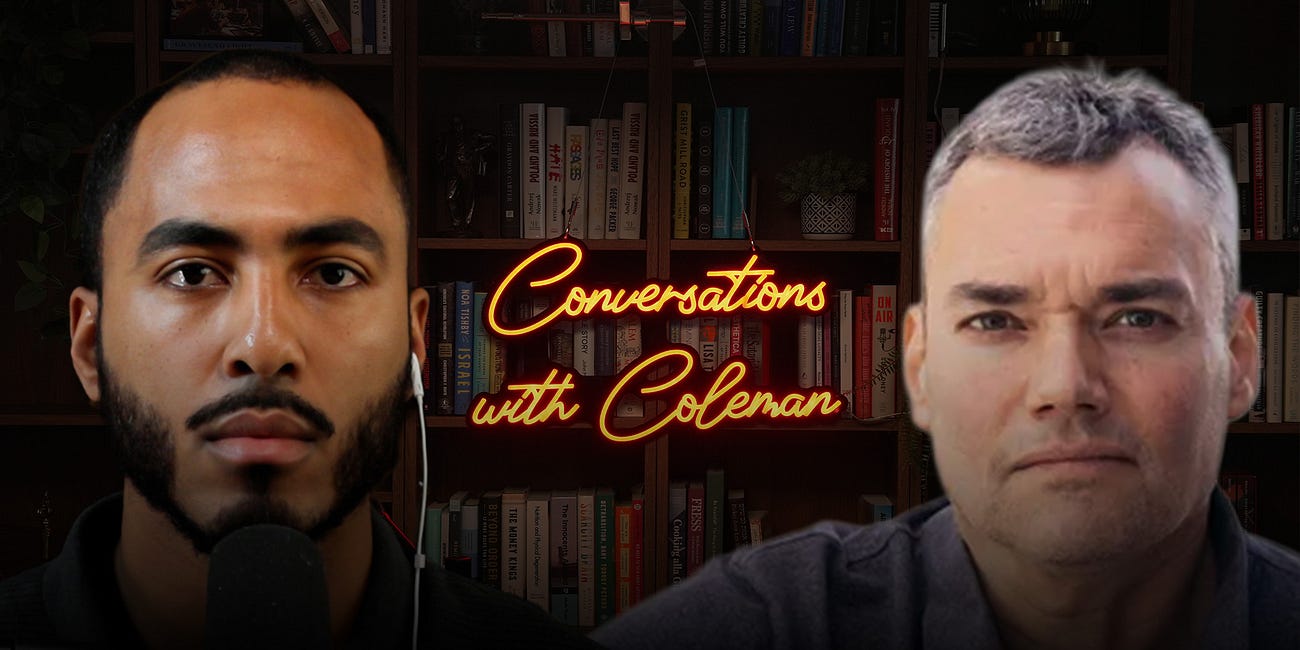
Peter Beinart grew up a committed Zionist—but he’s not anymore. The American Jewish writer is now a vicious critic of Israel, promoting some of the most extreme arguments against the Jewish state. Beinart is this week’s guest on “Conversations with Coleman.” Coleman debates the author of “Being Jewish After the Destruction of Gaza” on the right of return, the one-state solution, whether Iran poses an existential threat to Israel, and much else.
With America’s 250th birthday just a few weeks away, we’re honoring some of the Great Americans who shaped it. Today, Mark Gimein remembers Edwin Land, the Polaroid founder who, as Mark writes, “was part scientist, part inventor, and part showman.” He lived by two mantras: “Never go to sleep with a hypothesis untested,” and “every problem can be solved with the things in the room at the time.”
MORE FROM THE FREE PRESS


THE NEWS
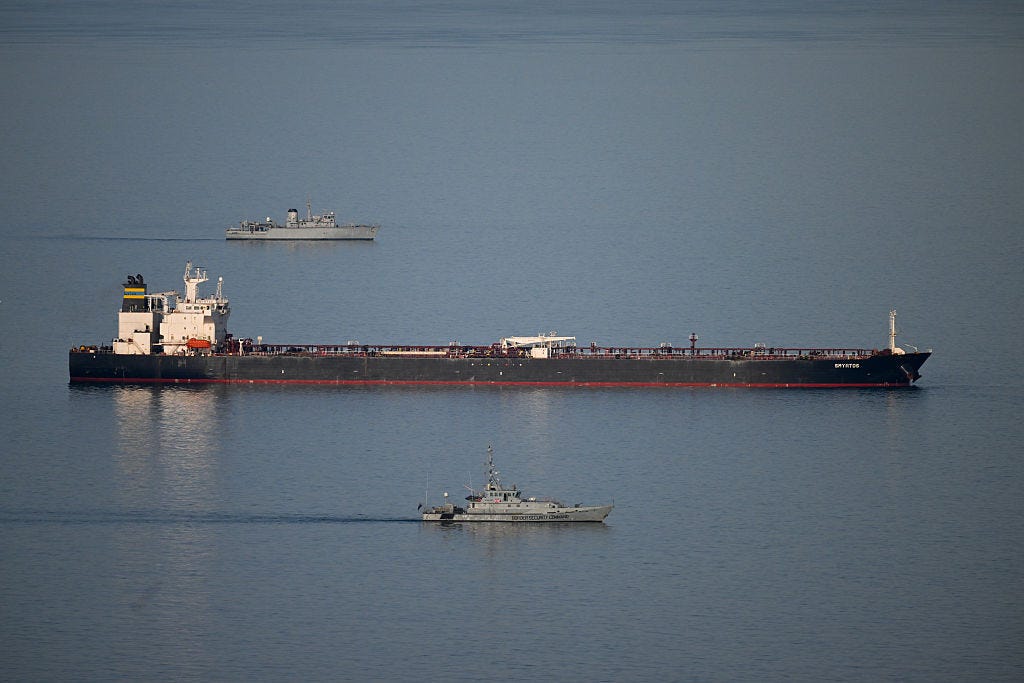
British Royal Marines seized a Russian shadow fleet oil tanker in the English Channel on Sunday—the first time Britain has acted alone to board one of the vessels Russia uses to secretly move fuel and dodge sanctions. The shadow fleet, which Britain says numbers more than 700 ships, carries about three-quarters of Russia’s sanctioned oil and serves as a key economic lifeline for the Kremlin.
Trump endorsed Rep. Mike Collins in Georgia’s Republican Senate primary runoff yesterday, a blow to rival Derek Dooley, who has the backing of Governor Brian Kemp. Tuesday’s winner will take on Democratic senator Jon Ossoff in one of the most competitive Senate races in the country.
Workers removed Trump’s name from the Kennedy Center’s facade early Saturday morning, complying with a court order requiring the change after a federal judge ruled that only Congress, not the center’s board, has the authority to rename the landmark.
Senator Mitch McConnell was hospitalized on Sunday, his spokesperson confirmed, offering no details about his condition beyond saying he is “receiving excellent care.” The 84-year-old Kentucky Republican stepped down from Senate leadership in January and has had a series of health scares in recent years.
Swiss voters rejected a referendum Sunday that would have capped the country’s population at 10 million and potentially forced the government to pull out of a free movement treaty with the European Union. The measure, backed by the country’s largest right-wing party, failed by about 10 percentage points—a wider margin than most analysts expected.
Trump held separate calls with Russian president Vladimir Putin and Ukraine’s president Volodymyr Zelensky ahead of this week’s G7 summit in France. Putin suggested Zelensky come to Moscow for a meeting—an offer the Ukrainian president has repeatedly turned down—while Zelensky said he and Trump agreed to continue peace discussions in person at the G7.
All 12 people aboard a skydiving plane were presumed dead after it crashed shortly after takeoff Sunday near Butler, Missouri. The aircraft failed to gain altitude, made a sharp turn, and went down along a highway. Some family members of those on board witnessed the crash.