 By Miltary.com | Created at 2026-10-09 20:36:01 | Updated at 2026-10-09 21:03:04
40 minutes ago
By Miltary.com | Created at 2026-10-09 20:36:01 | Updated at 2026-10-09 21:03:04
40 minutes ago
The Trump administration sanctioned the International Criminal Court (ICC) on Friday, expanding restrictions against individual officials into financial measures targeting the institution.
Eight U.S. allies jointly rebuked the decision, exposing a divide over protecting military personnel from potential international prosecution and preserving accountability for atrocities.
The U.S. Treasury Department added the Hague-based court to its sanctions list under President Donald Trump’s 2025 sanctions order. The ICC said the designation follows sanctions against 13 court officials.
“We will ban transactions with this rogue court, cutting off their resources and crippling its ability to operate against us,” Secretary of State Marco Rubio said in his announcement.
 The ICC
Rubio also warned: “Either the ICC will end its threats, or we will end the ICC.”
The court rejected the action as an attempt to obstruct justice and urged member countries to protect its operations.
Restrictions Include Substantial Exceptions
The designation operates under Executive Order 14203, signed Feb. 6, 2025.
It freezes the court’s assets held in the United States or controlled by U.S. citizens, permanent residents or businesses, and generally bars them from doing business with the court unless an exception applies. It also permits sanctions against certain foreign people or entities providing material support to designated targets or specified ICC activities.
However, the Treasury issued four licenses allowing substantial activity to continue.
General License 13 authorizes transactions necessary to maintain or wind down ICC operations, contracts and agreements through 12:01 a.m. EDT April 7, 2027. It covers member countries’ payments, salaries, health insurance, rent, utilities and routine commercial services. It does not generally authorize dealings involving separately sanctioned officials.

Secretary of State Marco Rubio, speaks during an event at the renamed Donald J Trump Institute of Peace, Thursday, Sept. 3, 2026, in Washington. (AP Photo/Jacquelyn Martin)
A software license permits specified telecommunications, internet communications and enterprise software services, including payroll, cybersecurity and data storage.
Other exceptions cover specified pension transactions and services necessary for the continued detention, health and welfare of listed detainees. The executive order separately exempts transactions for official federal government business conducted by employees, grantees or contractors.
The designation does not immediately shut off every American service the court uses. Its practical impact will depend on those authorizations and providers’ willingness to continue permitted business.
The Dispute Over American Troops
The ICC prosecutes individuals for genocide, crimes against humanity, war crimes and, under additional jurisdictional conditions and aggression. It differs from the International Court of Justice, which resolves disputes between countries and issues advisory opinions.
Neither the United States nor Israel have joined the Rome Statute, the ICC’s founding treaty. Trump’s sanctions order argues that the court consequently lacks jurisdiction over their personnel.
Article 12 permits jurisdiction over relevant crimes committed on a member country’s territory, including alleged crimes by citizens of nonmember countries. Nonmembers can also accept jurisdiction, and a U.N. Security Council referral provides another route. Nonmembership alone, therefore, does not foreclose jurisdiction under the treaty.
The current confrontation centers heavily on the ICC’s cases involving Israel’s war in Gaza.
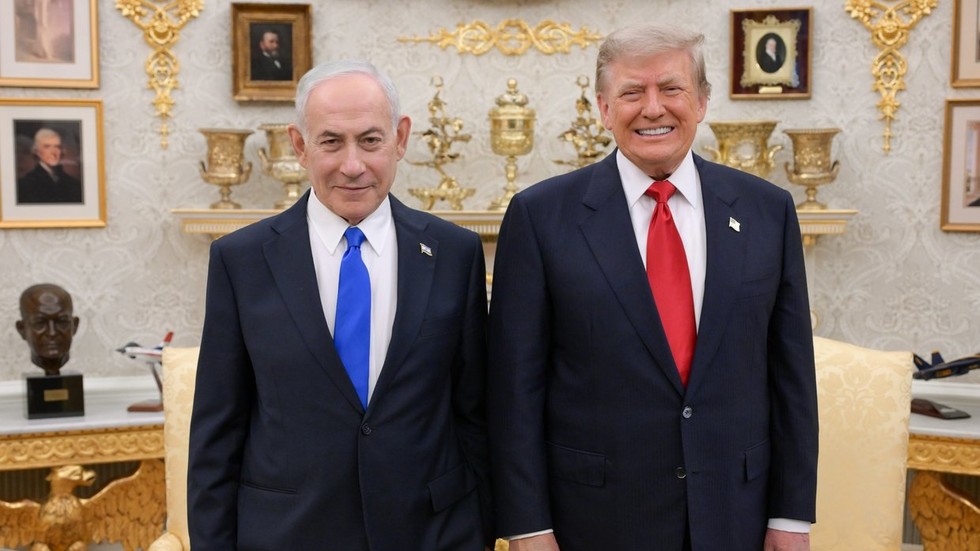
In November 2024, the court issued arrest warrants for Israeli Prime Minister Benjamin Netanyahu and former Defense Minister Yoav Gallant over alleged war crimes and crimes against humanity, including starvation as a method of warfare.
Washington subsequently sanctioned court officials involved in the Gaza proceedings. The warrants reflect reasonable grounds to believe crimes occurred, not convictions.
Ramifications of ICC Attacks
Potential scrutiny also extends to American officials.
Democracy for the Arab World Now submitted a request to the ICC prosecutor Jan. 24, 2025, seeking an investigation into former President Joe Biden, former Secretary of State Antony Blinken, and former Defense Secretary Lloyd Austin over alleged assistance to Israeli war crimes and crimes against humanity in Gaza.
The group publicly announced the submission Feb. 24, 2025. Its request presents allegations and legal arguments, not a court finding or confirmation that the prosecutor opened cases against those officials.
 Palestinians save their belongings from buildings destroyed by an Israeli airstrike late Thursday in Gaza city, Friday, Oct. 9, 2026. (AP Photo/Jehad Alshrafi)
The sanctions create a striking contrast with Trump’s pursuit of domestic investigations into his predecessors and political opponents. Trump ordered an investigation into Biden’s presidential actions in June 2025 and later pressed for prosecutions of other political adversaries.
Yet, his sanctions policy seeks to prevent an international court from prosecuting any American—a position that directly shields Biden administration officials from that forum. The administration’s stated distinction is jurisdiction: it supports American authorities pursuing cases while rejecting the ICC’s authority over Americans.
Although Israel and the United States never joined the ICC, Palestine did. In 2021, the court affirmed its jurisdiction over Gaza and the West Bank, including East Jerusalem.
That allows the ICC to investigate crimes committed there even when the home country of the accused person never joined. Whether alleged assistance provided from elsewhere falls within its jurisdiction requires a separate assessment of the conduct and its connection to those crimes.
The Iran War Impact
The Iran war presents a different jurisdictional obstacle.
Iran, United States and Israel are not parties to the Rome Statute. Alleged crimes committed in Iran by American or Israeli nationals therefore lack the ordinary territorial or nationality basis for ICC jurisdiction.
A Security Council referral or Iran’s acceptance of jurisdiction could provide a route for investigating covered war crimes, but allegations alone do not give the court authority.
Even where the ICC has jurisdiction, it operates as a court of last resort. Under Article 17, genuine domestic investigations or prosecutions of the same case generally prevent the ICC from proceeding. This principle, called complementarity, also recognizes genuine investigations that conclude prosecution is unwarranted; a conviction is not required.

FILE - Israel's Prime Minister Benjamin Netanyahu listens during a news conference with President Donald Trump at Mar-a-Lago, Dec. 29, 2025, in Palm Beach, Fla. (AP Photo/Alex Brandon, File)
For Americans, that means the ICC can intervene when U.S. authorities leave a case unaddressed or are unwilling or unable to handle it genuinely, provided the court’s other requirements are met.
American authorities must genuinely address the particular case; proceedings designed to shield someone from responsibility would not provide that protection.
A Longstanding Position, Different Methods
Congress enacted the American Servicemembers’ Protection Act in 2002.
Its release provision authorizes the president to use all necessary and appropriate means to free covered American and allied personnel detained by, on behalf of or at the ICC’s request. It also authorizes legal assistance.
Trump imposed sanctions during his first term over the Afghanistan investigation. President Joe Biden revoked those measures in April 2021 while preserving U.S. jurisdictional objections, calling sanctions ineffective and inappropriate.
Allies Rebuke Washington
Canada, Denmark, France, Germany, Italy, Japan, the Netherlands and Britain issued a joint statement saying they “regret and strongly disagree” with the sanctions announcement.
They warned of significant consequences for the court, its employees and their families, and pledged to help sustain its work.
Norway separately condemned the escalation and said countries were assessing how to protect the institution.
The Netherlands has discussed using the EU’s blocking statute, which could prohibit European companies from complying with specified American sanctions. If extended, it could leave providers facing competing legal requirements.
The disagreement also complicates accountability for foreign adversaries. U.S. law permits assistance to international efforts to prosecute foreign nationals accused of atrocity crimes, including figures tied to Middle Eastern conflicts and terrorist groups, and specifically authorizes support for ICC cases involving Ukraine.
Washington permits international accountability when it serves U.S. interests while seeking to shield American and covered allied personnel from the same court.
Institutional sanctions can impede that work alongside investigations Washington opposes. They also create diplomatic friction with defense partners committed to sustaining the court, even without altering those countries’ military commitments.