 By The War Zone | Created at 2026-06-17 17:25:47 | Updated at 2026-06-17 19:36:37
2 hours ago
By The War Zone | Created at 2026-06-17 17:25:47 | Updated at 2026-06-17 19:36:37
2 hours ago
The TWZ Newsletter
Weekly insights and analysis on the latest developments in military technology, strategy, and foreign policy.
Ukraine is increasingly emerging as a potential player in Europe’s race to rebuild its long-range conventional strike capabilities. New partnerships centered on the Ukrainian Flamingo and Neptune cruise missiles underscore how the European defense industry is moving from supplying Kyiv to co-developing and manufacturing combat-proven Ukrainian missile technology for NATO’s own future arsenal.
Diehl Defense recently confirmed that it plans to launch production of Ukraine’s Flamingo cruise missile in Germany. Diehl’s chief executive, Helmut Rauch, said that his company was planning talks in the coming weeks with Fire Point, the manufacturer of the Flamingo. Previously, Diehl had signed a technology agreement with Fire Point but had not disclosed any details.
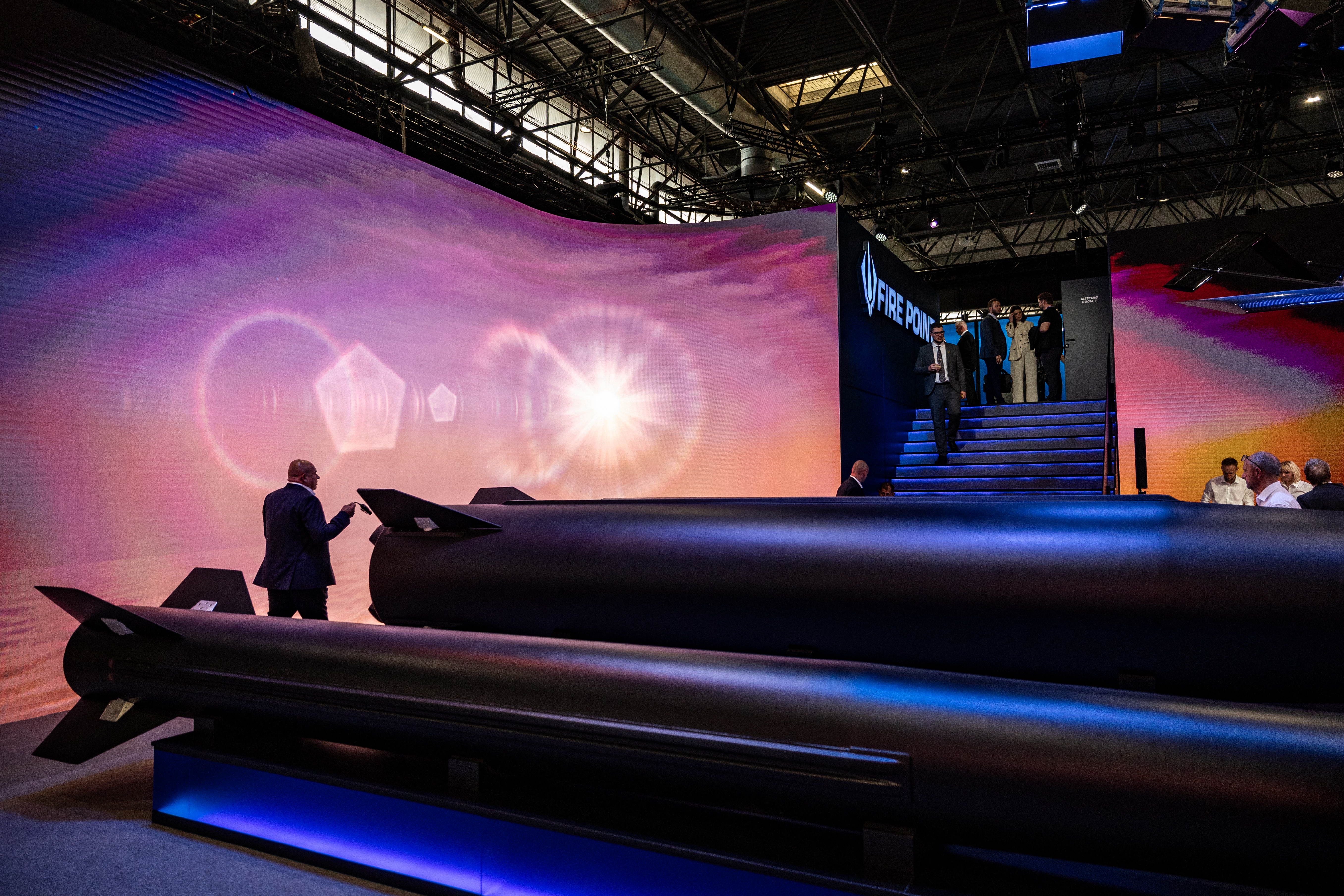 Visitors at the stand of Ukrainian defense technology company Fire Point during the Eurosatory defense and security trade fair, at the Paris-Nord Villepinte Exhibition Center in Villepinte, north of Paris on June 15, 2026. Photo by Guillaume BAPTISTE / AFP
 Meanwhile, another European missile manufacturer, MBDA, the largest company of its kind in Europe, has signed a memorandum of understanding (MoU) with the Ukrainian defense firm Luch to expand collaboration on deep-strike capabilities by focusing on the Neptune family of cruise missiles. Under the agreement, MBDA and Luch will work together on the so-called Neptune 2 missile, via what the European missile house describes as a process of “disruptive innovation.”
Reflecting this broader trend, during a visit to Kyiv last month, German Minister of Defense Boris Pistorius noted Ukraine’s “remarkable” wartime technological advances and said that Berlin was looking at joint ventures that included long-range drones, air defenses, and electronic warfare.
 German Defense Minister Boris Pistorius visits the command post of a Ukrainian Army combat and reconnaissance drone unit in Dnipro during a visit to Ukraine last month. Photo by Kay Nietfeld/picture alliance via Getty Images
 Looking at these Ukrainian cruise missiles in more detail, Luch’s Neptune first emerged as an anti-ship missile, based on the Soviet-era Kh-35, known to NATO as the SS-N-25 Switchblade in its surface-launched form. The Neptune came to prominence when it was used to sink the Russian Navy’s Slava class cruiser Moskva in 2022.
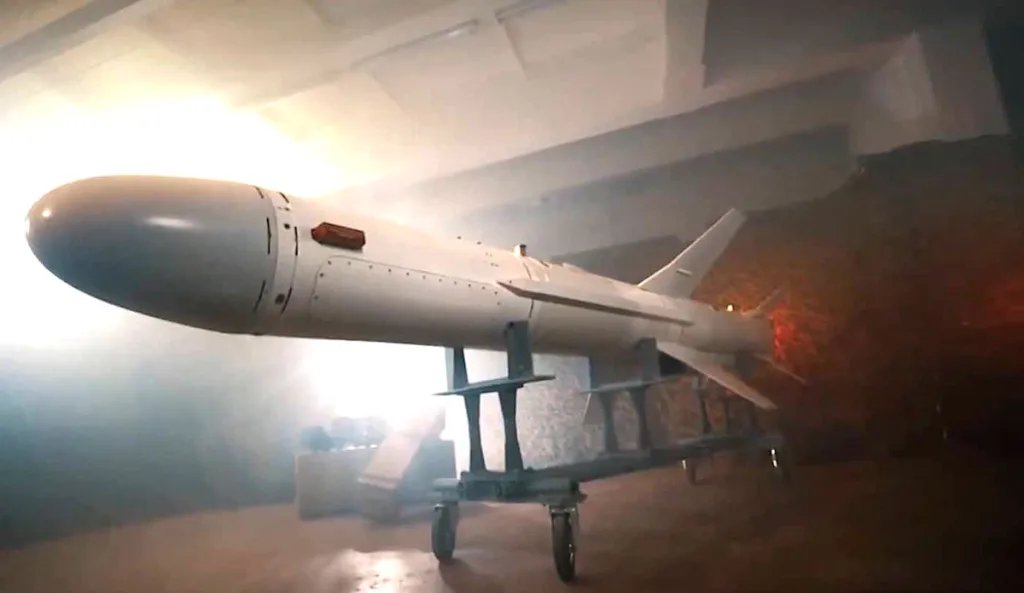 The original configuration of the Neptune missile. Office of the President of Ukraine Volodymyr Zelensky
 Ukraine reportedly began work on a new land-attack version of the Neptune in 2023. A Ukrainian defense official told TWZ that this version has a range of up to 225 miles (360 kilometers). This compares to a reported maximum range of around 190 miles (300 kilometers) for the anti-ship version.
Subsequently, Ukraine introduced the extended-range Long Neptune, which Ukrainian President Volodymyr Zelensky has stated has a range in the region of 620 miles (1,000 kilometers). The Long Neptune features an extended body to accommodate additional fuel for its turbofan engine. It has reportedly been used against dozens of targets inside Russia.
The land-attack versions of the Neptune reportedly use a GPS-assisted inertial navigation system (INS) and an imaging infrared sensor in place of the anti-ship missile’s active radar seeker.
At least one more version of the Neptune has also been developed, this one apparently featuring fuel tank ‘bulges’ for increased range. As you can read about here, this model appears to be something like an intermediate-range version, falling between the original land-attack Neptune and the Long Neptune.
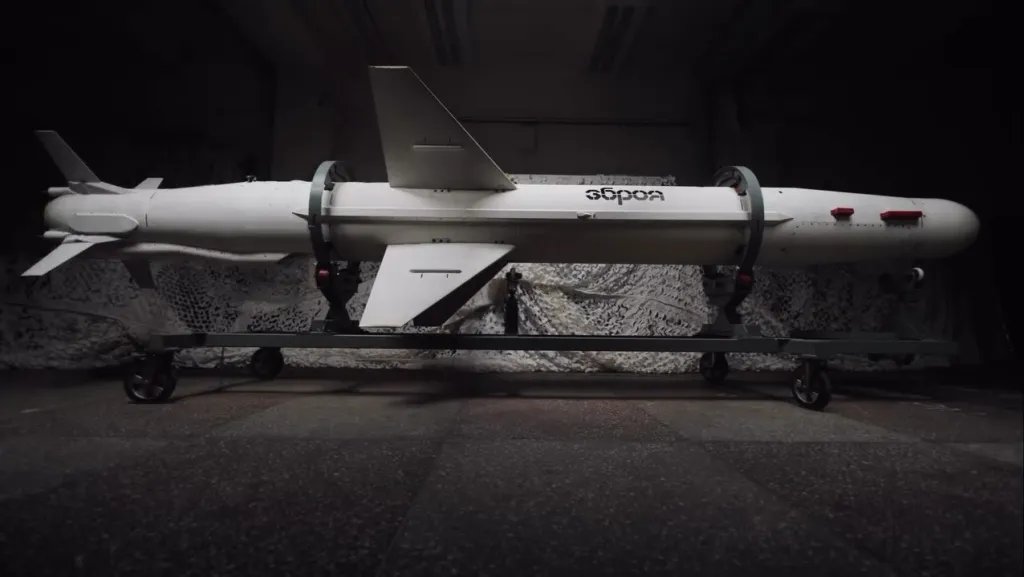 An official photo of the Long Neptune cruise missile. Government of Ukraine
 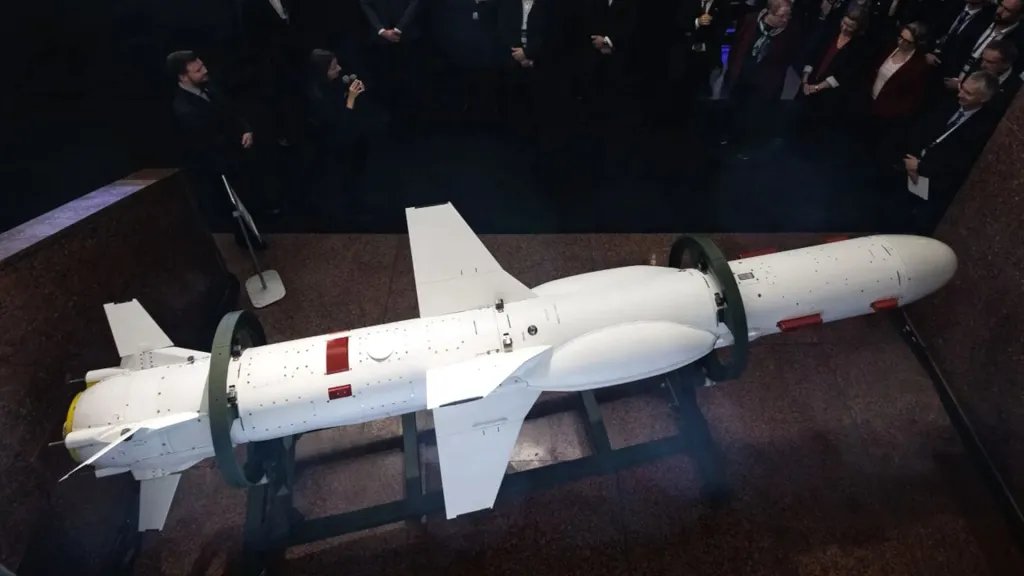 The ‘bulged’ Neptune variant. Denys Shmyhal/Ukrainian Ministry of Defense
 Turning to the Flamingo, also known as the FP-5, this was designed from the ground up to hit targets deep within Russia, the missile having a reported range of 1,864 miles (3,000 kilometers). The Flamingo is significantly bigger than the Neptune series, being launched from rails mounted on a trailer, rather than from canisters on the flatbed of a truck.
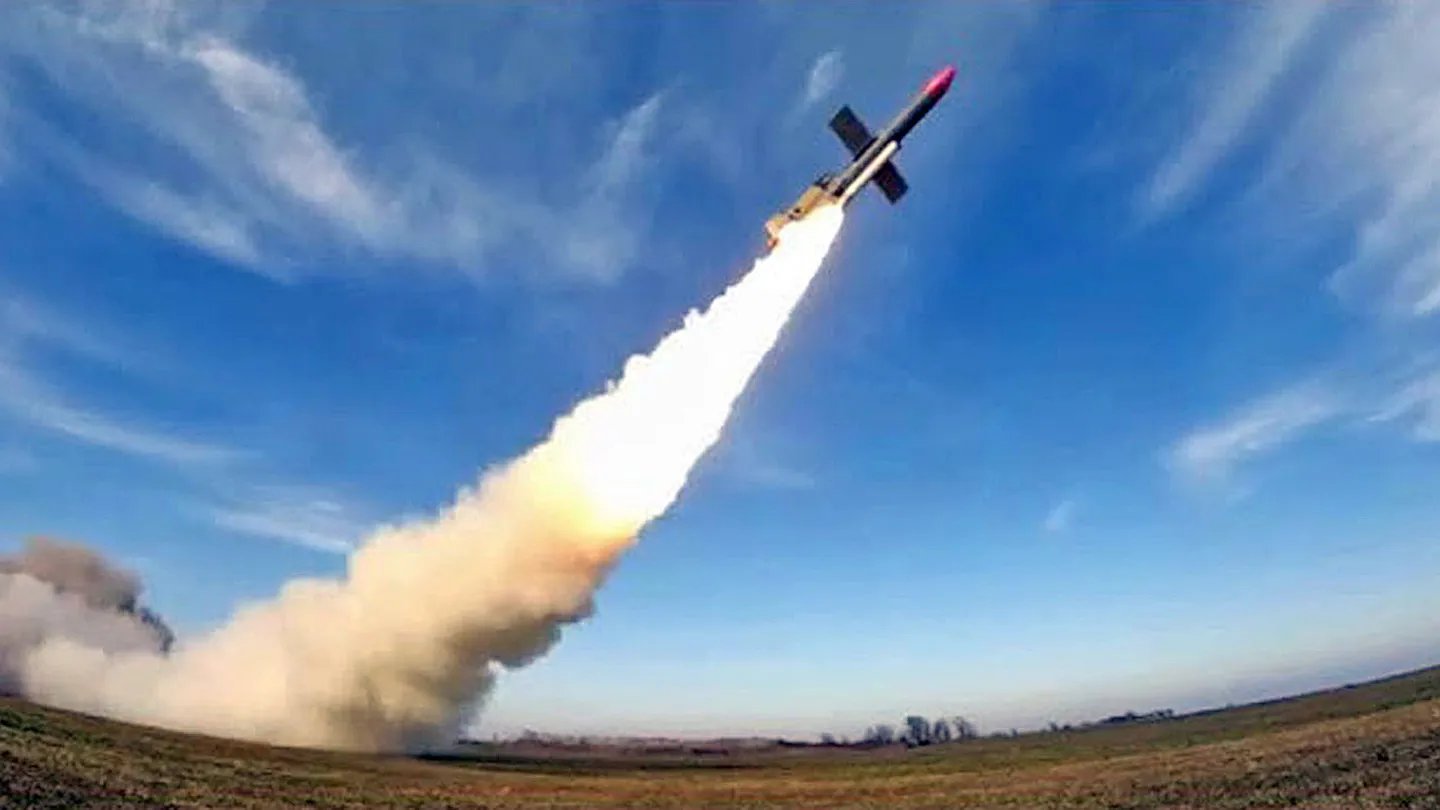 Launch of a Flamingo long-range cruise missile. via Ukrainska Pravda
 The Flamingo also features a notably larger warhead, reportedly weighing around 2,205 pounds (1,000 kilograms).
A video of the Flamingo cruise missile in action:

Випробувальний пуск ракети “Фламінго"
In terms of guidance, the Flamingo is said to use a combination of methods, including various types of satellite navigation. An underlying inertial navigation system is likely to be present. The missile is powered by an AI-25 turbofan engine, a type produced in Ukraine for military and civilian aircraft, including the L-39 Albatros trainer and the Yak-40 feederliner.
Ukraine’s development of increasingly long-range land-attack cruise missiles is driven by the requirement to strike targets deeper inside Russia. Kyiv has received standoff missiles from its allies, including the air-launched Storm Shadow and SCALP-EG from the United Kingdom and France, respectively, as well as the U.S.-supplied Army Tactical Missile System (ATACMS) short-range ballistic missile. However, these are not available in large numbers and are limited by restrictions imposed upon their use. Additionally, none of them have the kind of range or warhead capacity offered by the Flamingo.
Kyiv has long been campaigning to receive Tomahawk cruise missiles from the United States, but so far, Washington has refused these requests, with U.S. President Donald Trump saying he is “not looking to see an escalation” in the conflict. These highly accurate missiles would be able to hit targets roughly 1,000 miles (1,600 kilometers) from Ukraine’s borders.
As well as cruise missiles, Ukraine has also developed a huge variety of long-range one-way-attack drones, and other designs that blur the line between long-range kamikaze drones and cruise missiles, including Palianytsia, Peklo, and Trembita.
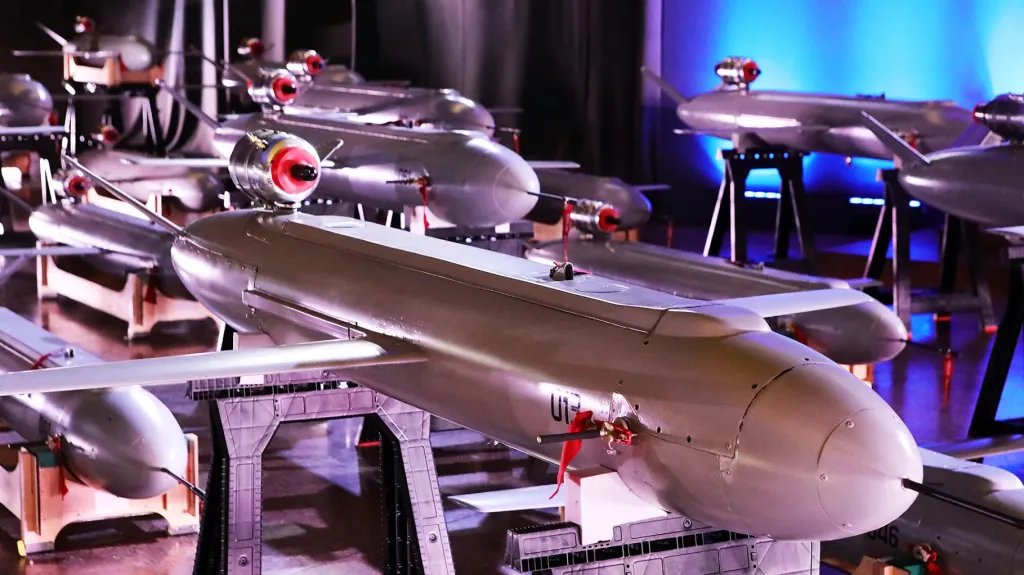 Ukrainian Peklo ‘missile-drones.’ Ukrinform/NurPhoto via Getty Images
 Kyiv has also been working on developing new ballistic missiles. However, the longest-range one of these, as far as is known, is the Hrim-2, which can hit targets at 174 miles (280 kilometers) or possibly up to 310 miles (500 kilometers).
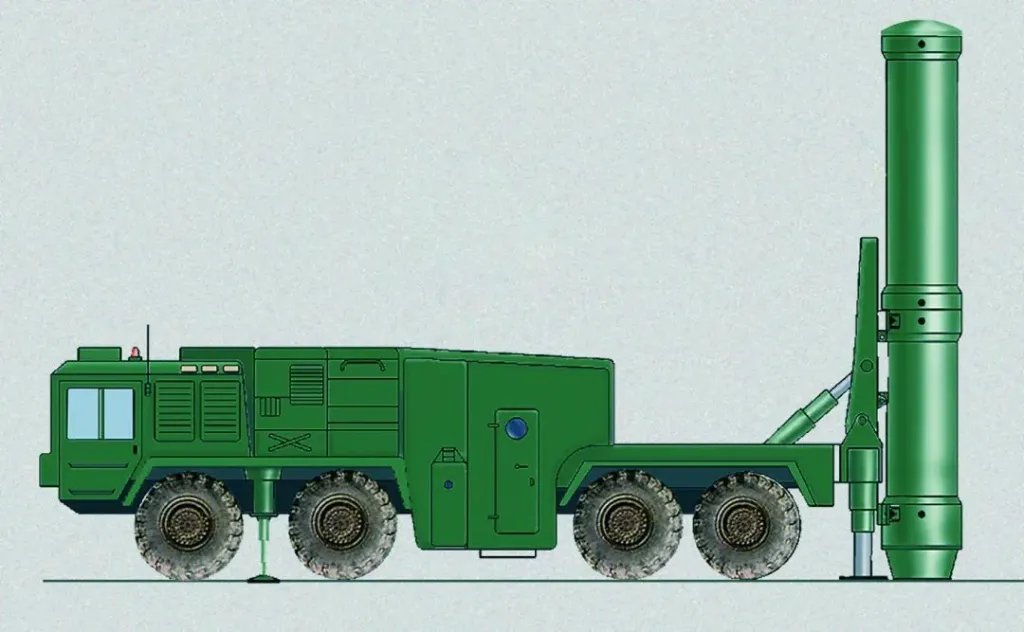 An artist’s rendition of the Hrim-2 TEL, as offered for export by Ukraine, back in 2015. Ukroboronexport
 Meanwhile, Fire Point has developed the FP-7 ballistic missile, a weapon with a stated range of around 124 miles (200 kilometers), and a warhead of approximately 331 pounds (150 kilograms).
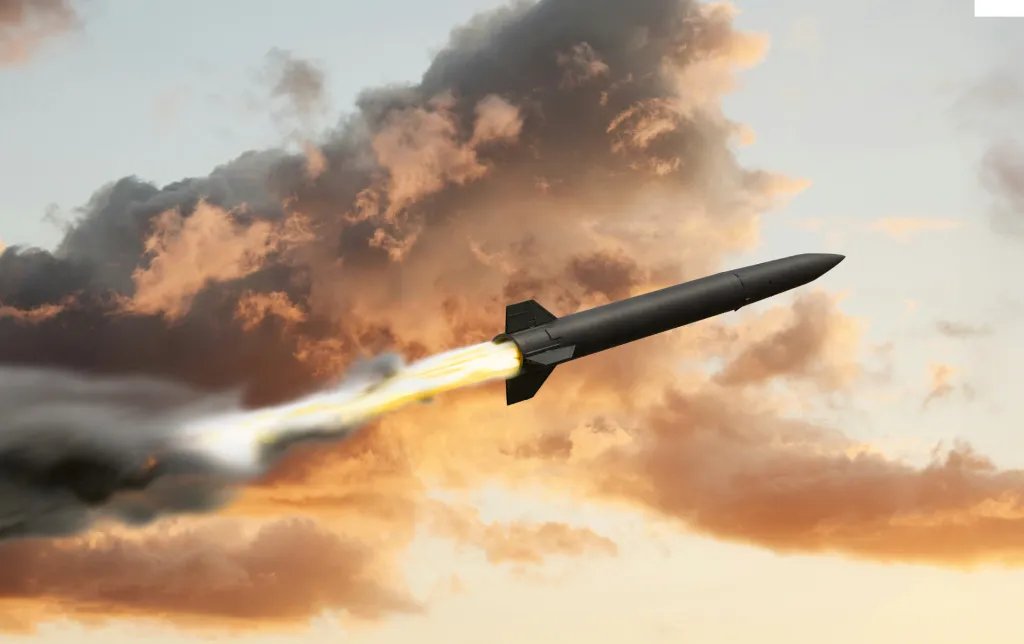 A rendering of the FP-7 surface-to-surface ballistic missile. Fire Point
 In both cases, however, these ballistic missiles lack true strategic reach. This would be partially addressed by the FP-9, which Fire Point aims to start testing this summer, and which is expected to have a range of 530 miles (855 kilometers).
Ukraine’s efforts to develop new and more destructive missiles, and to build them at scale, come as Europe’s NATO members also increasingly look to field weapons in this class.
The scale factor is an important one, since Ukrainian wartime weapons development stresses equipment that can be produced rapidly, in large numbers, and at a lower cost point. Fire Point has said that it aims to increase Flamingo production to a daily rate of at least seven missiles by October of this year. This would translate to 2,555 built annually. It remains questionable whether this is a realistic target, but the prospect of additional production lines elsewhere in Europe would change things.
Additional details have been released about Ukraine’s new domestically-produced long-range cruise missile, dubbed the FP-5 “Flamingo” which is manufactured by Fire Point. According to an interview with Chief Technical Officer Iryna Terekh, the “Flamingo” has entered serial… pic.twitter.com/2D5GisrmFP
— OSINTdefender (@sentdefender) August 21, 2025At the same time, it should be noted that the Flamingo and Neptune cruise missiles, for all their capabilities, are not especially sophisticated. They both fly at subsonic speed and do not appear to have any attempts at signature control. While they are certainly destructive, they are far from immune to interception.
Their effectiveness can be increased by using them in missile barrages and combined with drones and potentially decoys, to overwhelm air defenses. Here, too, is an area in which Ukrainian experience could help, creating a mix of high-end missile capabilities with combat mass from lower-end drones.
With this in mind, it is perhaps not surprising that Diehl is already looking at how it can improve the Flamingo.
Diehl’s Helmut Rauch has said that his company could outfit the Flamingo with a much more advanced seeker, leveraging the German firm’s experience in this area.
An unverified video that appears to show a Flamingo cruise missile strike on a military factory in Cheboksary in western Russia:
Similarly, MBDA’s expertise in missile development and production could potentially be incorporated in future versions of the Neptune.
Either way, Ukraine would benefit from advanced technologies that otherwise might not be immediately accessible.
What is clear is that European NATO allies are increasingly looking to address their lack of land-based long-range strike capabilities. As well as facing an increasingly belligerent Russia equipped with an expanding arsenal of long-range missiles, Europe is also confronting the prospect of its U.S. ally being unwilling to provide the same kinds of capabilities.
Ukraine is not alone in being unable to secure U.S.-made Tomahawk cruise missiles.
Berlin, in particular, is looking for alternatives to the U.S. Army long-range fires battalion equipped with various conventionally armed standoff missiles — including Tomahawk — that was expected to be deployed in Germany on a rotational basis, starting this year. The U.S. move was an apparent response to disagreements with Germany over the Iran war as well as ongoing tariff tensions.
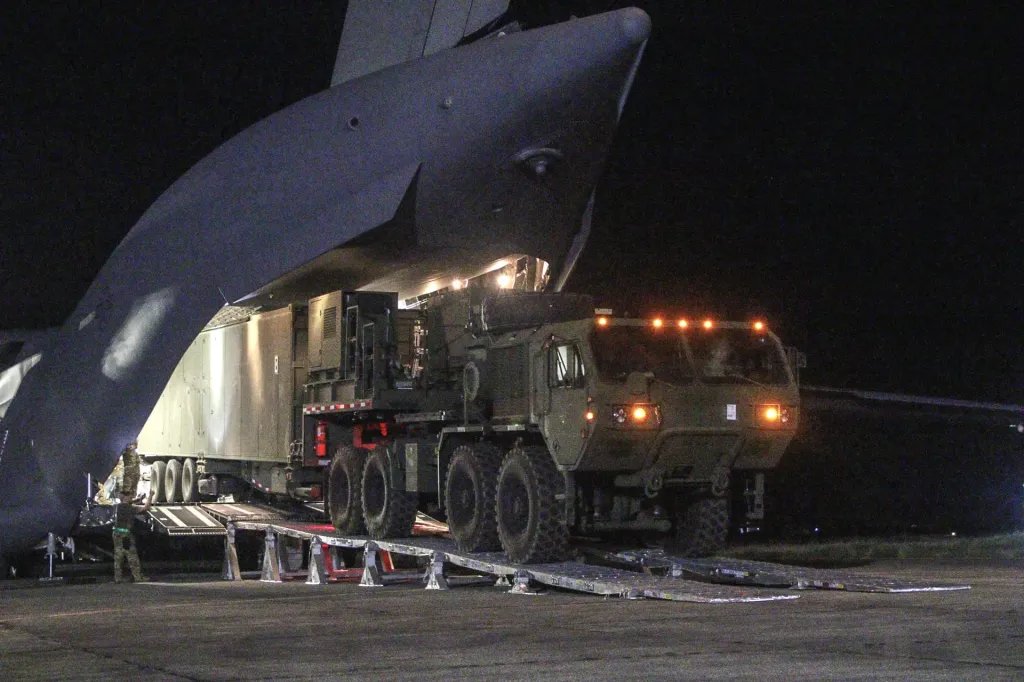 U.S. personnel unload a trailer-based launcher associated with the Typhon weapon system from a C-17A transport aircraft in the Philippines in 2024. The Typhon was to be deployed in Germany as part of a U.S. Army long-range fires battalion, the 2nd Multi-Domain Task Force (2MDTF). U.S. Army
 While Europe does have new long-range strike programs underway, they are not expected to bring new systems into service until the 2030s. At the same time, efforts like the European Long-Range Strike Approach (ELSA), which involves France, Germany, Italy, Poland, Sweden, and the United Kingdom, still have to agree on common requirements, provided that is even possible.
Separately, Germany and the United Kingdom have unveiled plans to jointly produce a “deep precision strike” weapon with a range of over 1,240 miles (2,000 kilometers). At this point, however, no industrial framework has been agreed on. Potentially, an advanced version of the Flamingo could meet that requirement, even if only as an interim measure before a more bespoke solution can be developed.
Russia’s extensive use of ground-launched missiles in Ukraine, along with its deployment of long-range weapons in Kaliningrad, has only highlighted the deficiencies in Europe’s deep-strike capabilities as NATO seeks to strengthen conventional deterrence against Moscow.
For Europe, Ukrainian missile developers like Luchs and Fire Point bring the valuable experience of wartime innovation, while established defense firms like MBDA and Diehl provide additional industrial capacity and advanced technologies. If either of these projects succeeds, they could not only help Ukraine field more advanced and capable cruise missiles, but also help address one of NATO’s most pressing capability gaps.
Contact the author: [email protected]