By The Rio Times | Created at 2026-08-03 11:31:48 | Updated at 2026-08-03 17:47:49
6 hours ago
By The Rio Times | Created at 2026-08-03 11:31:48 | Updated at 2026-08-03 17:47:49
6 hours ago
URUGUAY · ART AND CULTURE, 3 AUGUST 2026
Key Facts
Anniversary — The Teatro Solís in Montevideo turns 170 in 2026, having opened in 1856.
Gala — A gala evening is scheduled for Wednesday 12 August 2026.
Guests — The gala features the Buenos Aires Philharmonic Orchestra with pianist Homero Francesch.
Season — The anniversary programme runs to more than 370 performances by over 900 artists.
Access — On weekends in August the theatre opens for free public tours.
Symbol — The facade lantern is lit each night the theatre has a performance through the year.
Status — The Solís is one of Uruguay’s foremost cultural landmarks.
Montevideo’s Teatro Solís marks its 170th anniversary in 2026, crowning the year with a gala evening on 12 August and a season of more than 370 performances that reaffirm its place at the centre of Uruguayan cultural life.
One-stop reference
Company Intelligence
Every listed company in Latin America — financials, ownership and structure for 1,450+ companies across 26 exchanges, in one place.
A theatre that opened in 1856
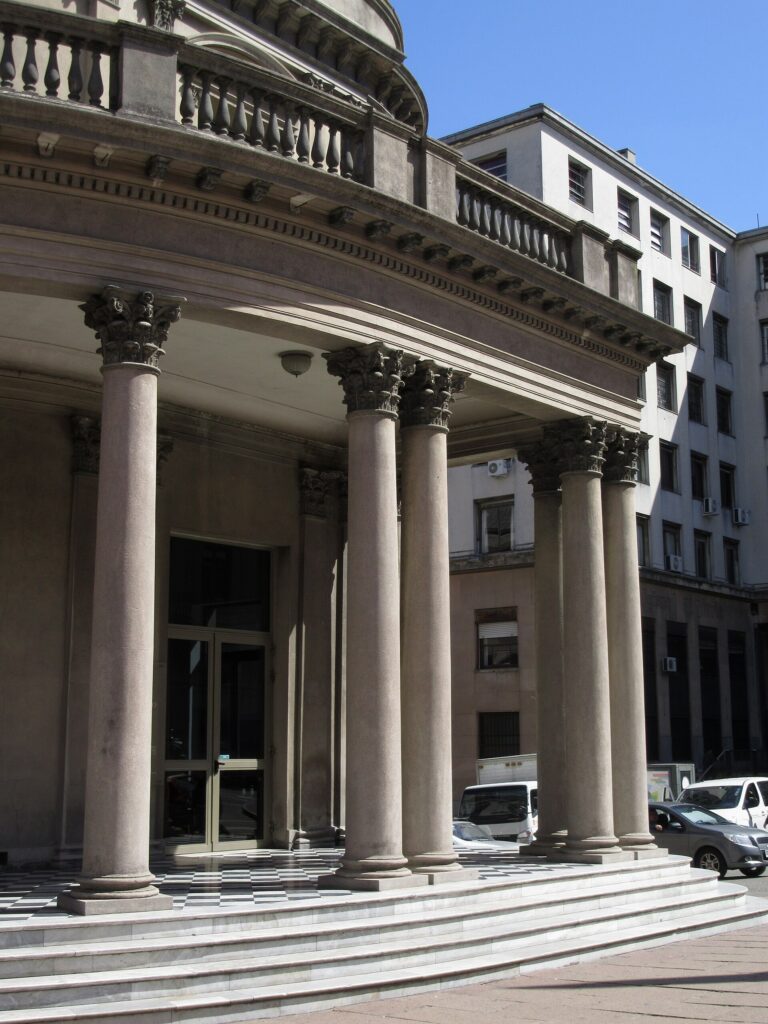
The Teatro Solís opened its doors in 1856, and 170 years later it remains one of the defining buildings of central Montevideo. Its neoclassical facade and horseshoe auditorium have hosted opera, symphonic concerts, ballet and drama across three centuries of the city’s history.
Owned by the city of Montevideo, the theatre has been restored and modernised over the decades while keeping the character that made it a landmark. It sits close to the Plaza Independencia, at the heart of the capital’s civic and cultural district.
Reaching 170 years places the Solís among the oldest working theatres in South America, a distinction its custodians have used to frame the anniversary programme. Anniversaries on this scale are rare for a working theatre, and the institution has treated 2026 as a year-long occasion rather than a single date to be marked and set aside.
The building’s Italianate design and richly decorated interior have made it a point of civic pride since the mid-nineteenth century, and successive restorations have preserved its acoustics and ornament for modern audiences. Few venues in the region carry a comparable weight of history while continuing to operate at the centre of national cultural life.
The anniversary gala
The centrepiece of the celebrations is a gala on Wednesday 12 August 2026. The evening features an extraordinary concert by the Buenos Aires Philharmonic Orchestra, with the pianist Homero Francesch as soloist, a pairing that underlines the theatre’s long ties across the River Plate.
The gala anchors a month of anniversary programming, with the date chosen to mark the theatre’s founding. Organisers have framed the concert as both a birthday celebration and a statement of the Solís’s continuing artistic ambition. Programming a full orchestral concert as the centrepiece signals confidence that the house can still draw major ensembles and large audiences on a landmark night.
The choice of an orchestra from across the River Plate also nods to the deep cultural traffic between Montevideo and Buenos Aires, two capitals whose musical and theatrical lives have long been intertwined. For many in the audience, the gala will be the highlight of a year built around the anniversary.
A season of more than 370 performances
The 170th-anniversary season is the busiest in recent memory, with more than 370 performances and over 900 artists taking part across opera, theatre, symphonic music, dance and international shows. The programme spans the full year rather than a single festival week.
The breadth is deliberate, reflecting the theatre’s role as a year-round public institution rather than an occasional venue. It also gives audiences across genres a reason to return through 2026. The mix is intended to serve subscribers and casual visitors alike, from opera devotees to families and tourists passing through the historic centre.
Opera anchors the calendar, as it has since the nineteenth century, but the season reaches beyond it to dance, contemporary theatre, symphonic concerts and touring international productions. The scale of the programme is intended to ensure that the anniversary is felt across the whole of 2026 rather than compressed into a single celebratory week.
Opening the doors to the city
As part of the anniversary, the Solís is opening for free public tours on Saturdays and Sundays in August, inviting residents to walk through a building many know only from the outside. The gesture fits a wider effort to present the theatre as a civic space, not just a stage.
Through the year, the traditional lantern on the theatre’s facade is lit each night there is a performance, a small nightly signal that the Solís is at work.
The free weekend tours let visitors see the auditorium, the foyers and the details of a building that has been carefully restored while keeping its historic character. For many residents it is a rare chance to step inside a landmark they pass often but seldom enter, reinforcing the theatre’s claim to belong to the city as a whole.
A landmark for Uruguay
For Uruguay, the Solís is more than a concert hall. It is a symbol of Montevideo’s cultural identity and one of the most recognisable theatres in the region, mentioned in the same breath as the great houses of Buenos Aires and Rio de Janeiro. That comparison is often made in Uruguay itself, where the Solís is regarded as the equal of any stage in the region despite the modest size of the country around it.
The 170th anniversary offers a moment to reaffirm that standing, and the gala and its packed season are designed to carry the theatre’s reputation into its next decade. The anniversary is being used as much to look forward as to honour the past, with an eye on keeping the house relevant to younger audiences.
Over its history the Solís has welcomed leading international artists and companies, and it remains the stage where Uruguay presents itself culturally to visitors. Named after the explorer Juan Díaz de Solís, the theatre has become shorthand for Montevideo’s identity as a city that takes its arts seriously, and the anniversary is as much a civic occasion as an artistic one.
A cultural anchor for Montevideo
The anniversary lands at a moment when Montevideo is keen to promote its cultural offer to residents and visitors alike. The Solís sits within a compact historic centre that includes museums, plazas and other venues, and the theatre’s programme helps draw audiences into that district throughout the year.
Uruguay’s capital has long punched above its weight culturally, and the Solís is the most visible expression of that ambition. A full anniversary calendar, capped by the August gala, is designed to reaffirm the theatre’s regional standing and to remind audiences why it has remained central to the city’s life for 170 years.
For the institution’s custodians, the milestone is also a chance to look forward. Sustaining a historic house as a working, year-round theatre requires continual investment and fresh programming, and the anniversary season doubles as a statement that the Solís intends to remain at the heart of Uruguayan culture well into its next century.
The gala
Date: Wednesday 12 August 2026.
Venue: Teatro Solís, Montevideo.
Orchestra: Buenos Aires Philharmonic Orchestra.
Soloist: pianist Homero Francesch.
Season: more than 370 performances, over 900 artists.
Programme details from the Teatro Solís; dates may be subject to change.
This is reporting; confirm details with official sources before acting.
Frequently Asked Questions
When did the Teatro Solís open?
In 1856, which makes 2026 its 170th anniversary.
When is the anniversary gala?
On Wednesday 12 August 2026.
Who is performing at the gala?
The Buenos Aires Philharmonic Orchestra with pianist Homero Francesch.
How big is the anniversary season?
More than 370 performances involving over 900 artists across genres.
Can the public visit the theatre?
Yes. Free tours are offered on Saturdays and Sundays in August.
Related reading
- Montevideo’s cultural calendar for 2026
- The great theatres of the River Plate
- Uruguay’s arts scene beyond the capital
This article was produced by The Rio Times’ automated newsroom system. How we use AI · Report an error
The Rio Times · Power Map
See who really holds power in Latin America
Click to open the Power Map →