 By The Epoch Times | Created at 2026-09-18 02:32:05 | Updated at 2026-09-18 09:52:16
7 hours ago
By The Epoch Times | Created at 2026-09-18 02:32:05 | Updated at 2026-09-18 09:52:16
7 hours ago

Secretary of State Marco Rubio and his wife Jeanette Rubio depart the international airport Ernesto Cortissoz in Barranquilla, Colombia, on Sept. 9, 2026. AP Photo/Fernando Vergara, Pool
The United States added new sanctions on Cuba’s military regime, including mining enterprises exploiting the country’s nickel sector wealth for profit, Secretary of State Marco Rubio announced Sept. 17.
“Communist Cuba is a corrupt failed state and a persistent threat to U.S. national security, sitting less than 100 miles from American shores,” Rubio stated in a post on X. “While ordinary Cubans endure blackouts, food shortages, and brutality, regime elites continue to hoard the island’s resources for themselves and Cuba’s repressive security apparatus.
“The United States will keep exposing and sanctioning those who sustain this system,” Rubio stated.
Eleven entities and people involved in the development of Cuba’s military capabilities and the exploitation of its mining sector were added to the State Department’s list of sanctions in Cuba.
Four military enterprises sanctioned Thursday play a role in building out the country’s military capabilities and provide simulators, training, research, and communications products for the armed forces.
The individuals sanctioned include Joaquin Francisco Cancio Monteagudo, a senior colonel in the armed forces and director general of SIMPRO, a state-owned military enterprise that develops training simulators for the forces.
Dioglis Pedrera Arguello, a captain in the armed forces and director general of CIDNAV, a sanctioned organization providing research to the Cuban navy, was also sanctioned.
Also sanctioned was Julio Hurtado Betancourt, a senior colonel in the armed forces and director general of CIDAI, a sanctioned military group involved in research programs developing and modernizing armaments for the infantry.
In Cuba’s nickel mining sector, four enterprises were sanctioned that provide revenue for the Cuban regime.
Rubio’s announcement came a day after Cuba’s Deputy Foreign Minister Fernández de Cossío disputed allegations by Trump administration officials about the country’s ruling Castro regime during a lengthy interview with PBS News reporter Amna Nawaz.
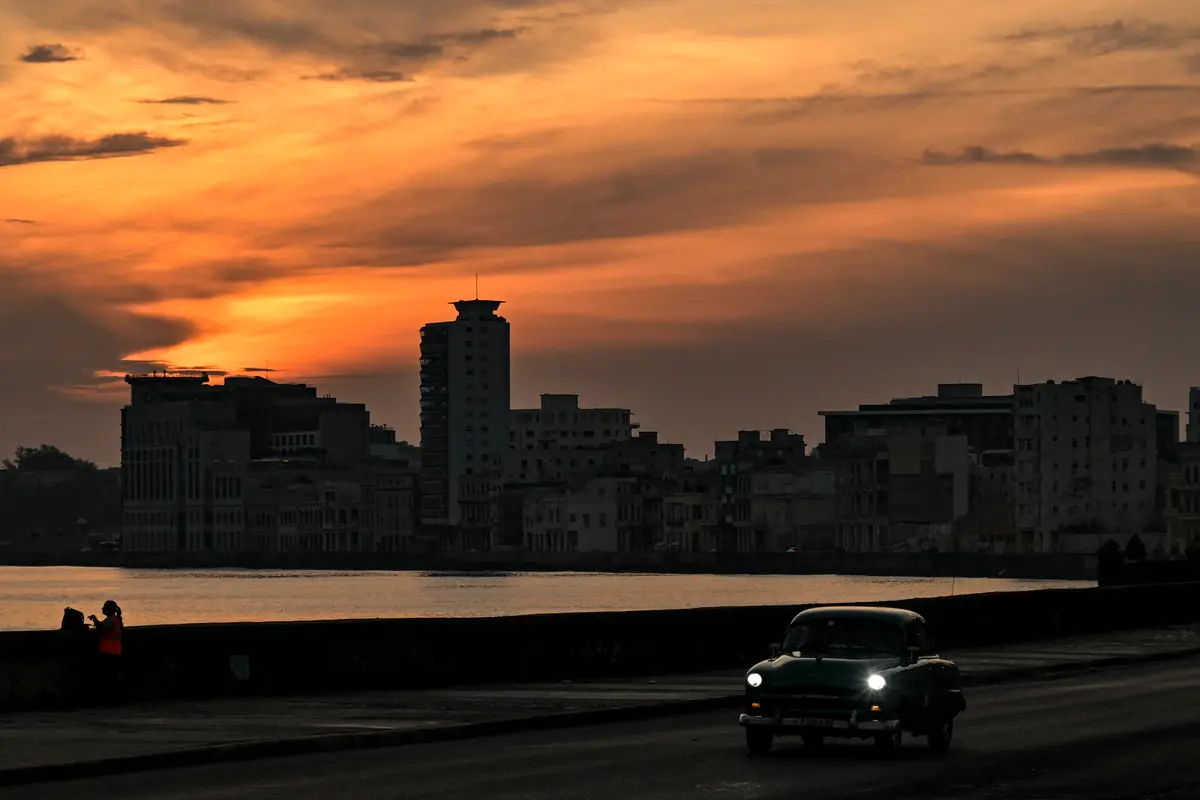
Havana during a nationwide blackout on Aug. 3, 2026. Cuba's power grid failed on Aug. 2, 2026, causing another nationwide blackout. State-run UNE said there was a “total disconnection” of the national electricity system, plunging the country, including the capital, into abrupt darkness. Yamil Lage/AFP via Getty Images
The foreign minister accused the United States of committing international crimes by blocking oil shipments, medical deliveries, food, and other goods, and restricting banking.
Cossío, who was in Washington attending the United Nations General Assembly, said U.S. and Cuban officials have met, but continued sanctions indicated that no progress has been made between the two countries.
“You could not claim there is progress in any dialogue, or any type of communication, if hostility continues to happen,” Cossio said. “We continue to be ready to engage with the United States when they are ready to try to solve our political differences—our bilateral political differences—which are many.”
Citizens of the impoverished communist country have endured multiple power outages this year, including a full-day outage on Wednesday, as the island deals with a lack of fuel and an aging power grid.

A man sits with his three dogs at the Paseo del Prado during a widespread power cut in Havana, Cuba, on July 14, 2026. Cuba’s power grid failed for the third time in less than 10 days, sparking another nationwide blackout. Yamil Lage/AFP via Getty Images