By The Diplomat | Created at 2026-09-03 09:46:42 | Updated at 2026-09-19 12:42:44
2 weeks ago
By The Diplomat | Created at 2026-09-03 09:46:42 | Updated at 2026-09-19 12:42:44
2 weeks ago
The U.S. aircraft carrier USS Abraham Lincoln yesterday docked in Thailand after more than nine months at sea, a period marked by reports of deteriorating conditions on board and the poor mental health of its sailors.
The nuclear-powered vessel arrived at Laem Chabang port yesterday morning and will remain there for five days while its 5,000-odd personnel rest and recuperate in the nearby city of Pattaya.
The Abraham Lincoln spent a total of 286 days at sea, taking part in the U.S. naval blockade and combat operations in the war with Iran, setting a modern-day deployment record. It has since crossed the Indian Ocean and is now conducting “routine operations in the U.S. 7th Fleet area of operations,” the U.S. Navy said in a statement.
“Our arrival in Laem Chabang provides a well-deserved opportunity for our Sailors and Marines to rest and recharge. It also underscores the strong and enduring partnership and alliance between the United States and Thailand,” Rear Admiral Robert E. Loughran, the commander of Carrier Strike Group 3, said in the statement.
“What this strike group has accomplished is truly historic,” he added. “I could not be prouder of the exceptional professionalism and expertise demonstrated by every member of this team during our operations.”
The Abraham Lincoln was accompanied by the guided-missile destroyer USS Frank E. Petersen Jr., which docked in nearby Sriracha, and the guided-missile cruiser USS Robert Smalls, which has docked in Map Ta Phut.
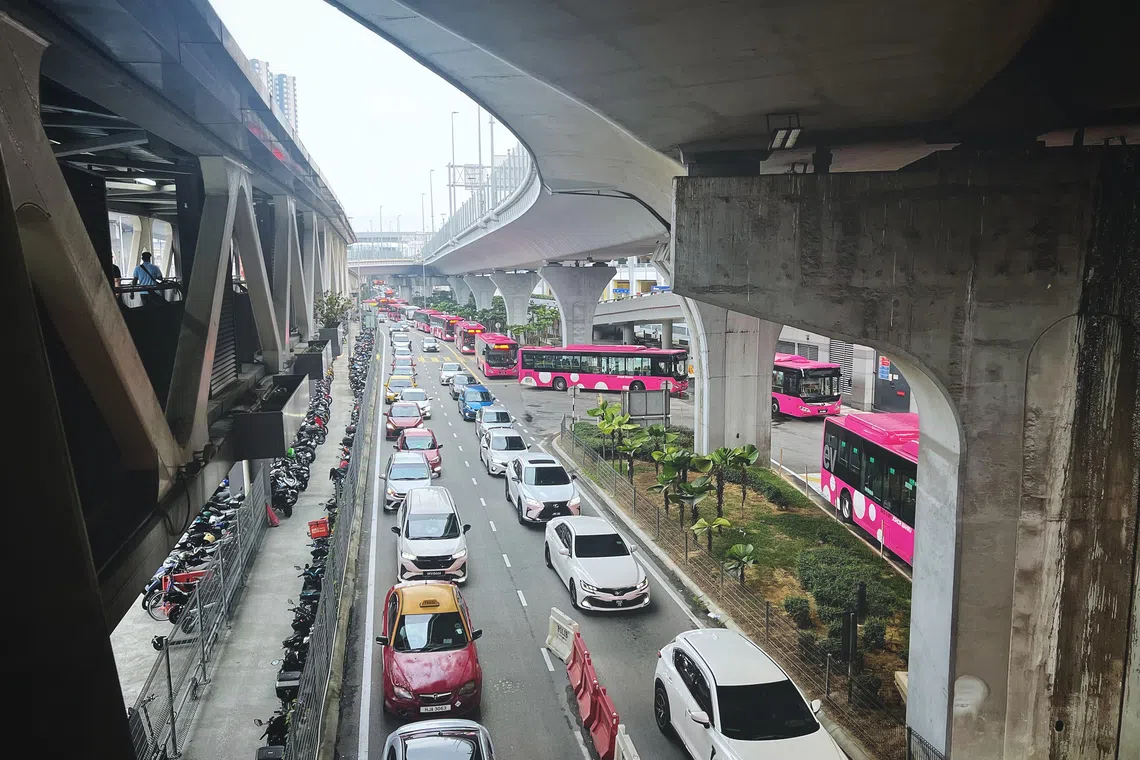
After the carrier docked, a fleet of around 40 buses ferried its personnel to Pattaya, where U.S. officers were greeted by the mayor and other Thai officials.
A lot of online commentary has focused on the battered state of the Abraham Lincoln, including the large rust patches on its hull, after a long and arduous deployment. Pro-China propaganda accounts on X gleefully shared images of the carrier, with one asserting that the “repercussions of the American decline are escalating faster than anticipated.”
The vessel’s arrival has also shone (for some) an unwelcome light on Pattaya’s sex industry. Although technically illegal, and subject to periodic crackdowns, the industry operates more or less openly in the city, as well as in other major tourism hubs like Bangkok and Phuket.
Indeed, while Thailand’s sex industry has existed in some form for centuries, the country’s modern sex tourism infrastructure owes its existence to U.S. troop deployments during the Vietnam War, when cities like Bangkok and Pattaya served as “rest and recreation” destinations for U.S. military personnel.
This is an unsavory aspect to the U.S.-Thai relationship that the two sides are obviously keen to downplay. As such, both the Thai government and the U.S. Navy have taken steps to ensure, however much in vain, that the city’s demi-monde is off-limits to U.S. personnel.
According to the Thai Enquirer, around 600 Thai officials have been deployed to manage security and traffic during the Abraham Lincoln’s port visit. Authorities have “increased checks at tourist and nightlife areas, stepped up enforcement against prostitution, and warned businesses against overcharging visitors,” it reported. The publication also reported that U.S. personnel are prohibited from visiting the districts of Pattaya that contain most of its hostess bars and other nightlife venues. Cannabis shops, pharmacies, and water activities are also off-limits.
Local businesses are expecting the sailors and marines to inject as much as 100 million baht (around $3 million) into the local economy during their stay.