 By The Epoch Times | Created at 2026-08-13 19:46:57 | Updated at 2026-08-13 20:47:08
1 hour ago
By The Epoch Times | Created at 2026-08-13 19:46:57 | Updated at 2026-08-13 20:47:08
1 hour ago
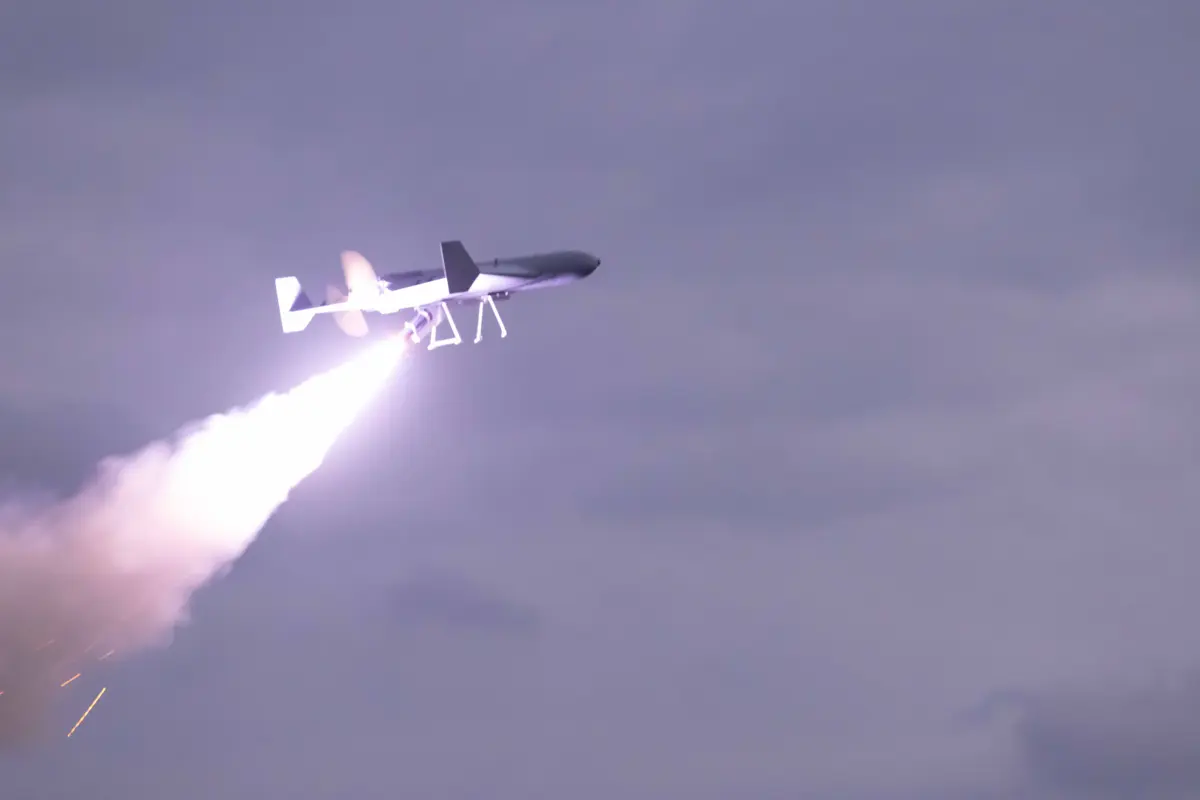
A Low-cost Unmanned Combat Attack System launches from the deck of the littoral combat ship USS Santa Barbara while operating in the Arabian Gulf, in this file photo. U.S. Army/Spc. Kayla Mc Guire
The U.S. military has formed what it intends to be a multinational task force to pool attack drone resources with partner states in the Middle East.
On Aug. 13, the U.S. Central Command (CENTCOM) announced the formation of the new multinational effort, dubbed Task Force Falcon Strike.
This force aims to employ a range of aerial, maritime, and submersible attack drones.
The formation of Task Force Falcon Strike comes after United States and Israeli forces launched strikes on Iran on Feb. 28, setting off 38 days of sustained combat operations and multiple subsequent armed clashes.
Amid the fighting, Iranian forces and their regional partners have targeted multiple Middle Eastern states that have hosted U.S. forces or otherwise partnered with the United States.
The initial U.S. strikes on Iran saw the first operational use of its FLM-136 Low-cost Uncrewed Combat Attack System (LUCAS) one-way aerial attack drones.
The LUCAS drones were themselves modeled off Iran’s Shahed-136 one-way attack drone design.
Last month, U.S. forces also employed a trio of explosive-laden Corsair one-way attack boats to bomb port facilities at Iran’s Bandar Abbas Naval Base.
A CENTCOM drone warfare component, known as Task Force Scorpion Strike, was responsible for leading strikes with the LUCAS aerial drones and Corsair sea drones.
Personnel from the U.S. Special Operations Command Central led the formation of Task Force Scorpion Strike and will now lead CENTCOM’s new multinational task force.
“Task Force Falcon Strike will expand on Scorpion Strike’s success given the tremendous innovation happening among our regional allies and partners,” Adm. Brad Cooper, CENTCOM commander, said in a statement on Thursday.
CENTCOM did not specify if any regional partners have joined the new multinational attack drone task force, but said it has begun to consult with and invite them.
“As regional partners formally join, Task Force Falcon Strike will scale attack drone capabilities across the Middle East into a unified multi-domain, multinational deterrent,” CENTCOM said.
The U.S. military has launched other efforts to expand its drone warfare capabilities in the past year.
In April, the U.S. Southern Command—which oversees military operations in and around Central and South America—announced the formation of its own autonomous warfare command.
Included in the Trump administration’s $1.5 trillion overall military budget request for fiscal year 2027 is about $75 billion in drone warfare investments.
Jules Hurst, the Pentagon official currently performing the duties of the comptroller, told reporters this investment would about triple the 2026 appropriations for drone warfare.