By The Rio Times | Created at 2026-08-08 16:46:36 | Updated at 2026-08-08 16:54:56
1 hour ago
By The Rio Times | Created at 2026-08-08 16:46:36 | Updated at 2026-08-08 16:54:56
1 hour ago
United States · POLICY
Key Facts
—The rulings: On 7 August 2026, federal judges Patti Saris in Boston and Matthew Kennelly in Chicago allowed the Trump administration to end Temporary Protected Status for South Sudan and Myanmar.
—Who is affected: About 232 South Sudanese nationals and approximately 4,000 Myanmar nationals in the United States will lose deportation protection and work authorisation.
—The legal trigger: A Supreme Court ruling on 25 June 2026, decided 6–3 in Mullin v. Doe, held that the TPS statute bars judicial review of everything except constitutional challenges.
—South Sudan designation: TPS for South Sudan was first granted in 2011, reflecting the country’s long-running armed conflict and instability since independence.
—Myanmar designation: The crisis that triggered TPS deepened after the February 2021 military coup, which was followed by civil war and mass displacement.
—Broader context: The terminations are part of a wider Trump administration push to shrink humanitarian migration protections across multiple countries, including Haiti, Syria, Ethiopia, Somalia, Yemen and Venezuela.
Two United States federal judges have cleared the way for the Trump administration to end Temporary Protected Status for South Sudan and Myanmar, a decision that will strip deportation protection and work permits from about 232 South Sudanese and roughly 4,000 Myanmar nationals in the country.
One-stop reference
Company Intelligence
Every listed company in Latin America — financials, ownership and structure for 1,450+ companies across 26 exchanges, in one place.
The court rulings that changed TPS South Sudan Myanmar protections
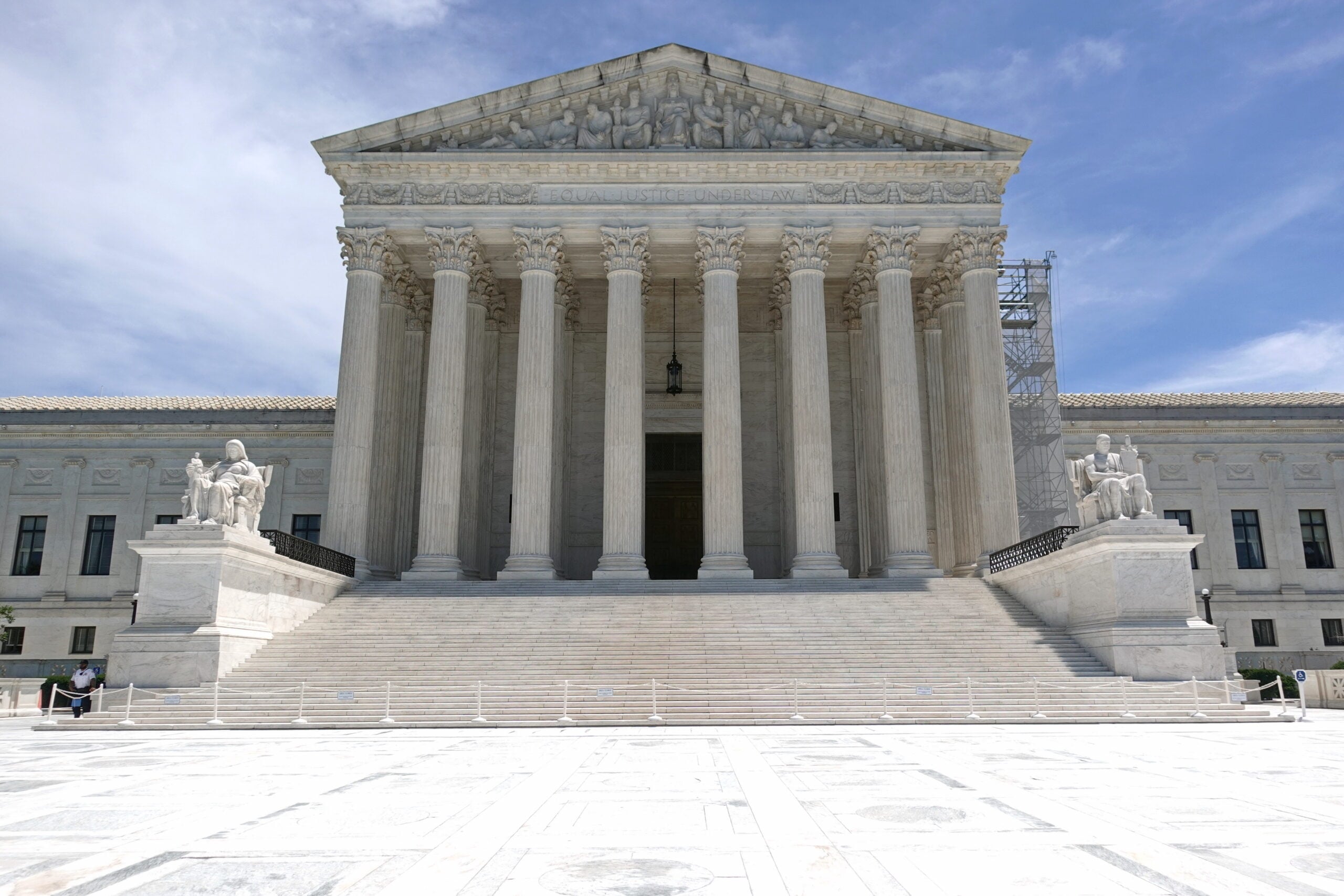
On 7 August 2026, U.S. District Judge Patti Saris in Boston and District Judge Matthew Kennelly in Chicago rejected last-minute legal efforts to keep Temporary Protected Status, or TPS, in place for nationals of both countries. The rulings followed a landmark Supreme Court decision of 25 June 2026, when the justices voted 6–3 in Mullin v. Doe, a case arising from the Haiti and Syria terminations, to hold that the TPS statute bars judicial review of anything short of a constitutional claim.
DHS had moved in November 2025 to end the designations. Judge Saris had earlier found the South Sudan termination likely unlawful, ruling in February 2026 that the department offered a “pretextual” justification, according to Reuters. Judge Kennelly had similarly blocked the Myanmar termination before the Supreme Court ruling reshaped the legal landscape.
Mullin v. Doe reduced lower courts’ ability to review DHS decisions ending TPS for roughly a dozen countries. It should not be confused with Department of Homeland Security v. D.V.D., the June 2025 third-country-removals case, which is a different matter. The conservative majority allowed the administration to proceed while leaving some constitutional claims possible, but made procedure-based challenges far harder to win.
What TPS means and who loses it
TPS is a humanitarian status the U.S. grants to people from countries hit by armed conflict, natural disasters or other extraordinary conditions. It provides temporary protection from deportation and the legal right to work.
South Sudan’s designation dates to 2011, the year the country gained independence and almost immediately descended into civil war. For Myanmar, the crisis deepened after the military seized power in February 2021, triggering a civil war that has driven mass displacement and economic collapse.
When TPS ends, beneficiaries lose both their shield against deportation and their work authorisation. That can push people from formal employment into irregular status almost overnight, with consequences for the households and communities that depend on their earnings.
The wider Trump administration migration agenda
The South Sudan and Myanmar terminations are not isolated moves. They sit inside a broader Trump-era push to shrink humanitarian migration protections across multiple countries, including Haiti, Syria, Ethiopia, Somalia, Yemen and Venezuela, according to CNN and the International Rescue Committee.
The administration’s position, as reported by Reuters, is that TPS should be used more sparingly and that domestic border control now outweighs humanitarian continuity. Critics inside the litigation argue the decisions are part of a broader plan to abolish TPS altogether.
The domestic political logic is clear: Trump is using the courts and DHS to accelerate a mass-deportation agenda. Opponents say the administration is dismantling long-established humanitarian safeguards that have enjoyed bipartisan support for decades.
Why South Sudan matters beyond the immigration debate
South Sudan is not just another TPS country. It is a fragile state whose instability has regional consequences across East Africa, including refugee flows into Uganda, Kenya, Ethiopia and Sudan.
Any reduction in U.S. protections does not only affect the diaspora. It can alter remittance flows, family support networks and the settlement prospects of exiles who often send money home. In fragile states, remittances are frequently a critical source of household income and foreign exchange, and changes in diaspora legal status can affect those flows indirectly through employment and residency security.
The decision also carries symbolic weight. South Sudan’s TPS designation was one of the longest-running, reflecting Washington’s recognition that the country remained too dangerous for safe return. Ending it signals a sharp shift in how the U.S. weighs humanitarian need against domestic enforcement priorities,
Myanmar and the great-power dimension
Myanmar’s conflict is tightly linked to the broader strategic competition in Indo-Pacific Asia. China has deep interests in border stability, infrastructure corridors and access to the Indian Ocean, while the junta’s post-coup isolation has deepened the country’s economic collapse.
The U.S. ending protections for Myanmar nationals underscores how domestic immigration policy intersects with the fallout from authoritarian consolidation. Washington, Beijing and regional powers all have stakes in Myanmar’s trajectory, and the TPS decision removes one of the few formal channels of American protection for people fleeing the junta’s violence.
For employers in sectors that rely on migrant labour, and for local U.S. economies where TPS holders rent homes, pay taxes and spend wages, the revocation of status can quickly move people from formal economic participation into vulnerability. The great-power frame is unmistakable: the U.S. is signalling that domestic border control now outweighs humanitarian continuity, even where the underlying crises remain unresolved.
The much larger Latin American caseload behind this ruling
For readers in Latin America, the South Sudan and Myanmar cases matter mainly as precedent, because the same statute and the same Supreme Court ruling are being applied to populations tens of times larger. Venezuela is the biggest single group in the whole rollback. Its termination has been in force since the Supreme Court allowed it to proceed in October 2025, and work authorisation for more than 350,000 recipients lapses on 2 October 2026.
Haiti is close behind. Its designation was terminated with effect from 27 July 2026, and on 5 August a federal judge lifted the injunction that had been holding the termination back, citing the same June ruling that decided these two cases three days later. Roughly 334,000 Haitians are affected. Honduras, with about 72,000 recipients, and Nicaragua, with about 4,000, had their terminations restored by the Ninth Circuit in February 2026.
Put together, the Latin American numbers dwarf the 4,232 people covered by Friday’s two rulings. If you are a Venezuelan or Haitian national in the United States on TPS, the practical point is that the courtroom route is now largely closed, and the dates on your own notice are the ones that matter.
What to watch next
The rulings do not end the legal fight entirely. Constitutional claims may still proceed, though the Supreme Court’s June 2026 decision has made procedural challenges far harder to win.
The broader TPS review continues across multiple countries. Advocacy groups and some members of Congress are likely to press for legislative alternatives, but the administration shows no sign of slowing its push to shrink humanitarian protections.
For the roughly 4,200 people directly affected, the clock is now ticking. Once the formal termination takes effect, they will face a choice between leaving the United States or staying without legal status, work rights or protection from deportation.
Frequently asked questions
What is Temporary Protected Status?
Temporary Protected Status is a U.S. humanitarian programme that grants deportation protection and work authorisation to nationals of countries affected by armed conflict, natural disasters or other extraordinary conditions.
How many people are affected by the TPS South Sudan Myanmar rulings?
About 232 South Sudanese nationals and approximately 4,000 Myanmar nationals in the United States will lose their deportation protection and work permits.
Why did the judges allow the terminations to proceed?
A Supreme Court ruling on 25 June 2026, decided 6–3 in Mullin v. Doe, held that the TPS statute bars judicial review of everything except constitutional challenges, making procedural challenges far harder to win.
Connected Coverage
The same legal machinery is now running against far larger Latin American caseloads, which is where this ruling will be felt most.
Sources
This article was produced by The Rio Times’ automated newsroom system. How we use AI · Report an error
The Rio Times · Power Map
See who really holds power in Latin America
Click to open the Power Map →