By The Rio Times | Created at 2026-09-07 11:26:26 | Updated at 2026-10-03 14:42:14
3 weeks ago
By The Rio Times | Created at 2026-09-07 11:26:26 | Updated at 2026-10-03 14:42:14
3 weeks ago
SUDAN · GEOPOLITICS
Key Facts
—Who wrote: Senator Chris Murphy led seven colleagues in a letter to the US ambassador to the United Nations, Mike Waltz.
—The core ask: They want Washington to push for additional Security Council measures limiting the money reaching the warring parties.
—Gold chemicals: The letter calls for international prohibitions on the sale of precursor chemicals used in certain forms of gold extraction.
—Gum arabic: It also asks for due-diligence guidelines covering gum arabic procurement, a commodity the senators say is smuggled to finance the fighting.
—Naming names: The senators want the Security Council’s Panel of Experts to identify explicitly which states have circumvented restrictions to arm or fund the belligerents.
—The deadline: The Council’s Sudan sanctions regime expires on 12 September, with a vote on renewal expected, according to Security Council Report.
—The stakes: The letter describes Sudan’s war as the largest humanitarian crisis in the world.
Eight US senators have asked Washington to push for Sudan sanctions that reach the commodities financing the war, specifically the chemicals used in gold extraction and the trade in gum arabic. The request lands days before the Security Council’s Sudan mandate expires on 12 September.
One-stop reference
Company Intelligence
Every listed company in Latin America — financials, ownership and structure for 1,450+ companies across 26 exchanges, in one place.
What the Sudan sanctions letter asks for
Senator Chris Murphy and seven colleagues wrote to Mike Waltz, the US ambassador to the United Nations, urging Washington to seek additional measures at the Security Council.
Two of the proposals are unusually specific. One would prohibit international sales of precursor chemicals used in certain gold-extraction processes, and the other would create due-diligence guidelines for buyers of gum arabic.
A third asks the Council’s Panel of Experts to report more transparently, naming the states that have circumvented restrictions to supply weapons or money to the warring parties.
Why gold is the centre of the war economy
Sudanese gold is portable, high-value and easy to move across desert borders, which makes it the ideal financing instrument for armed groups on both sides.
Targeting the metal directly has proved difficult because the buyers are dispersed and the refining chain runs through jurisdictions with limited appetite for enforcement.
Going after the inputs instead is the interesting move. Extraction chemicals are manufactured industrially, sold by a small number of firms and shipped through documented channels.
It is the same logic applied to drug precursors and to dual-use components. Control the narrow part of the chain rather than the wide part.
Whether it survives negotiation is another matter, because legitimate mining across the region uses the same inputs. A blunt prohibition would hit Ghana and Tanzania as well as Sudan.
Live Market IntelligenceCommodities — Live Market BoardInside: market breadth, the sector heatmap, currencies & rates, the Latin America scoreboard and the full instrument board.Rio Times · Live Market Intelligence
Commodities — Live Market Board
Global
Sep 7, 2026 · 08:08
Brent crude · benchmark
88.88
-0.03%
+34.42% over 12 months
Market breadth · 15 names
60% advancing
9 ▲ advancing6 declining ▼
Currencies, rates & key inputs
Full instrument board
| GOLD | 4,461 | +1.78% | +33.20% | 4,383 | 4,503 | 4,421 | 139,824 |
| SILVER | 65.59 | +1.26% | +73.05% | 64.77 | 66.98 | 64.81 | 46,406 |
| BRENT | 88.88 | -0.03% | +34.42% | 88.91 | 90.07 | 88.12 | 29,713 |
| WTI | 83.11 | -0.11% | +31.57% | 83.20 | 84.35 | 82.40 | 166,848 |
| COPPER | 6.61 | +0.03% | +46.70% | 6.61 | 6.71 | 6.61 | 39,543 |
| LITHIUM | 75.20 | +1.47% | +62.95% | 74.11 | 75.80 | 75.08 | 89,275 |
| IRON ORE | 161.91 | — | +58.10% | 161.91 | 161.91 | 1 | |
| SOY | 1,184 | +3.20% | +17.05% | 1,148 | 1,199 | 1,168 | 163,179 |
| CORN | 480.50 | +10.02% | +29.34% | 436.75 | 480.75 | 459.50 | 341,248 |
| WHEAT | 655.00 | +3.93% | +29.70% | 630.25 | 657.75 | 631.50 | 128,793 |
| COFFEE | 317.25 | -5.51% | +0.67% | 335.75 | 321.20 | 313.55 | 21,747 |
| SUGAR | 16.43 | -1.79% | -3.01% | 16.73 | 17.11 | 16.22 | 171,992 |
| COCOA | 5,719 | +3.18% | -34.96% | 5,543 | 5,779 | 5,574 | 26,773 |
| ORANGE JUICE | 138.55 | -0.47% | -45.38% | 139.20 | 141.05 | 137.50 | 703 |
| COTTON | 85.03 | +2.33% | +26.78% | 83.09 | 82.90 | 81.96 | 16,546 |
| BEEF | 223.60 | -3.93% | -5.18% | 232.75 | 226.40 | 223.00 | 16,126 |
| CATTLE | 339.10 | -3.16% | -1.82% | 350.17 | 345.50 | 338.60 | 10,164 |
| USD/BRL | 5.16 | +0.01% | -5.13% | 5.16 | 5.18 | 5.14 | — |
Largest moves today
CORN
480.50
+10.02%
COFFEE
317.25
-5.51%
WHEAT
655.00
+3.93%
BEEF
223.60
-3.93%
SOY
1,184
+3.20%
COCOA
5,719
+3.18%
CATTLE
339.10
-3.16%
COTTON
85.03
+2.33%
The session read
The Brent crude eased 0.03%, with breadth positive — 9 of 15 names higher. CORN led, while COFFEE lagged.
From The Rio Times
Related coverage · 7 Sep 2026
Boakai Oversees ArcelorMittal Rail Expansion as Liberia Economy Shifts
Read →
Gum arabic, and why a soft drink ingredient is in a sanctions letter
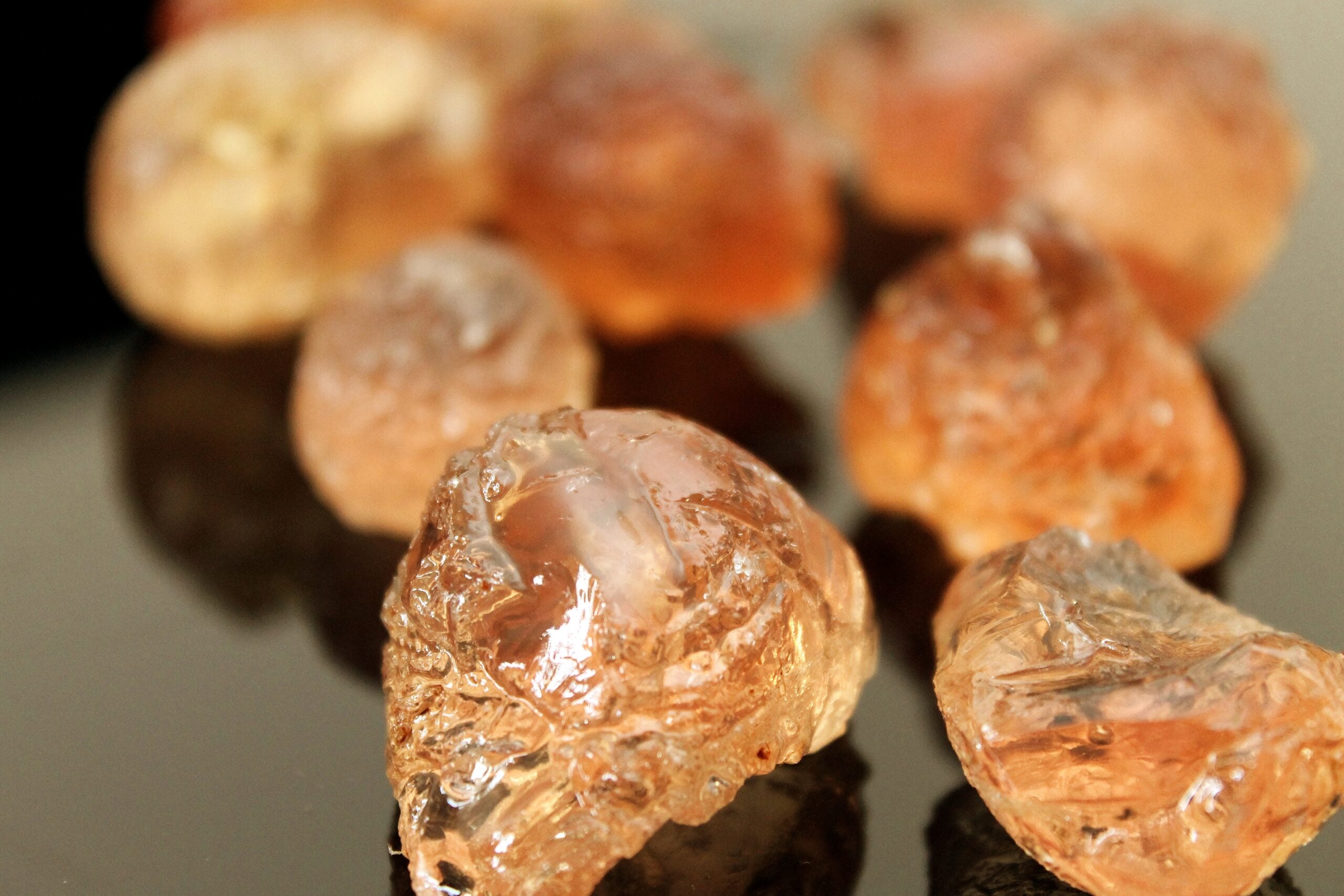
Sudan is the world’s dominant supplier of gum arabic, the acacia resin used as an emulsifier in soft drinks, sweets and pharmaceuticals. There is no easy substitute at scale.
That makes it both a lifeline for rural producers and, the senators argue, a smuggling channel for belligerents. The two facts are uncomfortable together.
Due-diligence guidelines rather than a ban is the compromise. The aim is to make Western buyers document their chains without cutting off the farmers who depend on the crop.
The gum belt runs across Kordofan and Darfur, precisely the areas the war has torn through. Harvesting is done by smallholders who have no say in who taxes the road out.
Any measure that raises the cost of buying Sudanese gum risks pushing buyers to Chad and Nigeria. That would punish producers rather than combatants.
The timing is not accidental
The Security Council’s Sudan sanctions regime expires on 12 September, and a vote on extension is expected, according to Security Council Report’s monthly forecast.
Renewal debates are when the scope of a regime can realistically be widened. Outside those windows, adding measures requires a fresh negotiation nobody wants.
Whether the Council has the appetite is another question. Recent Sudan votes have passed with abstentions rather than consensus.
The existing regime dates from the Darfur arms embargo and has been criticised for years as too narrow geographically. Extending it to the whole country has been proposed repeatedly.
Senators have raised that specific point before in a formal resolution. This letter is the latest attempt to move it from the Senate to the Council.
What this means for commodity buyers
Confectionery, beverage and pharmaceutical companies would carry the compliance cost of any gum arabic guidelines. Most already run voluntary schemes of varying seriousness.
Chemical manufacturers face a sharper version of the same problem, because a precursor prohibition would place liability closer to the point of sale.
For African exporters more broadly, the precedent matters. A commodity can now be brought into a sanctions conversation on the basis of who moves it rather than what it is.
What to watch next
The immediate marker is the 12 September vote and whether any of the senators’ proposals appear in the text rather than the debate.
The second is the Panel of Experts’ next report, and whether it names states directly. That single change would do more than most listings.
The third is the gum arabic market itself. Buyers tend to reprice risk in advance of rules, and rural Sudanese producers would feel that before any resolution passes.
Frequently Asked Questions
What do the senators want added to Sudan sanctions?
Prohibitions on selling precursor chemicals used in gold extraction, due-diligence guidelines for gum arabic procurement, and more transparent reporting by the UN Panel of Experts.
Who sent the letter?
Senator Chris Murphy led seven colleagues in writing to Mike Waltz, the US ambassador to the United Nations.
Why does gum arabic feature?
Sudan is the world’s dominant supplier, and the senators say belligerents smuggle it to finance their operations.
When does the current sanctions regime expire?
On 12 September 2026, with a Security Council vote on renewal expected, according to Security Council Report.
Would this stop the fighting?
No single measure would. The proposals aim to narrow the financing available to the warring parties rather than to end the conflict directly.
This article was produced by The Rio Times’ automated newsroom system. How we use AI · Report an error
The Rio Times · Power Map
See who really holds power in Latin America
Click to open the Power Map →