By The Rio Times | Created at 2026-08-06 09:42:03 | Updated at 2026-08-06 10:29:20
1 hour ago
By The Rio Times | Created at 2026-08-06 09:42:03 | Updated at 2026-08-06 10:29:20
1 hour ago
Key Facts
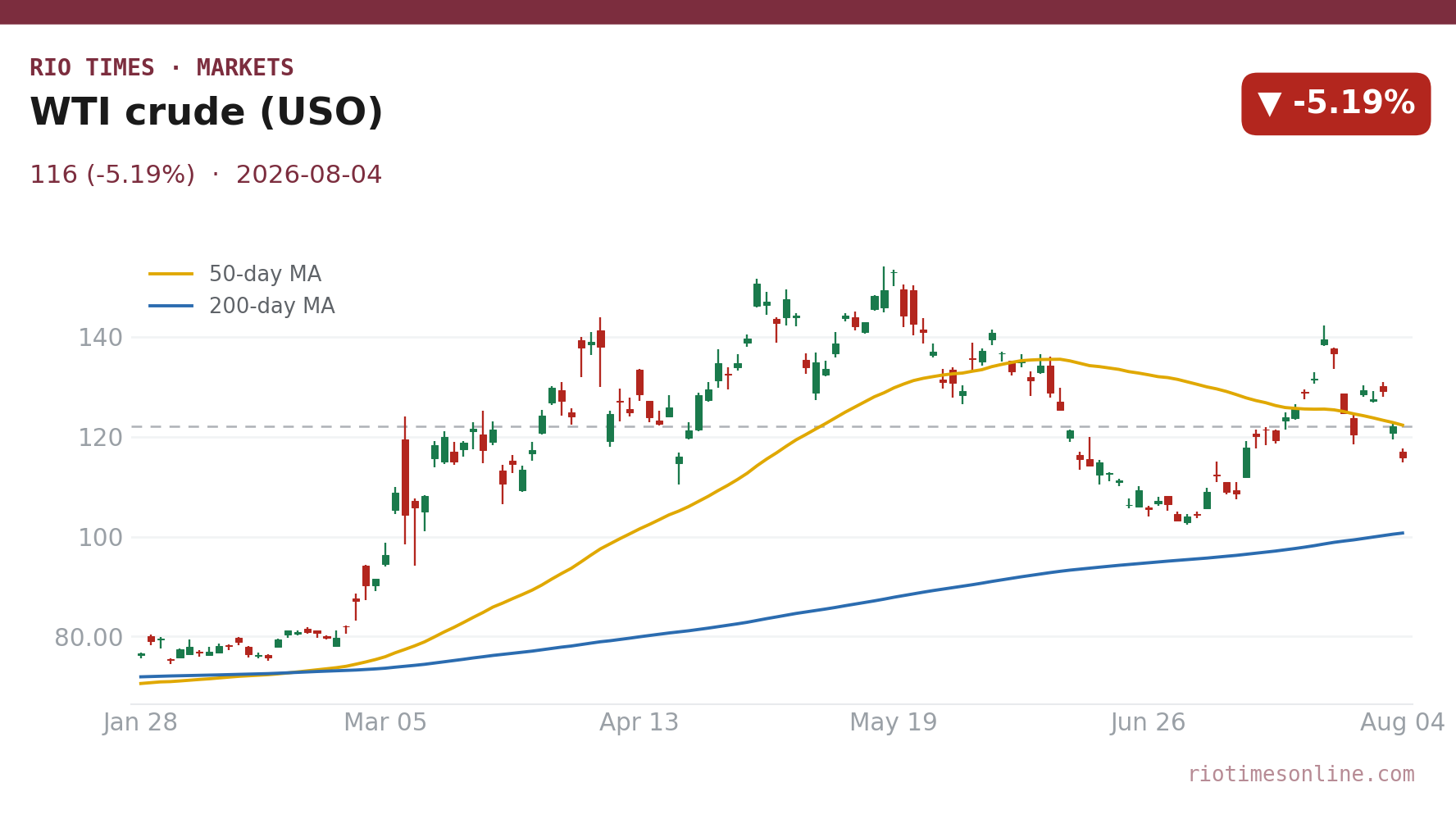
- The US Oil Fund fell 5.19% to US$115.78, reflecting weaker WTI futures as soft refinery margins and expectations of slower demand growth in China and Europe rattled traders.
- Petrobras shares dropped 1.78% to US$18.72, as the weaker crude curve and a revived debate over Brazil’s domestic fuel pricing policy pressured the state-controlled producer.
- Argentina’s YPF declined 2.78% to US$49.64, with persistent domestic macroeconomic uncertainty amplifying the drag from lower oil benchmarks on the main operator in the Vaca Muerta shale.
- Colombia’s Ecopetrol slid 1.75% to US$16.31, tracking the broader sell-off in state-owned energy equities as the WTI proxy signalled a looser short-term market.
- Guyana’s offshore boom faces valuation pressure, because lower WTI-linked prices reduce the net present value of high-capex deepwater projects even as production ramps up.
- Mexico’s Pemex fiscal strain intensifies, as softer oil benchmarks cut the cash flow available for the indebted state company to fund exploration and refinery upgrades.
Today’s Focus
Crude oil proxies tumbled on Tuesday after weak demand signals from China and Europe combined with rising supply from the Americas to push the US Oil Fund, which tracks WTI futures, down 5.19% to US$115.78. Every major Latin American oil equity fell in sympathy. Petrobras, the state-controlled operator of Brazil’s pre-salt fields, saw its New York shares lose 1.78% to US$18.72, while Argentina’s YPF, the leading player in the Vaca Muerta shale, dropped 2.78% to US$49.64 and Colombia’s Ecopetrol shed 1.75% to US$16.31.
The session’s move was driven not by a single geopolitical shock but by a grinding reassessment of consumption. Soft refinery margins pointed to tepid product demand, while macroeconomic data fanned expectations that Chinese and European industrial activity would need less feedstock. Because USO rolls futures monthly, the fund’s decline faithfully transmitted the pressure from the underlying WTI curve directly into the equity valuations of Latin America’s state-linked producers.
For a region rich in both mature and frontier oil provinces, the downturn sharpens the financial dilemmas facing policymakers. In Mexico, Pemex is a heavy debtor reliant on government support, and lower WTI-linked prices immediately constrict the cash flow available for upstream spending. Guyana’s revenue trajectory, tied to ramp-up schedules approved by ExxonMobil and its partners, faces a lower price deck. In Argentina, YPF’s need for continuous drilling to hold Vaca Muerta output steady collides with a weaker benchmark that squeezes its capital expenditure plans.
What matters today. Today’s 5.19% slide in the WTI proxy pulls the price floor from under every Latin American national oil champion, testing their ability to fund output growth in a lower-revenue environment.

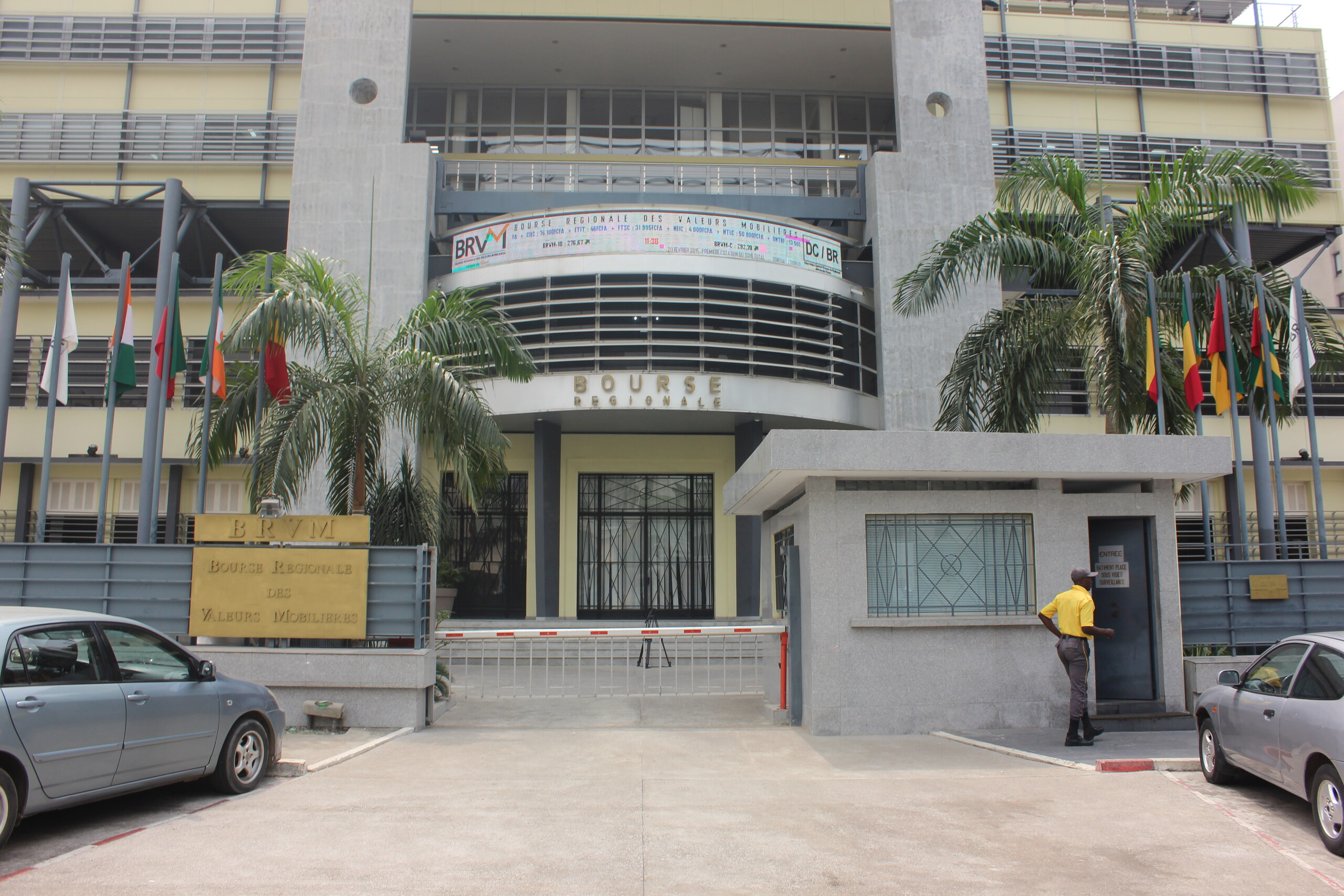
” alt=”Oil daily market wrap.” />Oil — the daily wrap. (Photo internet reproduction)
01 The session in one read
Oil proxies suffered a sharp retreat on Tuesday as the US Oil Fund, the exchange-traded vehicle that tracks West Texas Intermediate crude futures, closed 5.19% lower at US$115.78. The drop radiated across Latin America, dragging down the New York-listed shares of Petrobras, YPF and Ecopetrol by between 1.75% and 2.78%.
The driver was a compound of tepid demand signals from China and Europe, soft refinery margins and the nagging weight of rising supply from the Americas. For Brazil’s pre-salt, Guyana’s deepwater boom, Mexico’s indebted Pemex, Argentina’s Vaca Muerta and Venezuela’s constrained output, the session reaffirmed that global benchmark prices remain the ultimate arbiter of fiscal health and project economics.
Assessment — Demand fears flatten Latin American oil HIGH
Today’s rout was a demand-side story with immediate balance-sheet consequences. With the US Oil Fund plunging 5.19% to US$115.78, state-controlled producers from Brazil to Argentina saw their New York-listed shares swatted lower, as the market repriced the value of future barrels. Petrobras fell 1.78%, YPF dropped 2.78% and Ecopetrol lost 1.75%, confirming that foreign investors still treat these stocks as geared plays on the WTI curve rather than as insulated domestic stories. The variable to watch now is whether China’s next round of independent refinery crude purchases signals a floor for demand, because without a consumption catalyst, Americas supply growth will keep the pressure on.
02 The board
The US Oil Fund, which holds WTI futures and cash collateral to track daily moves in the American benchmark, anchored the sell-off at US$115.78. Petrobras, the foreign-investor proxy for Brazil’s pre-salt, fell 1.78% to US$18.72, while Argentina’s premier shale name YPF dropped 2.78% to US$49.64 and Colombia’s Ecopetrol eased 1.75% to US$16.31.
The uniformity of the declines underscored how tightly Latin America’s national oil companies remain tethered to the WTI curve. When the futures structure weakens, funds that blend energy with metals and agriculture, such as the CM Commodity Index Fund with its 31.18% energy allocation, transmit the pressure into index-driven flows that amplify the moves in individual producer shares.
| WTI crude (USO) | US$115.78 | -5.19% |
| Petrobras | US$18.72 | -1.78% |
| Ecopetrol | US$16.31 | -1.75% |
| YPF | US$49.64 | -2.78% |
Source: EODHD close, 2026-08-04. Where a commodity has no spot feed, an exchange-traded tracker or leading producer is shown as a labelled proxy.
Live Market IntelligenceThe live market boardInside: market breadth, the sector heatmap, currencies & rates, the Latin America scoreboard and the full instrument board.Rio Times · Live Market Intelligence
Latin America — Cross-Market Board
Regional
Aug 6, 2026 · 06:19
Ibovespa · benchmark
177,726.17 -0.09%
+33.48% over 12 months
Market breadth · 5 names
40% advancing
2 ▲ advancing3 declining ▼
Currencies, rates & key inputs
Latin America scoreboard
IndexLastTodayStrength
IbovespaBrazil 177,726.17 -0.09%
S&P/BMV IPCMexico 66,537.33 -0.47%
S&P IPSAChile 11,157.69 +1.47%
S&P MERVALArgentina 3,156,332 -1.02%
MSCI COLCAPColombia 2,344.80 -1.26%
BVL S&P PerúPeru 58,781.02 +0.81%
Full instrument board
| IBOV | 177,726.17 | -0.09% | +33.48% | 177,894.97 | — | — | — |
| IPSA | 11,157.69 | +1.47% | — | 10,996.46 | 11,179 | 10,996 | 1,513,213,483 |
| IPC MEX | 66,537.33 | -0.47% | +16.56% | 66,848.35 | — | — | — |
| MERVAL | 3,156,332 | -1.02% | +34.49% | 3,188,971 | — | — | — |
| COLCAP | 2,344.80 | -1.26% | — | 9.04 | 9.05 | 9.02 | 4,133 |
| BVL PERÚ | 58,781.02 | +0.81% | — | — | — | — | — |
| USD/BRL | 5.12 | +0.05% | -6.90% | 5.12 | 5.13 | 5.12 | — |
| EUR/BRL | 5.91 | -0.22% | -7.08% | 5.93 | 5.92 | 5.91 | — |
| USD/MXN | 17.25 | +0.13% | -7.92% | 17.23 | 17.27 | 17.21 | — |
| USD/CLP | 913.25 | +0.25% | -5.49% | 911.00 | 913.25 | 913.25 | — |
| USD/COP | 3,174 | -1.04% | -22.36% | 3,207 | 3,176 | 3,173 | — |
| USD/PEN | 3.38 | -0.27% | -4.94% | 3.39 | 3.39 | 3.38 | — |
| USD/ARS | 1,496 | -0.02% | +11.71% | 1,496 | 1,496 | 1,496 | — |
| USD/UYU | 40.26 | +1.26% | +1.57% | 39.76 | 40.26 | 40.26 | — |
| USD/PYG | 5,932 | +1.44% | -19.63% | 5,848 | 5,932 | 5,932 | — |
| USD/BOB | 12.02 | +0.44% | +78.37% | 11.97 | 12.02 | 12.02 | — |
| USD/DOP | 58.08 | -0.38% | -4.08% | 58.30 | 58.09 | 58.08 | — |
| USD/CRC | 448.18 | +1.25% | -9.15% | 442.63 | 448.18 | 448.18 | — |
Largest moves today
IPSA 11,157.69 +1.47%
USD/PYG 5,932 +1.44%
COLCAP 2,344.80 -1.26%
USD/UYU 40.26 +1.26%
USD/CRC 448.18 +1.25%
USD/COP 3,174 -1.04%
MERVAL 3,156,332 -1.02%
BVL PERÚ 58,781.02 +0.81%
The session read
The Ibovespa eased 0.09%, with breadth negative — 2 of 5 names higher. IPSA led, while COLCAP lagged.
P
◆ Live Company Intelligence
Petroleo Brasileiro Petrobras
NYSE: PBRPETR4EnergyOil & Gas Integrated43,199 employees
$120.64B
Market cap
Analyst target $22.22
Wall Street view
4.4Buy/ 5
11 Buy3 Hold0 Sell
Avg. price target $22.22 · +36% vs 200-day
Valuation & profitability
Market cap$120.64B
Revenue (TTM)$498.09B
P / E ratio6.0
Profit margin21.6%
Return on equity25.6%
Price & risk
52-wk low
$10.9752-wk high
$22.07
Beta (volatility)-0.22
200-day average$16.29
Revenue trend · 6y
20202025
Latest $88.10B
Ownership
Institutions21.8%
Shares outstanding3.72B
Top holderGQG Partners LLC
Institutional holders5+ funds
Dividend
Yield15.7%
Payout ratio37.0%
Fwd. annual$1.76
What Petroleo Brasileiro Petrobras does. Petróleo Brasileiro S.A. – Petrobras explores, produces, and sells oil and gas in Brazil, China, the United States, the Americas, Asia, Europe, Singapore, and internationally. It operates through three segments: Exploration and Production; Refining, Transportation & Marketing; and Gas & Low Carbon Energies. The Exploration and Production segment explores, develops, and produces…
03 What moved it
Soft refinery margins and deteriorating macroeconomic readings out of China and Europe catalysed the day’s risk-off mood. Traders interpreted the data as a signal that industrial activity and consumer fuel demand would require less crude feedstock in the months ahead, right as incremental barrels from the Americas continue to reach the market.
The futures curve structure added a technical headwind. Because the US Oil Fund rolls positions monthly, the fund must sell near-term contracts and buy longer-dated ones, a process that erodes returns when the market is in contango. This mechanical drag compounded the fundamental demand worries, sending the WTI proxy to its 5.19% loss.
04 The Latin American read
For Brazil, the 1.78% drop in Petrobras shares was a reminder that the pre-salt’s long-cycle investment case depends on a robust crude price. Debate over the government’s domestic fuel pricing policy added a local layer of uncertainty, making the stock a barometer of both geology and political risk in Brasília.
Argentina’s Vaca Muerta felt the chill through YPF, where the 2.78% slide to US$49.64 combined the global crude headwind with chronic macroeconomic jitters. In Mexico, Pemex’s absence from New York equity markets meant the strain showed up in credit spreads and sovereign risk rather than a share price, but the fiscal logic was identical: lower benchmarks reduce the cash flow needed to service heavy debt and fund upstream work.
05 The names to watch
Guyana remains Latin America’s most closely watched supply story, yet its growth is priced through ExxonMobil and its partners rather than a domestic listing. A sustained dip in WTI-linked funds reduces the net present value of the consortium’s high-capex deepwater projects, even as production volumes at the Stabroek block climb.
Venezuela’s heavy-oil resources are still locked behind sanctions and operational decay, and a softer benchmark like today’s USO price cuts the potential upside if incremental barrels were to return to export markets. Across the region, the session made clear that Petrobras and YPF are the most liquid and sensitive proxies for foreign investors navigating Latin America’s oil cycle.
06 The outlook
The immediate path for Latin America’s oil equities will be set by whether Chinese independent refiners step up crude purchases in the coming weeks or whether European demand data continues to deteriorate. With the US Oil Fund now at US$115.78, the price floor that makes pre-salt and shale projects comfortably economic is being tested. A failure to find demand support would shift the conversation from growth capex to balance-sheet defence across the region’s dominant producers.
07 What to watch
- China crude purchases: Watch the next round of import quotas and independent refinery buying, as a pick-up would signal a demand floor and could halt the slide in USO.
- USO futures roll: Monitor the WTI futures curve for deepening contango, since a wider spread between near and distant contracts would add further mechanical losses to the fund.
- Petrobras fuel pricing: Brazilian government statements on domestic gasoline and diesel prices will determine whether Petrobras shares decouple from the crude move or amplify it.
- YPF capex guidance: Argentina’s Vaca Muerta drilling activity is a direct read on whether YPF can sustain output in a lower-price environment, so any capex revision is critical.
Frequently Asked Questions
Why did the US Oil Fund drop 5.19%?
Weaker demand signals from China and Europe combined with soft refinery margins to push WTI futures lower. The fund, which tracks those futures, reflected the move exactly.
How did the crude move hit Petrobras?
Petrobras shares fell 1.78% to US$18.72 because foreign investors treat the stock as a direct proxy for Brazilian offshore oil, which loses value when the WTI curve softens.
What does a lower WTI price mean for Vaca Muerta?
Argentina’s shale requires continuous drilling to maintain output, so a lower benchmark squeezes YPF’s projected returns. The stock dropped 2.78% to US$49.64 as a result.
Is Guyana’s oil boom at risk?
Production is still ramping up, but the valuation of deepwater projects depends on benchmark prices. A sustained decline in WTI-linked funds reduces the present value of future barrels.
This article was produced by The Rio Times’ automated newsroom system. How we use AI · Report an error
LatAm Markets: Live Signals → — real-time movers, turnover leaders and FX across Latin America.
The Rio Times · Power Map
See who really holds power in Latin America
Click to open the Power Map →