By The Rio Times | Created at 2026-08-28 07:36:49 | Updated at 2026-09-27 21:02:29
1 month ago
By The Rio Times | Created at 2026-08-28 07:36:49 | Updated at 2026-09-27 21:02:29
1 month ago
Venezuela · OPEC
Key Facts
- —Report Bloomberg said on 27 August 2026 that Venezuela is examining an exit.
- —Sourcing Every source in the report is anonymous, and no decision has been announced.
- —Founding Venezuela helped create the group at the Baghdad Conference in September 1960.
- —Output Venezuelan production was about 1.16 million bpd in July 2026, Bloomberg said.
- —Effect A Venezuela OPEC exit would free no barrels, since quotas already exclude Caracas.
Bloomberg describes deliberations, not a decision, and every source in the report is unnamed.
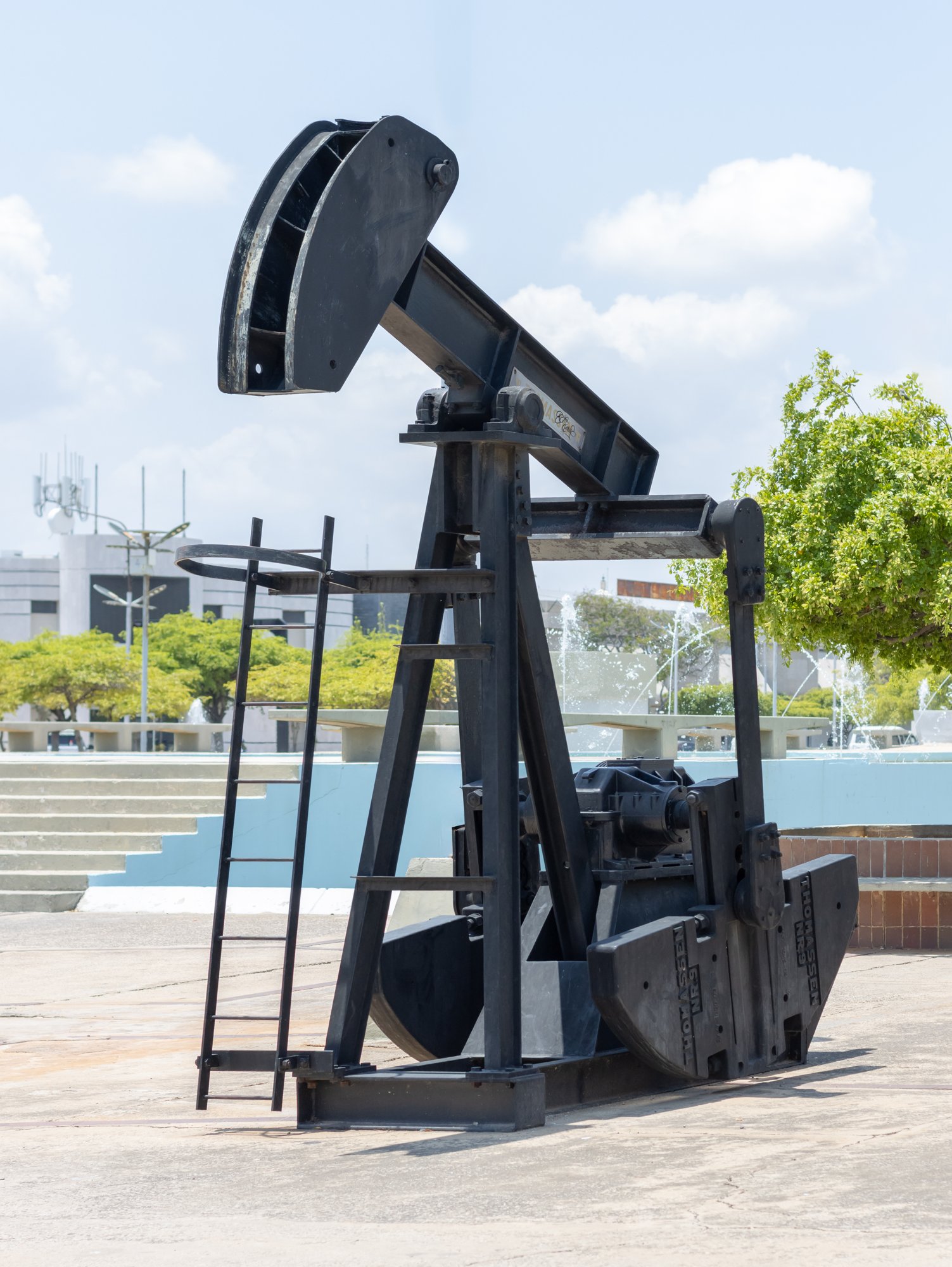
Bloomberg reported on 27 August that Venezuela is closely examining plans to leave OPEC. A Venezuela OPEC exit would end membership in the Organization of the Petroleum Exporting Countries since 1960.
One-stop reference
Company Intelligence
Every listed company in Latin America — financials, ownership and structure for 1,450+ companies across 26 exchanges, in one place.
What the Bloomberg report actually says
Bloomberg published the story on 27 August 2026 under the byline of Ben Bartenstein, Mie Dahl and Fabiola Zerpa. Its headline says Venezuela weighs an exit after decades of membership.
The verb matters here. The report says Caracas is closely examining plans to leave, and that no final decision has been made.
It also says the idea has come up in conversations with United States officials. That is a discussion, not a filing, and Bloomberg does not claim otherwise.
Reuters carried a related story on 28 August about American access to Venezuelan oilfields. It noted separately that Venezuela is considering leaving the group, without going further.
How the sourcing holds up
Every source in the Bloomberg piece is anonymous. The article attributes the exit talk to people asking not to be identified discussing private information.
The wording points to more than one person rather than a single voice. Bloomberg writes that some of the people described the conversations, which implies a group.
A White House spokesperson declined to comment for the story. Venezuela’s Information Ministry did not respond to requests for comment.
Reuters built its own oilfield story on two unnamed sources on 28 August. Two outlets working separate sources is firmer ground than one, though nobody has gone on record.
Why a founding member would be different
Venezuela is one of five states that created the group at the Baghdad Conference in September 1960. The others were Iran, Iraq, Kuwait and Saudi Arabia.
Venezuelan oil minister Juan Pablo Pérez Alfonzo drove the idea alongside Abdullah Tariki of Saudi Arabia. They acted after foreign oil companies cut posted crude prices without consulting producers.
Pérez Alfonzo wanted producer states to set their own terms rather than accept them. That principle is the founding argument of the organisation, and Caracas supplied it.
A Venezuela OPEC exit would therefore remove the member that supplied the original idea. That is why the story carries weight far beyond the barrels involved.
Venezuela’s actual weight in the group today
Bloomberg puts Venezuelan crude output at about 1.16 million bpd in July 2026. The abbreviation bpd means barrels per day, the standard unit for oil production.
That is roughly a third of the peak the country pumped in the late 1990s. Sanctions, years of underinvestment and the decay of PDVSA drove the fall.
PDVSA is Petróleos de Venezuela SA, the state company that runs the country’s fields. Its decline is the reason Caracas now sits outside the group’s production limits.
Bloomberg states plainly that Venezuela is subject to no production limits at present. A Venezuela OPEC exit would free the country from a ceiling it does not currently face.
What leaving would and would not change
On quotas the practical effect is close to nothing in the short term. Venezuela already produces without a target, so departure would release no extra barrels.
Market access would not change either, because membership neither grants nor blocks buyers. Venezuelan crude already moves to American refiners under licences issued in Washington.
Price formation is where the effect is indirect but real. Each departure narrows the share of world supply the group can coordinate.
The clearest change would be diplomatic. A Venezuela OPEC exit would read as a public choice of Washington over the producer bloc.
It would also hand other frustrated members a ready argument. That is the risk the group faces after a year of departures and threats.
The exits that came before
Ecuador left in January 2020, having rejoined in 2007, citing fiscal needs and a wish to pump more. It had also left once before, in 1992.
Qatar left in January 2019, announcing the move that December to concentrate on liquefied natural gas. It had joined in 1961, a year after the founding.
Indonesia suspended its membership in 2009, returned in January 2016, then suspended again that November. It had become a net oil importer and could not meet a quota.
Angola announced its departure in December 2023 and left in January 2024 over a quota dispute. Gabon left in 1995 and rejoined in 2016.
The United Arab Emirates announced withdrawal on 28 April 2026, effective on 1 May. Iraq threatened to leave on 25 June, and its oil ministry then denied the reports.
Who has spoken and who has not
No statement has come from the OPEC Secretariat about the report. Saudi Arabia and Russia have also said nothing publicly about a Venezuelan departure.
PDVSA and the Venezuelan oil ministry have not commented on the membership question. Neither responded to press requests around the Bloomberg and Reuters stories.
The most recent secretariat remark on Venezuela predates the story by months. Secretary General Haitham Al Ghais met Venezuelan officials in Saint Petersburg on 4 June 2026.
Al Ghais spoke then of the importance of Venezuela to the group as a founding member. He offered cooperation on the country’s oil industry, with no hint of a split.
Neil Atkinson of the National Centre for Energy Analytics wrote on 4 June that Venezuela was a likely next leaver. He added that any such decision may be influenced by the United States.
What alignment with Washington can be shown
Some of the alignment is documented. Nicolás Maduro was removed in January 2026, and Delcy Rodríguez was sworn in as interim president.
Rodríguez appointed Paula Henao as hydrocarbons minister in March 2026. On 20 August, Henao publicly invited American firms to invest in Venezuelan acreage.
Reuters reported on 28 August that seventeen fields sit on a list under negotiation with Washington. The Rio Times covers those field talks in a separate report.
What is not documented is any Venezuelan decision on membership. The step from deeper commercial ties to a formal Venezuela OPEC exit remains unproven.
Frequently Asked Questions
Has Venezuela decided to leave OPEC?
No. Bloomberg reported on 27 August 2026 that a Venezuela OPEC exit is under examination, with no final decision taken.
Would leaving change how much oil Venezuela sells?
Not directly, because the country already sits outside the group’s production limits. Its output is set by investment and sanctions policy, not by a quota.
How long has Venezuela been an OPEC member?
Since the founding conference in Baghdad in September 1960, almost sixty-six years. A Venezuela OPEC exit would end one of the five original memberships.
Sources
- www.bloomberg.com
- www.business-standard.com
- www.bnnbloomberg.ca
- www.aljazeera.com
- energyanalytics.org
- rnv.gob.ve
- www.thenationalnews.com
- fortune.com
- www.mees.com
- en.wikipedia.org
- riotimesonline.com
This article was produced by The Rio Times’ automated newsroom system. How we use AI · Report an error
The Rio Times · Power Map
See who really holds power in Latin America
Click to open the Power Map →