 By The Epoch Times | Created at 2026-08-14 10:47:42 | Updated at 2026-08-14 12:54:13
3 hours ago
By The Epoch Times | Created at 2026-08-14 10:47:42 | Updated at 2026-08-14 12:54:13
3 hours ago
CARACAS, Venezuela—On the outskirts of Venezuela’s capital city, Caracas, citizens mill about the streets, smiling and carrying on with their lives in a way reminiscent of what it was like in this once prosperous and free nation before socialist policies took root.
A mere stone’s throw away sits El Rodeo, a notorious prison and torture center.
The country’s former leader, Nicolás Maduro—who oversaw a period of catastrophic collapse, violence, and political retribution against Venezuelans—currently sits in an American prison, but El Rodeo serves as a looming reminder of the
remnantsof his regime.
Hiowanka Ávila, sister of political prisoner Henryberth Rivas, who is imprisoned at El Rodeo, said that when security forces arrested her brother, they tied him “to a police vehicle and dragged him.”
“They beat him, attached electrodes to his testicles, subjected him to electric shocks, [and] hit his feet with a small hammer, causing his toenails to come off,” she said.
It has been roughly eight months since the United States
capturedMaduro and his wife during a daring, overnight operation, but the
impactsfrom decades of violent, corrupt rule linger.
The Epoch Times traveled to Venezuela after Maduro was removed from power and met with citizens, dissidents, journalists, and former prisoners who described Venezuelans as a traumatized population. However, they shared a common belief that they can transform their home back into the prosperous and free country it once was.
US Oversight
From 1950 to 1982, Venezuela was the richest country in Latin America. Socialist policies took root by the late 1990s, when Hugo Chávez rose to power, rewrote the constitution, and
alignedthe country with Cuba, Iran, and China. Maduro ruled for more than a decade after Chávez died, but things have
changedunder U.S. President Donald Trump’s leadership.
In the early morning hours of Jan. 3, U.S. forces descended on Caracas and successfully apprehended Maduro and his wife, Cilia Flores, and transported them to New York City to face narcoterrorism charges. The deposed leader’s
trialis set for June 1, 2027. Both he and his wife have pleaded not guilty.
Maduro’s vice president, Delcy Rodríguez, was
allowedto assume control under the watchful eyes of the Trump
administration.
On Aug. 1, U.S.-backed negotiations began between Venezuela’s interim government and a section of the country’s
opposition. The United States has said it intends to remain involved until Venezuela is
stable, economically sound, and holds a free and fair election.
“We’ve established what I think, so far, has been a very respectful and productive line of communication as we go through this stabilization phase and towards the recovery phase,” U.S. Secretary of State Marco Rubio said. “There’s a lot of work to be done here.”
Hundreds of political
prisonersin Venezuela have been
releasedat the Trump administration’s direction.
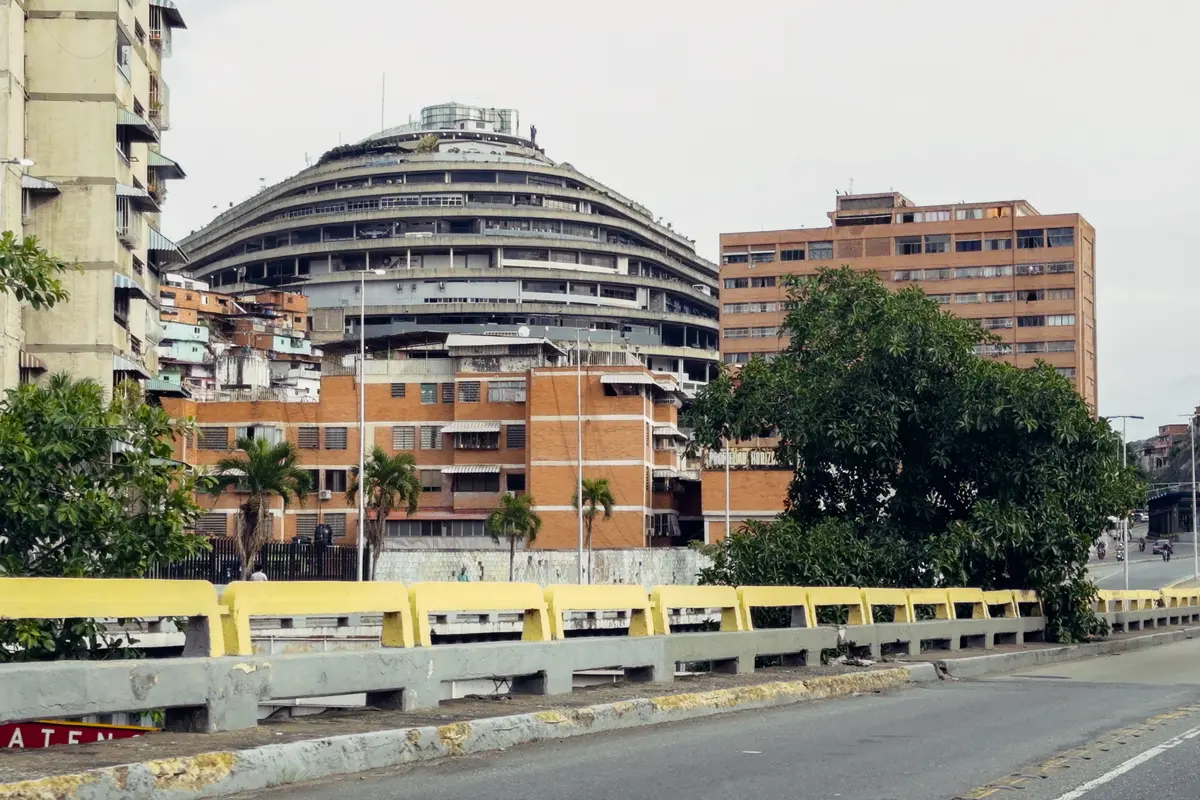
The dome-shaped El Helicoide served as the Venezuelan regime's main prison and torture center for political prisoners, in Caracas, Venezuela, on July 7, 2026. Frederico Vidovix/The Epoch Times
“I would also like to report that, as of today, 626 people who had been deprived of their liberty have been released from prison,” Rodríguez said earlier this year.
But it is not enough, Venezuelans told The Epoch Times, because Rodríguez was part of the apparatus that imprisoned these people in the first place.
Political Prisoners
Intimidation and false accusations are common tactics the Maduro regime used against its political opponents. The violence and torture that followed for those taken into custody became even more normalized—it likely still happens to this day.
Edward Ocariz, a human rights activist who was jailed for four months during the 2024 elections in Venezuela, said his case is still open and he is awaiting a summons for a trial.
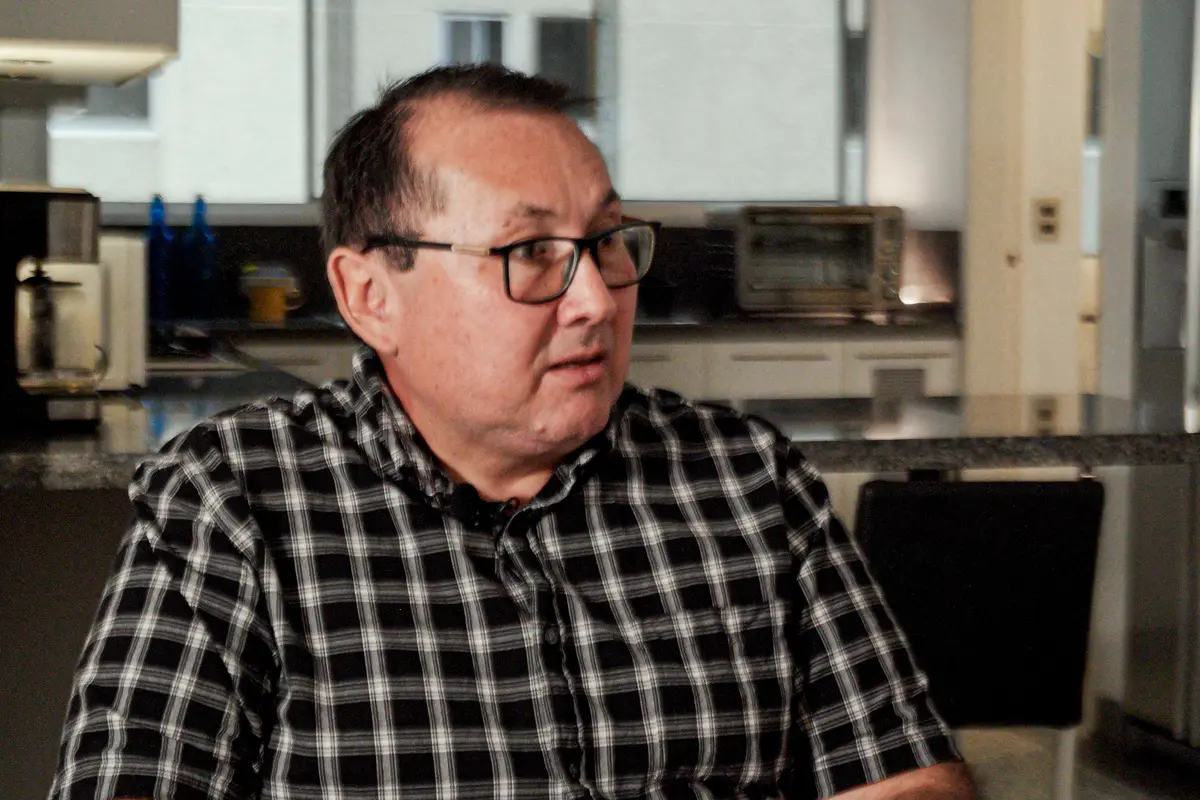
Human rights activist Edward Ocariz talks about the changes needed in Venezuela, in Caracas, Venezuela, on July 6, 2026. He was jailed for four months by the Venezuelan regime during the 2024 election. Frederico Vidovix/The Epoch Times
“We know very well that these trials will not begin. However, my legal proceedings remain open as a mechanism of intimidation,” he said.
Ten armed men with no identification abducted him from his home one day. He was accused of terrorism and incitement to hatred, among other charges.
“If you say anything ... they won’t give you the food bag you need in order to eat,” he said. “We went from that to psychological terrorism in Venezuela. We went from that to criminalizing anyone who is a dissident or whom they consider to be opposed to the party line.”
Ávila said her brother was detained in 2018 and accused of taking part in a drone attack against Maduro. He received a 30-year sentence.
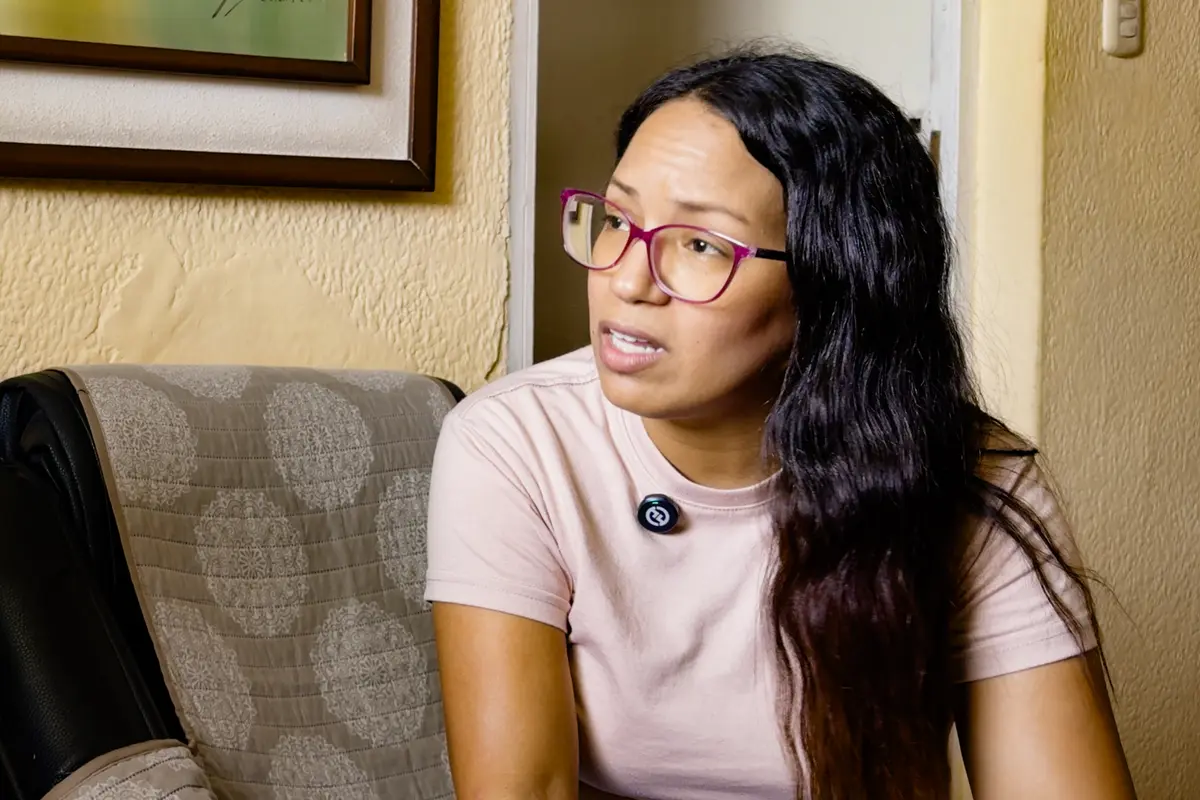
Hiowanka Ávila shares some of the methods the Venezuelan regime has used to torture her brother, who is being held in El Rodeo prison, at her home in the Catia neighborhood of Caracas, Venezuela, on July 8, 2026. Frederico Vidovix/The Epoch Times
His case was solely crafted by the Maduro regime’s agencies, which used confessions obtained under torture as evidence. Ávila’s brother, Rivas, had no right to due process, a fair trial, or fair treatment.
“They beat him ... put a hood over his head, and sprayed insecticide into it,” Ávila said. “Then they submerged his head in water and kept him suspended for around 15 days. They placed him in solitary confinement, inside a dark cell filled with cockroaches, rats, and with no ventilation.”
It took 48 days for Ávila to see her brother again. Bruises covered his body, she said.
This scenario has played out for thousands of Venezuelans who lost loved ones to politically motivated imprisonment, torture, and death, and they are forced to continue their lives in fear of the same thing happening to them.
Outside El Rodeo prison, this is the case for Massiel Cordones, whose son has been imprisoned for years.
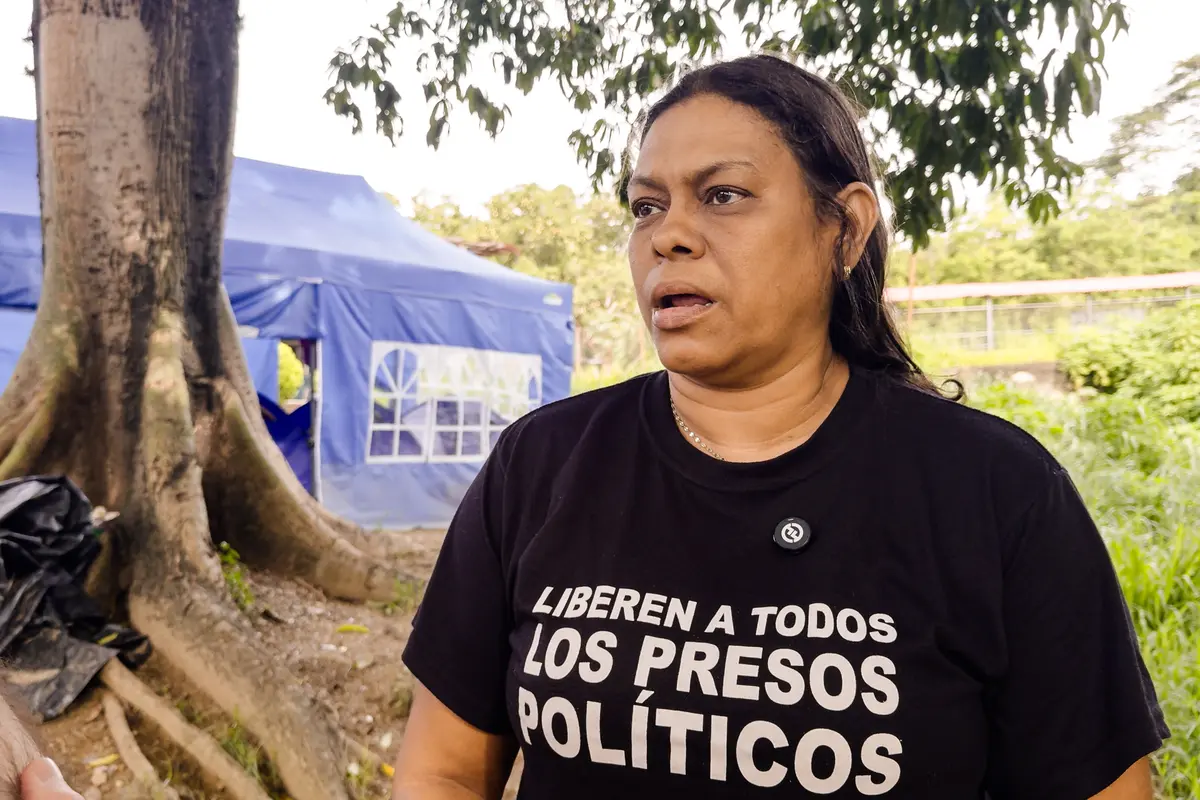
Massiel Cordones protests against her son's imprisonment outside El Rodeo prison, in Guatire, Venezuela, on July 8, 2026. Cordones said her son has been tortured during his six years in prison so far. Frederico Vidovix/The Epoch Times
She told The Epoch Times that her son, José Cordones, served four years at El Helicoide, historically the most notorious prison in Venezuela. He was transferred two years ago to El Rodeo, where he remains.
“My son has been tortured. Every political prisoner has been tortured,” Cordones said.
If the regime could not find the individual it was searching for, it abducted relatives, she said.
Cordones said at El Rodeo that several members of the same family have been taken for this reason.
“The conditions we have to endure here. ... I don’t regret it, because it’s for my son’s freedom,” Cordones said, standing outside a row of small tents where protesters plead for their family members’ release.
In and around Caracas alone, an Epoch Times review of U.N. and nongovernmental organization reports identified about a dozen official or unofficial sites where similar abuses against political prisoners have been documented or alleged. It remains unclear how many of these sites exist across the country and whether the conditions have remained the same in the months since Maduro’s capture.
Directly in the middle of Caracas is El Helicoide, the Maduro regime’s main torture center. It is known as one of the worst in the surrounding countries. Thousands of Venezuelans have been subjected to horrific conditions inside.
At the time of Venezuela’s prosperity, El Helicoide was built as a drive-in shopping mall.
The regime took it over in the 1980s.
The mall was never completed and instead turned into the facility that stands to this day. Rodríguez claimed that it would be shut down following Maduro’s capture, but even now, a heavy police presence patrols the area.
A statue of Chávez atop the building also keeps watch.
Freedom of Speech, Press
Basic freedoms are slowly
returningto Venezuela, but the fear of the remaining regime outweighs citizens’ desire to fully exercise them.
Oscar Murillo, general coordinator of human rights organization PROVEA, spoke to The Epoch Times candidly about the current state of his country but said he had no guarantee that he would not be persecuted for doing so the very next day.
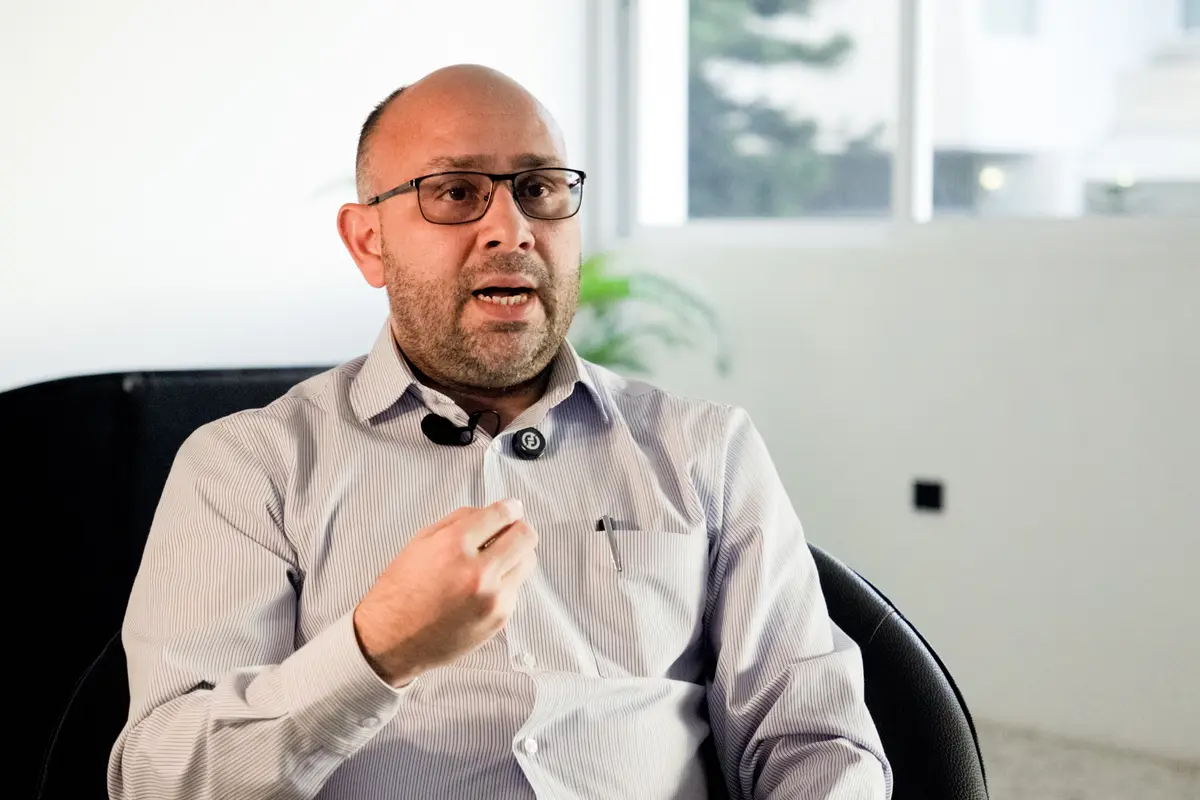
Oscar Murillo, general coordinator of human rights organization PROVEA, said Venezuelans’ desire for deep and genuine political change is alive and growing, in Caracas, Venezuela, on July 7, 2026. Frederico Vidovix/The Epoch Times
“The authoritarian system has not been dismantled in Venezuela,” he said. “Delcy Rodríguez has preserved that system. They are all part of the same structure.”
Venezuelans’ desire for deep and genuine political change is alive and growing. That change must involve casting out what’s left of the regime through legitimate, democratic pathways, Murillo said.
It has also become necessary to completely overhaul the Venezuelan judicial system, which enabled Maduro’s criminalization of political and social dissent in the country.
“That framework is still in place,” Murillo said. “[We need] a change that restores our institutions to serving the people and allows us to have legitimately elected, democratic authorities so that, with that legitimacy, we can finally begin the transformations we need in the social, economic, cultural, and educational sectors of the country.”
For journalists, who were viewed by the regime as enemies, there has been a modest change since the former leader’s capture, Venezuelan reporter Luna Perdomo said.
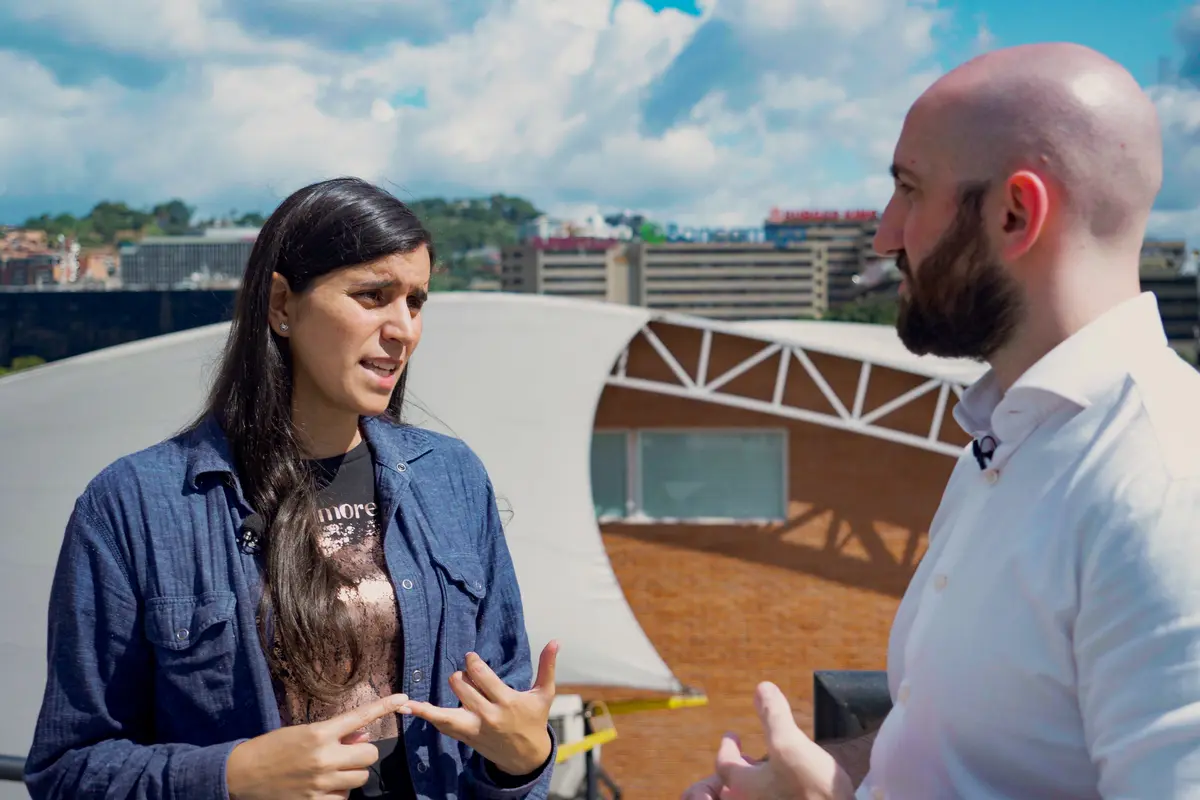
Journalist Luna Perdomo (L) and Epoch Times reporter Marcos Schotgues discuss the slight improvement in press freedom in Venezuela since former leader Nicolás Maduro was ousted, in Caracas, Venezuela, on July 7, 2026. Frederico Vidovix/The Epoch Times
She described Maduro’s persecution of the press as having steadily increased over his years in power. By 2024, it was in full force.
“Many journalists were already in exile, unable to work in Venezuela because they were being threatened by the government,” Perdomo said. “Many journalists were forced to leave the country. Those who were abroad couldn’t return. ... If you were inside the country, you couldn’t even leave.”
Maduro’s government began canceling the passports of journalists, Perdomo included, without any justification.
After Maduro’s capture, Rodríguez released more than 20 imprisoned journalists, Perdomo said. Six of them are still under supervision and are required to report regularly to the courts.
“Press freedom is still restricted,” Perdomo said. “Journalists still do not have access to many places in the country.”
Riches to Rags to Riches
Decades ago, Venezuela was the richest country in Latin America on a per capita basis, but between 2013 and 2021, it lost more than three-quarters of its gross domestic product.
Luis Crespo, an economics professor and vice president of the teachers association of the Central University of Venezuela, called it a “historic collapse.”
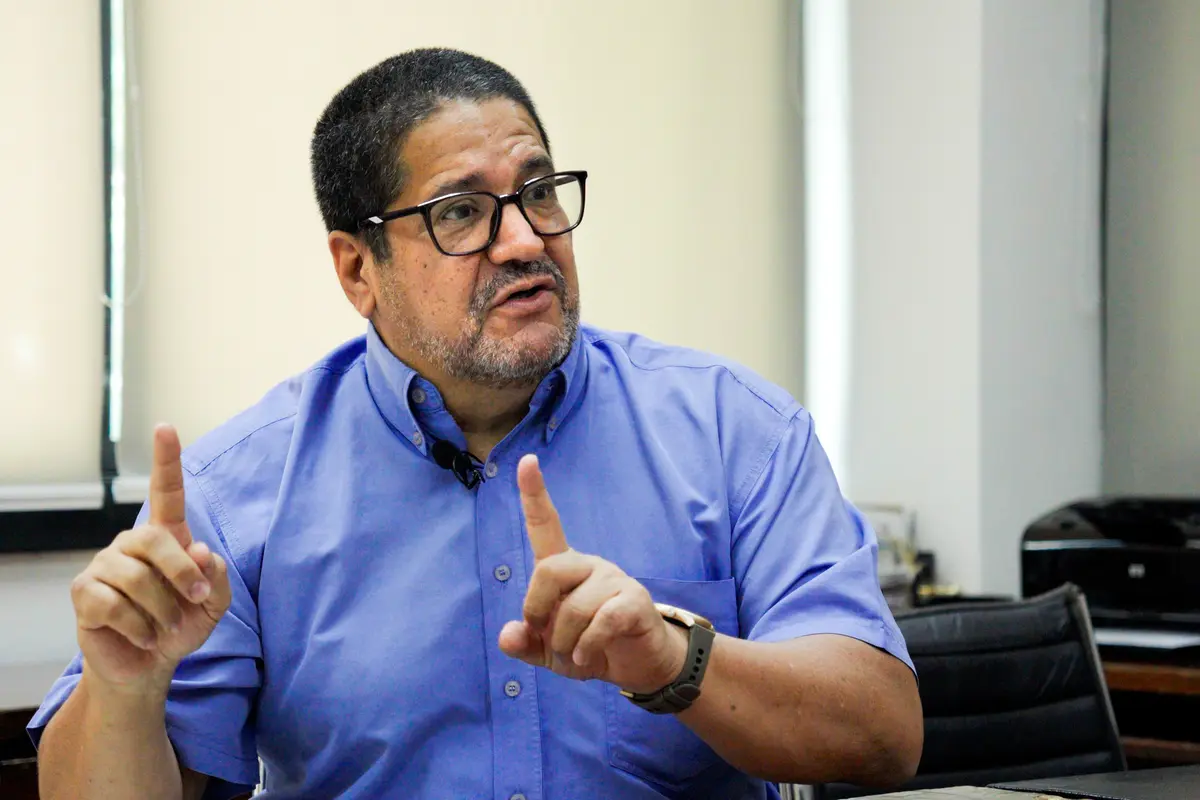
Luis Crespo, economics professor and vice president of the teachers association of the Central University of Venezuela, outlines Venezuela's economic downfall, in Caracas, Venezuela, on July 8, 2026. Frederico Vidovix/The Epoch Times
The country currently produces about 1.3 million barrels of oil. In 2021, that amount fell to just 600,000 barrels, Crespo said, blaming inefficiency, corruption, and poorly designed public policies.
Wages have remained stagnant for years.
Venezuelan public employees, about 3.8 million people, only earn about $200 per month.
“That’s why you see them working only two or three days a week,” Crespo said.
He told The Epoch Times that most professors in the association work two or three jobs to make ends meet, which distracts them from research and other duties at the university. Historically, the Central University of Venezuela is the most significant academic institution in the country.
For a university professor such as himself, with a PhD, multiple publications, proficiency in a foreign language, and at least 20 years of teaching experience, the base monthly salary is abysmal: $1.10.
“With additional bonuses, which are not considered wages, their total monthly income is around $200,” Crespo said. “This same professor at the beginning of the 2000s, or compared with their peers across Latin America today ... [would] typically earn between $3,100 and $3,200 a month.”
To return to Venezuela’s proper glory means more than just restoring it economically.
Venezuelans suffered years of physical, emotional, and psychological torment. Nearly 8 million have fled since 2015. Families have been torn apart and remain separated.
The Epoch Times’ guide for the Venezuela trip, Carlos José Leon, fled the country in 2018 out of fear of the Maduro regime and has lived in Brazil since. His brother, who also fled in 2018, has been living in Colombia.
They had not seen each other in nearly nine years.
“I decided I had to leave. He had already made that decision,” Leon said. “He was a police officer—that had always been his dream, but the pay was terrible—and what he saw inside the institution made it clear that sooner or later he’d end up repressing people, and one day, I might be among them.”
The Venezuelan regime, like many authoritarian regimes, strives to break families apart, because, in doing so, it destroys people’s ability to resist, he said.
In Colombia, Leon was finally reunited with his brother.
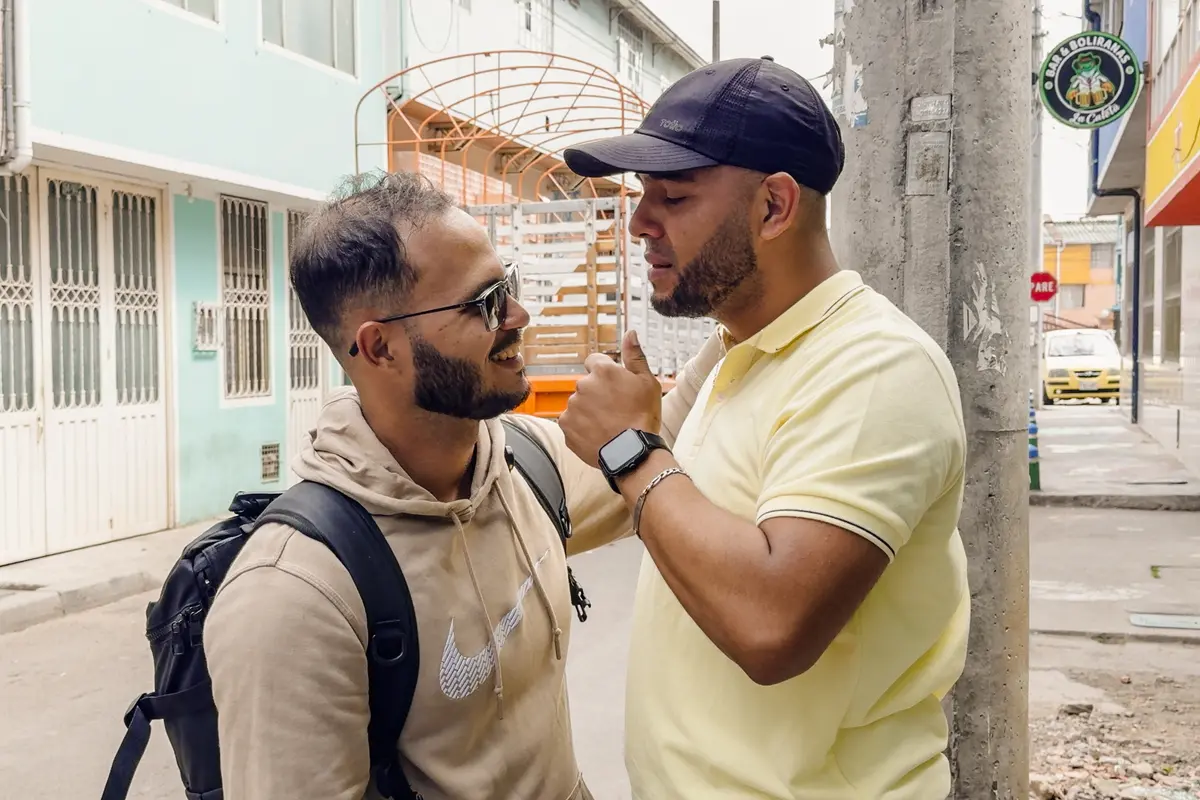
Venezuelan brothers Carlos José Leon (L) and Yarvis Hoyos greet each other for the first time in nearly nine years. In 2018, Leon fled Venezuela to live in Brazil and Hoyos fled to Colombia, in Bogotá, Colombia, on July 5, 2026. Frederico Vidovix/The Epoch Times
His brother told The Epoch Times that he had been training to join SEBIN, Venezuela’s intelligence service, which indoctrinated its trainees.
He said he could not continue listening to the agency’s lies while his family and others suffered.
“I want people to think I’m serious, that I’m strong, but behind that, there’s someone who still hurts for having left his country,” Leon’s brother said. “It hurts that I couldn’t fulfill my purpose there, that I couldn’t contribute what my country needed.”
Moving to Colombia gave him what Venezuela could not: work, stability, a future.
“Here [in Colombia], thank God, I know that if I work, I can plan for what comes next,” he said. “That has been one of the greatest gifts this country has given me, but it still breaks my heart that it couldn’t have been my own country.”
Ávila said every Venezuelans’ greatest fear is never achieving freedom from the regime and remaining under its darkness.
After Jan. 3, when Maduro was captured, a “crack of light” that had been blocked for decades was renewed, Ocariz, the human rights activist, said.
“What we’re seeing is not an open door,” he said. “It’s just a few rays of light reaching us, but certainly, that psychological terrorism still continues.”