By The Daily Caller (Opinion) | Created at 2026-06-04 00:09:47 | Updated at 2026-06-07 06:51:38
3 days ago
By The Daily Caller (Opinion) | Created at 2026-06-04 00:09:47 | Updated at 2026-06-07 06:51:38
3 days ago
Women are flocking back to Victoria’s Secret.
It has little to do with clever marketing, as many have suggested. Simply put: It’s probably the Ozempic.
Victoria’s Secret shares spiked about 50% Tuesday, according to Reuters — marking a record high for the 49-year-old lingerie retailer. Victoria’s Secret stock has “nearly tripled in value” in the past year, Reuters reports.
Reuters notes that CEO Hillary Super, appointed to the role in 2024, has directed the company to (re)embrace sex appeal. (RELATED: Victoria’s Secret Trying Best Not To Be Next Cracker Barrel)
Super told Fortune in February that “performative” displays of diversity “lack authenticity.”
Reuters suggests Victoria’s Secret’s ongoing dewokeification is responsible for the turnaround, as does Barron’s, as does the New York Post.
Victoria’s Secret has, during Super’s tenure, charted a course back toward sex appeal. But Ozempic, and other GLP-1s, are likely responsible for the brand’s resurgence.
About 12% of American adults reported they were currently taking a GLP-1 in November 2025, according to non-profit polling organization KFF. Women use GLP-1s at higher rates than men, says The RAND Corporation.
In short, women are getting thinner, feeling better about themselves, and are therefore more inclined to buy lingerie, or to replace their old and now-ill-fitting undergarments. Victoria’s Secret is the best-known lingerie brand in America, if not the world. It’s not surprising that newly confident female consumers would spend their money there.
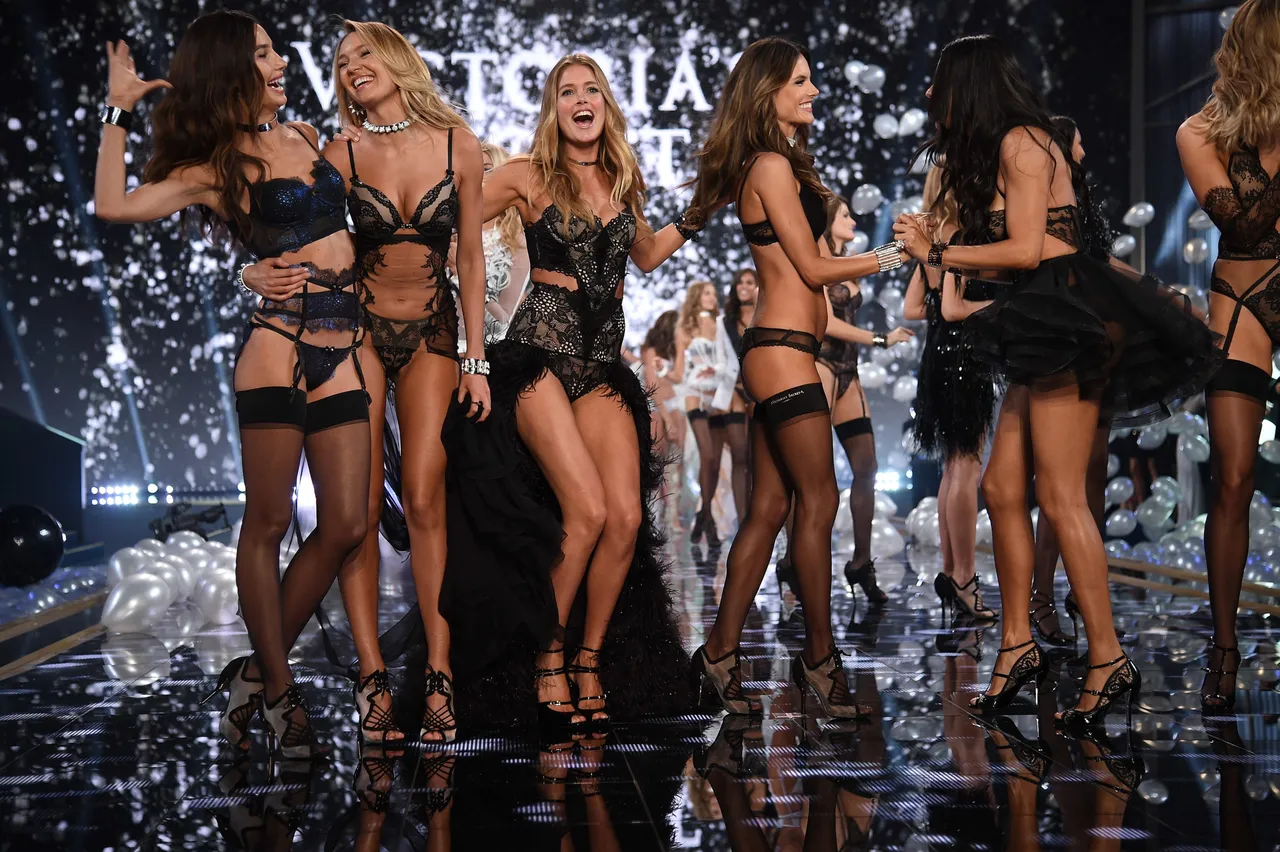
LONDON, ENGLAND – DECEMBER 02: Victoria’s Secret models (L-R) Lily Aldridge, Candice Swanepoel, Doutzen Kroes and Alessandra Ambrosio walks the runway during finale of the 2014 Victoria’s Secret Fashion Show at Earl’s Court exhibition centre on December 2, 2014 in London, England. (Photo by Dimitrios Kambouris/Getty Images for Victoria’s Secret)
Victoria’s Secret was once synonymous with aspirational beauty. Women bought lingerie from Victoria’s Secret to achieve proximity to tall, lean, impossibly symmetrical women like Candice Swanepoel or Adriana Lima. For many women, the annual Victoria’s Secret Fashion Show was their Super Bowl.
Victoria’s Secret cancelled their fashion show in 2019, amid increasingly loud griping about the lack of “body diversity” and “inclusivity” on the runway. Ratings were down, too.
The fashion show would not return until 2024 — this time, with fatter models, older models, and two male “angels.” Victoria’s Secret hired their first model with Down syndrome in 2022. That year, the brand launched the “Love Cloud” campaign, which was “modeled by eighteen dynamic women, reinforcing Victoria’s Secret’s commitment to welcoming and celebrating all women.” (RELATED: Victoria’s Secret Announces Angel Reese Is Set To Hit Runway)
Victoria’s Secret’s desperate stab at relevance (“Hey fat women, you’re gorgeous, give us your money!”) did not work. Sales reportedly dropped from $8.1 billion in 2018 to $7.5 billion in 2019 to $5.4 billion in 2020. Stock dipped from $57 a share in 2021 to about $20 a share in 2025, according to Fortune.