 By The Epoch Times | Created at 2026-09-07 16:44:55 | Updated at 2026-09-07 18:26:36
1 hour ago
By The Epoch Times | Created at 2026-09-07 16:44:55 | Updated at 2026-09-07 18:26:36
1 hour ago

Undated file photograph of an Ozempic GLP-1 self-injectable device at clinic in Mumbai. Indranil Mukherjee/AFP via Getty Images
American doctors are increasingly prescribing weight-loss drugs to children with obesity as young as 8, according to a study published on Sept. 4.
The practice was rare at the start of the study period in 2019 but has since increased rapidly as doctors seek new, effective treatments for younger patients with obesity.
Using data from more than 3.5 million children aged between 8 and 11 years with obesity but not diabetes, researchers found that prescriptions for glucagon-like peptide-1 (GLP-1) weight-loss drugs rose from 0.03 percent in 2019 to 9.3 percent as of June.
GLP-1 drugs were originally made to treat diabetes and then repurposed for their weight-loss effects. They are not approved for use in children under 12 years, but clinical guidelines allow the medications to be used for obesity in children as young as 8 years old in certain cases.
The study, funded by NYU Langone and published in the journal Pediatrics, found that an estimated 20 percent of children in the United States have obesity, meaning their body mass index (BMI) is above the 95th percentile for children of similar age and sex, without having diabetes, a well-known complication of the disease.
Researchers measured prescriptions for Saxenda, Wegovy, and Zepbound. They found that 93.7 percent of the children prescribed the drugs had severe obesity, and about 65.2 percent had at least one related condition, such as high cholesterol, high blood pressure, and sleep apnea.
Overall, 20,282 children received GLP-1 drugs during the study period, most often Novo Nordisk’s Wegovy. Doctors also prescribed Novo’s Saxenda and Eli Lilly’s Zepbound.
Lead investigator Dr. Babak Orandi of NYU Langone Health said the study “shows that while the absolute numbers of children under the age of 12 receiving GLP-1 treatment is still low, GLP-1 use is accelerating rapidly.”
Study co-author Allan B. Massie, an associate professor at NYU Grossman School of Medicine, said that young children with obesity who need these drugs should have access to them.
A team of clinicians warned in a 2023 article that the use of GLP-1 drugs to treat childhood obesity may have unintended or adverse consequences for children’s health.
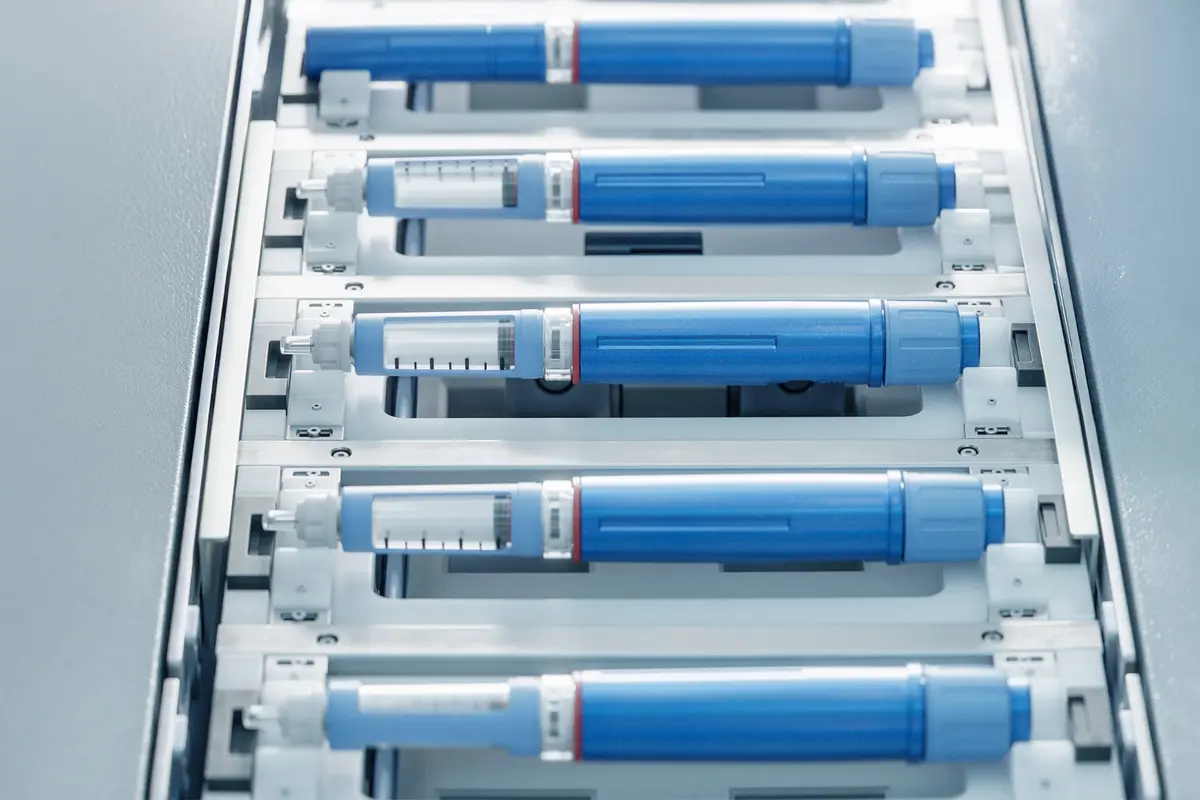
GLP-1 devices in an undated file photograph. IM Imagery/Getty Images
“A major element of our concern is that unbalanced and inappropriate reductions in caloric (energy) intake could be induced by [GLP-1 drugs] in children and adolescents,” they wrote in the article, published in the Journal of Clinical and Translational Science.
“Energy in children and adolescents is expended not only on physical activity but also, unlike in adults, on growth and development.”
Reuters, Naveen Athrappully, and Rachel Roberts contributed to this report.