By The Rio Times | Created at 2026-10-08 14:26:44 | Updated at 2026-10-08 15:35:05
1 hour ago
By The Rio Times | Created at 2026-10-08 14:26:44 | Updated at 2026-10-08 15:35:05
1 hour ago
UNITED STATES · HALLOWEEN
Key Facts
- —The country United States; 74% of consumers plan to celebrate Halloween in 2026.
- —The roots Samhain, a Celtic festival marking the start of winter.
- —The Christian layer All Saints’ Day on 1 November, All Souls’ Day on 2 November.
- —What happened Irish and Scottish immigrants brought Halloween to the US in the 1840s.
- —The numbers The National Retail Federation forecasts US$13.5 billion in spending for 2026.
- —Latin America Mexico’s Day of the Dead follows on 1 and 2 November.
From a Celtic winter festival to a US$13.5 billion American night, Halloween’s roots reach back more than 2,000 years.
What is the history of Halloween? It began as Samhain, a Celtic festival marking winter’s start, and took its name from All Hallows’ Eve.
Irish and Scottish immigrants carried its customs to the United States in the 1840s, where pumpkins replaced turnips and treats replaced tricks.
What Is the History of Halloween, in Short
The holiday has four layers: a Celtic festival, Christian feasts, Irish and Scottish folk customs, and American commerce. Each left habits that Americans still follow on 31 October.
- Samhain: a Celtic festival on 1 November, kept mainly on the night before, that opened winter.
- 609 or 610: Pope Boniface IV dedicates Rome’s Pantheon to the Virgin Mary and all the martyrs on 13 May.
- 731 to 741: Pope Gregory III dedicates a chapel in St Peter’s to all the saints, with its anniversary on 1 November.
- 827 to 844: Pope Gregory IV extends the 1 November feast of All Saints to the whole Church.
- By 1008: the diocese of Liège adopts the yearly remembrance of all the dead begun at Cluny in France; it becomes All Souls’ Day.
- 16th century: “guising”, going door to door in disguise for treats, is common in Scotland and Ireland.
- 1840s: Irish and Scottish immigrants bring Halloween customs to the United States in large numbers.
- 1920s to 1930s: the phrase “trick or treat” appears, then features in national magazines.
- After 1945: trick-or-treating spreads through the suburbs once wartime sugar rationing ends.
- 2026: the National Retail Federation forecasts US$13.5 billion in Halloween spending.
Samhain, the Celtic Festival at Summer’s End
Samhain, pronounced roughly “sow-in”, falls on 1 November. According to the National Museum of Ireland, the festivities took place mainly on the night of 31 October.
The museum describes Samhain as one of four seasonal markers in the traditional Irish calendar, signalling the start of winter. The Library of Congress glosses the name as “summer’s end”.
The library’s American Folklife Center, its folk-culture archive, calls Samhain “an ancient, pre-Christian Celtic festival of the dead”. Its roots lie with the Celts more than 2,000 years ago, according to Smithsonian magazine.
The central belief was that the barrier between the living and the dead grew thin on that night. Fairies, demons and other spirits were thought to roam, Smithsonian magazine reported in 2024.
People left food to placate the spirits and wore disguises of beasts or monsters to blend in with them. Trick-or-treating is “a modern day holdover” of bribing the spirits, anthropologist Bettina Arnold wrote in a paper Smithsonian cited in 2009.
Fire mattered too. In Ireland, 31 October is still the night for community bonfires, especially in urban housing estates, the National Museum of Ireland notes.
How All Saints’ and All Souls’ Days Reshaped It
The name Halloween is Christian, even if many of its customs are older. It is a contraction of All Hallows’ Eve, the night before All Hallows’, or All Saints’, Day.
The Catholic Encyclopedia of 1907 traces that feast to Rome. Pope Boniface IV dedicated the Pantheon to the Virgin Mary and all the martyrs on 13 May in 609 or 610.
Pope Gregory III, who led the Church from 731 to 741, dedicated a chapel in St Peter’s Basilica to all the saints. He fixed its anniversary on 1 November.
Gregory IV, pope from 827 to 844, extended the 1 November celebration to the entire Church. All Souls’ Day on 2 November, a day of prayer for the dead, came later.
Odilo, abbot of Cluny in France until his death in 1048, ordered his monasteries to remember all the faithful departed every year. The diocese of Liège, under Bishop Notger, who died in 1008, adopted it first.
The Library of Congress says Christian missionaries placed the two feasts on 1 and 2 November to replace Samhain. Instead, it notes, Christian and pre-Christian beliefs “mingled, creating the popular festival of Halloween”.
Whether the dates were chosen to absorb Samhain is still debated. Smithsonian calls the link to Gregory III “likely”, while the 1907 encyclopedia records only the chapel anniversary.
Guising, Souling and Fortune-Telling in Ireland and Scotland
Folk customs gave Halloween its door-to-door shape. In England, poor people called at houses for soul cakes and promised to pray for the giver’s dead, a custom called souling.
In Scotland and Ireland, guising was common on All Hallows’ Eve by the 16th century, Smithsonian reports. Children in ghoulish disguise were given treats, a way of warding off malign spirits.
The National Museum of Ireland describes guisers as “men or children dressed in disguise” who performed at houses in return for treats. Modern trick-or-treating, the museum says, stems from this tradition.
Fortune-telling filled the rest of the night. Irish families used a ring, clay, water and food to foretell marriage, emigration, death or prosperity, the museum records.
The Scottish poet Robert Burns (1759–1796) set the scene in his poem “Halloween”. Young people pull kale stalks in the dark, burn nuts and eat an apple at the mirror to glimpse a future partner.
Some of this survives. Irish supermarkets now sell barmbrack, a cake baked with objects that foretell the future, the museum notes.
How Irish and Scottish Immigrants Brought Halloween to America
Halloween reached the United States in force in the 1840s, with mass arrivals from Ireland and Scotland, Smithsonian reports. Irish and Scottish immigrants had brought Halloween superstitions since the 18th century, writer Lesley Bannatyne notes.
The trigger was Ireland’s potato blight of 1845, which the Library of Congress credits with launching a second wave of Irish emigration. Within five years, a million Irish were dead and half a million had reached America.
In the 1840s the Irish made up nearly half of all immigrants to the United States, the library says. As many as 4.5 million Irish arrived between 1820 and 1930.
Young immigrants from Ireland and Scotland were “the first American masterminds of mischief”, Bannatyne wrote in a 2017 essay republished by Smithsonian. They strung ropes across sidewalks, tied doorknobs together and overturned swill barrels.
By the early 20th century, big-city pranks had turned destructive, from pulled fire alarms to bricks through shop windows. In 1942 Chicago’s city council voted to replace Halloween with a “Conservation Day”, though the mayor apparently did little.
After World War II, adults moved the celebrations indoors. Individually wrapped candy made it easier to hand out treats and head off pranks, Smithsonian notes.
The Origins of Trick-or-Treating, Jack-o’-Lanterns and Costumes
Trick-or-Treating
Trick-or-treating blends souling and guising with American prank culture. The term only started appearing in the 1920s, Smithsonian reports.
The first magazine articles describing it ran in The American Home in the late 1930s, Bannatyne writes. Radio shows and Disney’s 1952 Donald Duck cartoon “Trick or Treat” then took it national.
The custom really took off after World War II, when sugar rationing ended. Growing suburbs offered easy routes from door to door.
Jack-o’-Lanterns
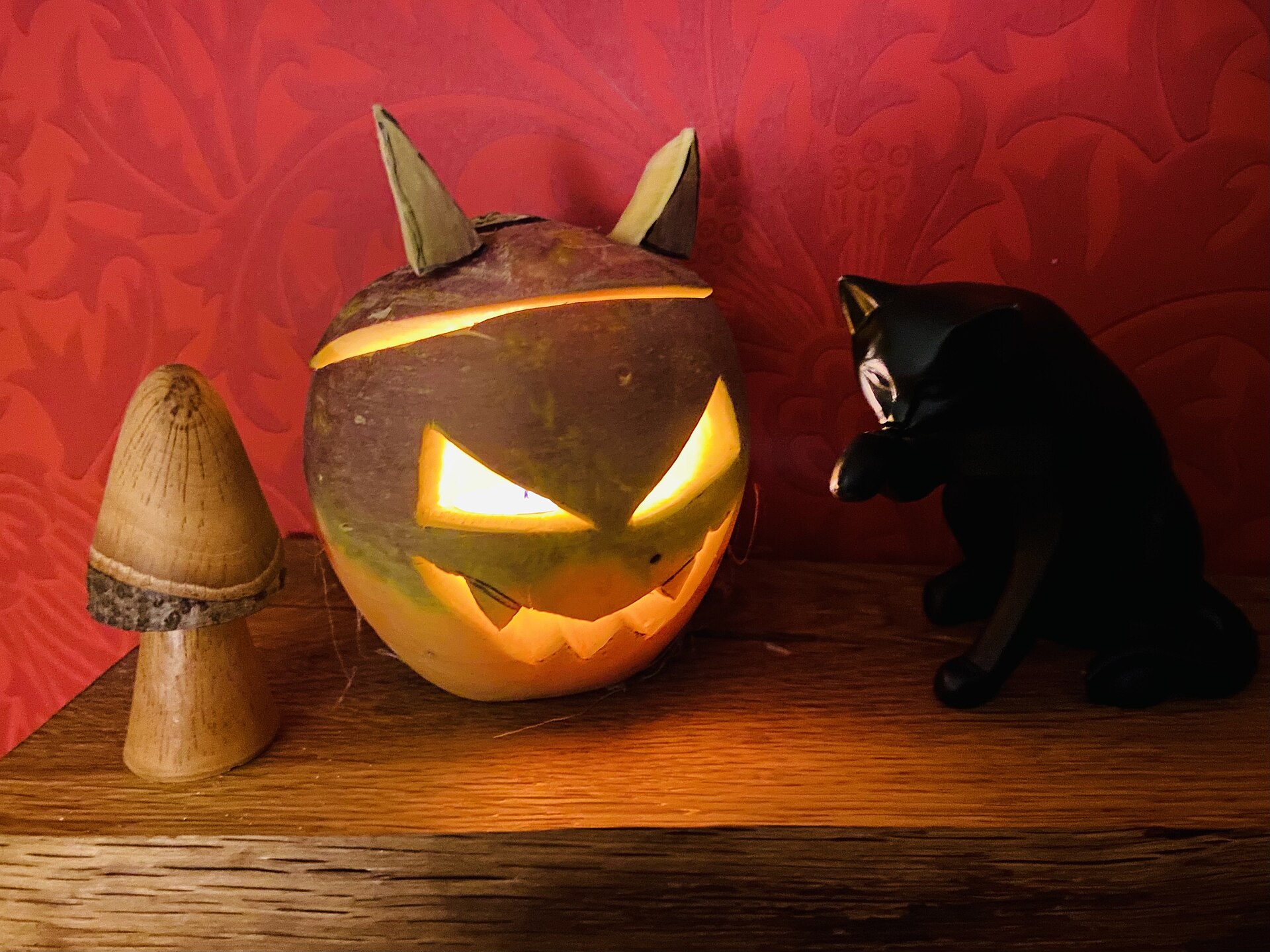
In Ireland and Scotland, lanterns were carved from turnips, not pumpkins. Pumpkins are New World plants and played no part in Celtic festivals, Smithsonian notes.
The National Museum of Ireland displays a plaster model of a turnip lantern from Fintown, County Donegal, a type made around 1900. Rois Ní Braonáin, a schoolteacher working near Fintown, gave the museum the original in 1943.
The museum calls today’s pumpkin “an American development of this Irish tradition”. Irish immigrants found pumpkins more plentiful than turnips and took to carving them, Smithsonian reported in 2016.
The name comes from a folktale about a man barred from both heaven and hell, who wanders with only a lantern. In the best-known version he is Stingy Jack, who tricked the devil.
The Library of Congress holds a 1917 photograph of three boys carving faces into pumpkins. Its folklife blog also shows an 1867 engraving titled “The Pumpkin Effigy”.
Costumes
Costumes descend from the disguises of Samhain and guising, worn to blend in with roaming spirits or to perform for treats. Halloween candy and costume profits hit US$300 million in 1965, Bannatyne writes.
Costumes are the largest spending category in the NRF forecast. The NRF expects US$4.4 billion on costumes in 2026, with Spider-Man the top children’s choice at 4.6 million.
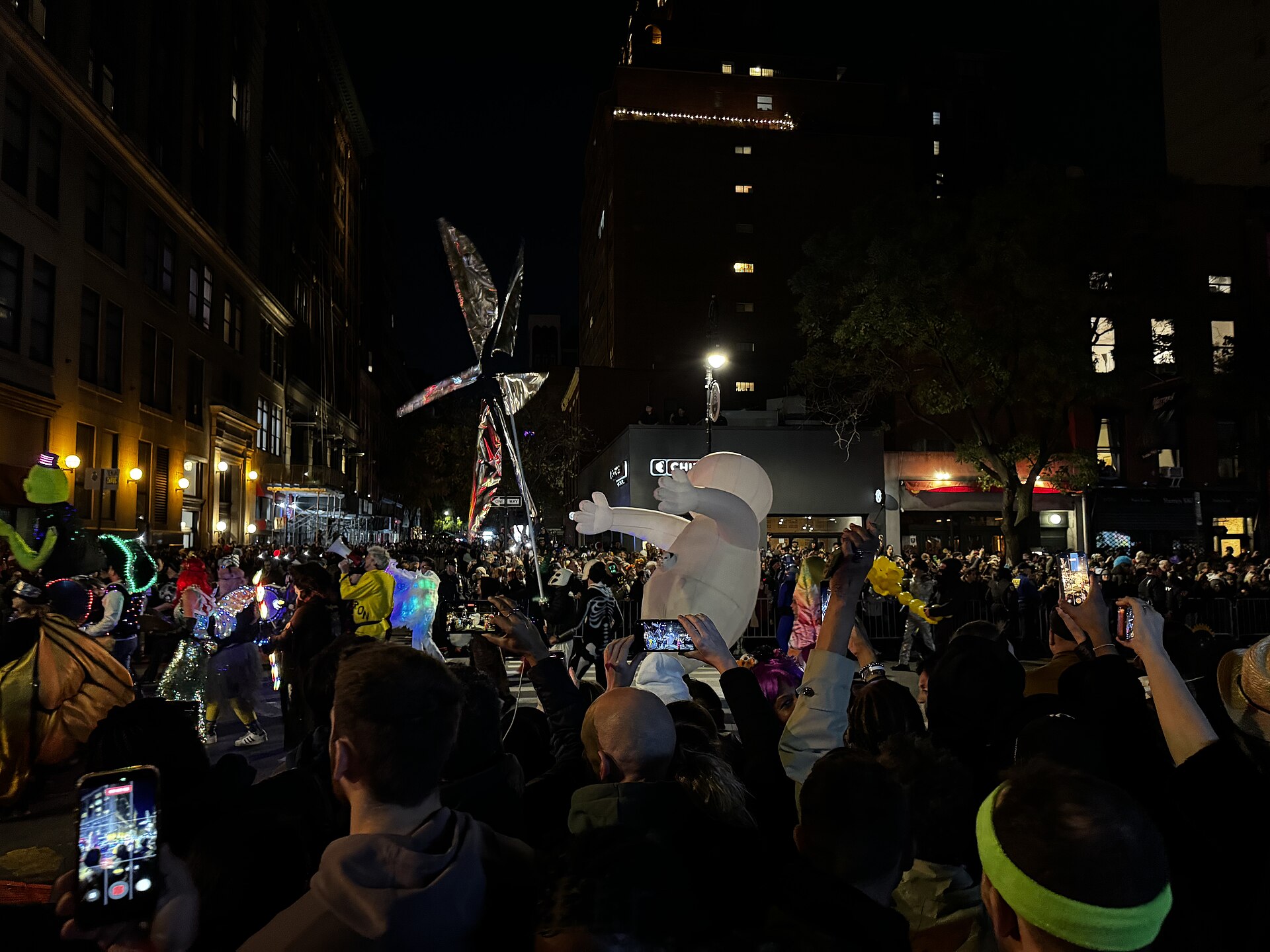
Halloween Versus the Day of the Dead in Latin America
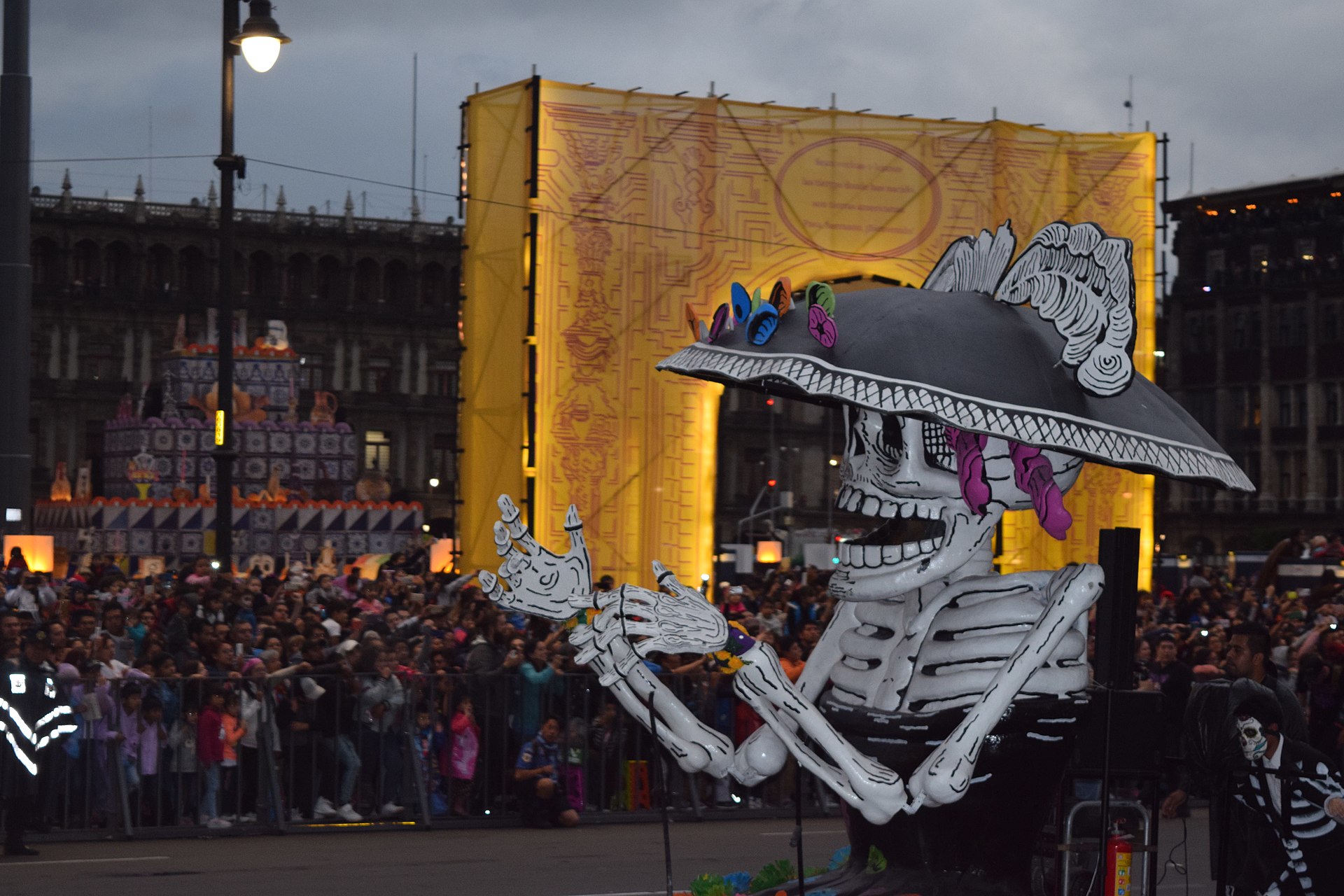
Mexico’s Day of the Dead, Día de Muertos, grew from the same Christian feasts as Halloween. The Library of Congress says All Souls’ Day mingled with Indigenous ancestor celebrations in colonial Mexico.
UNESCO, the UN cultural agency, inscribed Mexico’s “Indigenous festivity dedicated to the dead” on its heritage list in 2008. It describes a fusion of pre-Hispanic rites and Catholic feasts.
The mood is the opposite of a fright night. Halloween disguises once kept spirits at bay, while Day of the Dead families welcome deceased relatives home for a brief return.
Families lay flower petals, candles and offerings along the path from the cemetery to the house, UNESCO says. The dead person’s favourite dishes go on the home altar, or ofrenda, and on the tomb.
Mexico’s Secretariat of Public Education, the SEP, says 1 November is for children who have died and 2 November for adults. The orange cempasúchil, a marigold, decorates the altars.
In many communities, children go door to door asking “¿Me das para mi calaverita?”, or “Something for my little skull?” The ministry says nobody knows exactly when the custom began.
The custom has changed: grandparents who asked for their calaverita did not expect sweets as children do now, the ministry notes.
Mexico City turns the season into a public festival. Its official guide lists the Day of the Dead parade, the Gran Desfile, for 2 p.m. on Saturday 31 October 2026.
The route runs along Paseo de la Reforma to the Zócalo, the main square. The guide also lists a parade of giant alebrijes, fantastical folk-art creatures, on 17 October and a Catrina procession on 25 October.
Routes and timings are in the Rio Times guide to the Mexico City parade. Dates, altars and customs are in the Rio Times explainer on when the Day of the Dead is.
In Brazil, the public date is 2 November itself. Finados, or All Souls’ Day, is a national holiday under federal law.
Mexico, by contrast, does not list 1 or 2 November among the statutory rest days in its Federal Labour Law. The people who shape Mexican traditions today are profiled in Mexico culture, the key figures.
Halloween in the US Today, by the Numbers
The National Retail Federation (NRF), the main US retail trade group, forecasts US$13.5 billion in Halloween spending for 2026. That would top the record US$13.1 billion of 2025.
Its survey, run by the consumer research firm Prosper Insights & Analytics, polled 7,889 consumers from 1 to 9 September 2026. The margin of error is plus or minus 1.1 percentage points.
About 74% of consumers plan to celebrate, against 73% in 2025 and 68% in 2019. Average planned spending is US$115.14 per person, up from US$114.45 in 2025.
Planned spending by category for 2026, according to the NRF release of 22 September 2026:
- Costumes: US$4.4 billion, bought by 71% of shoppers, including US$1.5 billion for children.
- Decorations: US$4.3 billion, bought by 78%.
- Candy: US$4.1 billion, bought by 96%.
- Greeting cards: US$0.8 billion, bought by 42%, up from 38% in 2025.
- Pet costumes: US$0.92 billion, with the pumpkin the favourite outfit.
The most popular activities are handing out candy (61%), dressing up (50%), decorating, carving pumpkins and watching scary movies (42% each). Shopping starts early: 49% plan to begin in September or earlier, against 34% in 2016.
What It Means for US Readers
Halloween falls on Saturday 31 October 2026. Mexico’s Day of the Dead follows on Sunday 1 November and Monday 2 November.
Travellers in Mexico City can watch the Gran Desfile on Halloween afternoon itself. Expect road closures along Reforma and check the city’s official guide on the day.
Treat ofrendas and cemeteries as places of remembrance, not Halloween decorations. Ask before photographing family altars or graves.
In Mexico, 2 November is not a statutory day off, but some services may close. The Rio Times guide to Mexico’s November closures lists what shuts; in Brazil, Finados is a national holiday.
For US households, the NRF figures mean costumes, not candy, are the biggest Halloween bill. Witches lead adult costume plans, with 4.8 million, ahead of vampires at 4.2 million.
Planning a longer trip? The Rio Times guide to the best time to visit Mexico compares regions, and the Rio Times Mexico section carries daily news.
What Is Not Known
How pre-Christian Samhain was celebrated is largely unknown; Smithsonian has noted there is no historical evidence of what early celebrations involved.
Whether the Church set All Saints’ Day on 1 November to absorb Samhain is debated. The 1907 Catholic Encyclopedia records only a Roman chapel anniversary, not a missionary strategy.
The first use of “trick or treat” cannot be pinned to a single source; the evidence points to the 1920s. The age of the Stingy Jack folktale is also unknown.
The NRF figures are planned spending from a survey, not sales receipts. Mexico’s education ministry says no one knows exactly when children began asking for their calaverita.
Frequently Asked Questions
What is the history of Halloween in short?
Halloween began as Samhain, a Celtic festival marking the start of winter on 1 November. It took its name from All Hallows’ Eve and reached the US with Irish and Scottish immigrants in the 1840s.
Is Halloween pagan or Christian?
Both. Its name and dates come from the Christian feasts of All Saints and All Souls; many customs echo the Celtic Samhain.
Why do people carve pumpkins on Halloween?
In Ireland and Scotland people carved lanterns from turnips. Irish immigrants in America switched to the more plentiful pumpkin, which the National Museum of Ireland calls an American development.
Where does trick-or-treating come from?
It descends from souling in England and guising in Scotland and Ireland, when people went door to door for food. The phrase appeared in the 1920s and spread after World War II.
Is the Day of the Dead the same as Halloween?
No, they are different. The Day of the Dead on 1 and 2 November welcomes dead relatives home, while Halloween customs aimed to ward spirits off.
How much do Americans spend on Halloween?
The National Retail Federation forecasts US$13.5 billion for 2026, or US$115.14 per person. The record so far is US$13.1 billion, set in 2025.
When is Halloween in 2026?
Halloween falls on Saturday 31 October 2026. Mexico’s Day of the Dead follows on Sunday 1 November and Monday 2 November 2026.
Sources: Library of Congress, American Folklife Center, Halloween and Día de Muertos research guide; Library of Congress, Today in History: October 31; Library of Congress, Irish-Catholic Immigration to America; Library of Congress, Folklife Today (Santino lecture images); National Museum of Ireland, Ghost turnip; National Museum of Ireland, Hallowe’en traditions; Catholic Encyclopedia (1907), All Saints’ Day; Catholic Encyclopedia (1907), All Souls’ Day; Nicholas Rogers, Halloween: From Pagan Ritual to Party Night (Oxford University Press, 2002); Scottish Poetry Library, Robert Burns, Halloween; Smithsonian, The Celtic Origins of Trick-or-Treating (2024); Smithsonian, When People Carved Turnips (2021); Smithsonian, When Halloween Was All Tricks and No Treats (2017); Smithsonian, Halloween Owes Its Tricks and Treats to the Ancient Celtic New Year’s Eve (2016); Smithsonian, How Trick-or-Treating Started (2009); National Retail Federation, Halloween survey, 22 September 2026; UNESCO, Indigenous festivity dedicated to the dead; SEP, Día de muertos, una costumbre muy mexicana; Mexico City government, Día de muertos 2026 guide; Mexico, Federal Labour Law, Article 74; Brazil, Law 10.607 of 2002 (national holidays) (all accessed 8 October 2026).