By The Straits Times | Created at 2026-06-18 10:01:49 | Updated at 2026-06-18 11:59:35
2 hours ago
By The Straits Times | Created at 2026-06-18 10:01:49 | Updated at 2026-06-18 11:59:35
2 hours ago
GEORGE TOWN – As the Johor Bahru-Singapore Rapid Transit System (RTS) Link inches closer to its scheduled launch in 2027, attention has turned to Johor Bahru’s lack of efficient public transport to move commuters to and from the cross-border rail link, a gap that could weigh on ridership.
Travellers from Singapore will be able to take the MRT from almost anywhere on the island to Woodlands North station on the Thomson-East Coast Line, before crossing into Johor Bahru on the RTS.
But connectivity around the Malaysian terminus at Bukit Chagar is far less straightforward.
A recent aerial photo of the station under construction shocked many Malaysians, showing a tangled web of roads and flyovers surrounding the site. To critics, it was a visual reminder of the country’s car-centric planning, and of Johor Bahru’s lack of modern mass transit options.
While the state government has been improving bus services in anticipation of the RTS, only around 37,000 commuters – 2.1 per cent of Johor Bahru’s 1.7 million population – use public buses daily in the city, according to figures shared with ST by the Johor Public Transport Corporation (PAJ).
Johor Bahru is not alone in facing this problem.
In the north, Penang, Malaysia’s silicon hub and one of its most important tourist destinations, is wrestling with a similar dilemma: how to move people across its dense island economy and fast-growing mainland suburbs without simply funnelling more cars into already congested streets.
For decades, the iconic 13.5km-long Penang Bridge has served as the umbilical cord between the island and the mainland, with hundreds of thousands of people crossing daily for work, school and business.
After years of false starts and debate over whether to build a light rail, tram, or other form of mass transit, Penang eventually settled on a familiar Malaysian template: an elevated light rail transit (LRT) system similar to the one serving the Klang Valley.
Dubbed the Mutiara LRT, the 29.5km-long system will have 22 stations, connecting George Town, the Bayan Lepas Free Industrial Zone (FIZ) and the airport.
To reduce the number of cars entering the island, the LRT will also cross the Penang Strait, a distance of about 3km, to connect with the Penang Sentral transport hub in Butterworth on the mainland.
On the island itself, construction activity is already evident, with road diversions adding a temporary but stressful inconvenience to an already challenging commute for locals.
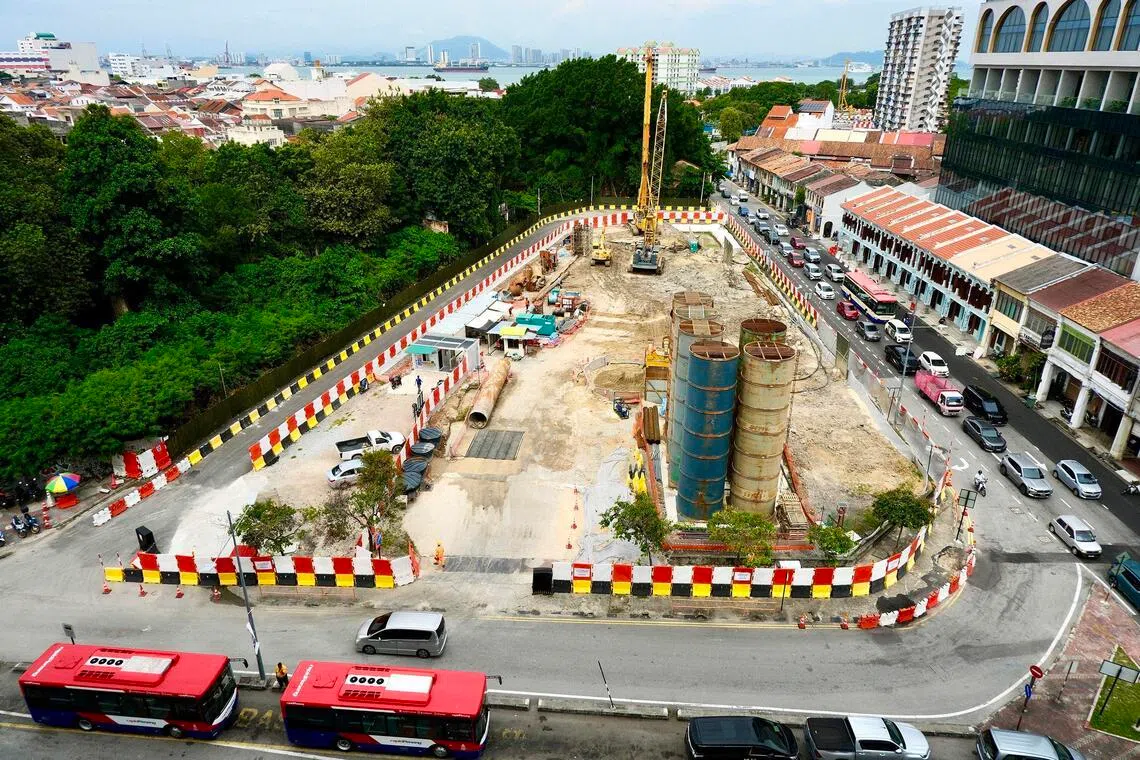
Construction at the Komtar light rail transit station in George Town, the northern terminus of Penang's Mutiara LRT Line.
ST PHOTO: HADI AZMI
On June 6, Penang Chief Minister Chow Kon Yeow, who visited the construction sites, said that the project has entered its active construction phase and construction is expected to intensify towards its 2031 completion target.
“The implementation of traffic management plans in the Bayan Lepas FIZ and phased lane closures along the 23.7km alignment from Komtar to Pulau Silikon are clear signs that the project has entered its active construction phase,” Chow said in a statement.
Given the widespread view that the Mutiara LRT is a “copy and paste” of the Klang Valley system, public transport advocates in Penang expect to see the service inheriting many of the grouses people have with the public transport service in the Malaysian capital.
Speaking to The Straits Times in George Town, Aaron Ngui, whose primary mode of transport is the RapidPenang buses, said that the problem has always been with the first- and last-mile connectivity.
“People forget that travel time starts from home,” Ngui said. “The LRT stations are far from where people live.”
The alignment hugs the industrial and commercial areas of Penang Island’s east coast without any stations in the dense residential areas of Paya Terubong – where Ngui lives – as well as Air Itam, and Farlim in the interior.
Local engagement with the LRT project suggests that feeder bus service will be introduced, but “it has not yet been confirmed”.
“Feeder buses cannot be an afterthought,” Ngui stressed.
Aside from Penang having just 232 buses in both the island and mainland, many popular routes have also been axed, including to the industrial zone and botanical gardens, forcing many to resort to driving or rely on ride-sharing services to move around.
Bus operator Rapid Penang said it is difficult to add more buses due to the lack of permanent bus lanes, meaning buses had to compete with private cars and other vehicles on the narrow roads.
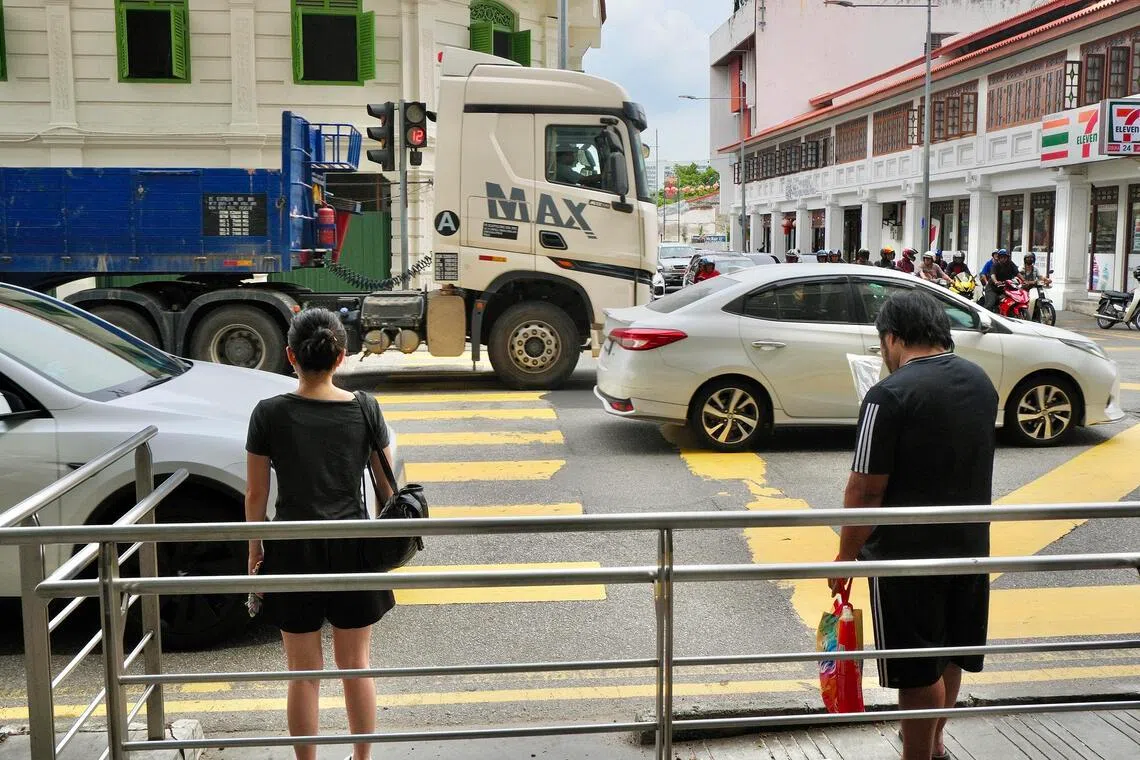
Pedestrians waiting to cross the busy Magazine Road in George Town.
ST PHOTO: HADI AZMI
Like Penang, Johor Bahru’s bus service is also relatively limited for a fast-growing metropolitan area. There are only 241 buses serving the city through the federally funded bright pink BAS.MY and the state-operated Bas Muafakat Johor.
This is despite JB and its surrounding metropolitan area having a population comparable to Penang’s, at around 2.4 million people.
Instead, the government is looking at autonomous rapid transit (ART) as a solution to JB’s traffic woes.
An ART is essentially a tram that runs on rubber tyres on the road, and is often sold as a cheaper and quicker alternative to a light rail for cities that do not want to build full rail infrastructure. But like buses, it risks getting caught in the same traffic it aims to alleviate if it is not given priority or separated from regular traffic.
Transport Minister Anthony Loke announced in May that the federal government had approved an elevated ART proposal to support the RTS, which has the capacity to serve 10,000 commuters per hour. Meanwhile, Johor Menteri Besar Onn Hafiz Ghazi said the ART could be ready by 2030 at the earliest.
While Johor Bahru’s ART plan is still being drawn up, Kuching is preparing to launch its own system across the South China Sea.
Like Johor Bahru, the Sarawak capital has grown into a car-dependent, low-rise metropolitan area where many residents live in outlying suburbs and commute into older commercial and administrative cores.
Instead of copying Kuala Lumpur’s rail template, Sarawak is betting heavily on ART to solve its traffic woes, while also making a statement by powering the network with hydrogen-powered Chinese-made vehicles.
The Kuching Urban Transportation System (KUTS), scheduled to begin pilot operations by the end of this year, consists of three lines covering the city, its suburbs and nearby satellite towns. The Blue Line, running southeast towards Kota Samarahan, is expected to be the first to open.
“We call it ‘Jamarahan’,” Kuching resident Jerome Liew told ST, using the term locals coined for the notorious traffic jam on the route between Kota Samarahan and the capital city.
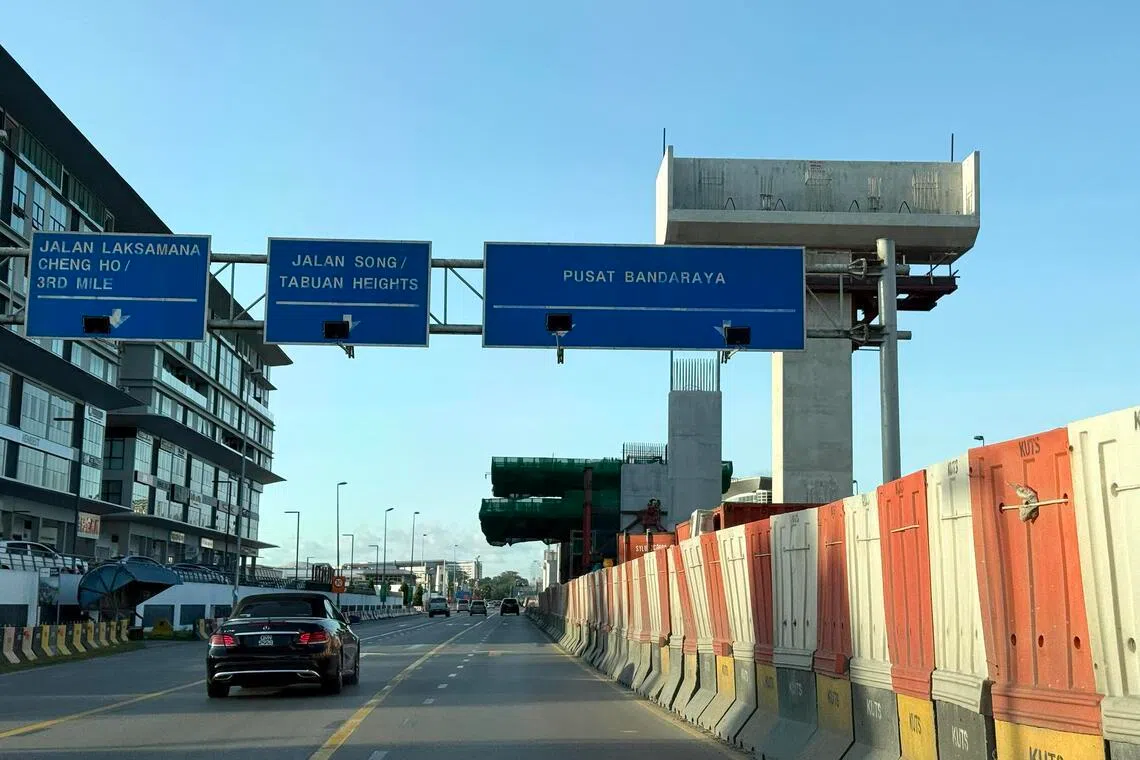
Construction of the Kuching Autonomous Rapid Transit is becoming a familiar sight around the Sarawak state capital.
ST PHOTO: HADI AZMI
Aside from existing housing areas, KUTS will also have to serve rising new townships as well as Universiti Malaysia Sarawak, one of the biggest trip generators along the Samarahan corridor.
But Sarawak’s novel approach, billed as among the first full-scale hydrogen-powered ART systems outside China, has also raised questions over whether the technology can deliver the reliability commuters need.
However, Liew, who is a public transit advocate, said that there is something that needs to be done today to address the traffic congestion rather than letting it fester.
“I wish it was a full rail system, but we have to accept what has been announced,” he said.
“We are cautiously optimistic, but we will still complain.”
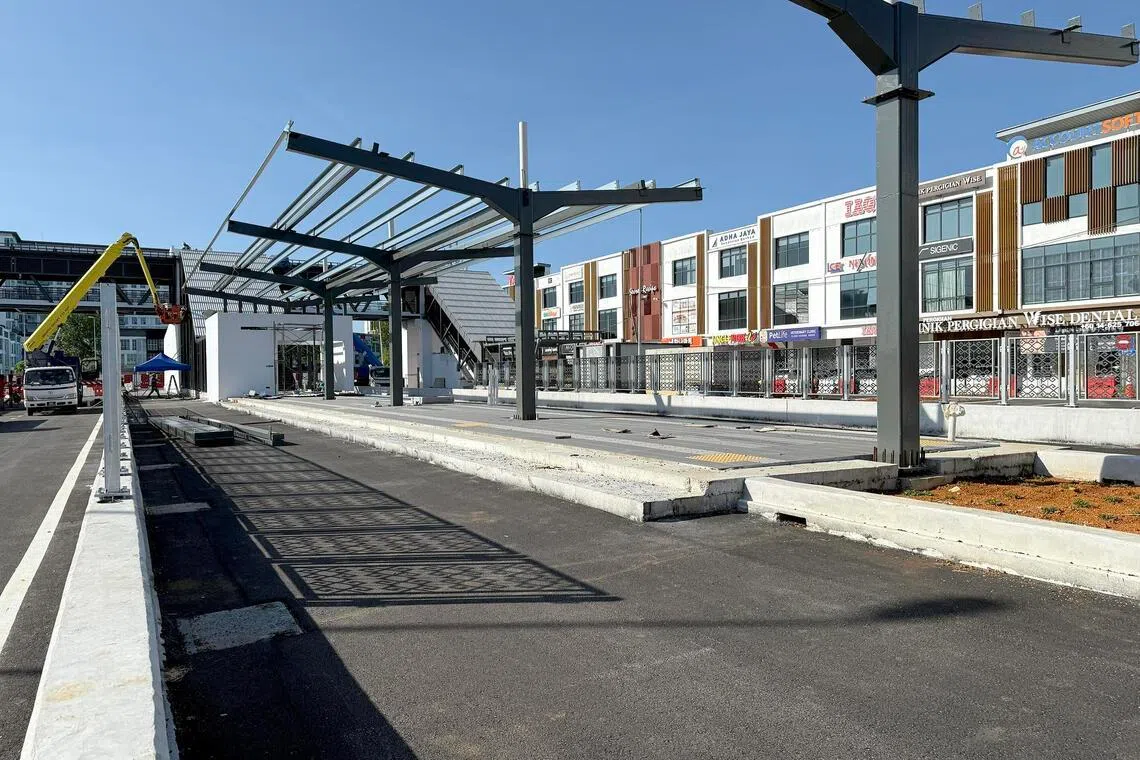
Construction of the Northbank ART station on the Blue Line in Kuching, slated for opening by the end of 2026.
ST PHOTO: HADI AZMI
For transport planners, the challenge is not merely to build more lines, but to understand the different ways people move through each city.
Speaking to ST, urban planning expert Amelia Neoh of Terracity Consultancy based in Penang said planners need to move beyond one-size-fits-all solutions and instead localise transport planning to the needs of each area.
In Johor Bahru, that means looking beyond Bukit Chagar and the RTS terminus, and accounting for commuters from suburbs such as Bukit Indah and Iskandar Puteri.
“While pedestrian movement in the city centre is very high in volume compared with places like Bukit Indah, these areas also have very high commuting intensity, especially among people who live in Johor and work in Singapore,” Neoh said.
“That means the approach has to be different. The keyword here is localisation: localising the analysis, while also customising solutions that respect the realities of each area.”
The same applies to Penang and Kuching, where new rail and ART systems will have to serve not just traffic corridors, but actual human journeys from homes to stations, workplaces and schools, she added.
Ms Neoh said transport modelling too often accounts for vehicles, rather than humans.
“But it is the movement of people that should shape the solution,” she said.
Sign up for our weekly Asian Insider Malaysia Edition newsletter to make sense of the big stories in Malaysia.