By The Free Press | Created at 2026-08-28 21:11:17 | Updated at 2026-09-05 07:32:02
1 week ago
By The Free Press | Created at 2026-08-28 21:11:17 | Updated at 2026-09-05 07:32:02
1 week ago
Produced by ElevenLabs using AI narration
It’s Friday, August 28. This is The Front Page, your daily window into the world of The Free Press—and our take on the world at large. Today: Coleman Hughes sits down with Nathan Cofnas. Maya Sulkin interviews the sports columnist who refused to toe the party line on trans athletes. Noah Bernstein reports on the GOP’s plans to stop Abdul El-Sayed. And much more.
But first: The right way to fight vaccine skepticism.
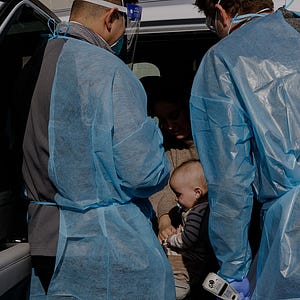
The Pennsylvania Department of Health announced this week that two people in Lancaster County—home to America’s largest Amish community—had died of measles, and that both were unvaccinated. The news drew a familiar cadence of outcries along party lines—first, on the left that public health officials should shout louder about the lifesaving effects of the measles, mumps, and rubella (MMR) shot, then on the right that no vaccine mandate should interfere with empowering parents to make the right choices for their children.
The challenge we face, writes Vinay Prasad, who served as the FDA’s vaccine chief until earlier this year, is that “the heavy-handed role of governments and public health during the Covid-19 pandemic” backfired, and we now live in an era of “fractured trust.” In his column for The Free Press today, he sorts fact from fiction about the Pennsylvania cases and argues that hand-wringing and coercive mechanisms will inevitably fail. “The thesis that rising measles cases are the fault of the current administration doesn’t fit the facts,” writes Vinay.
—The Editors

Coleman Hughes • Conversations with Coleman
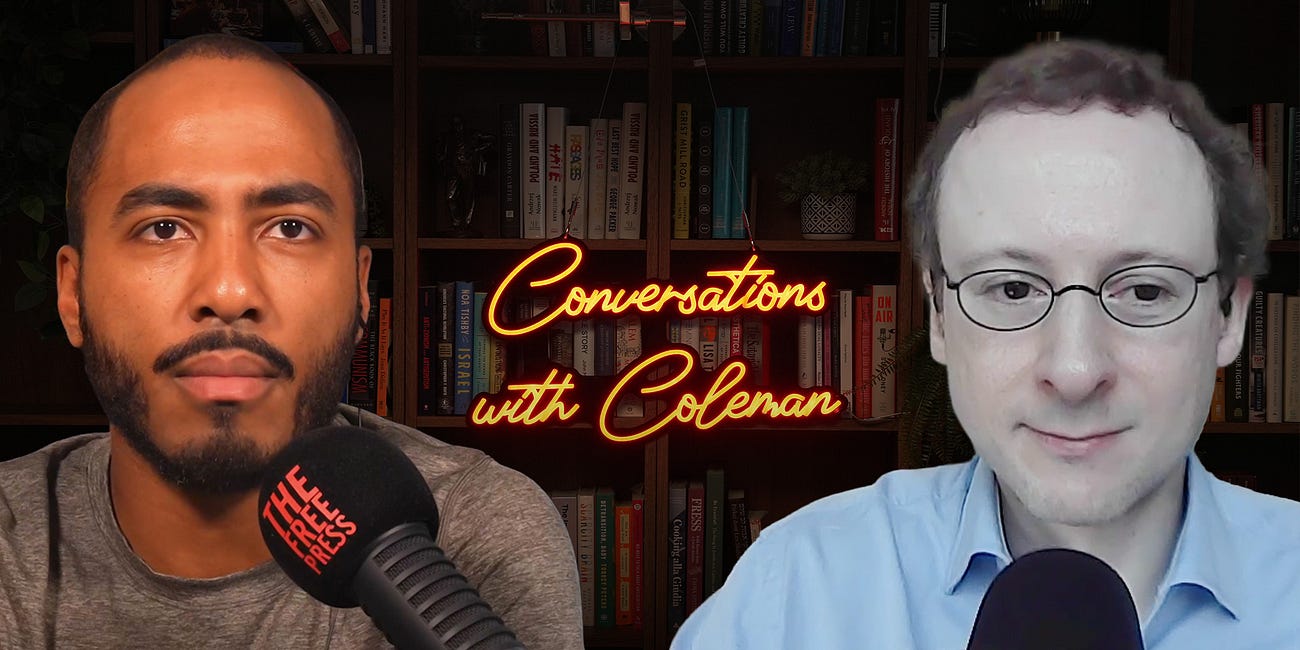
Belgian professor Nathan Cofnas was accused of a racist hate campaign after he levied the plagiarism accusations that unraveled Jason Arday’s career last month. He’s since been suspended from his post at Belgium’s Ghent University. Today, Cofnas joins Coleman’s podcast to discuss why he identifies as a “race realist,” the fallout over Arday’s death, and more. Don’t miss this debate between Cofnas and Coleman on some of the most controversial issues out there.
Noah Bernstein • U.S. Politics
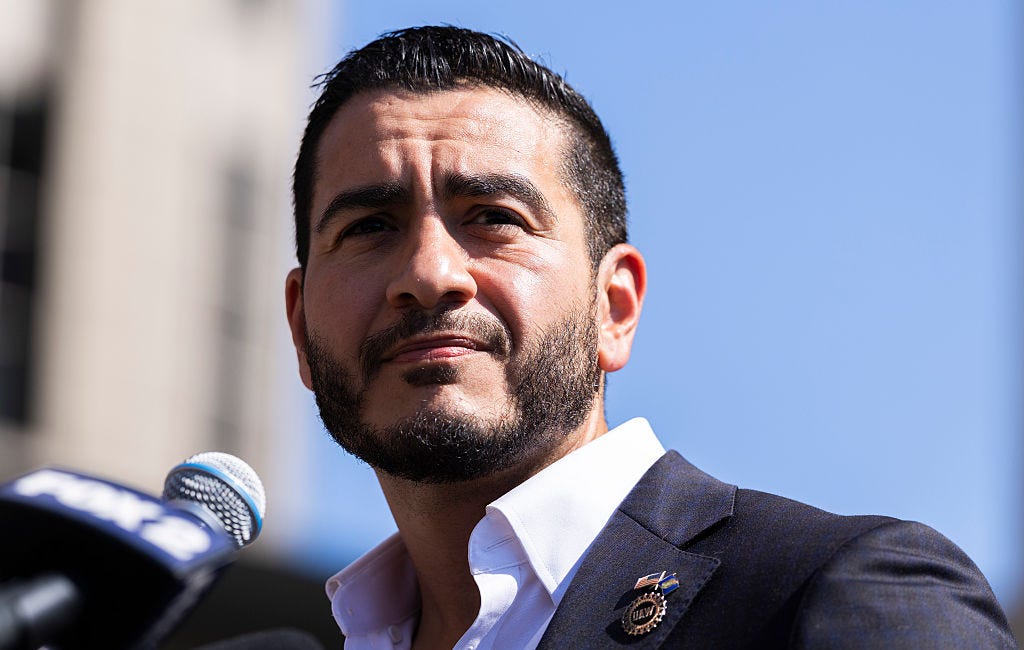
Abdul El-Sayed won his Senate primary with a razor-thin margin—and angered some crucial parts of the Democratic base in the process. Now the question is, can he convince the injured parties to vote for him in November? Noah Bernstein reports on the Jewish Democrats who aren’t willing to compromise on Israel, the black Democrats who say El-Sayed “has got some work to do,” and the coalition uniting behind his opponent, Mike Rogers, who said his “phone is ringing off the hook” with moderate Democrats who aren’t willing to hold their nose and toe the party line.
Maya Sulkin • The Free Press Interviews
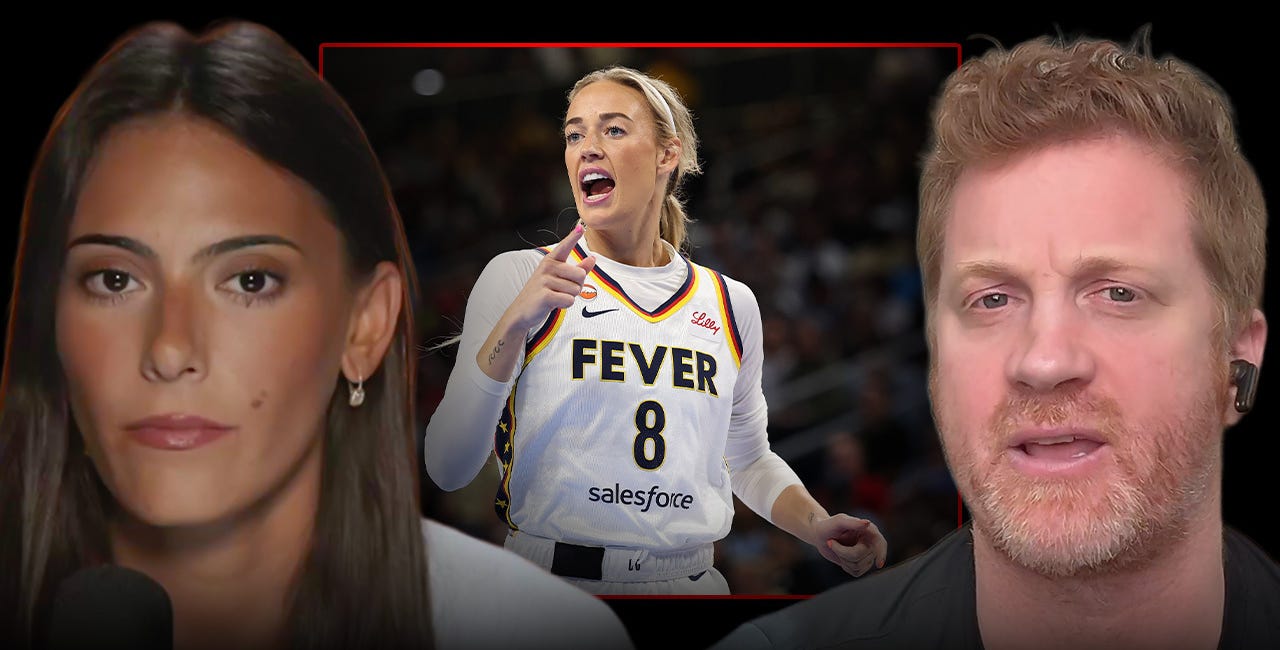
Matt Calkins was a sports columnist for The Seattle Times for 11 years, until he resigned earlier this month. He quit after the paper refused to publish a column with a pretty basic thesis: that supporting the separation of biological males and females in sports doesn’t make you transphobic. Today, he sits down with Maya Sulkin to discuss the unspoken rules that quashed dissent in his newsroom, the fallout from his departure after his 11-year stint at the Times, and why he finally decided to walk away.

EDITORS’ PICKS
There’s a Dolly-shaped hole in everyone’s hearts following the passing of music legend Dolly Parton, who died this week at 80. Why, exactly, did America love Parton so? It wasn’t just her voice, her music, or her philanthropy, argues Hannah Long. Parton understood her own hypnotic power over people, and she knew how to use it for good.
And don’t miss Caitlin Flanagan’s ode to Parton, who lived the American dream in between the contradictions of her Southern roots and the Wild West of showbiz—and who united America like no other modern celebrity.
As summer fades and students settle back into campus this week, the state of academia is looking grimmer than usual. In an era where literacy is on the decline, and technology can do our thinking for us, University of Austin president Carlos Carvalho argues against the conventional wisdom of a world starved of meaning. Don’t try to “find yourself” in college, he urges. “Forget yourself and find something greater than you.”
The Free Press has a new survey series that takes you deeper than a typical poll. It’s called The Honesty Project, and it’s a series of opinion surveys that gauge respondents’ private opinions—the views they are too sensitive to share publicly.
Our latest survey asked about Americans’ faith in capitalism. The most surprising findings? Republicans are less confident in the system than they’ll publicly admit. Gen Z is privately much more ambivalent about socialism than they want their peers to know. And high earners are quietly warming up to voting for a socialist candidate—though they wouldn’t say it at the country club.
And don’t miss the biggest Free Press investigation of the week: Olivia Reingold on a new report on hunger in Gaza, which found some of the lowest rates of childhood malnutrition in the Middle East—and even noted that childhood obesity is on the rise in the territory. Read Olivia’s report on the data that should have been front-page news—but wasn’t.