By The Rio Times | Created at 2026-06-11 17:16:35 | Updated at 2026-06-12 16:56:19
23 hours ago
By The Rio Times | Created at 2026-06-11 17:16:35 | Updated at 2026-06-12 16:56:19
23 hours ago
LATIN AMERICA · INVESTING · 2026
Key Facts
—Biggest market: Brazil — the B3 exchange in São Paulo; the Ibovespa hit an all-time high near 199,000 points in April 2026.
—Highest upside: Argentina — the Merval is at post-election highs, and a possible MSCI emerging-market upgrade could draw close to US$1 billion in index buying.
—Steadiest: Mexico — a nearshoring tailwind and an investment-grade rating (Moody’s Baa3).
—Carry play: Brazil’s benchmark Selic rate near 15% makes fixed income and the real attractive to foreign investors.
—New tax: Brazil now withholds 10% on dividends paid abroad, in force since January 1, 2026.
—Easiest access: US-listed ETFs — EWZ (Brazil), EWW (Mexico), ECH (Chile), ARGT (Argentina), GXG (Colombia).
—Watch-out: 2026 is an election year across much of the region, and currency swings can outweigh share-price moves.
The best Latin American country to invest in for 2026 depends on your appetite for risk: Brazil offers the region’s deepest, most liquid market, Argentina the highest-upside turnaround, and Mexico the steadiest nearshoring play. Below we compare the five markets foreign investors ask about most — on returns, access and the risks that matter.
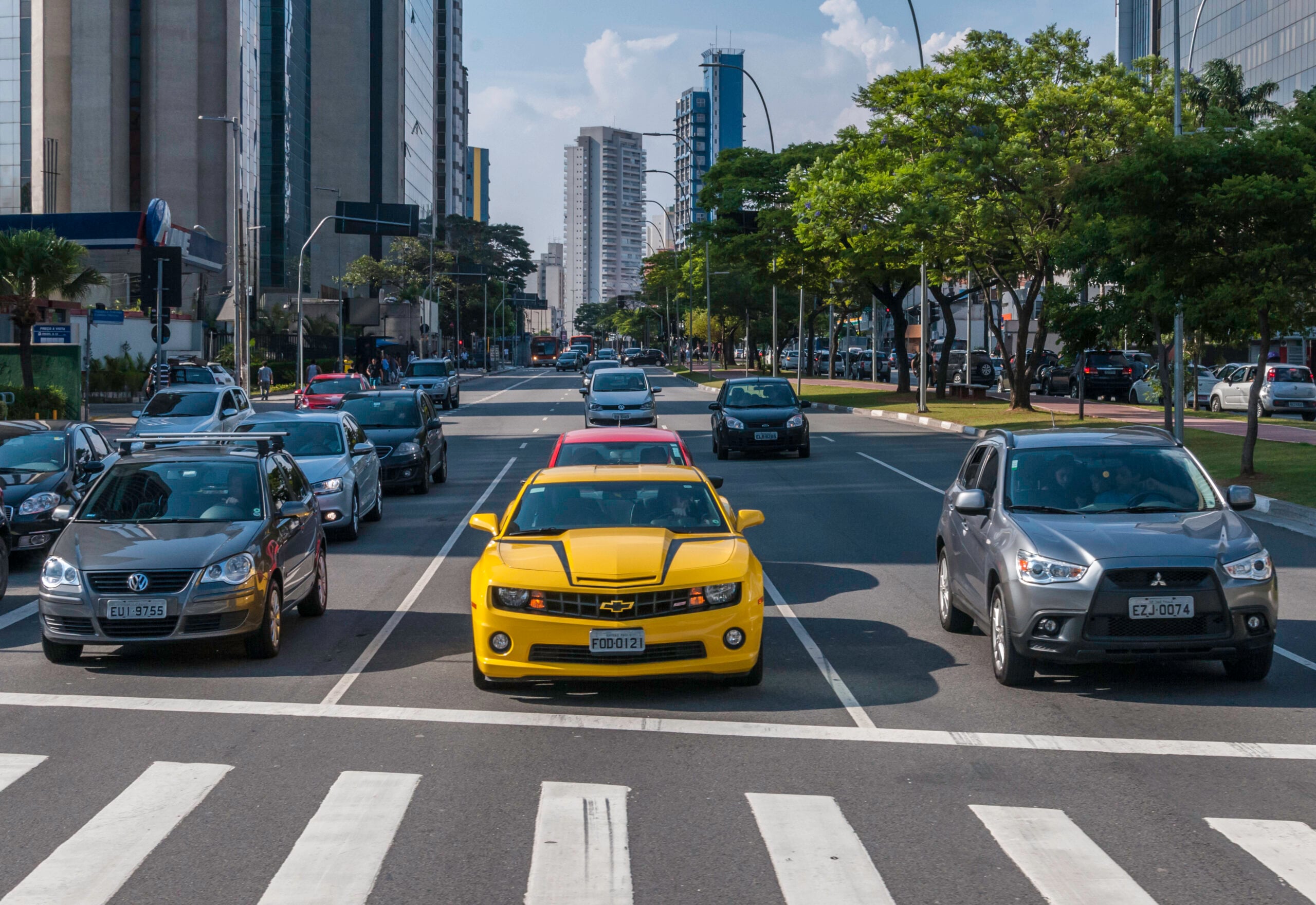 Avenida Faria Lima, São Paulo — Brazil’s financial center. (Photo: Internet reproduction)
How we compared the markets
We weighed the factors that decide a foreign investor’s experience: the size and liquidity of the stock market, 2026 momentum and valuations, how easy the market is to reach from abroad, the tax treatment of foreign money, and the political and currency risk attached to each. No single country wins on every axis, so we flag what each is best for.
This is general information for comparison, not investment advice — every market here carries real risk, and currencies can move as much as share prices. Treat the rankings as a starting shortlist to research against your own goals and time horizon.
The 2026 investor snapshot
| Brazil | B3 / Ibovespa | Record run, high Selic carry | EWZ, ADRs, B3 direct |
| Argentina | Merval | Milei reforms, possible MSCI upgrade | ARGT, ADRs |
| Mexico | Mexbol (BMV) | Nearshoring, investment-grade | EWW, ADRs |
| Chile | IPSA | Copper & lithium, stable | ECH ETF |
| Colombia | Colcap | Cheap, election-year risk | GXG ETF |
Rio Times · Live Market Intelligence
Brazil — Live Market Board
B3 · São Paulo
Jun 11, 2026 · 14:13
Ibovespa · benchmark
168,495
-0.07%
L 168,470day rangeH 169,509
+22.87% over 12 months
Market breadth · 15 names
33% advancing
5 ▲ advancing10 declining ▼
Currencies, rates & key inputs
Sector heatmap · average move today
Energy
+1.21%
PETR4, PRIO3
Consumer Staples
+0.18%
ABEV3
Financials
-0.12%
ITUB4, BBDC4, BBAS3, B3SA3
Industrials
-0.42%
WEGE3, RENT3
Mining
-0.78%
VALE3, CSNA3, GGBR4
Consumer Disc.
-0.83%
AZZA3
Latin America scoreboard
IndexLastTodayStrength
IbovespaBrazil
168,495
-0.07%
S&P/BMV IPCMexico
65,792
+1.50%
S&P IPSAChile
10,674
+2.11%
S&P MERVALArgentina
3,334,658
+5.76%
MSCI COLCAPColombia
2,262.54
+0.45%
BVL S&P PerúPeru
34,937.73
+0.29%
Full instrument board
| IBOV | 168,495 | -0.07% | +22.87% | 168,619 | 169,509 | 168,470 | — |
| USD/BRL | 5.15 | -0.72% | -7.60% | 5.19 | 5.19 | 5.14 | — |
| SELIC | 14.50% | — | — | — | — | — | |
| PETR4 | 42.01 | +0.86% | +35.30% | 41.65 | 42.15 | 41.47 | 18,456,800 |
| VALE3 | 77.54 | -0.21% | +45.79% | 77.70 | 78.28 | 77.10 | 6,858,200 |
| ITUB4 | 39.51 | +0.38% | +12.02% | 39.36 | 39.71 | 39.22 | 25,257,500 |
| BBDC4 | 17.20 | -0.35% | +5.39% | 17.26 | 17.37 | 17.17 | 11,055,100 |
| BBAS3 | 18.98 | -0.11% | -11.40% | 19.00 | 19.24 | 18.95 | 14,534,800 |
| B3SA3 | 15.06 | -0.40% | +13.67% | 15.12 | 15.19 | 14.99 | 27,841,300 |
| ABEV3 | 16.31 | +0.18% | +17.25% | 16.28 | 16.51 | 16.19 | 11,091,300 |
| WEGE3 | 41.82 | -1.34% | -1.11% | 42.39 | 42.16 | 41.73 | 3,643,700 |
| PRIO3 | 63.86 | +1.56% | +47.38% | 62.88 | 64.21 | 62.07 | 4,045,100 |
| SUZB3 | 40.95 | -1.21% | -22.74% | 41.45 | 41.53 | 40.70 | 1,630,400 |
| RENT3 | 39.32 | +0.51% | -10.68% | 39.12 | 39.78 | 39.05 | 6,291,600 |
| AZZA3 | 16.71 | -0.83% | -59.99% | 16.85 | 16.99 | 16.66 | 1,577,400 |
| CSNA3 | 5.94 | -1.66% | -30.07% | 6.04 | 6.11 | 5.94 | 6,173,900 |
| GGBR4 | 23.32 | -0.47% | +37.18% | 23.43 | 23.65 | 23.26 | 4,474,900 |
| ENEV3 | 23.81 | -0.25% | +73.43% | 23.87 | 24.18 | 23.76 | 2,807,400 |
Largest moves today
CSNA3
5.94
-1.66%
PRIO3
63.86
+1.56%
WEGE3
41.82
-1.34%
SUZB3
40.95
-1.21%
PETR4
42.01
+0.86%
AZZA3
16.71
-0.83%
USD/BRL
5.15
-0.72%
RENT3
39.32
+0.51%
The session read
The Ibovespa eased 0.07%, with breadth negative — 5 of 15 names higher. Energy led, while Materials lagged.
From The Rio Times
Related coverage · 11 Jun 2026
LatAm Expat & Nomad Daily Guide — Thursday, June 11, 2026
Read →
Brazil — the anchor market
Brazil runs the region’s largest and most liquid exchange, B3 in São Paulo, and its Ibovespa index had a banner start to 2026, reaching an all-time high near 199,000 points in April before easing back toward 170,000 by June — still sharply higher on the year. Foreign money seeking diversification away from US assets drove much of the rally.
Two things define the 2026 calculus. A benchmark Selic rate near 15% makes Brazilian fixed income and the real attractive for carry, while a new 10% withholding tax on dividends sent abroad — in force since January 1, 2026 — trims net payouts for foreign shareholders. An October election adds the usual year-of-the-vote uncertainty. Our guide to investing in Brazil and the Selic rate explainer go deeper.
Argentina — the high-risk, high-reward turnaround
Argentina is the region’s boldest bet. President Milei’s shock therapy has cooled inflation and steadied the peso, the Merval jumped roughly a tenth in dollar terms in May to post-election highs, and MSCI is weighing a return of Argentina to emerging-market status — a move JPMorgan estimates could pull in close to US$1 billion of near-automatic index buying.
The upside comes with volatility. Most analysts expect a watch-list step in 2026 rather than a full upgrade, currency rules have shifted repeatedly, and the RIGI incentive regime — 30-year tax and legal stability for investments above US$200 million, already backing some US$8 billion of approved mining projects — expires at the end of 2026. Argentina rewards investors who can stomach the swings.
Mexico — the steady nearshoring play
Mexico is the conservative choice. Its proximity to the United States and the nearshoring shift keep capital flowing into factories and logistics, and the country still holds an investment-grade credit rating — though Moody’s cut it to Baa3, the lowest investment-grade rung, on fiscal and Pemex concerns.
For a foreign investor, Mexico offers a familiar, liquid market reachable through US-listed funds, a peso that has held up well, and less drama than the Southern Cone. The trade-off is slower growth and the overhang of state oil company Pemex’s heavy debts.
Chile, Colombia and the smaller markets
Chile is the region’s stable resource play, anchored by copper and some of the world’s largest lithium reserves, with strong institutions and a solid IPSA index — though its market is smaller and less liquid than Brazil’s or Mexico’s.
Colombia offers cheap valuations and high dividend yields, but a presidential election in 2026 brings real political risk that has weighed on its peso and stocks. Peru, also heading through a contested 2026 vote, is a copper-leveraged market best left to investors comfortable with political noise.
How foreigners actually invest
The simplest route for most Americans and Europeans is a US- or Europe-listed exchange-traded fund: EWZ for Brazil, EWW for Mexico, ECH for Chile, GXG for Colombia and ARGT for Argentina each give one-click, diversified exposure without opening a local account.
Single-stock investors can buy American Depositary Receipts (ADRs) of the region’s giants — Petrobras, Vale, Nubank, América Móvil — on US exchanges. The direct route, opening an account with a local broker, offers the widest choice but means local tax IDs and paperwork; for Brazil it now also means the 10% dividend withholding tax on money sent home.
The risks every foreign investor should weigh
Currency is the first risk: a strong local-market year can be wiped out by a falling peso or real when you convert back to dollars, so foreign-exchange exposure matters as much as stock selection. Political cycles are the second — 2026 is an election year across much of the region, and votes move markets.
Liquidity and taxes round out the list. Outside Brazil and Mexico, markets can be thin and harder to exit, and tax treatment differs by country and by how you hold the asset. None of this is a reason to avoid Latin America — it is a reason to size positions sensibly and, for larger sums, take cross-border tax advice.
Frequently Asked Questions
What is the best Latin American country to invest in for 2026?
It depends on your risk appetite: Brazil for size and liquidity, Argentina for upside, and Mexico for stability. This is general information, not investment advice, and every market carries real risk.
How can a foreigner invest in Latin American stocks?
The easiest way is a US-listed ETF such as EWZ (Brazil), EWW (Mexico), ECH (Chile), ARGT (Argentina) or GXG (Colombia). You can also buy ADRs of major companies, or open an account with a local broker for direct access.
Does Brazil tax dividends for foreign investors?
Yes. Since January 1, 2026, Brazil withholds 10% on dividends paid to nonresidents. Dividends formally declared by the end of 2025 are grandfathered, and a refund mechanism can apply in some cases.
Is Argentina safe to invest in right now?
It is higher risk and higher reward. Milei’s reforms have cooled inflation and lifted the Merval, but currency volatility and Argentina’s track record mean it suits investors who can tolerate swings.
Which Latin American market is least risky?
Mexico is generally the steadiest, thanks to its investment-grade rating, nearshoring tailwind and proximity to the US — though no market is risk-free, and a downgrade to Baa3 shows even Mexico faces fiscal pressure.
The Rio Times · Power Map
See who really holds power in Latin America
Click to open the Power Map →