By The Rio Times | Created at 2026-10-13 13:40:56 | Updated at 2026-10-13 14:39:30
1 hour ago
By The Rio Times | Created at 2026-10-13 13:40:56 | Updated at 2026-10-13 14:39:30
1 hour ago
GUIDES · CHILE
Key Facts
- —The country Chile counted 18,480,432 people in its 2024 census. Four in ten live in the Santiago Metropolitan Region, where most national power sits.
- —Who governs José Antonio Kast, a conservative, has been president since 11 March 2026. The central bank is constitutionally autonomous and held its rate at 4.5% in September 2026.
- —The families The Luksic, Angelini, Ponce Lerou and Yarur names led the 2025 Forbes list of Chilean billionaires, published in April 2025.
- —Inequality The World Bank puts Chile’s Gini index at 43.0 in 2024. The top tenth of earners took 34.3% of income that year.
- —Who is left out In 2024, 24.0% of Indigenous people lived in income poverty, against 16.5% of everyone else, the CASEN survey shows.
Who really runs Chile: the presidency, the family groups, the capital, the armed forces, churches and unions, and those left outside.
Chile power is concentrated in a few places: La Moneda palace, a handful of family business groups and the capital, Santiago. Chile matters to Americans because it is a leading copper and lithium supplier with a free-trade deal with the United States.
Knowing who holds sway explains why policy moves slowly and why some Chileans feel shut out.
This guide maps those centres of influence as of October 2026, from the elected government to the groups that sit outside it. Every figure carries its date and source.
For the economy alone, see the companion guide to who runs Chile’s economy.
How Power Works at the Top
Chile is a presidential republic. The president is head of state and government, names the cabinet and commands the armed forces.
Since 11 March 2026 that has been José Antonio Kast of the Republican Party, a conservative party he founded.
Kast won the runoff of 14 December 2025 against Jeannette Jara of the Communist Party, a former labour minister under Gabriel Boric. His agenda centres on public order, migration control and faster investment permits.
Congress, where no single party holds a majority, decides how much of it becomes law.
The constitution still in force dates from 1980, the military era, though it has been amended many times. Voters rejected two replacement drafts, on 4 September 2022 and 17 December 2023.
The first failed with 61.9% of the vote against it, according to the electoral service, Servel.
One institution sits deliberately outside the government’s reach: the Banco Central de Chile. Its board sets interest rates on its own and kept the policy rate at 4.5% at its September 2026 meeting.
Rosanna Costa presides over it, and Diario Financiero reports her term as president ends on 3 February 2027.
The Business Families
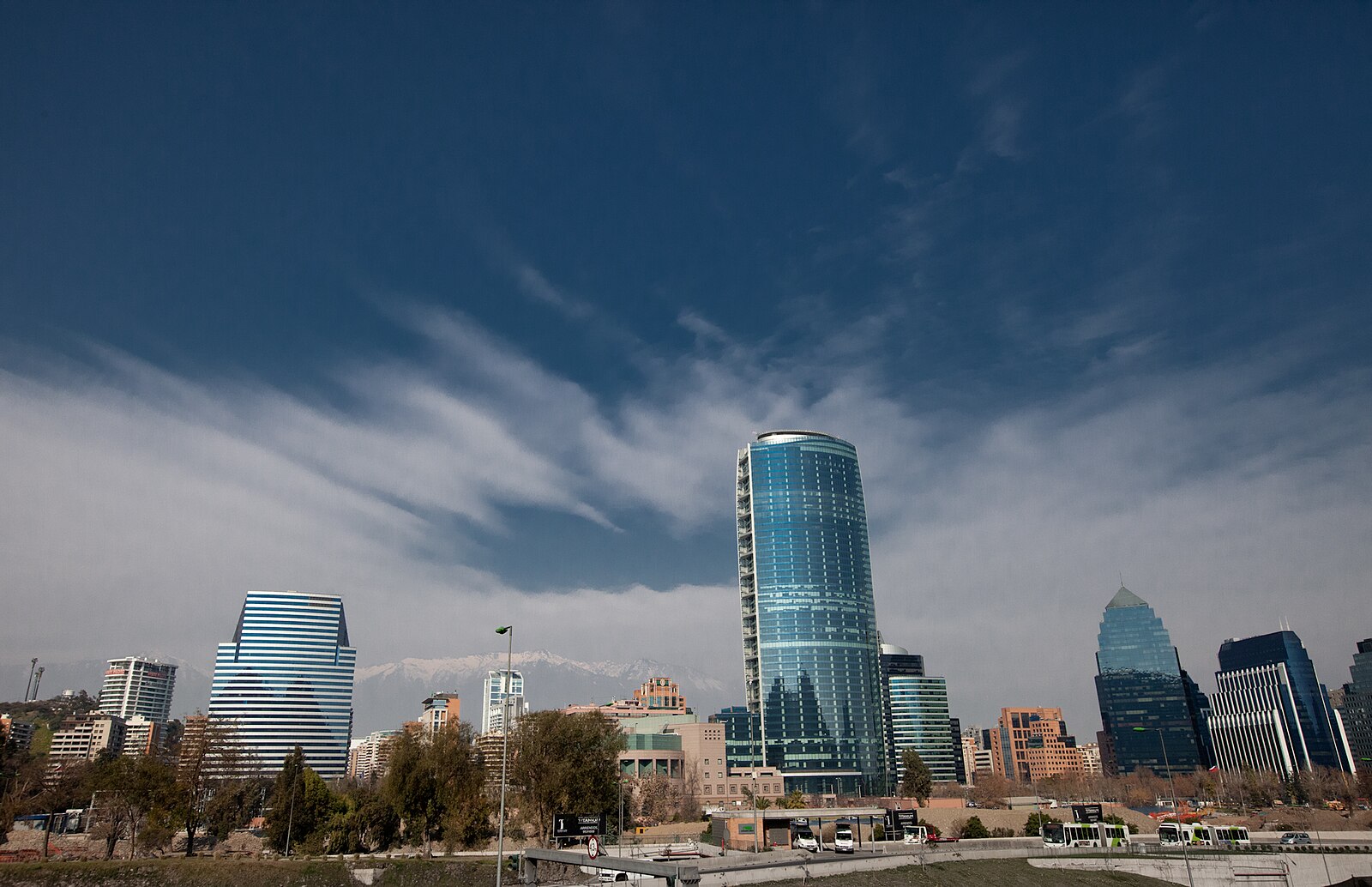
Chilean private wealth is held largely by family groups that control listed holding companies. They own banks, retailers, mines, ports and drinks makers, often through chains of companies.
The largest is the Luksic group. Its holding company Quiñenco says it controls Banco de Chile with Citigroup, owning 51.2%, and brewer CCU with Heineken, owning 65.9%.
It is also the main shareholder of shipping line CSAV, fuel distributor Enex and port operator SAAM.
The group’s mining arm, Antofagasta plc, runs the Los Pelambres, Centinela, Antucoya and Zaldívar copper deposits. The group calls itself Chile’s leading private player in large-scale copper mining.
It also owns the Twin Metals project in Minnesota.
Forbes Chile’s list of April 2025 named five Chilean billionaires with a combined US$35.1 billion. Iris Fontbona and her children, the Luksic family, led with about US$28.1 billion.
The others were Julio Ponce Lerou, Roberto and Patricia Angelini, and Luis Enrique Yarur Rey.
- Julio Ponce Lerou holds about 17% of SQM, the lithium and fertiliser company, according to Forbes Chile.
- Roberto and Patricia Angelini control, with relatives, 74.5% of AntarChile, whose main asset is the forestry and fuel group Empresas Copec.
- Luis Enrique Yarur Rey chairs Banco de Crédito e Inversiones, known as Bci.
- Horst Paulmann, founder of the retailer Cencosud, died on 11 March 2025 and left the ranking.
These groups also shape policy through business associations. The best known is the Confederación de la Producción y del Comercio, or CPC, an umbrella for the main sector lobbies.
Santiago and the Regions
Geography is the second axis of power. The 2024 census found that 40% of Chileans live in the Santiago Metropolitan Region.
Valparaíso, Biobío, Maule and La Araucanía follow, each with more than one million people.
Ministries, the central bank, the big company headquarters and most media sit in the capital. The mining wealth, though, comes from the north, and the forestry and farming wealth from the south.
Chile’s 16 regions now elect their own regional governors, a reform first used in 2021. Their budgets still depend on the central state.
In September 2026 the Santiago governor, Claudio Orrego, criticised proposed cuts of up to 10% to regional governments.
The gap shows in living standards. Income poverty in 2024 was 13.3% in the Santiago region, the CASEN household survey shows.
In La Araucanía it was 28.6%, the highest in the country.
Indigenous Peoples and Newcomers
In the 2024 census, 11.5% of people, or 2,105,863, said they belong to an Indigenous people. Mapuche account for 77.2% of them, followed by Aymara at 8.5% and Diaguita at 7.3%.
At least one in three residents of Arica and Parinacota and of La Araucanía identifies as Indigenous. Few Indigenous Chileans hold top posts in government, business or the armed forces.
The 2022 draft constitution would have recognised Chile as plurinational, and voters rejected it.
Land claims by Mapuche communities in the south remain the sharpest dispute. Since May 2022 a state of emergency has let the armed forces support the police in parts of La Araucanía and Biobío.
Congress has extended it repeatedly, most recently in 2026.
Migration has also changed the map. People born abroad reached 1,608,650 in 2024, or 8.8% of the population, double the 4.4% of 2017.
In Tarapacá in the far north almost one resident in four was born abroad.
The Military and the Carabineros
The armed forces ruled Chile from the coup of 11 September 1973 until 1990. They are now under civilian control but keep prestige and institutional weight.
Their commanders-in-chief serve fixed four-year terms.
General Pedro Varela took command of the army in March 2026, in front of the outgoing president, Gabriel Boric, and president-elect Kast. Boric had appointed him in late 2025 to succeed General Javier Iturriaga.
The national police, the Carabineros, are a militarised force led by General Director Marcelo Araya. They remain central to Kast’s security agenda.
The emergency in the south means soldiers and police share duties there, which keeps the military visible in domestic life.
Churches, Unions and Business Lobbies
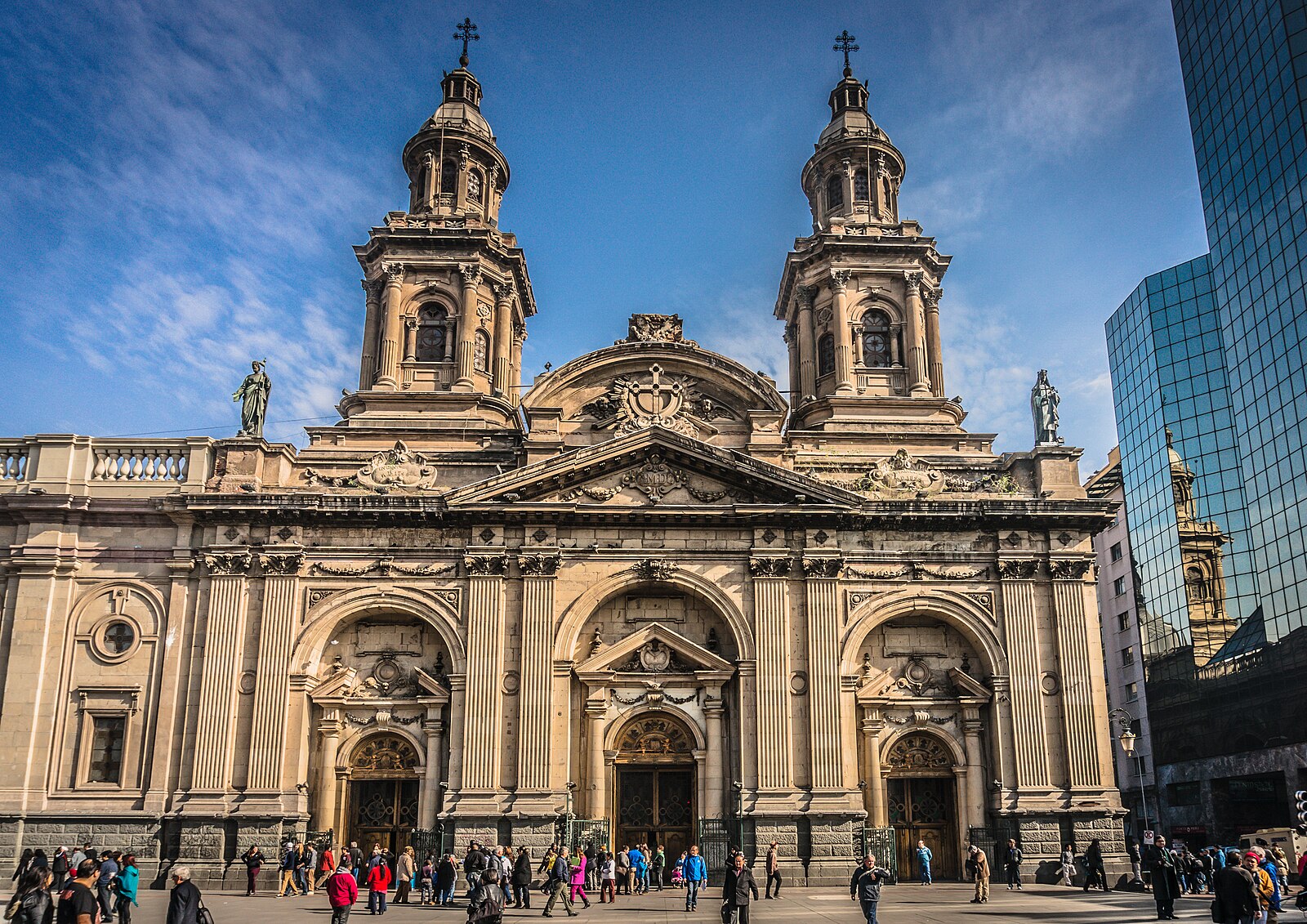
The Catholic Church remains the largest faith but is shrinking. In the 2024 census 54.0% of people aged 15 or over said they were Catholic, against 70.1% in 2002.
Evangelical or Protestant believers rose to 16.3%, and those with no religion to 25.8%.
Cardinal Fernando Chomali, the archbishop of Santiago, leads the traditional ecumenical Te Deum each September before the national holidays. In August 2026 the government turned a La Moneda office into a permanent evangelical chapel.
That opened a debate about the secular state.
Organised labour is weaker than in much of Latin America. The labour directorate’s ENCLA employer survey, released in January 2025, found 19.9% of workers in firms with five or more staff belong to a union.
Only 3.9% of companies have one.
The largest federation is the Central Unitaria de Trabajadores, or CUT, presided by José Manuel Díaz. It is openly opposed to the Kast government and its labour proposals.
On the employers’ side, the CPC is led by Susana Jiménez. A contest to succeed her was under way in October 2026, with the farm lobby SNA backing its president, Antonio Walker.
The winner takes over in December 2026.
Inequality, What the Numbers Show
Chile is richer per head than most of Latin America but remains unequal. The World Bank puts its Gini index at 43.0 in 2024, down from 47.0 in 2020.
On that scale, 0 means perfect equality and 100 means one person holds everything.
The government’s own CASEN survey tells a similar story. Its Gini coefficient for household income before state cash transfers was 0.488 in 2024, and 0.464 after them.
The ministry warns that household surveys under-record the very top incomes.
Income poverty affected 17.3% of people in 2024 under a new, stricter method, including 6.9% in extreme poverty. Kast questioned those figures publicly in August 2026, drawing criticism from ministers of the previous government.
Who Is Left Out
Those with least say tend to live outside Santiago, to be Indigenous or foreign-born, or to work without a union or formal contract.
- Indigenous Chileans: 24.0% lived in income poverty in 2024, against 16.5% of the non-Indigenous population (CASEN 2024).
- The south: La Araucanía, the Mapuche heartland, had the highest regional poverty rate, 28.6% in 2024.
- Migrants: 8.8% of residents were born abroad in 2024, double the 2017 share, and foreigners can vote only after five years of residence.
- Workers without unions: more than eight in ten workers have no union to bargain for them (ENCLA).
What It Means for US Readers
For investors, Chile power means dealing with a few family groups and a state that moves through negotiated deals. Banco de Chile and SQM have American depositary receipts on the New York Stock Exchange, so family control matters to US shareholders.
For US companies buying copper and lithium, the north and the south carry different risks. Mining regions face labour disputes, and the south faces land conflict and a standing state of emergency.
Antofagasta’s Twin Metals project ties the Luksic group directly to a contested US mining debate in Minnesota.
For travellers and expats, the divide between Santiago and the regions shapes prices, services and safety. Kast has made migration control and policing priorities, so residence paperwork and identity checks deserve care.
What Is Not Known
It is not known who will succeed Rosanna Costa at the head of the central bank, or when Kast will name that person. Nor is it settled who will lead the CPC after Susana Jiménez.
The true concentration of wealth is uncertain, because household surveys miss the richest and the family holdings are layered through many companies. The future of the southern state of emergency, and of Mapuche land claims, also remains open.
Frequently Asked Questions
Who has the most power in Chile?
The president, José Antonio Kast, in office since 11 March 2026, heads the state and the government and commands the armed forces. Congress must pass his laws, and the autonomous central bank sets interest rates on its own.
Which families dominate business in Chile?
The Luksic family leads, through Quiñenco and Antofagasta plc. The 2025 Forbes Chile list also named Julio Ponce Lerou of SQM, Roberto and Patricia Angelini of AntarChile and Empresas Copec, and Luis Enrique Yarur Rey of Bci.
How unequal is Chile?
The World Bank puts Chile’s Gini index at 43.0 in 2024, and the top tenth of earners took 34.3% of income. The government’s CASEN survey found 17.3% of people in income poverty in 2024.
How many Indigenous people live in Chile?
The 2024 census counted 2,105,863 people, or 11.5% of the population, who belong to an Indigenous people. Mapuche make up 77.2% of them.
What role does the military play in Chile today?
The armed forces are under civilian control. General Pedro Varela has led the army since March 2026, and soldiers support the police under a state of emergency in parts of the south that began in May 2022.
Is Chile still a Catholic country?
Catholics remain the largest group, at 54.0% of people aged 15 or over in the 2024 census, down from 70.1% in 2002. Evangelicals reached 16.3% and people with no religion 25.8%.
Sources: INE, Censo 2024 síntesis de resultados; Ministerio de Desarrollo Social, CASEN 2024 pobreza por ingresos; Ministerio de Desarrollo Social, CASEN 2024 ingresos; World Bank, Gini index for Chile; World Bank, income share of the top 10%; Banco Central de Chile, monetary policy; Quiñenco, the Luksic Group; Quiñenco, companies; Forbes Chile, multimillonarios chilenos 2025; CUT Chile; Iglesia de Santiago, Cardinal Chomali, 10 October 2026. Office-holders and events also from Ejército de Chile, the Senate of Chile, La Tercera, BioBioChile, Cooperativa, Diario Financiero, El Mostrador, Ex-Ante, The Clinic, Diario Concepción and Radio Universidad de Chile reporting; Dirección del Trabajo, ENCLA results, 21 January 2025; World Bank Poverty and Inequality Platform. All accessed 13 October 2026.