 By The Rio Times | Created at 2026-10-19 10:11:24 | Updated at 2026-10-19 22:12:36
12 hours ago
GUIDES · BOLIVIA
Key Facts
- —The country Bolivia counted 11,312,620 people in its 2024 census, and Santa Cruz is the most populous department. The economy produced US$64.8 billion in 2025.
- —The slump Output fell 1.6% in 2025 and is forecast to fall 3.0% in 2026 and 1.5% in 2027, as of October 2026. Consumer prices rose 19.5% on average in 2025.
- —The dollar The official rate was Bs 11.69 to the US dollar for 17 to 19 October 2026. The fixed rate of Bs 6.96, held for 15 years, ended on 29 June 2026.
- —Who decides President Rodrigo Paz has governed since November 2025, and Christian Morales became economy minister in August 2026. David Espinoza heads the central bank.
- —The biggest firms State oil and gas company YPFB paid the most tax in 2025. Brewer CBN was the top private taxpayer.
- —The dollar earners Mineral exports of US$4.45 billion in the first half of 2026 were almost nine times the US$510 million from hydrocarbons.
- —Power Index Bolivia ranks 12th of 14 in The Rio Times Latin America Power Index, with 28.4 points (October 2026 edition).
Bolivia’s economy is steered by a small circle: a new centre-right government, a rebuilt central bank, state firms, miners, banks and the farm families of Santa Cruz. This guide names who holds each lever and where the dollars come from, as of October 2026.
The Bolivia economy is forecast to shrink in both 2026 and 2027, the only one in South America to do so in the International Monetary Fund (IMF) outlook. That makes the question of who holds the levers urgent for anyone with money, travel plans or supply chains tied to the country.
This guide maps the government, the central bank, the state companies, the mining and gas sectors, the agribusiness groups and the banks. Every figure carries its date, and local amounts show their US$ value.
The Economy in Numbers
Bolivia’s output was US$64.8 billion in 2025, on World Bank data. The economy shrank 1.6% that year while consumer prices rose 19.5% on average.
The IMF expects output to fall 3.0% in 2026 and 1.5% in 2027, while the World Bank sees falls of 2.8% and 1.4%. The IMF projects gross public-sector debt at 100.2% of output in 2026, up from 83.3% in 2025.
The IMF announced a 36-month arrangement worth about US$1.9 billion on 2 October 2026, with US$214 million paid at once. It expects the programme to draw about US$4 billion more from other lenders.
President Rodrigo Paz said after a September trip to the United States that about US$10 billion over two to three years had been secured. He named the World Bank, CAF (the regional development bank), the Inter-American Development Bank and the IMF, but gave no split.
The Government Players
Paz, a centre-right president, took office in November 2025 and has ended the fixed dollar rate and the cheap fuel regime. His economic team has already changed once.
The Legislative Assembly censured Economy Minister José Gabriel Espinoza, and Paz replaced him with Christian Morales, a former vice minister, who was sworn in in late August 2026. Infobae reported that Morales’s past role would ensure continuity, and Paz asked him to deepen the “50-50” work with regions and municipalities.
The Assembly is the other veto player, because it can remove ministers and must approve major bills. It also holds the lithium contracts signed under the previous government.
On 11 August 2026 the Executive sent the Assembly a 103-article draft Investment Law to replace Law 516 of 2014. It would create a National Investment Agency under the Economy Ministry and allow arbitration only with express consent in each case.
The Dollar and the Central Bank
For 15 years the central bank held the dollar at Bs 6.96. It abandoned that fixed rate on 29 June 2026 and moved to a floating regime.
The official rate was Bs 12.12 on 1 September 2026, according to the central bank. It stood at Bs 11.69 for 17 to 19 October 2026.
David Espinoza, sworn in as central bank president in January 2026, leads a board of four members named by Paz. Paz said at the swearing-in that the bank would stop being a petty cash box for the state.
The bank bought more than US$400 million from the financial system between late July and August 2026. Its net international reserves were US$4.255 billion on 14 August 2026, against a record US$15.1 billion in 2014.
On 14 October 2026 the bank said it had met all its gold obligations. It also closed three forward operations that it had contracted in 2025.
State Companies That Hold the Levers
The biggest firm in Bolivia is YPFB, the state oil and gas company (Yacimientos Petrolíferos Fiscales Bolivianos). Economist Hugo Siles said in November 2025 that it alone represents 22% of the country’s revenue (“ingresos”), without giving the base.
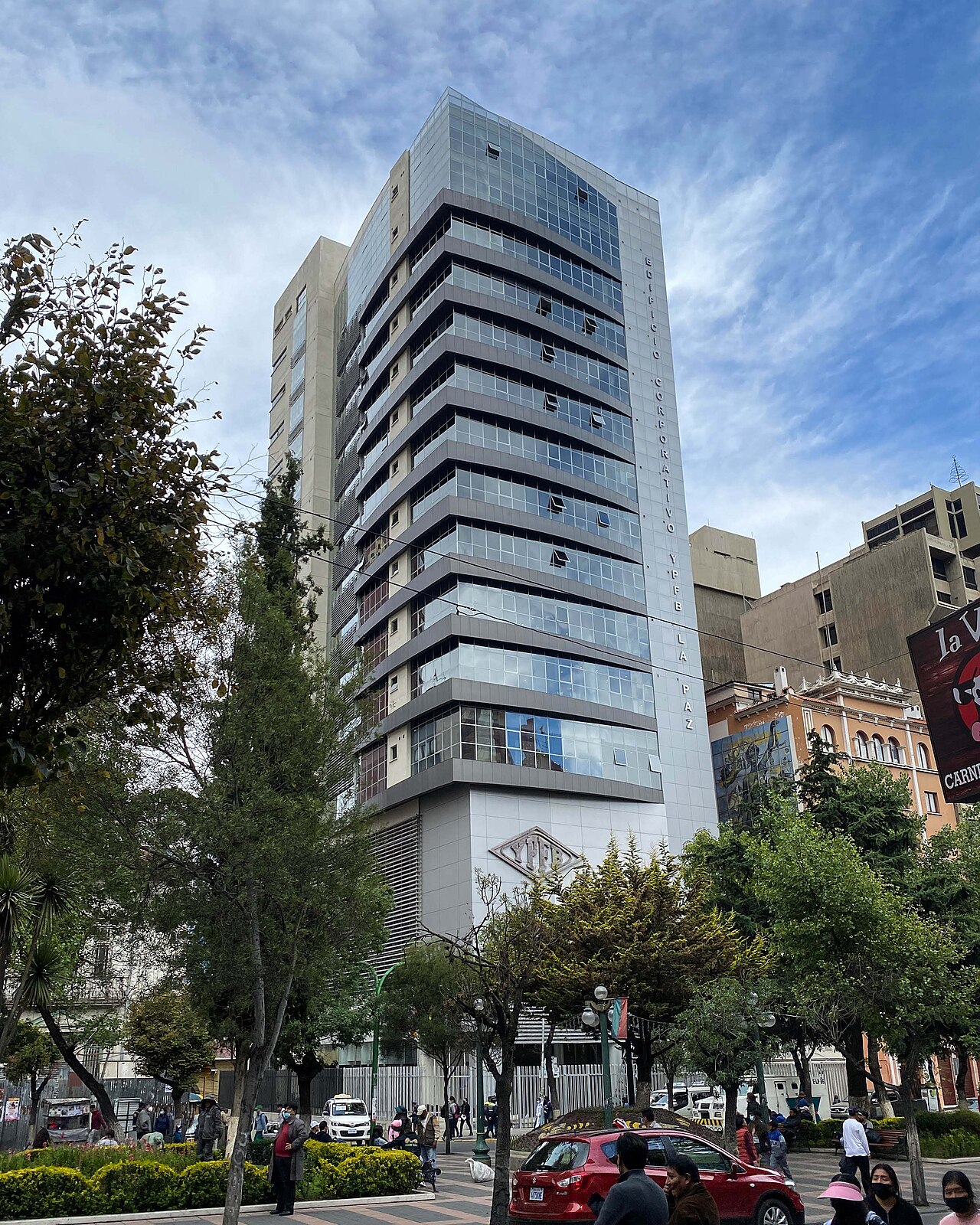
In 2025 YPFB paid Bs 3.59 billion in taxes, the most of any company (about US$515 million at the old fixed rate of Bs 6.96). That was 23% less than in 2024, and its share of national tax collection fell from 13.7% to 9.3%.
Its refining arm, YPFB Refinación, ranked third with Bs 1.35 billion (about US$193 million). Banco Unión, the state bank, ranked ninth by revenue in the Siles study.
Comibol, the state mining company, says it contributed Bs 2.15 billion to the economy in 2025 (about US$309 million). Yet private firms and cooperatives made more than 90% of mineral export sales, says Gary Rodríguez of IBCE, the Bolivian foreign-trade institute.
Paz has promised a 30% cut in the state apparatus and decrees to close or audit loss-making state enterprises. The IMF programme also lists public-enterprise reform among its measures.
Gas and Fuel, the Energy Squeeze
Natural gas was once Bolivia’s main earner, but output roughly halved from its 2014 peak to 2024 and was 27.34 million cubic metres a day in 2025. YPFB projects an average near 26.6 million for 2026, and the hydrocarbons ministry supplied the 2025 figure.
Gas export income fell from US$471.3 million in January to May 2025 to US$283.8 million in the same months of 2026. Brazil remains a buyer, at lower volumes, and Argentina no longer imports Bolivian gas.
YPFB president Sebastián Daroca warned in April 2026 that Bolivia could need to import gas within four to five years without new investment. He blamed field depletion and too little exploration.
Fuel is the other pressure point, because Bolivia imports much of what it burns. About US$2.9 billion went on fuel imports in 2025.
Decree 5503 of 17 December 2025 lifted diesel from Bs 3.72 to Bs 9.80 a litre (about US$0.53 to US$1.41 at the old fixed rate). After protests, the government and the Bolivian Workers’ Central (COB), the main union federation, agreed on 11 January 2026 to repeal it while keeping the new prices.
Decree 5716 of 18 September 2026 then moved diesel to import-parity pricing, starting at Bs 17.95 a litre (about US$1.54 at the 19 October rate). Soy growers warn that the higher price raises their costs and may cut planting.
Minerals, Where the Dollars Come From
Minerals now earn most of Bolivia’s export dollars. Exports reached US$6.39 billion in the first half of 2026, up 55%, and minerals supplied US$4.45 billion of that, up 91%.
Hydrocarbons brought in US$509.9 million in the same half, 13% less than a year earlier. In 2025 silver (US$1.73 billion), zinc (US$1.42 billion) and gold (US$1.19 billion) led mineral exports, ahead of tin (US$512 million).
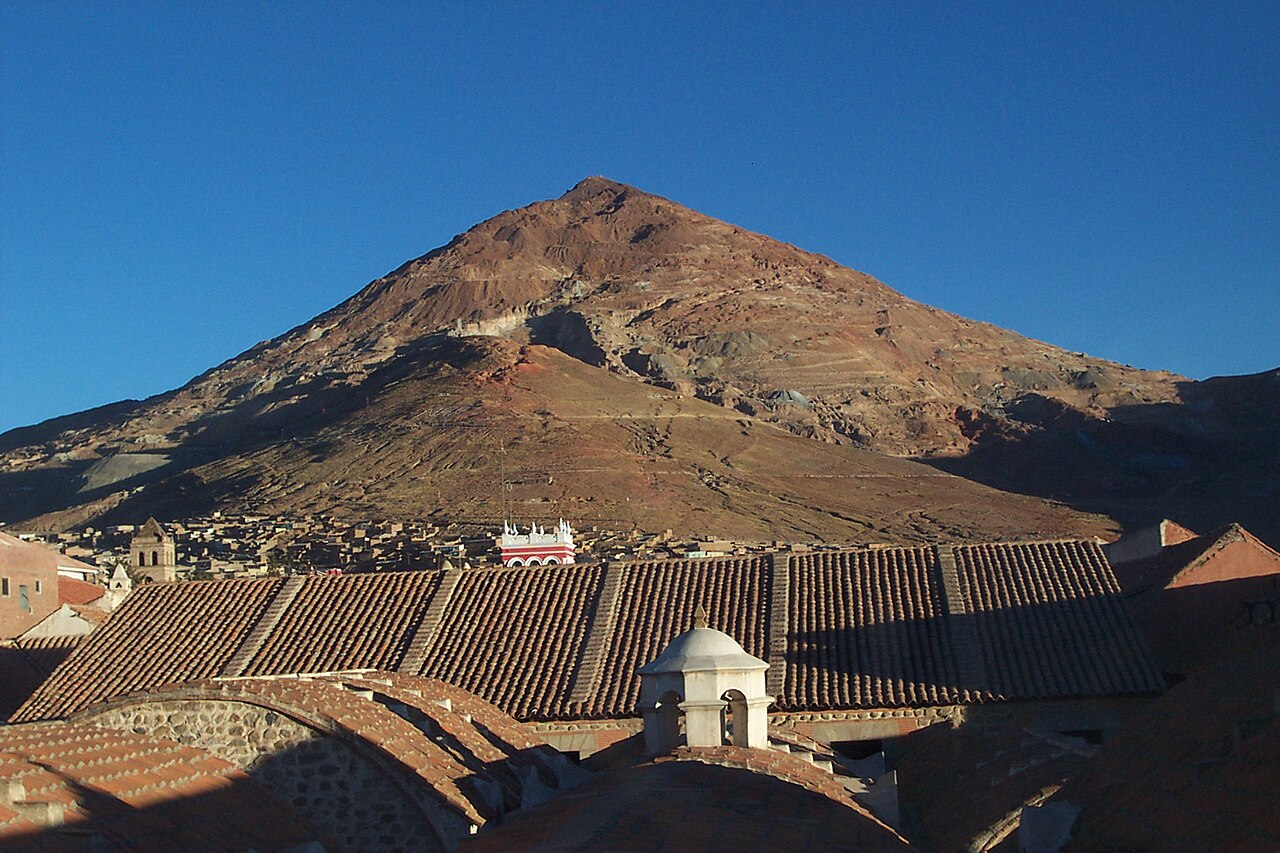
Minera San Cristóbal, described in 2021 as Bolivia’s largest silver mine, was to pass from Japan’s Sumitomo to Bolivian businesspeople, in a deal announced on 24 October 2021. The project represents an investment of US$1.8 billion, and the mine’s own website calls it the world’s fourth-largest silver producer.
Gold exports fell from over US$3 billion in 2022 to US$1.19 billion in 2025 on INE data, while Europa Press cites about US$1.1 billion. On 15 October 2026 the government scrapped former president Luis Arce’s gold purchase scheme and told exporters to bank at least 80% of proceeds in Bolivia.
Bolivia’s lithium contracts with the Chinese consortium CBC and Russia’s Uranium One Group, signed by state firm YLB under Arce, are stalled in the Assembly. Fifty-three Indigenous communities in Nor Lípez, in Potosí, filed a popular action, and the Constitutional Court had asked outside experts for opinions as of July 2026.
Agribusiness and the Santa Cruz Families
Non-traditional exports, which include farm goods and jewellery, earned US$1.43 billion in the first half of 2026, or 22.4% of the total. Soy and derivatives brought in US$448.1 million, flat on a year earlier.
Brazil nuts (US$123.1 million), beef (US$80.9 million) and sugar (US$37.2 million) all grew in that half. Beef was up 46% and sugar up 72%.
Industrias Oleaginosas (IOL) is owned by the Marinkovic family, which founded it in 1957 under Silvio Marinkovic. A 2023 prospectus put its share of soy crushing at about 22%, and the three largest crushers held about 84%.
Industrias de Aceite (IASA) is held by ASAI Capital Holdings, a group led by Carlos Kempff, after a share transfer registered on 4 November 2024. Its revenue was Bs 3.85 billion in the year to March 2025 (about US$553 million), and a rating agency calls it the main grain buyer in the country.
In December 2024 the government suspended edible oil exports to ease a domestic shortage. Vice Minister Jorge Silva said industrialists supplied only 30% to 40% of national demand.
Banks and Private Groups
As of 31 July 2026 the financial system held Bs 262.6 billion in deposits (about US$22.5 billion at the 19 October rate). Loans were Bs 235.5 billion (about US$20.1 billion), and late payments stood at 3.0% of loans.
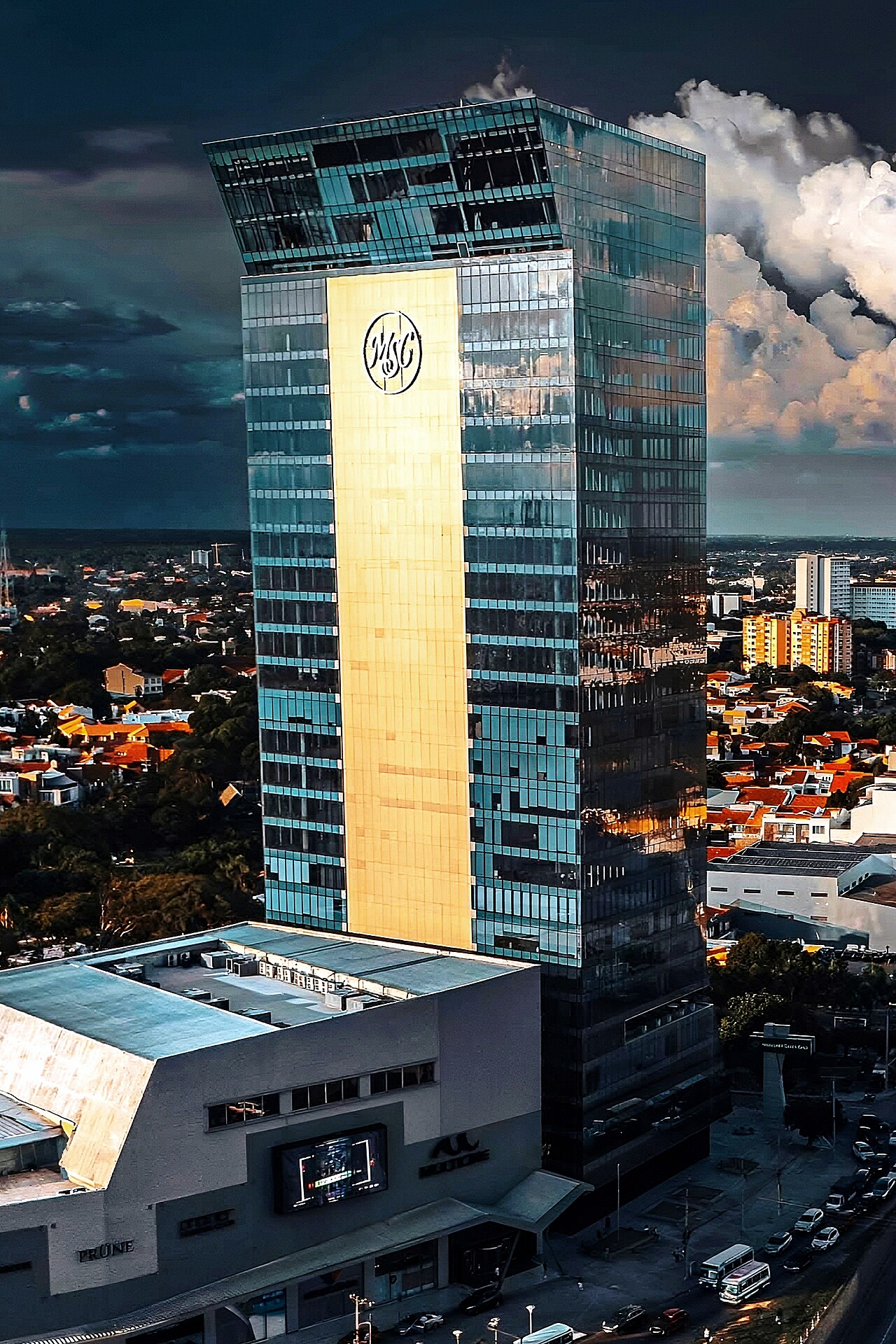
Regulated banks together earned about US$540 million in 2025, a record. BISA made Bs 778.1 million (about US$112 million), Banco Unión Bs 519.1 million (about US$75 million) and Banco de Crédito (BCP) Bs 210.6 million (about US$30 million).
Banco Ganadero, Banco Mercantil Santa Cruz, BancoSol and BISA were among the ten biggest taxpayers of 2025, as was mobile operator Tigo. Banco Ganadero paid Bs 657.7 million (about US$95 million), the fourth-highest bill in the country.
Brewer CBN paid Bs 2.28 billion, the most of any private firm for a third straight year (about US$327 million). IBCE, the foreign-trade institute, named AB InBev as CBN’s owner in 2015, and a CBN executive says the firm hands over more than 60% of its revenue in taxes.
Seven of the ten biggest taxpayers are private, and the top 100 paid Bs 20.4 billion, or 53.1% of all collection (about US$2.9 billion). Siles found that 500 firms out of about 490,000 registered generate 85% of national sales.
BISA’s group chairman, Julio César León Prado, resigned on 22 September 2026. The sources reviewed do not give a reason.
What It Means for US Readers
For investors, Bolivia is a shrinking economy with public debt near 100% of output and an IMF programme only just approved. The IMF money is tied to a floating dollar rate and an end to fuel subsidies, so prices and politics may move together.
Lithium is the link most watched abroad, and the two stalled contracts involve Chinese and Russian partners, not US firms. The court ruling and any new lithium law will decide whether those deals stand.
Travellers should expect an official rate near Bs 11.69 to the dollar, but the rate floats and can move from day to day. Diesel shortages disrupted farming and transport earlier in 2026, so road travel can be affected.
What Is Not Known
It is not known whether the Assembly will pass the Investment Law, or in what form, because Congress is fragmented and no vote date was fixed as of mid-August 2026. Nor is it known when the Constitutional Court will rule on the lithium contracts.
The size of the gold trade is hard to measure, because the 2023 system was criticised for encouraging smuggling and its replacement began only in October 2026. Ownership of many private groups is not public, so this guide names only holdings found in filings or named reporting.
The sources reviewed give no list of the state companies Paz plans to close, or their losses. It is also unclear where the official dollar rate will settle, and whether Bolivia must import gas within five years, as YPFB has warned.
Frequently Asked Questions
Who runs Bolivia’s economy?
President Rodrigo Paz sets policy, with Economy Minister Christian Morales and central bank president David Espinoza. The Legislative Assembly must approve major laws, and it censured the previous economy minister before his replacement in August 2026.
How big is the Bolivia economy and is it growing?
The economy produced US$64.8 billion in 2025 on World Bank data, after shrinking 1.6% that year. The IMF forecasts falls of 3.0% in 2026 and 1.5% in 2027.
What does Bolivia export?
Minerals lead, at US$4.45 billion of US$6.39 billion in exports in the first half of 2026. Hydrocarbons earned US$509.9 million, and soy and derivatives US$448.1 million.
Who are the biggest companies in Bolivia?
State firm YPFB paid the most tax in 2025, followed by brewer CBN, the top private taxpayer. Banco Ganadero, Embol, Mercantil Santa Cruz, BancoSol, BISA and Tigo also made the top ten.
What is the official dollar rate in Bolivia?
The official rate was Bs 11.69 to the US dollar for 17 to 19 October 2026. The central bank ended the fixed rate of Bs 6.96 on 29 June 2026.
Why is Bolivia getting IMF money?
The IMF approved about US$1.9 billion over 36 months to restore stability and rebuild reserves. The programme backs a flexible exchange rate and an end to fuel subsidies.
Is Bolivia developing its lithium?
Its two contracts, with Chinese and Russian partners, are stalled. They await Assembly approval while the Constitutional Court reviews a case brought by Indigenous communities.
Sources: IMF, Bolivia EFF arrangement, 2 October 2026; World Bank, GDP, inflation and growth data for Bolivia; Los Tiempos, World Bank forecast, 6 October 2026; Correo del Sur, IMF outlook, 14 October 2026; Banco Central de Bolivia, exchange rate and news; INE, Censo 2024; Presidencia, new central bank board, 6 January 2026; Infobae, Christian Morales, 26 August 2026; Infobae, new exchange regime and reserves, 1 September 2026; Red Uno, US$10 billion financing, 28 September 2026; El País, draft Investment Law, 13 August 2026; El País, banking sector, 18 October 2026; ASFI, financial system variables, July 2026; Cabildeo Digital, SIN top taxpayers 2025, 9 October 2026; Economy.com.bo, Siles ranking, 12 November 2025; El Deber, exports first half 2026, 13 August 2026; El Deber, mining exports, 18 August 2026; eju.tv, 2025 mineral exports, 6 August 2026; Infobae and Europa Press, gold export reform, 15 October 2026; Gestión, San Cristóbal sale, October 2021; eju.tv, lithium contracts, 12 July 2026; Los Tiempos, gas crisis, 18 October 2026; Infobae, YPFB president, 27 April 2026; Infobae, diesel pricing, 25 September 2026; Unitel, decree 5503 repeal, 11 January 2026; Publiagro, ANAPO and diesel, 5 October 2026; Urgente.bo, IOL and the Marinkovic family; Moody’s Local, Industrias de Aceite, June 2025; IBCE, CBN ownership, October 2015; La Patria, gas exports, June 2025. All accessed 19 October 2026.