By The Rio Times | Created at 2026-10-08 14:26:46 | Updated at 2026-10-08 19:15:38
5 hours ago
By The Rio Times | Created at 2026-10-08 14:26:46 | Updated at 2026-10-08 19:15:38
5 hours ago
COLOMBIA · ECONOMY
Key Facts
- —The country 53.4 million people (2026 projection); GDP about US$457 billion in 2025.
- —Who governs President Abelardo De La Espriella, in office since 7 August 2026.
- —What happened Ecopetrol named Joaquín Gutiérrez Caballero chief executive on 24 September 2026.
- —The oil giant Ecopetrol is 88.49% state-owned and trades in New York as EC.
- —The families Sarmiento Angulo (Aval), Gilinski (Nutresa) and Santo Domingo (Valorem) lead private groups.
- —Prediction markets Kalshi: 15% chance the 2027 minimum-wage rise beats inflation by over 4 points (8 Oct, 5:07 a.m. ET).
A new government, a state oil company under fresh management, three banking groups and a few families decide where Colombia’s money goes.
The Colombia economy is steered by a short list: the government, the central bank, Ecopetrol, three banking groups and a few families. The United States is Colombia’s biggest export market, and at least four companies rooted in Colombia list shares in New York.
This guide sets out who controls the money, the oil and the brands, as of October 2026. For a wider introduction to the country, see Colombia Explained.
Who Sets the Rules: Government and Central Bank
Abelardo De La Espriella took office as president on Friday, 7 August 2026, succeeding the left-wing Gustavo Petro. His background is set out in the Rio Times profile of who Abelardo De La Espriella is.
Economic policy runs through Finance Minister Miguel Gómez Martínez. In a ministry statement on 28 September 2026, he described a “very serious fiscal situation” after four years of Petro’s government.
The state spends about COP 40 trillion (US$12.3 billion) a month and collects about COP 29 trillion (US$9.0 billion), the ministry says. The government has asked the IMF to start its Article IV review, a regular health check of the economy.
Congress’s joint economic committees approved a 2027 budget of COP 634.9 trillion (about US$196 billion) in September 2026. The bill still needs votes in both full chambers, the ministry says.
Interest rates are set by the Banco de la República, the central bank, led by Governor Leonardo Villar. Its board raised the policy rate by a quarter point to 12.25% on Wednesday, 30 September 2026.
Four directors backed the rise, two wanted no change and one wanted half a point, the bank says. Its inflation target is 3%.
Consumer prices rose 6.29% in the year to September 2026, the statistics agency DANE reported on 7 October. That is more than twice the target.
Ecopetrol, the State’s Oil Giant
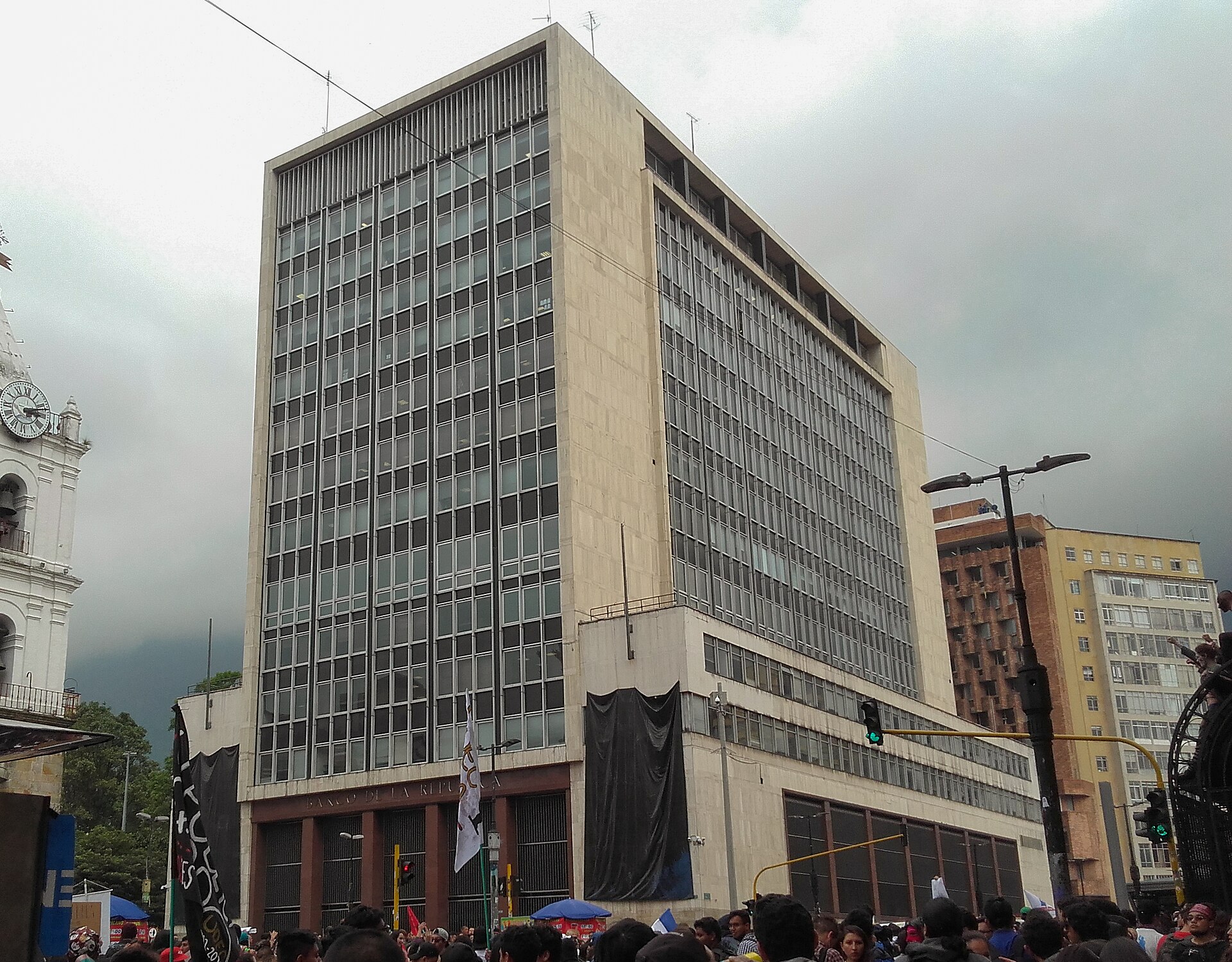
Ecopetrol describes itself as Colombia’s largest oil producer in its 2025 annual report to the US Securities and Exchange Commission. The Nation owns 88.49% of its voting shares.
It listed in Bogotá in 2007 and on the New York Stock Exchange in 2008, under the ticker EC. Its US subsidiaries generated 36% of its 2025 revenue.
Profit attributable to shareholders was COP 10.5 trillion (about US$3.2 billion) in 2025, under international accounting standards. Second-quarter 2026 revenue rose 35% to COP 40.2 trillion (about US$12.4 billion).
Quarterly net income more than tripled to COP 6.1 trillion (about US$1.9 billion), helped by Brent crude averaging US$97 a barrel. Output, however, fell 6.6% from a year earlier to 706,000 barrels of oil equivalent a day.
The company blamed external disruptions and operating limits in strategic fields. It paid COP 5.0 trillion (about US$1.5 billion) in dividends during the quarter, mostly to the state.
Ecopetrol’s leadership has been replaced since the new government took office. At an extraordinary meeting on 15 September 2026, shareholders elected a new board, after a bylaw change proposed by the Finance Ministry.
On 17 September the board elected Carlos Augusto Suárez Rojas as chairman. His public clash with two news outlets is covered in the Rio Times report on the Ecopetrol chairman.
On 24 September the board unanimously named Joaquín Gutiérrez Caballero, a business administrator, as chief executive. He took office on 28 September, after a period in which the post was filled on an acting basis, SEC filings show.
Ecopetrol owns 51.4% of ISA, a power transmission group with leading positions in Brazil, Chile, Peru and Bolivia. Since 2019 it has also held a stake in Texas’s Permian Basin through a joint venture with Occidental Petroleum.
On 17 August 2026 it completed the purchase of about 51% of Brava Energia, an oil producer listed in São Paulo. Ecopetrol says it paid about US$1.2 billion.
Three Banking Groups Make Most of the Loans
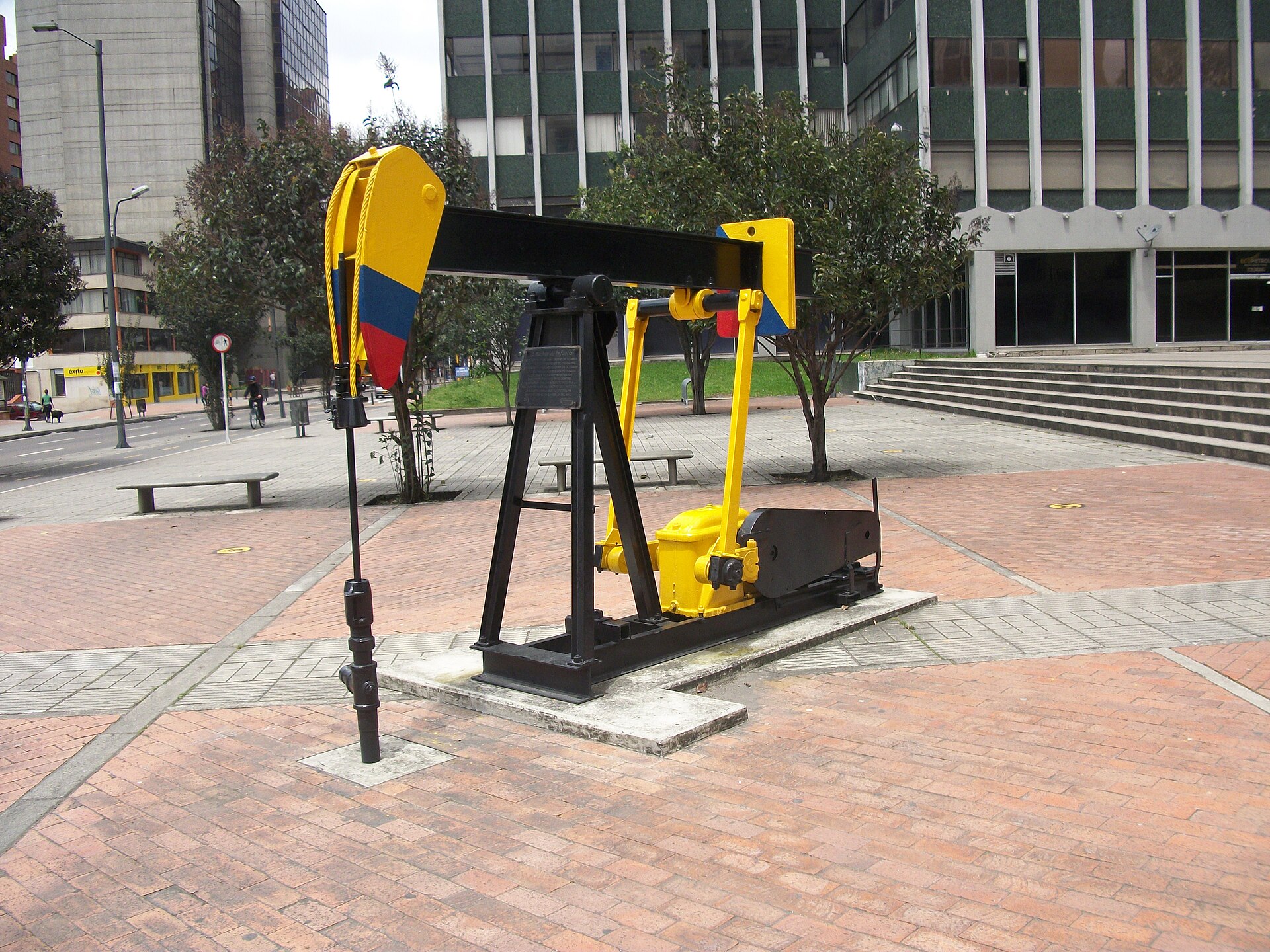
Three groups dominate Colombian lending. At the end of 2025, Bancolombia held 27.6% of net loans, Davivienda 16.0% and Banco de Bogotá 12.8%, regulator data show.
Banco de Occidente, also part of Grupo Aval, held 7.1%, and Scotiabank Colpatria, now folded into Davivienda, 4.0%. Together these banks held about two-thirds of net loans.
Bancolombia belongs to Grupo Cibest, a holding company created in May 2025 and listed in New York as CIB. Grupo Sura, the holding company of the Sura-Bancolombia financial conglomerate, owns 46.16% of Grupo Cibest’s voting shares, the US filing shows.
Grupo Cibest’s second-quarter 2026 profit rose 52% to COP 2.7 trillion (about US$830 million). The bank is explained in detail in Bancolombia Explained.
Grupo Aval owns Banco de Bogotá, Banco de Occidente, Banco Popular and Banco AV Villas. It also controls Porvenir, a pension and severance fund manager, and Corficolombiana, an investment firm.
Luis Carlos Sarmiento Angulo held 97.9% of Grupo Aval’s common shares as of April 2026, its US annual report says. Luis Carlos Sarmiento Gutiérrez chairs the board, and María Lorena Gutiérrez is president.
Davivienda absorbed Scotiabank’s businesses in Colombia, Costa Rica and Panama in a deal formalised in 2025. Scotiabank received 20.32% of the new Davivienda Group, the Bogotá business daily La República reported.
Grupo Bolívar, an insurance and finance group, remains the controlling company, according to the same report. Banks are supervised by the Superintendencia Financiera, the financial regulator, which also certifies the official exchange rate.
The Families and Holding Companies Behind the Brands
Forbes Colombia ranked banker Jaime Gilinski as the country’s richest person in March 2026, with US$14.7 billion. The magazine says he owns GNB Sudameris, a bank.
Under a 2023 deal reported by the business daily Portafolio, his family’s companies took control of food maker Grupo Nutresa. Grupo Sura and Grupo Argos left Nutresa in February 2024, the news site Xataka Colombia reported.
The swap ended Nutresa’s cross-shareholdings with Sura and Argos, fellow members of the Medellín-based Grupo Empresarial Antioqueño network. The family’s links to the new president are examined in the Rio Times review of the Gilinski group.
Grupo Sura now presents itself as a financial holding company. It owns 93.3% of pension manager Sura Asset Management, 81.1% of insurer Suramericana and 46.2% of Grupo Cibest’s voting shares.
It reported first-half 2026 profit of COP 1.7 trillion (about US$525 million), up 37.7%, which it called a record. On Monday, 5 October 2026, it began buying back up to COP 500 billion (about US$154 million) of its shares.
Grupo Argos calls itself an infrastructure holding company. Its businesses include cement maker Argos, power company Celsia and Odinsa, which runs road and airport concessions.
The Santo Domingo family’s business group is led by Valorem, according to Valorem’s website. Its companies include the TV network Caracol Televisión, the newspaper El Espectador, the cinema chain Cine Colombia and the D1 discount stores.
Ecopetrol, Grupo Cibest, Grupo Aval, Grupo Sura and Grupo Argos all trade on the Bolsa de Valores de Colombia. The Bogotá exchange now belongs to nuam, a regional holding that integrates the Santiago, Lima and Colombia exchanges.
Oil, Coffee and Coal: What Colombia Sells
Colombia exported goods worth US$50.2 billion in 2025, DANE figures show. Mineral fuels, mostly crude oil and coal, made up US$17.5 billion, or about 35%.
Crude oil and refined products alone earned US$12.5 billion. Coffee brought in US$5.8 billion and coal US$4.9 billion.
Gold and other precious metals and stones added US$4.9 billion. Flowers and live plants earned US$2.4 billion, and fresh fruit US$2.2 billion.
Exports rose 12.8% to US$36.9 billion in January to August 2026. Oil’s share rose to 27%, while coffee’s fell to about 9%.
Glencore, the Swiss-based commodity group, lists Cerrejón among its operations and calls it one of the world’s largest open-cut thermal coal operations. Drummond Ltd, part of Drummond Company of Birmingham, Alabama, mines coal in the Cesar department.
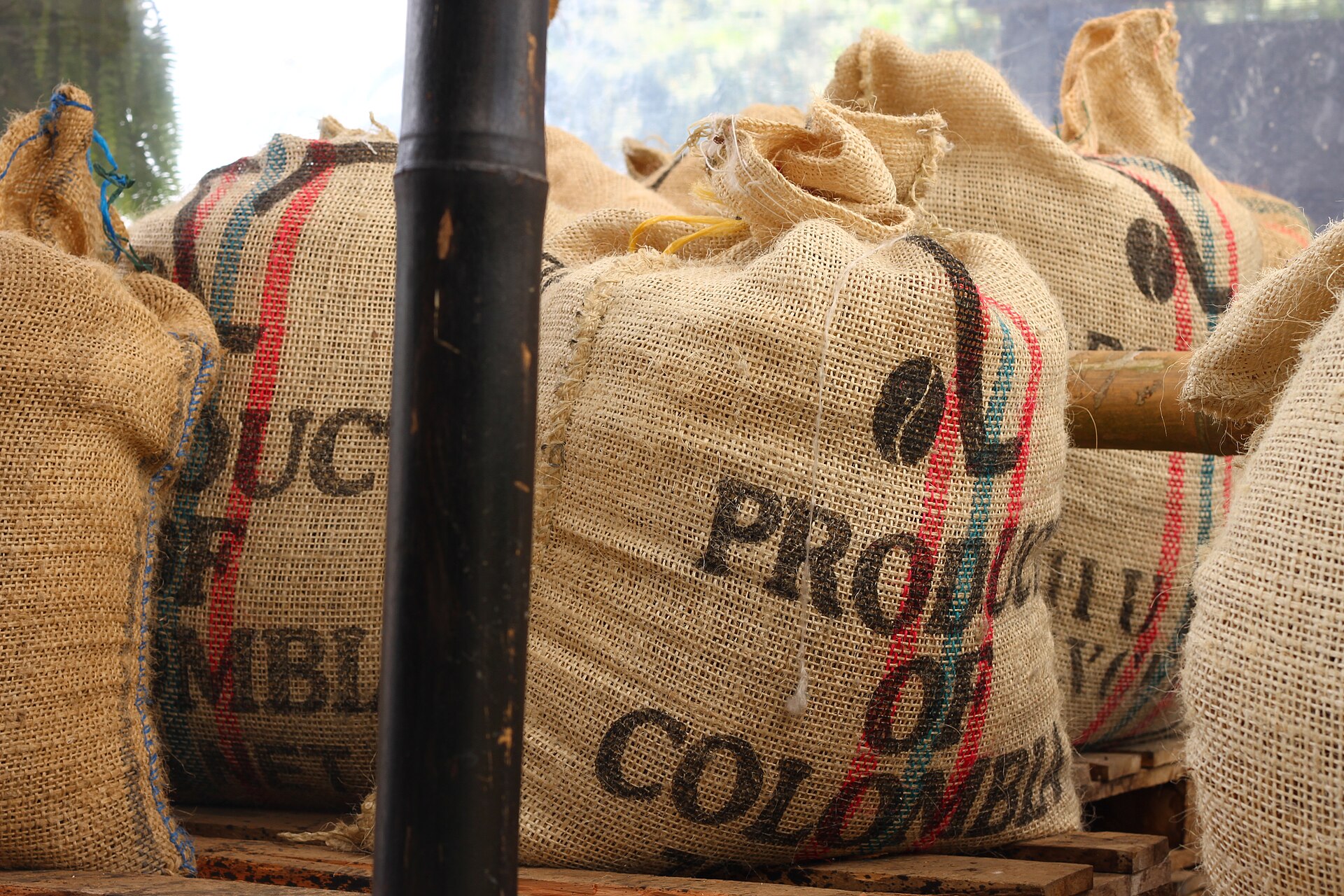
Coffee growers are represented by the Federación Nacional de Cafeteros, founded in 1927. It guarantees growers a permanent buyer for their coffee at a base market price, through cooperatives, the federation says.
The Colombia Economy in Numbers
Colombia’s gross domestic product was COP 1,853 trillion in 2025, which the IMF puts at about US$457 billion. The DANE figure is preliminary.
The population is projected at 53.4 million for 2026, DANE estimates. The IMF’s 2025 figure works out at roughly US$8,600 per person.
Output grew 3.5% from a year earlier in the second quarter of 2026, and 2.9% in the first half. Public administration, education and health led, growing 10.0% in the quarter.
Mining and quarrying, including oil, made up just 3.7% of 2025 GDP at current prices. Commerce, transport and hotels made up 19%, and public administration, education and health 15%.
Oil therefore weighs far more in exports and in dividends to the state than in total output. That makes Ecopetrol’s results a public-finance question as much as a corporate one.
The 2026 minimum wage is COP 1,750,905 a month (about US$541), after a 23% rise decreed in December 2025, Portafolio reports. The Council of State, the top administrative court, has yet to rule on a challenge to it.
Forecasts for the 2027 rise are discussed in the Rio Times report on the minimum-wage talks. Daily coverage is collected on the Colombia news page.
The peso traded at COP 3,238.88 per US dollar on 8 October 2026, the official rate certified by the Superintendencia Financiera. Conversions in this guide use that rate, except where the IMF is cited.
What It Means for US Readers
The United States bought 29.6% of Colombia’s goods exports in 2025, more than any other country, DANE data show. US Census figures put two-way goods trade at US$37.3 billion that year, with a US surplus of US$1.6 billion.
Trade runs under the US-Colombia Trade Promotion Agreement, in force since 15 May 2012. Ecopetrol’s Texas shale venture and its US subsidiaries tie the state oil company closely to the US market.
At least four companies rooted in Colombia list shares on the New York Stock Exchange. They include Ecopetrol (EC), Grupo Cibest (CIB), Grupo Aval (AVAL) and Tecnoglass (TGLS).
Tecnoglass, a window maker, makes most products in Barranquilla and earns 96% of revenue in the United States, its annual report says. Colombia’s wider ties with Washington and Beijing are covered in Colombia Geopolitics Explained.
Investors tend to watch three things: who runs Ecopetrol, how fast inflation falls and whether the budget gap narrows.
What Prediction Markets Say
On Kalshi, a US exchange regulated by the Commodity Futures Trading Commission, traders bet on Colombia’s 2027 minimum-wage rise. The contract pays out if the rise beats December 2026 inflation, as measured by DANE, by more than 4.00 percentage points.
At 5:07 a.m. ET on 8 October 2026, Kalshi priced that outcome at 15%. By 8 a.m. ET about 123,000 contracts had traded, Kalshi’s public data show.
For scale, the 2026 rise of 23% was about 18 points above December 2025 inflation of about 5.1%, by DANE’s price index.
Why we show this: prediction markets turn real-money bets into a live probability that moves within minutes of the news, which is why investors, campaigns and newsrooms in the United States now follow them closely. We show them next to polls and official results, never instead of them.
What Is Not Known
It is not yet clear whether Ecopetrol’s new management will change its investment plan or production goals. The government has not set out in detail how it will close the gap between monthly spending and revenue.
The Council of State has not ruled on whether the 23% wage rise for 2026 was lawful. The 2027 rise has not been set, and beneficial ownership behind some family holding companies is not fully public.
Frequently Asked Questions
Who runs the Colombia economy?
President Abelardo De La Espriella and Finance Minister Miguel Gómez Martínez set fiscal policy. The Banco de la República, led by Governor Leonardo Villar, sets interest rates.
What is Ecopetrol?
Ecopetrol is Colombia’s state-controlled oil company, and the Nation owns 88.49% of its voting shares. It trades on the New York Stock Exchange as EC.
Who owns Bancolombia?
Bancolombia belongs to Grupo Cibest, which trades in New York as CIB. Grupo Sura owns 46.16% of Grupo Cibest’s voting shares.
Which families control big Colombian companies?
Luis Carlos Sarmiento Angulo controls Grupo Aval, and the Gilinski family controls food group Nutresa. The Santo Domingo family’s group, led by Valorem, includes Caracol Televisión.
What does Colombia export?
Mineral fuels, mostly oil and coal, were about 35% of 2025 goods exports worth US$50.2 billion. Coffee, gold, flowers and fruit follow.
How high is inflation in Colombia?
Consumer prices rose 6.29% in the year to September 2026, DANE says. The central bank’s target is 3%, and its policy rate is 12.25%.
Can Americans invest in Colombian companies?
Yes. Ecopetrol, Grupo Cibest, Grupo Aval and Tecnoglass list shares on the New York Stock Exchange.
Sources: Banco de la República, rate decision of 30 September 2026; Banco de la República, minutes; Banco de la República, inflation target; DANE, CPI September 2026; DANE, CPI index series; DANE, GDP second quarter 2026; DANE, GDP at current prices; DANE, exports of coffee, coal and oil; DANE, exports by tariff chapter; DANE, exports by destination; DANE, population projections; Ministerio de Hacienda, 28 September 2026; Ministerio de Hacienda, 2027 budget; Cancillería, on the presidency since 7 August; Superintendencia Financiera, official exchange rate (TRM); Ecopetrol, Form 20-F 2025; Ecopetrol, second-quarter 2026 results; Ecopetrol, shareholders’ meeting of 15 September 2026; Ecopetrol, board decisions of 17 September 2026; Ecopetrol, Brava Energia closing; Ecopetrol, new chief executive; Grupo Cibest, Form 20-F 2025; Grupo Cibest, second-quarter 2026 results; Grupo Aval, Form 20-F 2025; Tecnoglass, Form 10-K 2025; SEC, company tickers; Grupo Sura, portfolio; Grupo Sura, first-half 2026 results; Grupo Sura, share buyback; Grupo Argos; Valorem; nuam; Glencore, coal; Drummond Company; Drummond Ltd; Federación Nacional de Cafeteros; IMF, Colombia data; US Census Bureau, trade with Colombia; USTR, US-Colombia TPA; Portafolio, 2026 minimum wage; Portafolio, Nutresa deal; Xataka Colombia; La República, Davivienda Group; Forbes Colombia (all accessed 8 October 2026).