By The Rio Times | Created at 2026-08-08 07:46:50 | Updated at 2026-08-08 08:15:33
46 minutes ago
By The Rio Times | Created at 2026-08-08 07:46:50 | Updated at 2026-08-08 08:15:33
46 minutes ago
South Africa · COMPANIES
Key Facts
—Half-year revenue: Heineken NV reported first-half 2026 revenue of €17.6 billion (about US$20.3 billion), up 3.8% from a year earlier, with organic net revenue rising 2.7% to €14.8 billion (about US$17.1 billion).
—South African performance: South Africa delivered strong beer performance in H1 2026, led by Amstel alongside contributions from Heineken, Windhoek and Sol brands.
—Windhoek brand: Windhoek is a Namibian premium lager brewed by Namibia Breweries Limited, also produced at the Sedibeng brewery south of Johannesburg under a Heineken-Diageo joint venture.
—Sol brand: Sol, an authentic Mexican lager, was launched in South Africa in September 2016 and now helps drive Heineken’s premium imported lager segment in the country.
—Heineken Beverages: The €4 billion (about US$4.6 billion) combination of Distell, Namibia Breweries and Heineken South Africa, completed in 2023, created the number-two beer player in South Africa with strong cider and spirits exposure.
—Africa profit engine: Africa accounts for nearly 21% of Heineken’s profits while representing only around 15% of volume and revenue, with profits per beer about 42% higher than the global average.
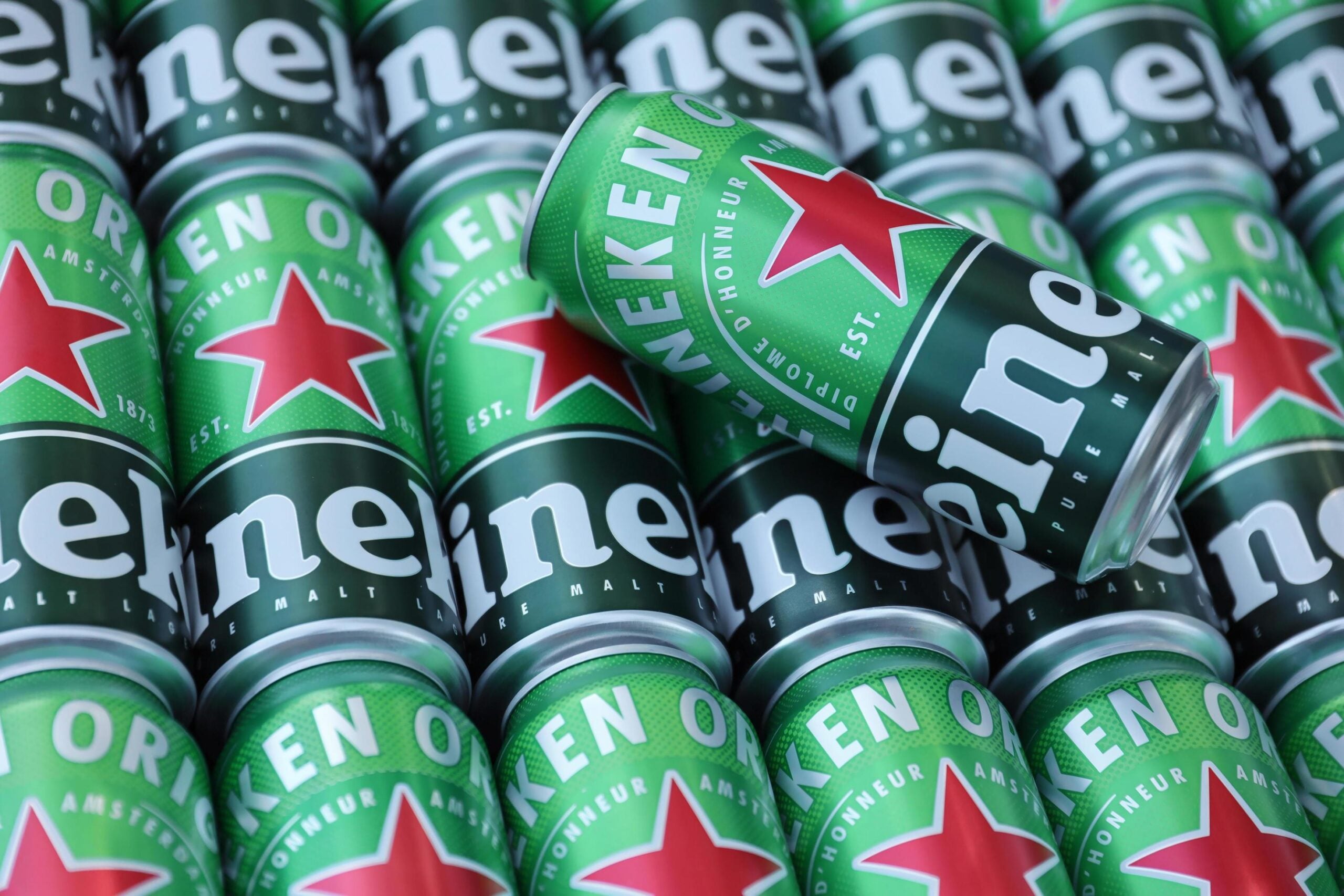
Heineken South Africa has emerged as a standout growth engine for the Dutch brewer, with Windhoek and Sol premium brands helping to drive a strong first half of 2026 that saw group revenue reach €17.6 billion, about US$20.3 billion.
One-stop reference
Company Intelligence
Every listed company in Latin America — financials, ownership and structure for 1,450+ companies across 26 exchanges, in one place.
Premium brands power Heineken South Africa growth
Heineken NV reported first-half 2026 revenue of €17.6 billion, about US$20.3 billion at €1 = US$1.155, a 3.8% increase driven by organic growth and consolidation changes. Operating profit rose 6.7%, while free operating cash flow surged to €1.4 billion from €257 million a year earlier.
Management described the outcome as “quality growth” across volume, revenue and profit. South Africa played a central role, with beer performance led by Amstel and its partnership with Orlando Pirates, alongside contributions from Heineken, Windhoek and Sol.
Windhoek, a Namibian premium lager brewed by Namibia Breweries Limited, has long carried strong regional brand recognition as a pure malt beer. The Sedibeng brewery south of Johannesburg, owned 75% by Heineken and 25% by Diageo, was the first facility outside Namibia licensed to brew Windhoek Lager.
Sol, an authentic Mexican lager, was launched in South Africa in September 2016 as part of a strategy to boost market share ahead of AB InBev’s takeover of SABMiller. By 2026, both brands are helping position Heineken more deeply in the premium imported lager segment.
The €4 billion bet on Southern Africa
In November 2021, Heineken announced an implementation agreement with Distell Group Holdings, Namibia Breweries Limited and Ohlthaver & List to integrate their Southern African businesses into one enlarged company. The Distell acquisition was valued at €2.2 billion, with the combined new business worth approximately €4 billion.
The South African Competition Tribunal conditionally approved the Distell takeover, estimated at R40.1 billion. Conditions included more than R10 billion in investment over five years to maintain and grow productive capacity, plus commitments on jobs, local procurement and small business support.
The deal was completed in 2023, creating Heineken Beverages, headquartered in South Africa. The combined entity adds more than €1 billion in net revenue and €150 million in operating profit to Heineken’s African footprint, bringing in 5,400 employees from Distell and Namibia Breweries.
Heineken Beverages positioned the group as number two in the South African beer market, with strong cider and spirits exposure through brands like Savanna and Hunter’s. The Competition Commission warned the group would control more than 65% of the flavoured alcoholic beverages market.
Why Africa delivers outsized profits for Heineken
Africa accounts for nearly 21% of Heineken’s profits while representing only around 15% of volume and revenue, according to research cited by author Olivier van Beemen. This means profits per beer are about 42% higher in Africa than the global average.
Under its global EverGreen strategy, Heineken focuses on premiumisation of the portfolio, better route-to-customer execution and digitising customer relationships. Southern Africa fits that playbook perfectly, pivoting from a beer-centric model to a total beverage company spanning beer, cider, ready-to-drink products, wine and spirits.
Management expects mid- to high single-digit top-line lifts in targeted markets as premium penetration rises. South Africa is increasingly used as a test case for Heineken’s integrated beverages strategy, sustainability initiatives and tavern-level inclusion programmes.
The Distell and Namibia Breweries deal explicitly aimed to create a regional champion capable of competing with AB InBev, which acquired SABMiller in 2016, and Diageo, the global spirits giant previously in joint ventures with Heineken in South Africa. The consolidation marked a decisive escalation in the commercial contest for African consumers, a theme explored in Africa: The New Scramble.
Capacity expansion to match rising demand
Heineken embarked on a US$70 million expansion of the Sedibeng brewery to raise annual capacity from more than 5 million hectolitres to 8.5 million hectolitres by 2020. The facility brews Heineken, Amstel, Windhoek and Strongbow cider for the South African market.
Around that time, Heineken’s South African chief said company brands had reached 18% of the domestic beer market, with the Heineken brand itself showing double-digit sales growth. In 2019, the company announced a plan to build a R6 billion brewery near Dube TradePort on KwaZulu-Natal’s North Coast.
After the Distell deal closed, Heineken outlined plans for a new R3.8 billion brewery and R1.7 billion malting facilities, plus R10 billion in capital expenditure to expand and maintain operations. The public-interest investment package totalled more than €500 million over five years.
This package included more than €250 million for a new brewery and maltery, a €20 million supplier development fund, a €10 million localisation and growth fund, and an innovation and research hub for Africa based in South Africa.
Taverns, football and soft power
The Tavern Transformation programme commits support for around 1,000 tavern owners to formalise, license and grow their businesses over five years. This serves both as a development initiative and a distribution strategy, locking taverns into Heineken’s branded ecosystems.
In H1 2026, Amstel’s partnership with Orlando Pirates, one of South Africa’s biggest football clubs, was explicitly cited as supporting stronger beer performance. Football sponsorships give Heineken cultural leverage, embedding its brands in everyday social rituals and reinforcing premium positioning.
French geopolitical analysis characterises Heineken’s African strategy as a commercial war fought using tailored product quality, fluid investment capacity and political and social influence levers. The company has invested over €3 billion in Africa over the past decade, targeting markets with high population growth, rising per-capita beer consumption and rapid urbanisation.
South Africa offers scale, institutional capacity and safe harbour status compared with more volatile African markets. The Johannesburg-based Heineken Beverages headquarters provides regional command over distribution into Namibia, Botswana, Tanzania, Kenya and beyond.
What to watch next
Heineken’s Africa, Middle East and Eastern Europe division faces headwinds including high inflation, low purchasing power and currency shortages. Yet the stated role of the region is to transform to a profitable growth model and create more value from long-term potential.
In water-stressed South Africa, Heineken has invested in solar energy and water efficiency measures as part of its sustainability strategy. Regulatory risk remains a factor, with higher excise taxes and tighter alcohol marketing rules capable of depressing volumes across markets.
The company’s €300 million non-cash impairment from its Russia exit in 2023 serves as a reminder of how quickly political decisions can wipe out assets. For now, however, South Africa stands out as a growth engine, helped by premium beer sales and the successful integration of the Distell and Namibia Breweries businesses.
Frequently Asked Questions
Which brands drove Heineken’s South African growth in H1 2026?
Amstel led the performance, with Heineken, Windhoek and Sol all contributing to strong beer results in South Africa during the first half of 2026.
What was the value of the Distell and Namibia Breweries deal?
The combined new business was valued at approximately €4 billion, with the Distell acquisition alone valued at €2.2 billion, and was completed in 2023 to create Heineken Beverages.
How profitable is Africa for Heineken compared with the rest of the world?
Africa accounts for nearly 21% of Heineken’s profits while representing only around 15% of volume and revenue, meaning profits per beer are about 42% higher than the global average.
Connected Coverage
For deeper analysis of how global capital is reshaping African consumer markets, read Africa: The New Scramble.
Sources
This article was produced by The Rio Times’ automated newsroom system. How we use AI · Report an error
LatAm Markets: Live Signals → — real-time movers, turnover leaders and FX across Latin America.
The Rio Times · Power Map
See who really holds power in Latin America
Click to open the Power Map →