 By GB News (World News) | Created at 2026-10-08 02:51:02 | Updated at 2026-10-08 03:57:15
1 hour ago
By GB News (World News) | Created at 2026-10-08 02:51:02 | Updated at 2026-10-08 03:57:15
1 hour ago
DNA from the planet's oldest known land animal could reveal genetic secrets that may shed light on how humans age.
Jonathan, the Aldabra giant tortoise, is believed to have hatched in 1832 during the reign of King William IV and resides on the grounds of Plantation House on St Helena, the remote British Overseas Territory in the South Atlantic.
At an estimated 194 years old, Jonathan has outlived the typical lifespan for his species by roughly a century, with Aldabra tortoises averaging around 80 years.
Now, a team including researchers from the University of Cambridge and the Kallel Foundation has analysed Jonathan's DNA and identified 287 gene variants unique to him, linked to ageing-related biological pathways.
Of those 287 variants, 41 are considered functionally significant, meaning they actively shape the animal's biology and survival.
A dozen overlap with genes catalogued in ageing databases for other long-lived species.
Strikingly, 272 of Jonathan's genes showed characteristics resembling those of a five-year-old Aldabra tortoise, particularly genes responsible for maintaining mitochondrial function, the cellular powerhouses that supply energy throughout the body.
As animals grow older, chemical modifications accumulate on their DNA, altering how genes behave and hastening decline.
Jonathan the tortoise could hold the secret to ageing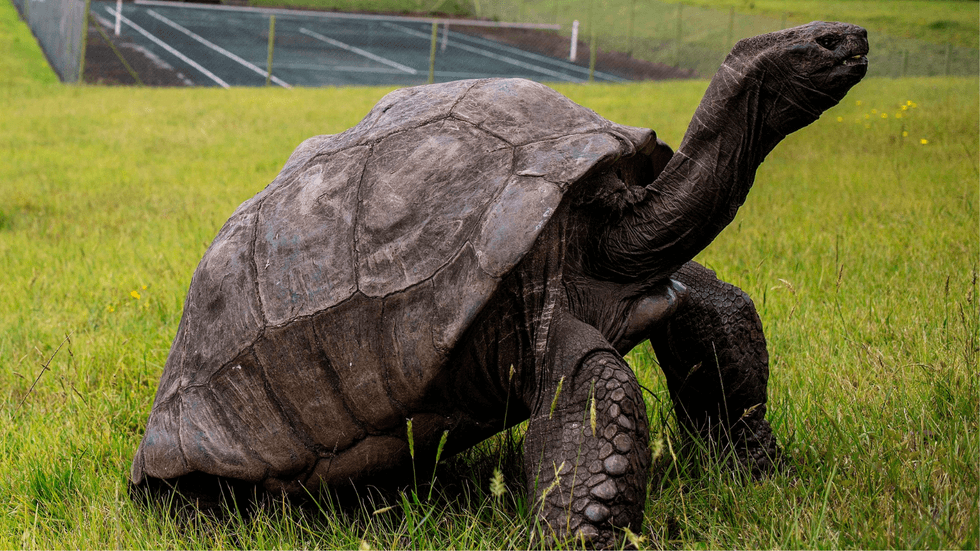
Jonathan, however, showed remarkably few of these age-related changes.
His gene regulators, the molecular switches that govern when and how strongly genes are expressed, were unusually intact.
These regulators typically deteriorate over time, causing genes to misfire and contributing to age-related disorders.
In Jonathan's case, the original function of many genes appeared barely altered across nearly two centuries of life.
Jonathan is believed to be the oldest reptile living on earth 
GETTY
Dr Justin Gerlach, an ecologist from Cambridge, said: "Not only is he slightly better able to cope with the symptoms of ageing, he is actually ageing more slowly.
"His longevity arises from a combination of good genes and stable gene regulation."
"If we can understand what it is about Jonathan's gene regulators that makes them so stable, we may be able to apply some aspect of that to slow the ageing process [in humans]."
Dr Stephen Clark, founder of Kallel and co-author of the study, said: "Nature has already solved the puzzle of ageing in remarkable ways, and Jonathan's genome provides a blueprint for cellular resilience."
Jonathan the Tortoise is almost 200 years old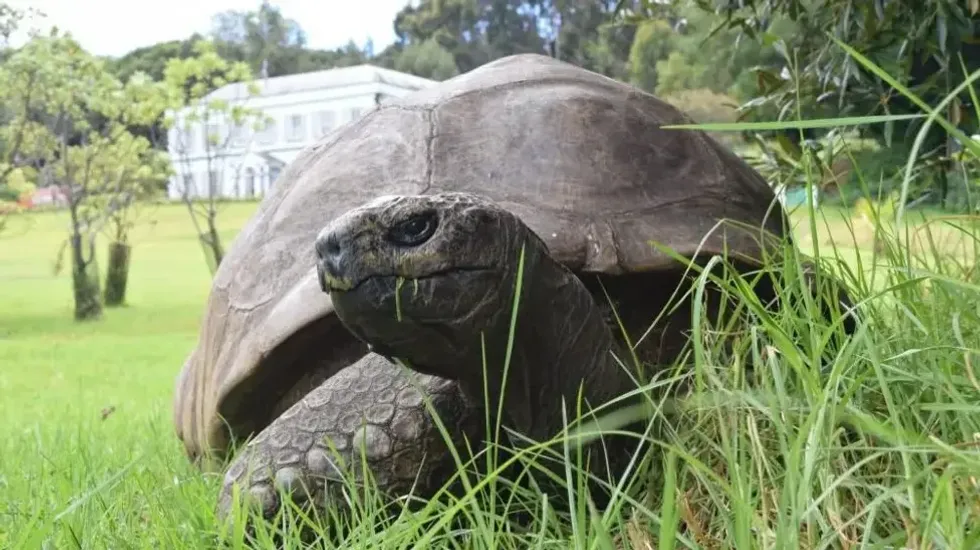
The findings, published in the journal Science Advances, echo research on human supercentenarians.
Manel Esteller at the Josep Carreras Leukaemia Research Institute in Barcelona, who led a study of a 117-year-old woman, said: "I firmly believe we can learn about the global mechanisms of ageing by looking at the exceptions."
Dr Clark noted that the woman in Esteller's study also possessed exceptionally efficient mitochondrial function, reinforcing the idea that ageing mechanisms may be shared across species.
Jonathan has long fascinated biologists due to his longevity
GETTY
However, the study faced significant practical hurdles.
Authorities on St Helena refused to allow blood samples from the famous tortoise because of infection risks, forcing the team to rely on cheek swabs and scrapes instead.
An initial batch of samples contained bacterial DNA from Jonathan's mouth rather than his own cells, requiring a second collection effort.
Because DNA extracted from saliva is more fragmented than DNA from blood, the researchers had to patch gaps using a reference genome from another Aldabra tortoise.
Kousuke Hashimoto at the University of Osaka cautioned that the comparison group of just four other tortoises was small, as those individuals may carry their own unique genetic quirks.
Experts say Jonathan is nonetheless showing signs of wear, including deteriorating eyesight, and his remaining lifespan is uncertain.