By The Rio Times | Created at 2026-06-19 17:06:38 | Updated at 2026-06-19 19:41:25
2 hours ago
By The Rio Times | Created at 2026-06-19 17:06:38 | Updated at 2026-06-19 19:41:25
2 hours ago
Markets & Finance · Caribbean
—The deal. Bermuda’s Butterfield bank has agreed to buy the Caribbean arm of Canada’s CIBC for about one point eight billion dollars.
—The exit. CIBC is selling its roughly ninety-two percent stake, ending a long and often difficult run as a Canadian owner in the region.
—The size. The combination would create a bank with around twenty-nine billion dollars in assets across more than a dozen island markets.
—The structure. Butterfield is paying mostly cash with some of its own shares, and CIBC will keep a stake of about a fifth in the merged group.
—The timeline. The two banks expect to close the deal in the first half of 2027, once shareholders and regulators sign off.
—Why it matters. One of the biggest banking shake-ups the Caribbean has seen in decades will reshape who lends to islanders and businesses.
The CIBC Caribbean deal marks a quiet but important retreat: a big Canadian bank is walking away from the islands, and a smaller Bermudian rival is stepping in to scoop up the pieces.
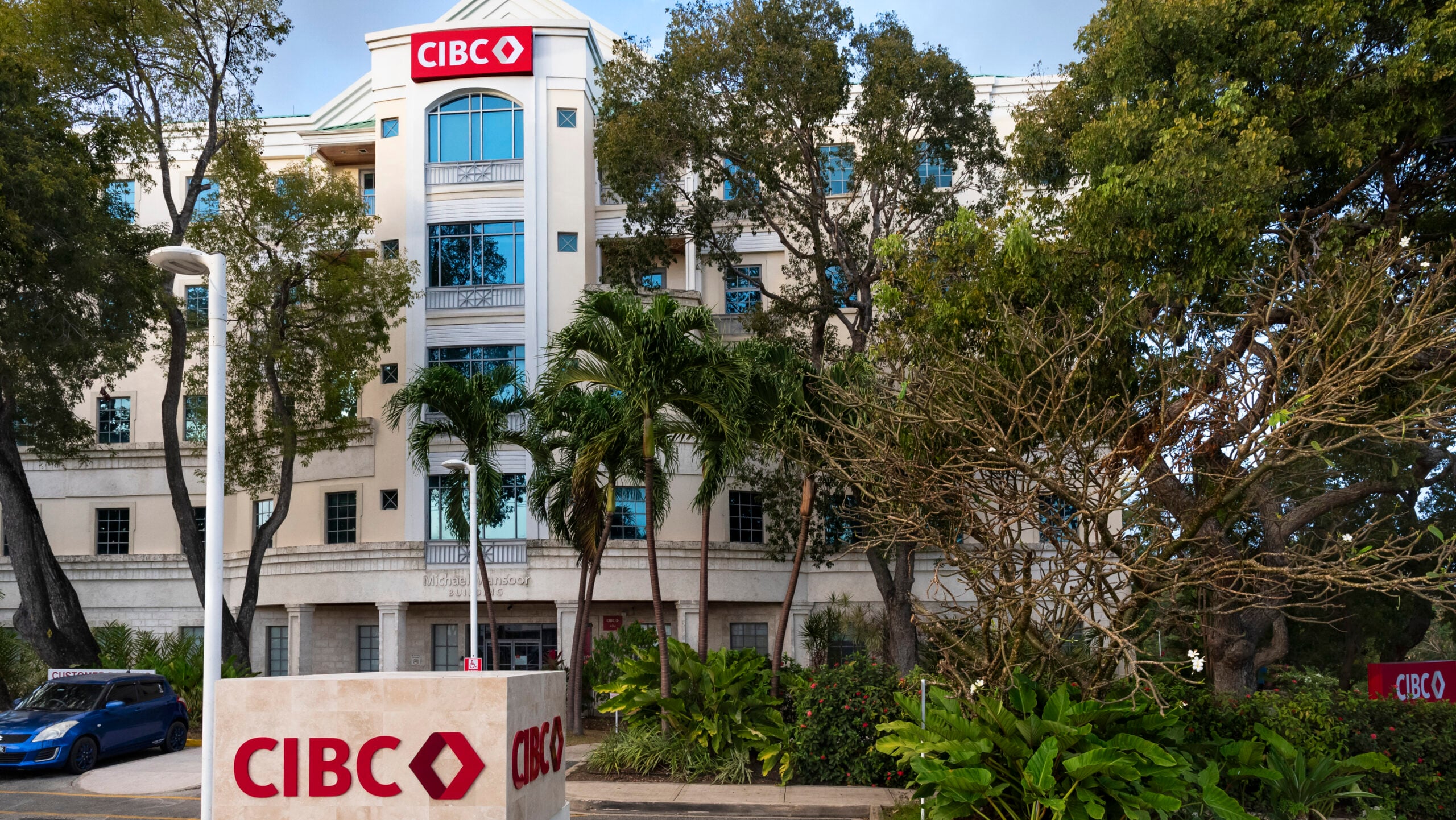 A Canadian Bank Is Quitting the Caribbean in a $1.8 Billion Deal. (Photo internet reproduction)
What the CIBC Caribbean deal involves
Butterfield, a lender and wealth manager based in Bermuda, has signed a definitive agreement to take control of CIBC Caribbean. It is buying the roughly ninety-two percent stake held by the Canadian Imperial Bank of Commerce, one of Canada’s largest banks.
The price tag is close to two billion dollars. Most of that is cash, with the rest paid in Butterfield shares, and the company plans to chase the small slice of the business it would not yet own.
Put together, the two banks would hold around twenty-nine billion dollars in assets. That would make the combined group one of the larger players in Caribbean banking.
Why CIBC is leaving
For a foreign reader, the simplest way to read this is as a Canadian bank deciding the Caribbean is no longer worth the trouble. CIBC has run its island business, long known as FirstCaribbean, for about two decades, and the relationship has not always been smooth.
The bank even tried to float the unit on the United States stock market back in 2018, without success. Selling now lets CIBC redeploy capital while still keeping a foot in the door.
Rather than cash out entirely, CIBC will hold on to a stake of roughly a fifth in the enlarged Butterfield. That keeps it exposed to any upside without the burden of running the operation day to day.
What Butterfield gains
For Butterfield the prize is scale and a powerful competitor removed from its home turf. The deal is especially important in the Cayman Islands, a wealthy financial centre where CIBC‘s arm had been one of its two main rivals.
The bank expects the purchase to lift its earnings from the first year and to deliver tens of millions of dollars in annual cost savings by the end of the decade. It is funding the move with cash, shares and new borrowing.
The scale matters in a small market. Before the deal, Butterfield and the CIBC arm each held a little over fourteen billion dollars in regional assets, so merging them roughly doubles Butterfield’s weight at a stroke.
That places the combined bank closer to the region’s heavyweights. The largest, Scotiabank’s Caribbean business, holds about twenty-six billion dollars, while Jamaica’s NCB sits in a similar range to the new Butterfield group.
Butterfield says it will keep CIBC Caribbean’s regional headquarters in Barbados and its existing footprint. It also plans to list its shares on the Barbados, Bahamas and Trinidad exchanges after the deal closes.
Why it matters for investors
The deal is part of a longer pattern of North American banks trimming their presence in the Caribbean. As they pull back, regional and offshore players are buying up the franchises they leave behind.
The shift also moves the centre of gravity closer to home. Where decisions once ran through Toronto, the enlarged bank will be supervised from Bermuda and rooted in Barbados, in the markets it actually serves.
For customers across the islands, the banks promise no immediate change, with the same branches and services for now. The real test will come as the two networks are stitched together after closing.
For investors, the read-through is a steady consolidation of Caribbean finance into fewer, larger hands. That can mean stronger banks, but also less competition in markets that already have few lenders.
Frequently Asked Questions
What is the CIBC Caribbean deal?
It is an agreement for Bermuda’s Butterfield bank to buy the roughly ninety-two percent stake that Canada’s CIBC holds in CIBC Caribbean. The price is about one point eight billion dollars, and the combined bank would have around twenty-nine billion dollars in assets.
Why is CIBC selling its Caribbean business?
The Canadian bank has run its island arm for about twenty years and is choosing to step back and free up capital. It will keep a stake of roughly a fifth in the enlarged Butterfield, so it stays partly exposed to the region.
When will the deal close?
Butterfield and CIBC expect to complete the transaction in the first half of 2027. It still needs approval from shareholders and from regulators across the various jurisdictions where the banks operate.
The Rio Times · Power Map
See who really holds power in Latin America
Click to open the Power Map →