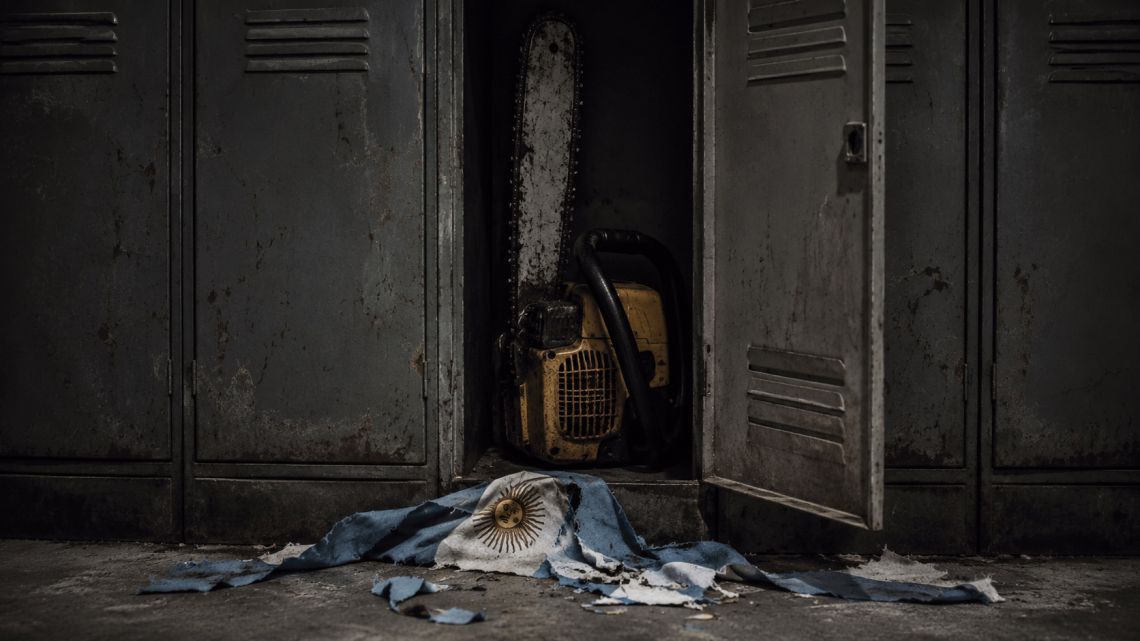
A century after the Lost Generation of Ernest Hemingway & Co were roaming the Latin Quarter of Paris, a lost generation of Argentine youth is posing a blight for what in many ways looks like a promising future for this country. Things were both better and worse for each of these generations – World War I (far more keenly felt in Paris for the Lost Generation writers than in their United States birthplaces) was obviously far more lethal than even the most vicious Greater Buenos Aires or Rosario drug rings, as was Spanish flu when compared to the Covid-19 pandemic, whose role in blocking futures should not be underestimated. Yet living colourful lives in interwar Paris on the cheap (with the French franc shattered by Bolshevik default) was infinitely more enriching than the grim realities of coming to age in a bleak Greater Buenos Aires urban sprawl without horizons – the worst of both worlds compared to the previous Lost Generation because life is not only shoddy but also expensive with an appreciated currency.
Analysis of the problems facing the young tend to focus on specific aspects such as juvenile delinquency, drugs, youth unemployment and (more recently) online betting whose role in the rising number of indebted households should not be underestimated. Yet perhaps it is worth paying attention to the everyday lives of this universe beyond these issues. Education has lost its scarcity value as a path of upward social mobility in the past two decades with the number of universities growing from 80 to 130 in that period, while the legally registered private-sector workforce has shrunk with the public-sector payroll more recently slashed.
This scenario drastically alters perspective. Odd jobs replace the previous fixed employment defining the next 30 years to qualify for a normal pension which is beyond reach for the gig economy – those working in the latter tend to seek a minimal difference between gross and net earnings, living for the present rather than the future. Pensions thus cease to be a universal right, virtually restricted to the generation now collecting them, and youth is increasingly likely to resent the elderly as a privileged group accounting for some 40 percent of the budget, as against some three percent for universities in the 2027 Budget sent to Congress last Tuesday. Amid a general crackdown on social welfare spending, the Javier Milei administration has doubled AUH child benefits, which leaves the young feeling left out in the middle – orphans of the storm.
Another area which seems to favour the older generations over the younger is housing where the transfer of property from parents to children has broken down in recent decades, while increased longevity is delaying that transfer in families where it is still possible. With nothing of their own, the young cannot buy even a small flat on the cash down basis which still persists while little over a quarter of a million people have mortgages in a population of 46 million (it might be said in passing that Argentina actually has less indebted households than developed countries, contrary to general belief, precisely because of mortgages) – even the new government scheme to encourage mortgages with credit from pension reserve funds is out of reach for those earning under a monthly 3.5 million pesos.
War is the locomotive of history, as Leon Trotsky said, but when there are no wars (at least not in this part of the world) or World Cups, elections can take their place and perhaps the premature obsession with next year’s contest can bring some more attention to this segment of voters, which accounts for over a quarter of the electorate. This is anything but a captive vote. Milei garnered massive youth support as the anti-system candidate in 2023 but after 30 months in office he represents the system more than anybody else despite the anti-caste rhetoric. Buenos Aires Province Peronist Governor Axel Kicillof, the main alternative until now, has been the figure of authority for the youth of Greater Buenos Aires even longer, almost 80 months, with the absence of crime from his radar a huge frustration for many trapped in the mean streets. The prevailing mood among youth is thus an indifference to politics and civic values in general so that driving a wedge into this apathy will be a major challenge for next year’s candidates.
“Too bad youth is wasted on the young,” said George Bernard Shaw but perhaps preventing that waste needs to be a wider responsibility.