By Literary Hub | Created at 2026-08-11 20:07:25 | Updated at 2026-08-11 20:31:46
1 hour ago
By Literary Hub | Created at 2026-08-11 20:07:25 | Updated at 2026-08-11 20:31:46
1 hour ago
Emily Van Duyne on the Cowardice of Stockton University—and the Problem With For-Profit Higher Education
July 2026 was the deadliest month of the last year for Palestinians. The Gaza Health Ministry reported that 152 Palestinians were murdered by Israel, bringing the official death toll in the American-backed Israeli genocide to more than 73,000 people in less than three years. The UN reported in June that 20,000 of those people were children.
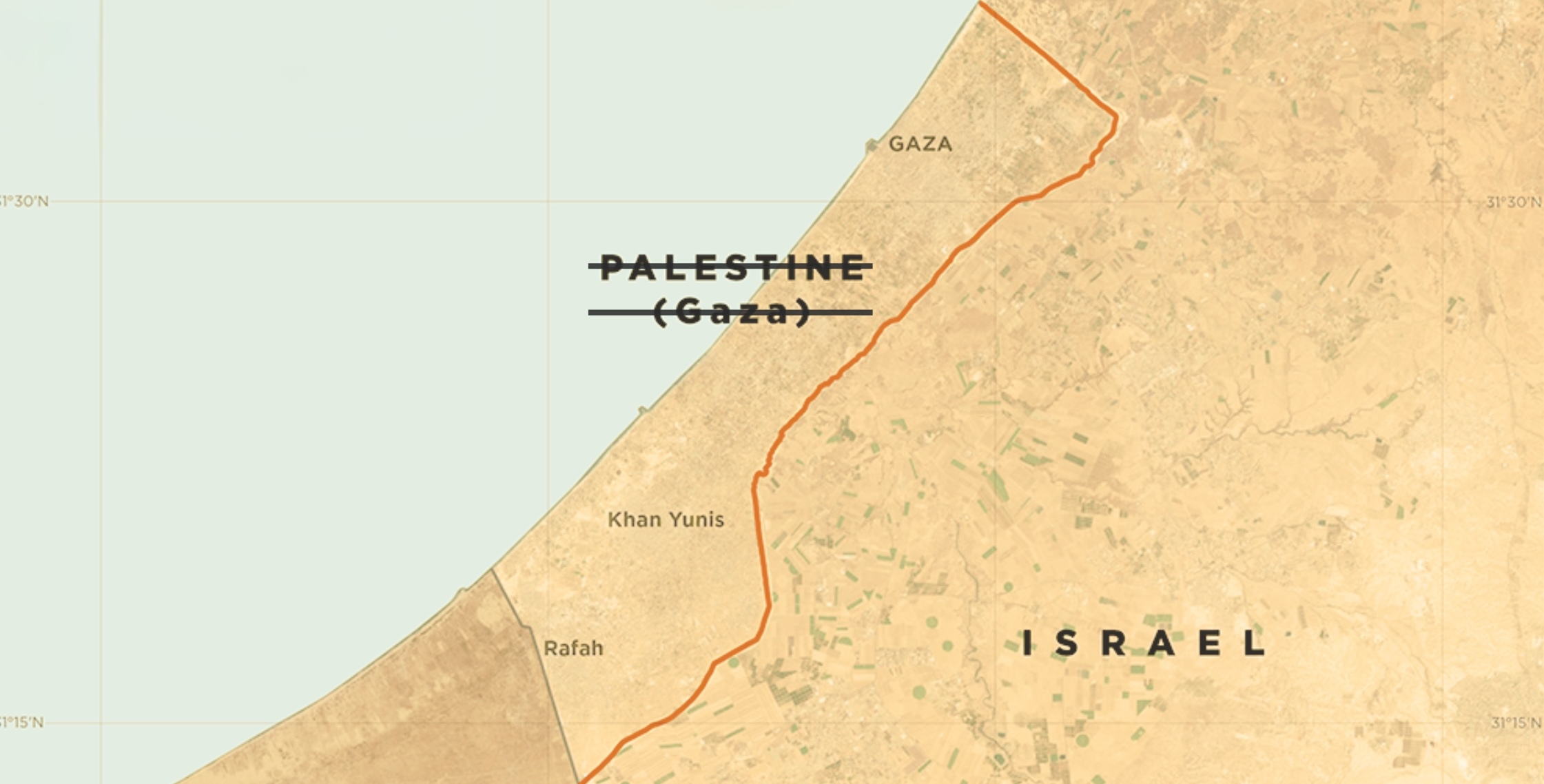
In spite of these horrific numbers, on August 1 the Atlantic City Press (my local paper) reported that John F. Scarpa, a so-called “major donor” to Stockton University, where I have taught since 2010, had complained to Stockton’s president, Joe Bertolino, that Stockton’s webpage for its master’s program in Holocaust and Genocide Studies contained “misinformation:” “The… ‘About the Program’ page… states that ‘Israel’s ongoing genocide in Gaza since October 2023 has killed, according to official figures, more than 70,000 Palestinians, including over 20,000 children, leaving almost the entire population of 2.3 million people forcibly displaced.’”
Scarpa—who made his fortune in the cell phone and cable tv industries—asserted that the genocide in Gaza is “a matter of significant legal, political, and scholarly dispute,” that the page’s language about the Israeli genocide “appears to be the personal views of one individual who has previously expressed similar positions and… should not be given a platform to spread opinion as fact.” This last was a transparent dig at my colleague Raz Segal, the author of text in question, and one of the leading Holocaust and genocide scholars in the world, who has been publicly harassed since calling the crisis in Gaza “a textbook case of genocide” in late October 2023. As a result of Scarpa’s letter, the Press reported, Stockton’s University Relations and Marketing office would be “‘reviewing the webpage and the concerns raised, including how content across different areas of the university is presented, attributed and reviewed.’” The following day, Stockton erased Raz’s words from its website.
*
I thought the writing of this would be straightforward, but I’m finding it hard. I initially wrote that “leadership at Stockton removed Raz’s words from its website,” but for style purposes, changed the wording to “Stockton,” as though a cluster of modern buildings standing in the Pine Barrens of southern New Jersey is a magical entity capable of making editorial changes on its own. This is the perennial problem of writing about an institution, but I want my reader to know who is responsible for this erasure of mass murder—President Bertolino, Provost Palladino, the people in charge.
For two years we have watched as places like Harvard, Columbia, and Cornell caved to the Biden and Trump administrations’ mafia-style demands.
Provost Palladino sent a cookie-cutter email to those of us who had written in outrage at the removal of Raz’s words. The email was a series of quasi-fascist corporate lies. Removing the language about Israel’s genocide in Gaza from the webpage did not, the provost wrote, violate Raz’s academic freedom, because academic freedom has nothing to do with “public facing” materials like the university website. It only applies to scholarship and the classroom. And anyway, he concluded, the university was already in the process of homogenizing its website, and although the master’s program in Holocaust and Genocide Studies was not initially part of that redesign, this was a prudent opportunity to remove “personal statements” from the website.
I wrote “he concluded,” but here’s the thing: when a university higher-up writes to you, you can’t be sure who’s behind the message. There is a labyrinth of assistants who could have done the job and, from what I can tell, the president (or someone on his behalf) uses artificial intelligence to directly compose or dramatically edit his emails to all of us, so the words we read from the man in charge of our livelihood (to say nothing of the moral and intellectual care of his thousands of students), are machine-generated. In other words, I don’t want to put words in the provost’s mouth, even if he did sign the email. It’s words, in the end, that all of this is concerned with, language and its erasure, its subjectivity. In Scarpa’s letter to President Bertolino (which I am sure he wrote; it’s riddled with errors), he reminded Raz Segal “that official university communications should reflect scholarly objectivity…”.
Objectivity is the great byword of higher education, that by which you prove your capitalist credentials. Stand too close to something and you’re said to be unable to see it clearly, even if the thing in question is blowing up in front of your face. Show me the data, says every university administrator I have ever met, but the data is somehow suddenly moot when it’s 73,000 dead Palestinians and counting. As our local language squabble was unfolding last weekend, I listened to an interview with the British-Palestinian doctor Ghassan Abu-Sittah about the concept of liberatory medicine. “How do you develop consciousness when your academic institutions are kowtowing to a colonial tune?” he was asked. “People are subjective,” he replied. “Capitalism works by objectifying the subject… and colonial wounding aims at objectifying the subjective by mutilating it.”
He meant this literally—Palestinian bodies, Lebanese bodies, Iranian bodies as objects identified for destruction by American-made bombs—but consciousness can also be mutilated. Anything I write about Gaza I write with an urgency and shame fueled by the constant reminder that I have little but language at my disposal. My body, my colleagues’ bodies, those of our students are safe from mutilation, but our consciousness is available for the capitalist objectification Mr. Scarpa demands and to which our university kowtowed. If we name our sorrow about Gaza, we make ourselves into subjects and become the thing higher education abhors. But if we describe the genocide with objective facts, those facts are mutilated by the university in all its collective power, the place we thought of as our academic home.
“I have some questions about YOUR NUMBERS,” a racist colleague repeatedly yelled at the anthropologist and pro-Palestine activist Maura Finkelstein when she spoke at Stockton in the fall of 2024. Maura had quoted statistics from a Lancet article about the death toll in Gaza, one she had not written. The numbers were objectively not hers, and yet her insistence on saying them aloud and in great pain as a genocide unfolded in front of her eyes sapped them, in that moment, of objectivity and authority, of the academic authority and freedom which are the alleged foundations of the university where we have made our home. I could say we are homeless, then, those of us who insist on naming the genocide in Gaza publicly, no matter the consequences. But the same horror and shame that animates my public speech about Palestine refuses me the right to use the word homeless metaphorically since, as Raz Segal wrote in his statement, now erased from Stockton’s website, “2.3 million Gazans have been forcibly displaced,” living in tents among the rubble of what was once their homes, freezing, drowning, and starving to death. And all I can do is write about it.
Stockton’s eager capitulation to John Scarpa’s demands make the thing we already suspected objectively clear: it is not academic authority, but authoritarianism, that upholds Stockton University. For two years we have watched as places like Harvard, Columbia, and Cornell caved to the Biden and Trump administrations’ mafia-style demands, thinking Stockton was somehow different. We know better, now. And we’ll fight back, using all the facts and language and solidarity at our disposal. I have to believe we will win, but I would fight even with the certainty that we would lose. It’s the least I can do from my safe little perch in America, where my language and my livelihood, but never my life, can be lost in this fight.
And Free Palestine.