By The Rio Times | Created at 2026-08-12 17:43:29 | Updated at 2026-08-12 18:15:40
53 minutes ago
By The Rio Times | Created at 2026-08-12 17:43:29 | Updated at 2026-08-12 18:15:40
53 minutes ago
Rio Times · Africa Intelligence Brief August 12
Key Facts
—Zambia votes tomorrow Africa’s second-largest copper producer holds a general election on Thursday, with 8.79 million registered voters.
—A running mate in body armour His running mate, Makebi Zulu, appeared on stage in a bulletproof vest at an opposition campaign rally.
—Observers withdrawn The Electoral Commission has revoked an accreditation with immediate effect, and a journalist has been detained under the Cyber Crimes Act.
—The railway behind it The African Development Bank approved a $255 million loan and $10 million grant on 6 August for Zambia’s leg of the Lobito Corridor.
—What it builds Roughly 550 kilometres of new railway in Zambia and 105 kilometres of upgraded road, with later phases envisaged to reach $500 million.
—Congo’s toll More than 1,900 people have died in the Ebola outbreak, with 60 to 70% dying in their communities before reaching a treatment centre.
One-stop reference
Company Intelligence
Every listed company in Latin America — financials, ownership and structure for 1,450+ companies across 26 exchanges, in one place.
Five days ago the bank financing its railway to the Atlantic answered the same question with $255 million.
Zambia – The Eve, and What It Looks Like
A running mate in body armour
Brian Mundubile, presidential candidate of the National Reconciliation Party for Unity and Prosperity and standard-bearer of the Tonse-Pamodzi alliance, has seen his running mate, Makebi Zulu, appear on stage in a bulletproof vest. The alliance draws on the structures of the former ruling party after it split.
The state house has urged party leaders to take seriously remarks by Binwell Mpundu, a former Nkana member of parliament, reported as a readiness to kill, and police have opened an investigation. President Hichilema has separately warned against political violence and said offenders will face the full force of the law.
Accreditation withdrawn, a journalist detained
The Electoral Commission has revoked an accreditation with immediate effect in the final days of the campaign. A Zambian journalist has been detained under the Cyber Crimes Act over a leaked audio recording, weeks before the vote.
Zambia has managed three peaceful transfers of power through the ballot box, which is why these details register at all. A country with a genuine democratic record is being watched for signs of losing it.
Restructured debt, unimproved kitchens
President Hakainde Hichilema is asking for a second term on the strength of a debt restructuring that followed the country’s 2020 default on repayments to China and other creditors. The government points to progress on debt, growth and inflation.
Voters point to the cost of living. Those two sentences are the entire election.
A central bank loosening on the way in
Governor Denny Kalyalya announced at the 98th Agricultural and Commercial Show that the Bank of Zambia would cut the statutory reserve ratio on kwacha deposits from 26% to 21%, effective 3 August. Banks will also now meet the requirement on a weekly average rather than daily, giving them flexibility.
The central bank cites eased inflation, a steadier kwacha, reserves of about 6.7 billion dollars and progress on debt as grounds for shifting from stabilising the economy to supporting growth. A country that took the medicine is asking, out loud and ten days before a vote, whether the medicine worked.
The Lobito Corridor – The Railway That Makes the Vote Matter
Two hundred and fifty-five million, five days ago
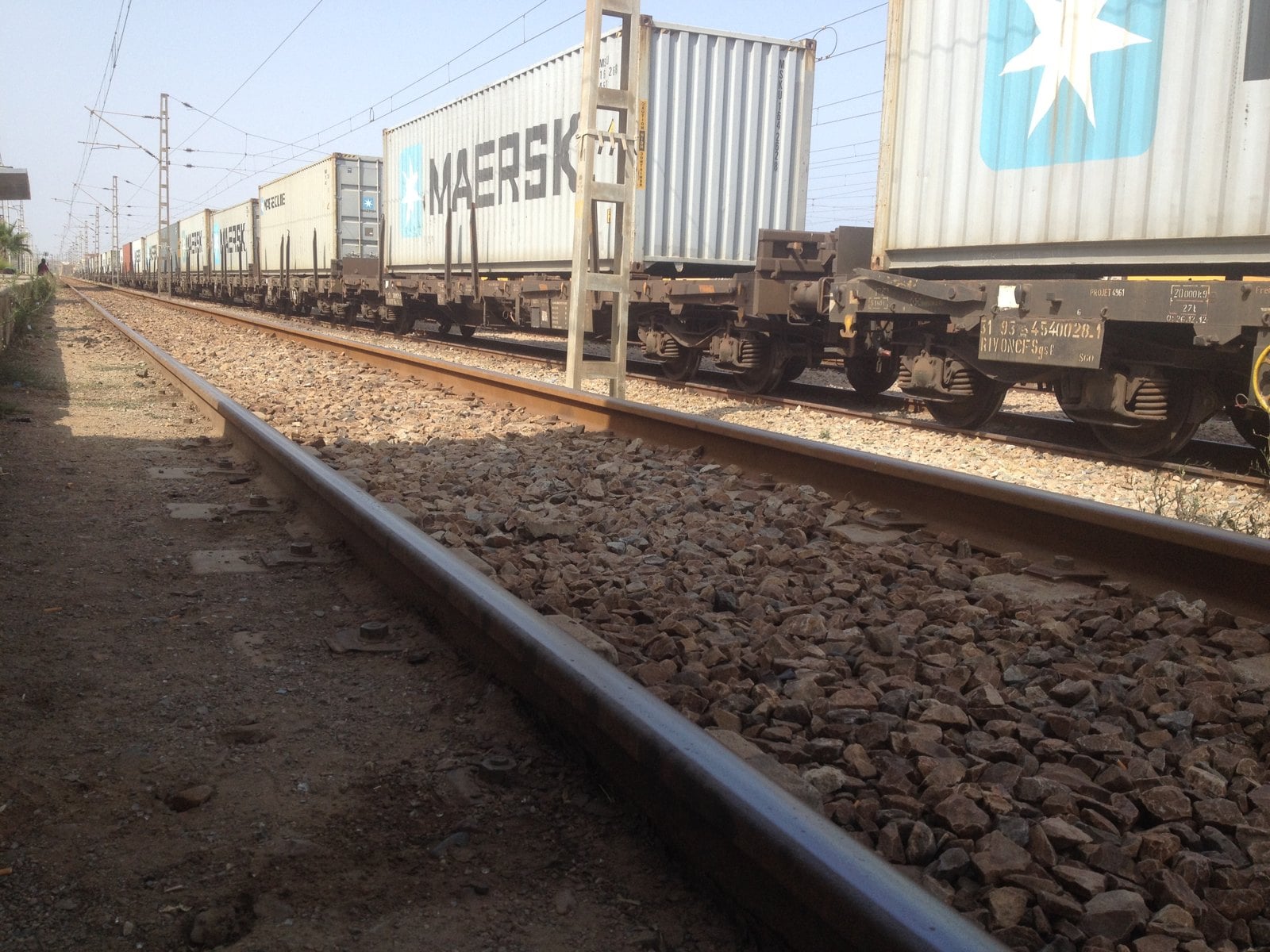
The African Development Bank approved a $255 million loan from the African Development Fund and a $10 million grant on 6 August, for Zambia’s participation in the Lobito Corridor. It funds roughly 550 kilometres of new railway inside Zambia and upgrades 105 kilometres of the Mwinilunga to Jimbe road.
This is the first tranche, with later phases envisaged to reach around $500 million. The project is expected to create some 500 permanent and 5,000 temporary jobs.
The Copper Contest – Whose Route to the Atlantic
A corridor with a geopolitical label attached
The corridor links Angola, the Democratic Republic of Congo and Zambia’s Copperbelt to the Atlantic at the port of Lobito, running more than 1,300 kilometres with over $2.7 billion in pledged investment and the European Union as its largest foreign backer. It has been pitched openly as the West’s answer to Chinese dominance in African mining.
Analysts had already flagged this week’s election as a policy risk to the whole scheme. Financiers committing half a billion dollars to a railway want to know who will be in office when it opens.
A development bank committed $255 million to Zambia’s railway on 6 August, and on 13 August Zambians decide who will govern the country it runs through — the sequence tells you which decision the money considers riskier.
What a railway does to freight economics
A shorter route to a deepwater Atlantic port changes the landed cost of every tonne that uses it, which is the only number that ultimately decides where a smelter buys. Congolese cobalt and Zambian copper currently travel east to Indian Ocean ports or south through South Africa.
Turning that journey westward is the entire commercial logic. The politics attached to it are secondary to the arithmetic.
DR Congo – Dying Before Reaching a Doctor
Nineteen hundred deaths, and where they happen
More than 1,900 people have now died in the Democratic Republic of Congo’s Ebola outbreak. Between 60 and 70% of those deaths occur in communities, before patients ever reach a treatment centre.
That second figure is the one that matters. It describes distance, trust and transport rather than a virus.
The same country, the other end of the corridor
This is the country that supplies most of the world’s cobalt and sits at the northern end of the Lobito route. The infrastructure being built for minerals runs through provinces where people cannot reach a clinic.
Kinshasa’s mood is neither denial nor despair but a kind of administrative exhaustion. It is running a mineral boom and an epidemic with the same civil service.
Kenya – A Court Rewrites the Calendar
An election date declared unconstitutional
Kenya’s High Court has declared the 2027 election date unconstitutional, holding that the poll was due in 2026. The ruling reaches the timetable of the region’s most important economy after South Africa and Nigeria.
Appeals are the obvious next step and nothing is settled. Political timetables in Kenya have been litigated before.
Two countries, two versions of the same institution
Zambia is holding a vote while restricting who may observe it, and Kenya’s judiciary has just told its own government when it may hold one. The contrast is the useful part rather than either case alone.
For investors the question is never whether institutions exist but whether they bind. This week the continent is offering evidence in both directions.
What This Means From Latin America
A competing route to the same buyers
Every kilometre of the Lobito railway shortens the journey from African copper and cobalt to Atlantic shipping, and therefore to the same North American and European buyers Chilean and Peruvian producers serve. A corridor explicitly financed as an alternative to Chinese supply routes is a competitor to Latin American supply as well.
Andean producers have geography on their side and should watch the freight economics rather than the politics. The relevant number is landed cost per tonne, not the diplomatic framing.
And a familiar test of whether reform pays
Zambia defaulted in 2020, restructured, stabilised the numbers and is now asking voters whether that was worth it. Argentina, Ecuador and others have run the same experiment and know how rarely macroeconomic repair translates into electoral gratitude.
Thursday’s result is therefore useful evidence beyond Africa. It measures the political half-life of an adjustment programme.
The Bigger Picture
Zambia votes on Thursday with 8.79 million registered voters, in a contest between a president asking to be rewarded for a debt restructuring and an opposition arguing it never reached ordinary kitchens. The final days have produced a running mate in a bulletproof vest, an accreditation revoked and a journalist detained under cyber laws.
Five days before the vote the African Development Bank approved $255 million for Zambia’s leg of the Lobito Corridor, funding 550 kilometres of new railway toward the Atlantic. The corridor carries more than $2.7 billion in pledged investment and is described openly as the West’s answer to Chinese dominance in African minerals.
For Latin American readers there are two useful reads. That railway competes with Andean copper for the same Atlantic buyers, and Thursday measures something the region knows well, which is how much electoral credit a government earns for fixing the numbers.
Africa Intelligence Brief August 12: What We Are Watching
- Thursday – Zambia’s presidential and parliamentary elections, and whether the count is accepted.
- Coming days – Whether the withdrawn observer accreditation is restored or contested.
- Coming months – Whether Zambia agrees a successor programme with the International Monetary Fund.
- Coming years – The Lobito Corridor’s later financing phases, envisaged to reach around $500 million.
- Ongoing – The Congolese Ebola outbreak, where most deaths still occur outside treatment centres.
- Ongoing – Appeals against the Kenyan High Court ruling on the election date.
Go Deeper
The full Africa Intelligence Dossier — the interactive risk dashboard, the six people who matter and the downloadable PDF — is updated daily by the Rio Times Intelligence Desk.
More from the Rio Times Intelligence Desk on August 12: the Europe Intelligence Brief, the Asia Intelligence Brief and the USA & Canada Intelligence Brief. For how these stories developed, see the Africa Intelligence Brief for August 11 and the Africa Intelligence Brief for August 10.
Frequently Asked Questions
What is at stake in Zambia’s election on 13 August?
President Hakainde Hichilema is seeking a second five-year term on the strength of an economic recovery plan following the country’s 2020 sovereign default, facing Brian Mundubile of the National Reconciliation Party for Unity and Prosperity, standard-bearer of the Tonse-Pamodzi alliance backed by former ruling party structures. Zambia is one of the world’s top copper producers with 8.79 million registered voters, and while the government cites progress on debt restructuring, growth and inflation, the cost of living remains voters’ dominant concern.
What concerns have been raised about the campaign?
The Electoral Commission of Zambia has revoked an accreditation with immediate effect, a Zambian journalist has been detained under the Cyber Crimes Act over a leaked audio recording, and Brian Mundubile of the National Reconciliation Party for Unity and Prosperity has seen his running mate, Makebi Zulu, appear on stage in a bulletproof vest. Reporting has also cited alleged state interference, restrictions on opposition activity and contested legislative changes, against a national record of three peaceful transfers of power through the ballot box.
What did the African Development Bank approve for the Lobito Corridor?
On 6 August the Bank’s board approved a $255 million loan from the African Development Fund and a $10 million grant from the Rome Process and Mattei Plan Financing Facility for Zambia’s participation, funding roughly 550 kilometres of new railway inside Zambia and upgrading 105 kilometres of the Mwinilunga to Jimbe road. It is the first tranche under ADF-16, with later phases envisaged to reach around $500 million, and is expected to create some 500 permanent and 5,000 temporary jobs.
How severe is the Congolese Ebola outbreak?
More than 1,900 people have died, and between 60 and 70% of those deaths occur within communities before patients reach a treatment centre. That distribution points to distance, transport and trust in the health system rather than to the characteristics of the disease itself.
Sources: African Development Bank, allAfrica, Zambian Eye, Associated Press via Washington Post
This article was produced by The Rio Times’ automated newsroom system. How we use AI · Report an error
LatAm Markets: Live Signals → — real-time movers, turnover leaders and FX across Latin America.