By The Straits Times | Created at 2026-09-10 11:05:07 | Updated at 2026-10-05 16:08:23
3 weeks ago
By The Straits Times | Created at 2026-09-10 11:05:07 | Updated at 2026-10-05 16:08:23
3 weeks ago
BEIJING – Inside Wang Conghui’s 126 sq m bright and cozy apartment on the outskirts of Zhengzhou, Henan province, little suggests that her home has yet to be formally handed over by the developer.
But step outside into the development’s common areas and the picture changes: landscaping remains unfinished, with weeds taking over and fallen trees piled up.
“We bought the home before we got married. Then we got married, then I got pregnant and had a child. By the time she was four, the home still wasn’t finished. It was a really, really difficult wait,” said Wang, 31, who quit her job in the new media industry in Shenzhen to move to Zhengzhou and is now a budding home blogger on Chinese social media Xiaohongshu.
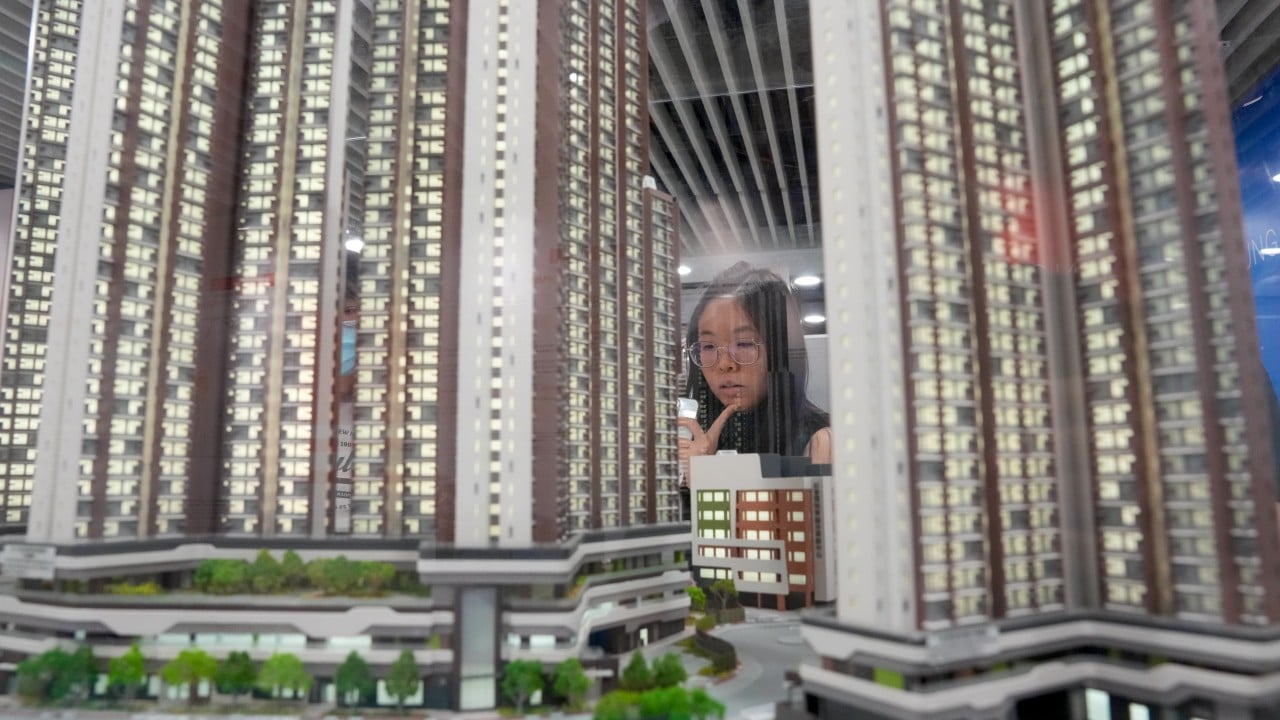
Wang and her then-fiance bought their three-bedroom apartment as a presale home in May 2019 when there was little to see beyond floor plans and a model at a sales office – a common way that homes are sold in China.
Their apartment was supposed to be delivered in October 2020, but the handover never came. The couple had started servicing the loan since they bought the flat.
Tired of the wait, Wang decided to bite the bullet, requested for the keys to the apartment and started renovating in August 2025, even though water and gas had yet to be connected. She and her young family just wanted to move into their first home, after having rented elsewhere for close to seven years.
While Wang and her family have moved into their apartment, what is missing is the property ownership certificate to formally establish their ownership, which the developer still owes them. The document is also needed if they want to resell the apartment in the future.
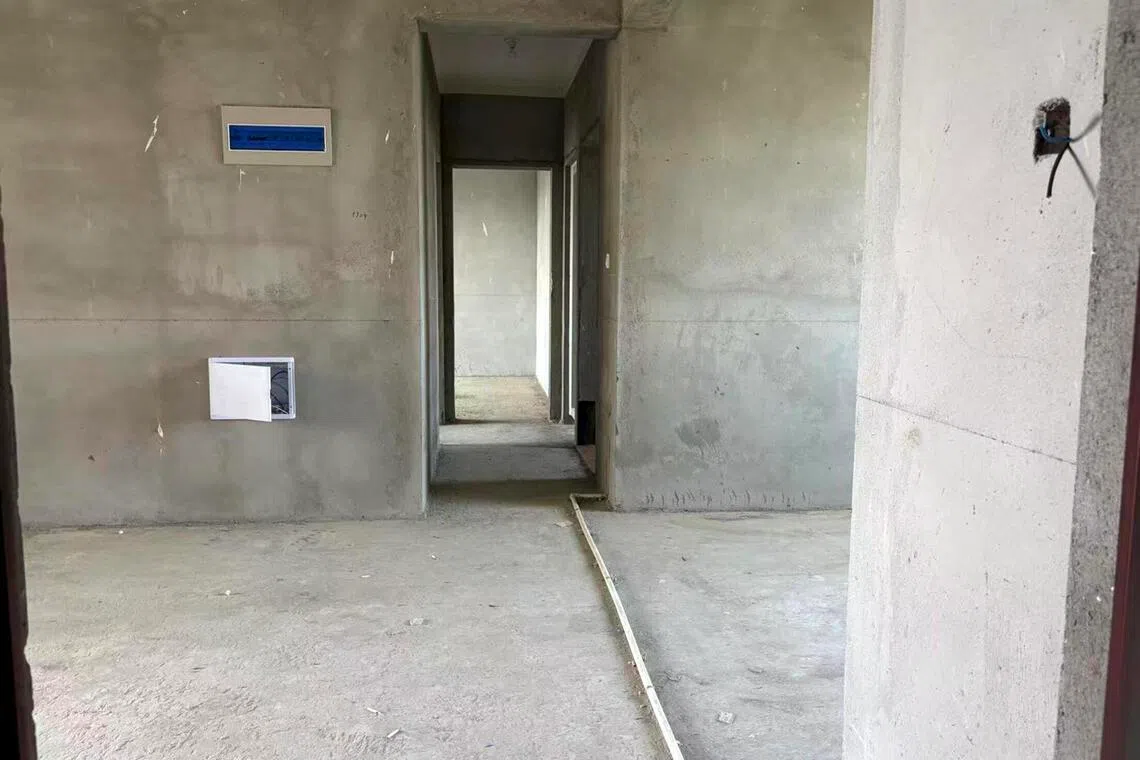
The empty apartment before Wang Conghui renovated it even though the developer failed to officially hand it over.
PHOTO: WANG CONGHUI
Her experience is precisely the kind that Beijing is hoping to prevent in the future with a sweeping overhaul of how new homes are sold in China, aimed at reducing the risks created by the presale-driven model that helped fuel the country’s property boom – and eventual crisis.
Measures unveiled jointly by three Chinese ministries on Aug 28 state that future residential projects should prioritise completed-home sales, with presales only allowed later in the construction process once a building’s main structure has been topped out, meaning the frame and roof must be complete. Controls over home buyers’ funds will also be tightened, as part of Beijing’s long-talked-about shift towards what it calls a “new model” for real estate development.
Separate measures issued the same day also extended the maximum mortgage term from 30 to 40 years, potentially lowering monthly repayments for home buyers, even as the interest owed over the course of the loan will increase.
The policies, which took effect the same day, do not apply retroactively to projects with construction project planning permits issued before Aug 28. Such projects will continue to be governed by previous regulations, which allow presales once 25 per cent of the planned investment has been spent.
While reducing the risk of unfinished homes could help repair battered buyer confidence, the effectiveness of the new policies should not be judged by whether they immediately generate more home sales, said Maybank’s director of macro research Erica Tay.
“These are not to be mistaken for your run-of-the-mill property market stimulus package. Stimulating demand is not the policy’s intent. The policies usher in a new era for China’s property market,” Tay told The Straits Times.
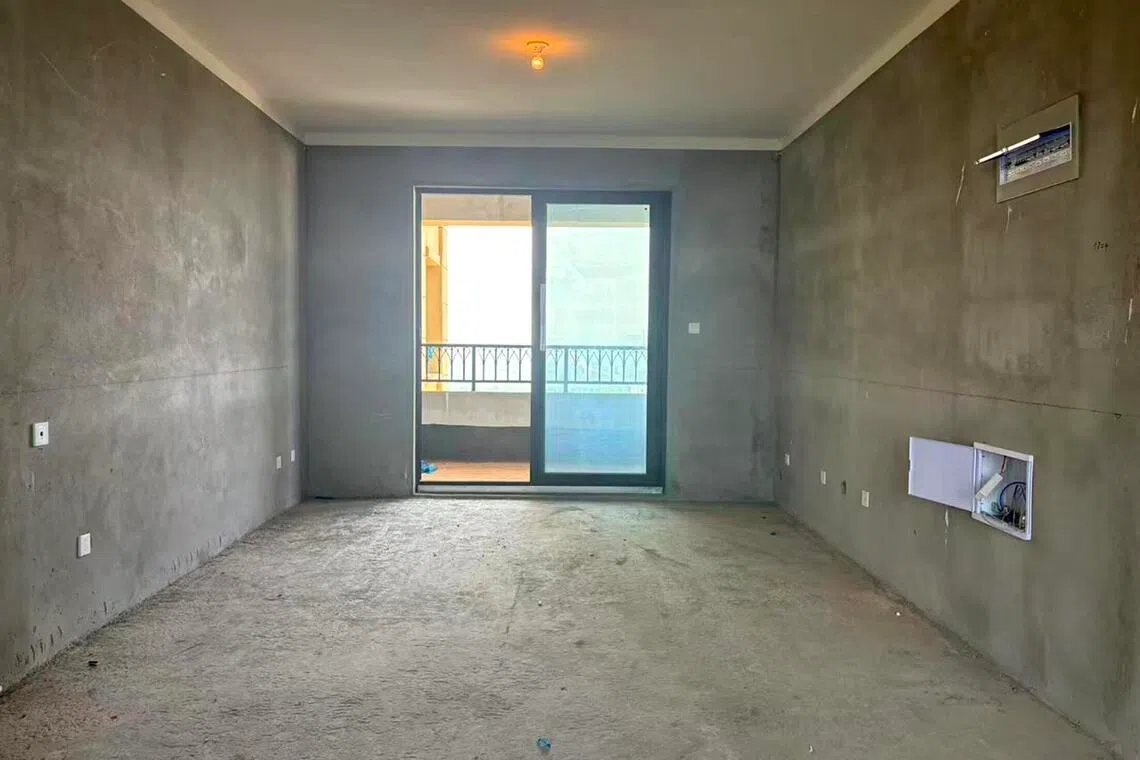
The empty apartment before Wang Conghui renovated it even though the developer failed to officially hand it over.
PHOTO: WANG CONGHUI
But while the overhaul addresses some of the vulnerabilities exposed by China’s property crisis, it is no silver bullet for a slump now into its fifth year. Falling price expectations, weak income confidence and longer-term demographic shifts have continued to weigh on housing demand and the broader Chinese economy.
Analysts said dismantling the old presale model, while making home buying safer, comes with its own trade-offs.
For decades, presale proceeds have provided developers with an important source of working capital, which will now become even harder to tap under the new rules.
Maybank’s Tay said deposits and presale payments accounted for about one-third of developers’ funding two decades ago but have fallen to 19.9 per cent now.
“The era of ‘rinse and repeat’ recycling of funds by risky property developers, who use presales proceeds to finance more projects elsewhere, is over,” said Tay.
Tighter restrictions on how those funds can be used should curb risk-taking but could also squeeze smaller developers with few alternative sources of financing, she said.
“The real estate industry will probably consolidate around a cluster of high-quality players who are able to access bank loans and the capital markets,” said Tay.
Moody’s Ratings, in a note on Sept 4, said that funding pressure will fall unevenly across sectors over the coming 12 to 18 months, but beyond two to three years, the reforms are “broadly credit positive” as delivery risk recedes in a less leveraged, more delivery-focused property model.
Chinese authorities have been direct about why the old model is no longer feasible.
During a press conference to explain the new rules, officials singled out the “high debt, high leverage, and high turnover” model pursued by some developers for accumulating risks, pointing explicitly to the collapse of Chinese property giant Evergrande as evidence of its shortcomings.
Eight days before the new policies were announced, Evergrande founder Hui Ka Yan, known as Xu Jiayin in Mandarin, was sentenced to life in prison for a string of crimes including financial fraud and bribery.
Evergrande, once China’s largest developer by contracted sales, had expanded rapidly into a sprawling conglomerate on the back of heavy borrowing. It defaulted in 2021 with more than US$300 billion in liabilities and became the most prominent poster child of a property crisis that left developments unfinished across the country.
For Wang, the risks of the old model were much less apparent when she bought her apartment in 2019, when China’s property market was booming.
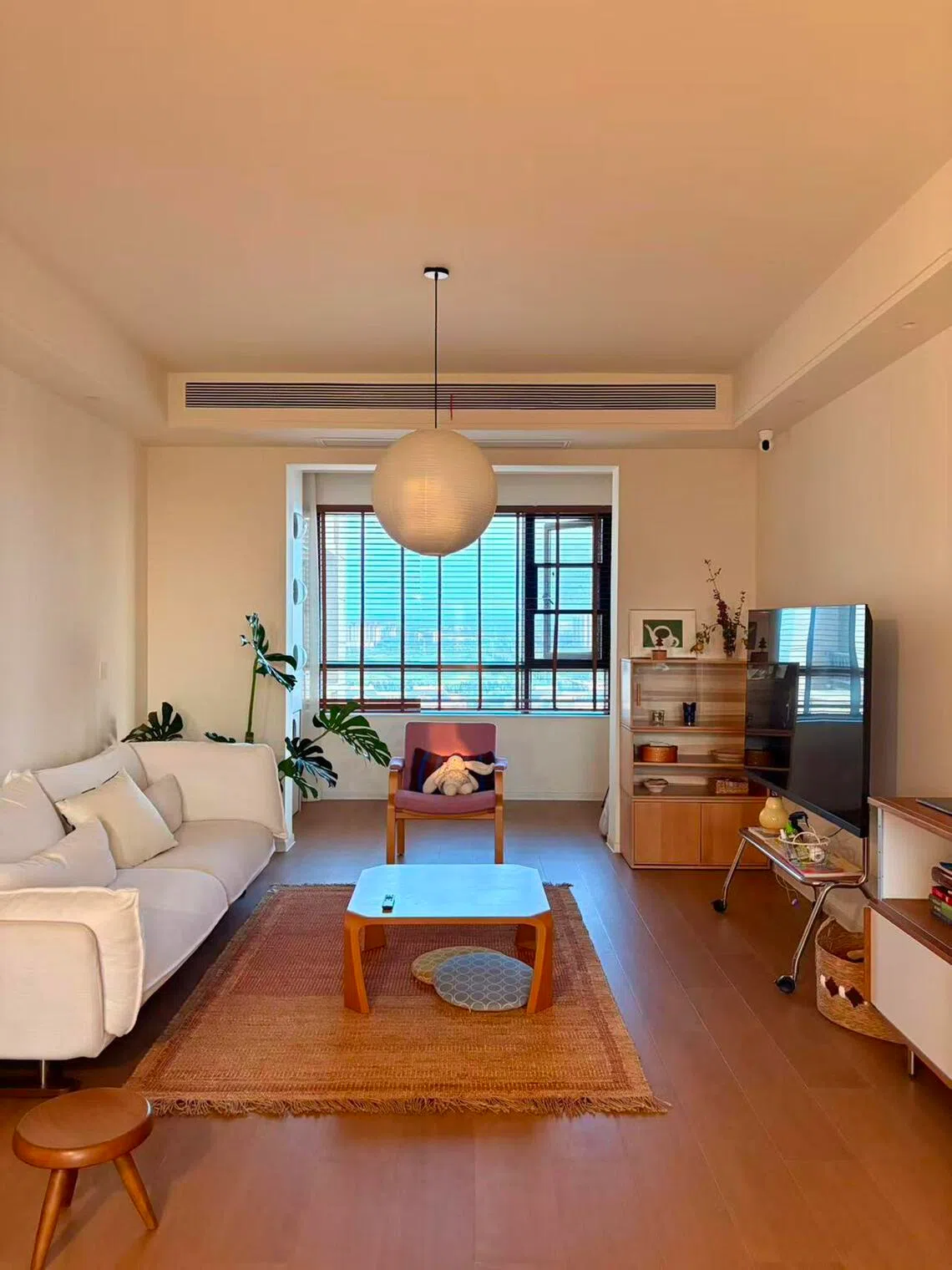
Wang Conghui turned her apartment into a cozy home for her young family of three after eight months of renovations.
PHOTO: WANG CONGHUI
Then, property prices were rising and the presale unit in the outskirts was more than two times cheaper than buying a completed home.
“It’s not that we thought this was a great buy. It was more of, what if we can’t afford one later if we wait and prices keep rising?” she recalled thinking.
“At that time, there wasn’t this worry about lan wei lou, so it wasn’t something we considered as a real possibility,” said Wang, using the term that literally translates to “rotten tail building” and is commonly used in China for buildings where construction has stalled, often because developers run into financial difficulties.
Seven years later, the development in which they live is a reminder of how much has changed.
Today, fewer than 10 households have moved into Wang’s roughly 300-unit block. There are another four affected blocks in the development. External works remain unfinished, including half-built guardhouses, and the project has yet to get the approval from Chinese authorities required for the formal handover.
The promised amenities, such as a nearby big shopping mall and smaller mom-and-pop shops in the development, also never materialised. The nearest supermarket is a 15-minute scooter ride away, said Wang.
“Opposite us is a completed development where all the families have moved in, so every night their buildings are brightly lit. We considered buying there, too. If we had, maybe our fate would have been different,” said Wang.
The developer of her home, Henan Yishenghe, has been facing financial difficulties since at least 2021, according to local media reports. The Covid-19 pandemic had also contributed to the work stoppage on the project.
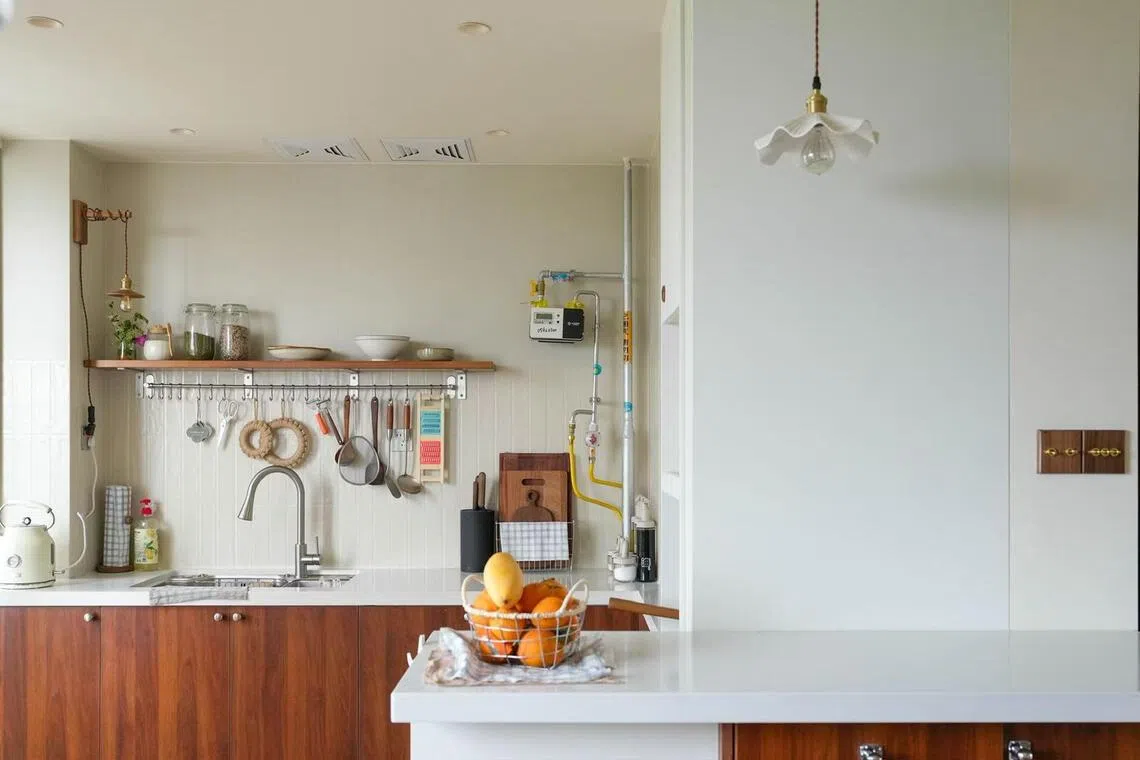
Wang Conghui started renovating her home in August 2025, when water and gas had yet to be connected at that time.
PHOTO: WANG CONGHUI
Her experience was far from unique. Zhengzhou became one of the focal points for nationwide mortgage boycotts in mid-2022, when frustrated homebuyers refused to service loans on unfinished apartment buildings.
Yan Yuejin, deputy head of the Shanghai-based E-House China Research Institute, said home buyers would not enter the market simply because a new policy has been introduced. Instead, they would weigh factors including home prices, their own financial capabilities and the certainty of delivery.
But he cautioned that the transition towards completed-home sales would have to be gradual, as developers and banks absorb the additional financing costs without major disruptions.
“The ultimate objective of the new model is to give ordinary people greater peace of mind when buying homes, keep costs more manageable and improve the quality of housing,” he said.
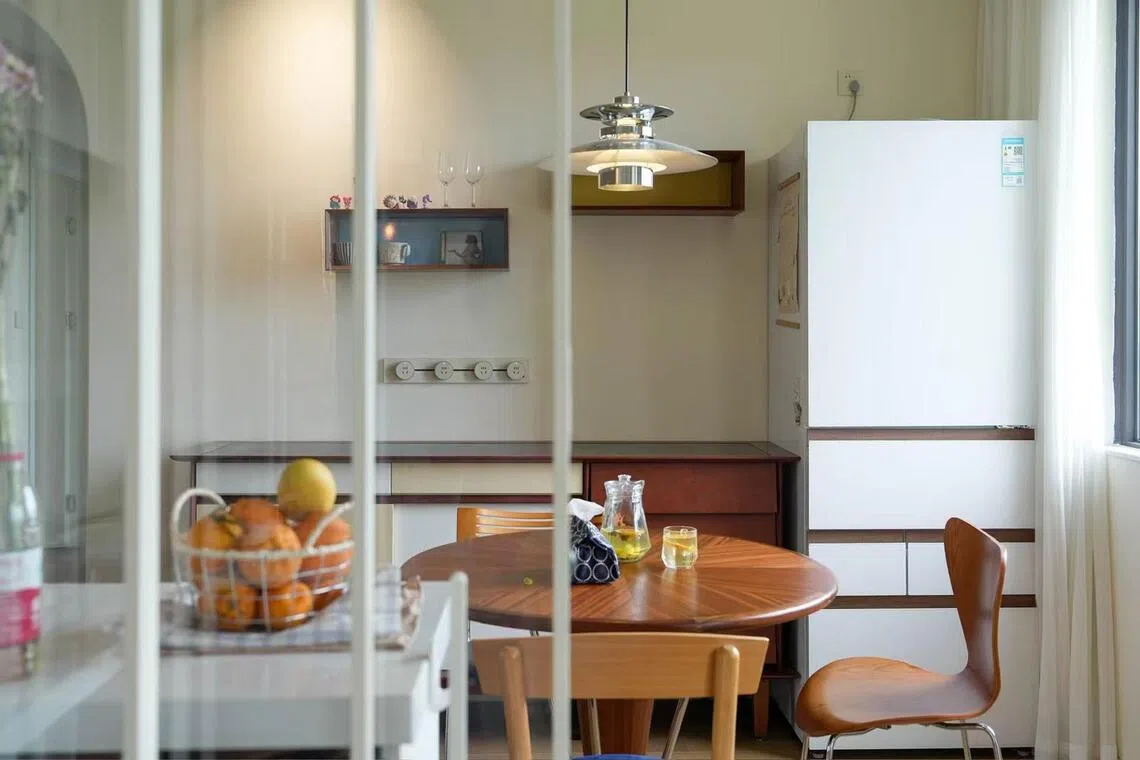
Wang Conghui and her young family just wanted to move into their first home, even though it was unfinished, after having rented elsewhere for close to seven years.
PHOTO: WANG CONGHUI
For homeowners like Wang, that sense of security came partly through taking matters into their own hands.
The landscaping around her development remains unfinished and Wang doubts it will ever look quite as originally promised. But some residents have begun planting vegetables and flowers in patches of bare soil around the compound.
“That’s Chinese resilience for you,” she said. “No matter how tough the conditions are, we can always find a patch of land to cultivate.”