By The Straits Times | Created at 2026-06-22 02:41:36 | Updated at 2026-06-22 04:38:20
2 hours ago
By The Straits Times | Created at 2026-06-22 02:41:36 | Updated at 2026-06-22 04:38:20
2 hours ago
JAKARTA – Zakaria, 24, waited for a less crowded Commuter Line train so he could sit on his trip home to Daru, Banten, from Tanah Abang Station in Central Jakarta. He had just transferred from Bekasi, West Java, where he had undergone a hemodialysis session in a hospital, and was feeling too weak to stand through the journey.
He braces himself for the overcrowded commuter train journey twice a week for his treatment, as crossing three provinces would be highly inconvenient if public transit did not connect cities beyond Jakarta. “Going by ambulance is the only alternative, but that’s for emergencies. I can only rely on the Commuter Line, while other transport modes don’t reach Daru,” he told The Jakarta Post on June 20.
Zakaria said integrated transport around the capital is essential for patients like him who rely on long-distance mobility for treatment.
Even reaching Tangerang, the nearest city in Banten, is more difficult for him than travelling to Jakarta or Bekasi. “It’s easier to go to Jakarta because it’s faster and more accessible. It already feels like Daru is connected to Jakarta,” he said. But still he wished that trains bound from Jakarta to Daru were more frequent and more punctual.
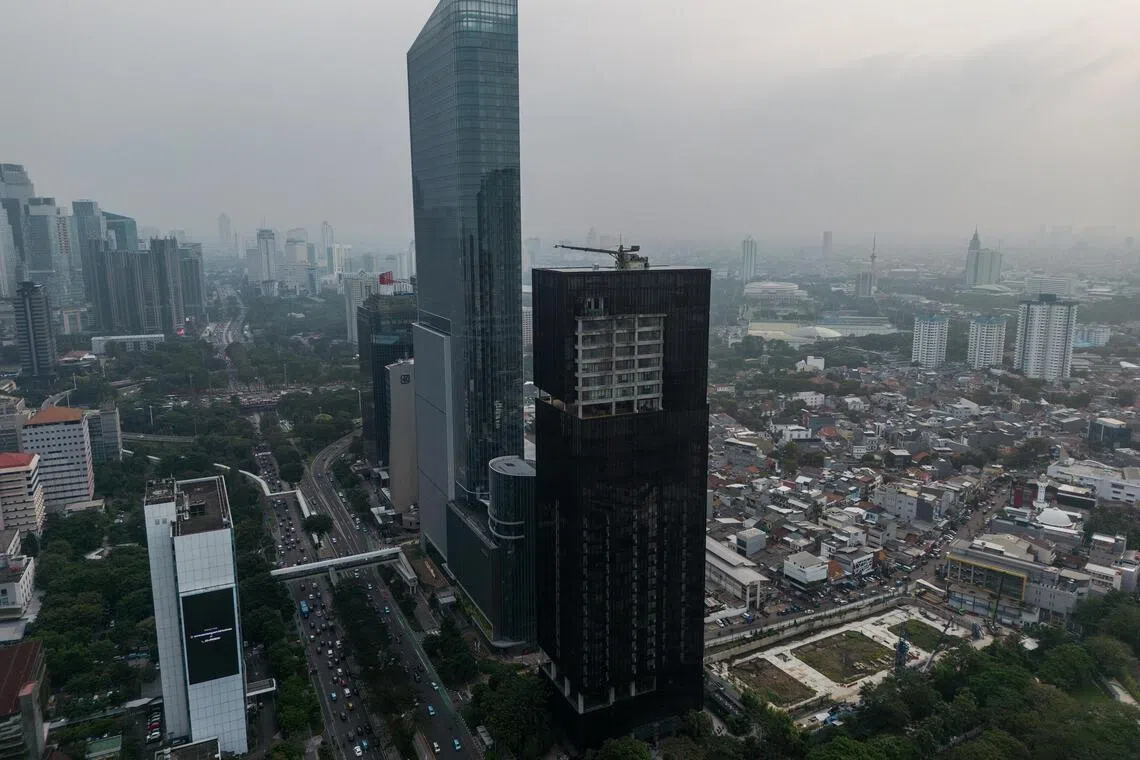
Jakarta remains marred by longstanding mobility problems, as the capital turns 499 years old on June 22.
Isra Livera, also 24, has grown frustrated with the traffic and overcrowded public transport defining her daily commute from Depok, West Java, to her office in South Jakarta on commuter trains, Transjakarta buses and motorcycle taxis.
“I complain about it a lot. But then again, everyone else is enduring the same problem like me,” she said on June 19, having long accepted her life as a commuter for over 16 years, even grown fond of Jakarta’s lively and fast-paced environment.
As she applauded Jakarta’s development progress as a capital, Isra wished it “could find its way to improve itself and be more welcoming for everyone”, including by creating a better-integrated multi-modal public transport system that workers across Greater Jakarta can rely on.
“Jakarta really needs to add more capacity so we don’t end up packed inside every time,” she said, hoping for improvement as the city marks another anniversary. “With better integration, I wouldn’t have to walk so far just to transfer.”
As Jakarta celebrates its 499th anniversary, the city has long outgrown its boundaries and became the world’s most populous megacity with 42 million inhabitants across the sprawled metropolitan area. Yet Greater Jakartans continue to grapple with urban challenges as a plan for an agglomeration, which would further integrate the region’s mobility, economy, infrastructure and services, remains in limbo.
The agglomeration plan was incorporated in the 2024 Jakarta Special Region Law, which was enacted as part of Jakarta’s transition away from being Indonesia’s capital. The law mandates the establishment of an agglomeration council, but it has yet to be operational, pending a presidential decree on the capital relocation to the new city of Nusantara in East Kalimantan.
Urban expert Yayat Supriatna said that while the plan remains unclear, it becomes important as Jakarta’s highly mobile population has not been matched by infrastructure and services improvements in satellite cities. “Jakarta has played its role in agglomeration, particularly in transportation,” he said.
“But it is also struggling because there is no subsidy or financial support from neighbouring regions.” Earlier in June, Jakarta Governor Pramono Anung revealed a plan to raise fares on Transjabodetabek, the extended city-owned Transjakarta bus network, as subsidizing it became difficult to sustain.
Yayat argued the agglomeration council could help ensure continuity. But its effectiveness would depend on “how strong its budget is and how much authority is granted to it”.
The Jakarta Development Planning Agency (Bappeda) said preparations for the agglomeration are underway through the planning and identification of shared priorities among administrations, including transportation and transit-oriented development projects.
However, it acknowledged that aligning Jakarta’s interest with surrounding cities remains a challenge, and it is waiting for the agglomeration council to improve coordination. “Problems such as traffic congestion, flooding, air pollution and housing cannot be addressed by a single administration alone, as their root causes are spread across the metropolitan region,” Bappeda said in a statement on June 20.
In celebration of the anniversary, the city has stepped up efforts to improve urban mobility, with the governor launching a pedestrian deck linking transport modes at the Dukuh Atas transit hub in Central Jakarta and a new Commuter Line station at the Jakarta International Stadium in North Jakarta. THE JAKARTA POST/ASIA NEWS NETWORK