By The Rio Times | Created at 2026-09-26 15:11:32 | Updated at 2026-09-26 17:01:26
2 hours ago
By The Rio Times | Created at 2026-09-26 15:11:32 | Updated at 2026-09-26 17:01:26
2 hours ago
Asia Intelligence Brief — Saturday, 26 September 2026
One-stop reference
Company Intelligence
Every listed company in Latin America — financials, ownership and structure for 1,450+ companies across 26 exchanges, in one place.
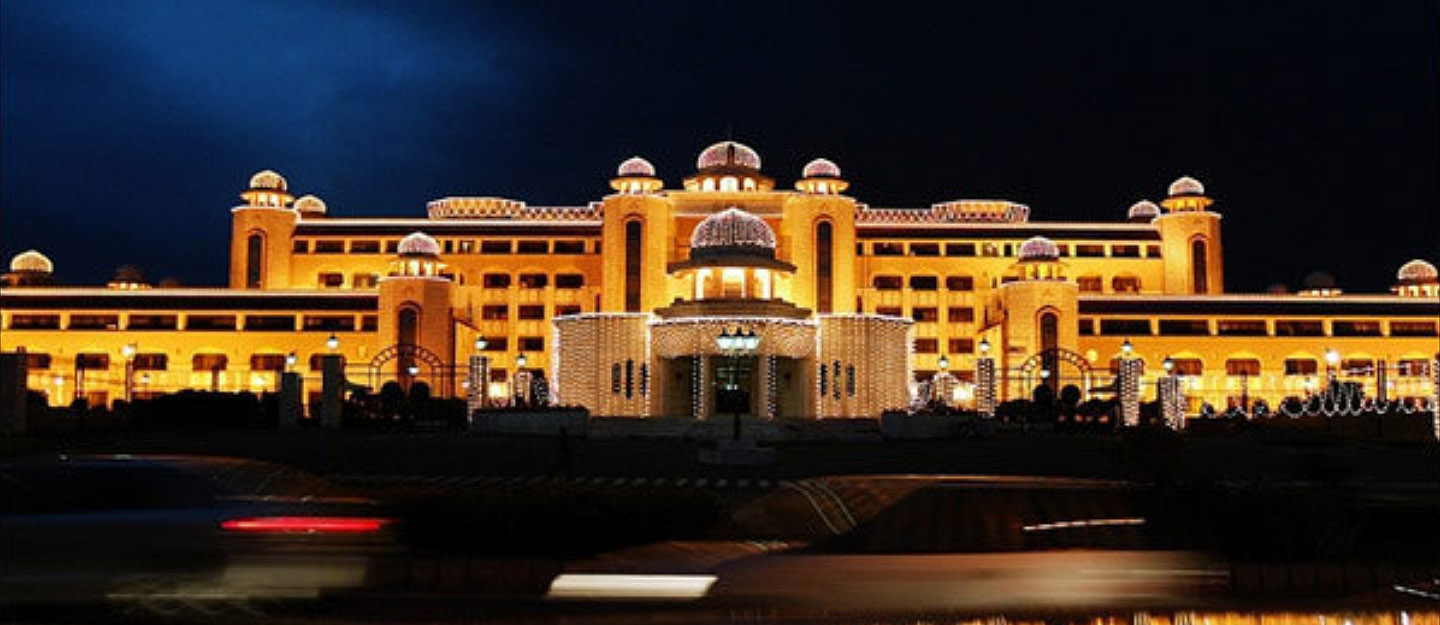
Pakistan — Worn down rather than frightened, paying for a barricaded capital and then being told the march has moved.
Nepal — Unembarrassed about asking, putting its case to the world while the roads into its own capital are shut.
Australia — Resigned rather than angry, waiting on a decision its own lenders have already agreed about.
Bangladesh — Jumpy about a birthday, as a banned party appears on a Dhaka street for a few minutes at a time.
India — Watching a deadline expire that the man it was set for has not acknowledged.
Asia spent the last days of September waiting rather than acting, and the waiting is the temperament. Islamabad was sealed against a march its organisers then put off, Dhaka policed a procession that lasted minutes, and Delhi let an ultimatum run out.
The register in these capitals is tired competence, not alarm. Officials are renting containers, clearing mud from highways, counting detainees and writing letters to opposition leaders, with the manner of people who expect to do all of it again next week.
Pakistan is the clearest case of expense without event. Its capital has been ringed with rented containers at a cost of Rs46.5 million a day in Pakistani rupees (about US$168,000), and the party whose march justified them moved the date to 4 October.
Nepal did its asking in New York. Prime Minister Balendra Shah told the United Nations on Thursday that his country contributes less than 0.1 per cent of global greenhouse-gas emissions, and asked for grants rather than loans.
Australia is the calmest and the most fatalistic. All four of its largest banks expect borrowing to be made dearer on Tuesday, and household spending grew by 0.1 per cent in August on the Commonwealth Bank’s own measure.
Dhaka’s unease is older than any of this. A party barred from political activity marched briefly on a Dhanmondi street on Saturday for the birthday of the leader it lost in 2024, and two crude bombs went off beside it.
Key Facts
—
Islamabad’s container bill. Rented containers sealing Pakistan’s capital cost Rs46.5 million a day (about US$168,000), or Rs325.5 million (about US$1.18 million) a week, Dawn reported on 26 September.
—
Pakistan’s petrol price. Petrol rose Rs2.02 to Rs391.30 a litre (about US$1.41) for 26 to 28 September, while high-speed diesel fell Rs3.59 to Rs408.53 (about US$1.47).
—
What Shah told the Assembly. Nepal’s prime minister said on 24 September that August’s Bhotekoshi-Trishuli floods had left at least 1,400 confirmed dead and more than 6,000 missing.
—
Nepal’s Gulf job permits. New labour approvals for Gulf jobs fell 52.12 per cent year on year, from 228,165 to 109,249, by mid-September, the Kathmandu Post reported on 26 September.
—
Australia’s expected rate rise. All four of Australia’s largest banks expect the Reserve Bank to raise its cash rate from 4.35 per cent to 4.60 per cent on 29 September.
—
Dhaka’s Saturday blasts. Two crude bombs went off beside a banned Awami League procession in Dhanmondi on 26 September, with three people detained on one account and four on another.
—
India’s election chief. A satirical youth party’s deadline for Chief Election Commissioner Gyanesh Kumar to resign expired on 26 September with no resignation reported.
Islamabad Pays For A March That Was Called Off
Pakistan’s temperament this weekend is exhausted rather than tense. The state spent a fortnight fortifying its capital against a protest, and on Friday the protest was moved a week to the right.
The postponement came from a provincial capital, not from the party’s founder. Khyber Pakhtunkhwa’s chief minister, Sohail Afridi, said the party’s political committee had “unanimously agreed” to put the long march off, Dawn, a liberal Karachi daily, reported.
The party says the obstacles will not stop it. Mr Afridi told the same press conference “Put spikes on the roads, place containers or even fire bullets, we will come out”, The Nation, a conservative Lahore daily, reported.
He also read the barricades as a design. Mr Afridi asked whether a deliberate effort was under way to disconnect his province from the rest of the country.
Its account of the state’s preparations is more specific than the federal one. The same paper reported 35,000 police deployed against the march, routes sealed between Attock and Khyber Pakhtunkhwa, metal spikes laid on provincial roads and provincial ministers and assembly members detained.
The new date is 4 October and the starting point is Peshawar. Mr Afridi described the aim as “the supremacy of the Constitution, restoration of the independent judiciary, media freedom and Haqiqi Azadi”, an Urdu phrase meaning real freedom, as the same paper reported it.
For a reader with no background, this is a party locked out of the centre. Pakistan Tehreek-e-Insaf governs Khyber Pakhtunkhwa, the province on the Afghan border, and its founder, the former prime minister Imran Khan, is in prison.
The scale of the preparation was published before it was needed. More than 43,000 police were assigned across the Rawalpindi division and Islamabad had 110,000 tear-gas shells ready, the Express Tribune, a centrist Karachi English-language daily, reported on 24 September.
The cost of the barricades is the figure the newspapers are now counting. Dawn reported on 26 September that 1,550 rented containers seal the capital at Rs46.5 million a day (about US$168,000), or Rs325.5 million (about US$1.18 million) over a week.
The transporters, organised as the All Pakistan Goods Alliance, are not doing it as a favour. It first asked Rs40,000 a day (about US$144) for a twelve-metre container and Rs20,000 (about US$72) for a shorter one, and now asks Rs30,000 (about US$108) for either, Dawn reported.
Feeding the police is a separate bill. The same account put three meals a day for 2,000 Sindh officers at Rs1.2 million (about US$4,300) and for 16,000 Punjab officers at Rs9.6 million (about US$34,700).
The government’s answer is that the province, not the capital, is the problem. The information minister, Attaullah Tarar, accused the Khyber Pakhtunkhwa administration of facilitating terrorism and put this year’s attacks in the province at 2,456, with 472 security personnel killed, Dawn reported.
The case against the fortification is made outside party politics. The Human Rights Commission of Pakistan, an independent watchdog, said reports indicated scores of workers, including women, had been arbitrarily detained, Dawn reported.
Its point was addressed to the state rather than to the party. The commission said it was incumbent on the state to uphold the right to peaceful assembly for all citizens.
A quieter negotiation runs underneath the barricades. Prime Minister Shehbaz Sharif has invited the opposition leader, Mahmood Khan Achakzai, for direct talks, and a person close to him told Dawn that nothing had come back.
What the talks are formally about is an overdue appointment. Sikandar Sultan Raja remains chief election commissioner although his five-year term expired on 26 January 2025, and he holds over until a successor is confirmed, Dawn reported.
That consultation has not happened. No reply from Mr Achakzai had been reported by 11.25 UTC on 26 September.
The fuel price arrived in the middle of all this. Petrol rose Rs2.02 (about US$0.01) to Rs391.30 a litre (about US$1.41) for 26 to 28 September, while high-speed diesel, the grade used by lorries and buses, fell Rs3.59 (about US$0.01) to Rs408.53 (about US$1.47).
Two papers carried the same figures. The Pakistan Observer and The Nation, a conservative Lahore daily, both reported them.
One of the two marches on the capital was put off without a new date at all. Kissan Ittehad, a farmers’ alliance, postponed its own Islamabad march after assurances from the Balochistan government, Dawn reported on 26 September.
Nepal Asks The World For Grants, Not Loans
Nepal’s mood is unembarrassed. Its government is asking the rest of the world for money in public, without the apologetic tone smaller states often use, and doing it while the highways into its own capital are shut.
The asking was done in New York on Thursday evening. Balendra Shah spoke for about a quarter of an hour to the 81st United Nations General Assembly on 24 September, the Kathmandu Post, a Kathmandu English-language daily, reported.
The hour explains a common error about the date. It was about five in the morning in Kathmandu when he reached the rostrum, which was still Thursday evening in New York, the same paper noted.
He is new to the job. He became prime minister on 27 March, after his Rastriya Swatantra Party won this year’s general election.
He opened on a disaster rather than on a grievance. The text of the address, published by the United Nations Development Programme, reads: “The Bhotekoshi-Trishuli disaster was not just a local tragedy, it was a warning to the world.”
The toll he cited is the largest single figure in this brief. The same text gives “at least 1400 confirmed deaths and over 6,000 people still missing” after the August floods on the Bhotekoshi and Trishuli rivers, which run from the Chinese border towards India.
The count has moved since he spoke. The Indian daily Business Standard reported on 26 September that the confirmed dead had risen to 1,453, with more than 5,200 still missing.
His figures were about scale rather than blame. Nepal contributes less than 0.1 per cent of global greenhouse-gas emissions, he said, and rapid assessments put physical recovery needs at about a tenth of everything the country produces in a year.
The proposal he brought was regional and awkward. He asked for a Himalayan Climate Resilience Mechanism “led by Nepal, India and China”, to share satellite data and watch dangerous glacial lakes, the Business Standard, an Indian financial daily, reported.
For a reader in São Paulo, the awkwardness is the point. Nepal is a landlocked country of about thirty million people wedged between the two most populous states on earth, and it is asking them to cooperate over the mountains all three share.
Neither neighbour has said yes. No public response from the Indian or Chinese governments had been reported by 11.25 UTC on 26 September.
The foreign coverage was not all admiring, on the Kathmandu Post’s own survey of it. That survey records the New York Times, a liberal American daily, leading on the dark sunglasses he wears in public rather than on his argument.
The same survey splits the rest by what they chose. It has the Guardian, a left-leaning British daily, taking the climate-justice case, Deutsche Welle, Germany’s state international broadcaster, leading on grants rather than debt, and Chinese state outlets carrying no separate account at all.
His own version of the injustice was about logistics. The published text reads: “Inter-continental missiles arrive on time. Rifles and ammunition cross borders, clear every bottleneck, meet each deadline. But a peasant in Nepal cannot procure his fertilizer or fuel at market price at a time of need.”
The other half of Nepal’s story is a job market closing abroad. New labour approvals for Gulf countries fell 52.12 per cent year on year by mid-September, from 228,165 to 109,249, the Kathmandu Post reported on 26 September.
The war it is measured from began in late winter. The United States and Israel started striking Iran on 28 February, the same paper notes, and the Gulf economies that employ Nepalis have been contracting since.
The falls are steep almost everywhere at once. Recruitment is down 59.05 per cent to the United Arab Emirates, 57.02 per cent to Saudi Arabia and 42.93 per cent to Kuwait, while Oman is up 24.33 per cent.
Two more Gulf states sit in between. Recruitment of Nepali workers is down 45.49 per cent to Bahrain and 35.08 per cent to Qatar on the same comparison.
This matters because there is little else earning foreign money. Nepal took in Rs2.363 trillion in Nepali rupees (about US$15.4 billion) in remittances in the 2025-26 financial year, and 40 to 45 per cent of that came from the Gulf, the same paper reported.
Workers put it in flatter language than ministers do. Arun Rai, a hotel worker from Dharan in the east who has not been told he is dismissed and has no work either, said his employer “reduced its staff to just 20 percent”.
Another gave the shorter version. Shankar Lal Shrestha, from Pokhara in central Nepal, said: “There are simply no jobs”.
The government’s answer is domestic. Mira Acharya, a spokeswoman for the labour ministry, said: “The government has prioritised promoting employment at home”, against the roughly 500,000 young Nepalis the World Bank counts entering the labour market every year.
Organised labour does not think that is ready. Binod Shrestha, who leads the Joint Trade Union Coordination Centre, said: “Workers returning from abroad have no reliable way to have their skills assessed”.
What steadies the picture is that the money has not stopped. Guru Prasad Paudel, a spokesman for Nepal Rastra Bank, the central bank, said: “If fewer workers are leaving now, the impact will not be felt immediately”.
The weather is the problem of the hour. Three days of rain closed sections of the Prithvi and BP highways and the Nagdhunga-Mugling road into Kathmandu, the Kathmandu Post reported on 26 September.
The mountains were closed too. Manang district banned high-altitude trekking from Friday to Sunday.
One search ended well. Six shepherds reported missing in Jumla in the west were found safe on Friday.
Higher up it was snow rather than rain. The mountaineer Mingma G Sherpa put the fall around Gokyo, in the Everest region, at three to three and a half feet, about a metre.
One piece of infrastructure did open this week. Flydubai’s first Pokhara service landed on Wednesday, at an airport that cost about US$216 million and is still arguing about its debts.
The passengers were mostly Gulf returnees. Sita Gharti, home from Dubai, told the Kathmandu Post: “I am very happy that I landed in Pokhara directly on the very first flight”.
Australia Braces For A Rise And Argues About The Next One
Australia’s temperament is resignation rather than anger. Its central bank is widely expected to make borrowing dearer on Tuesday, and the argument is no longer about that but about what follows it.
The expectation is unanimous among the people who lend the money. All four of Australia’s largest banks expect the Reserve Bank to lift its cash rate from 4.35 per cent to 4.60 per cent on 29 September, the market site investinglive.com reported on 21 September.
For a foreign reader this is a reversal, not a continuation. The cash rate is the price the central bank sets for overnight money between banks, and it was being cut last year.
The turn came this year. Three rises have already been delivered in 2026, the Australian site MacroBusiness reported on 22 September.
The governor has been unusually plain about what she wants. Michele Bullock said at a Committee for Economic Development of Australia event in Sydney on Tuesday that unemployment between 4.5 and 5 per cent would probably take enough heat out of the labour market.
That is a striking thing for a central bank to say aloud. The Australian Broadcasting Corporation, the public broadcaster, reported the Sydney event on 22 September, and said she was echoing what she had told a federal parliamentary hearing the previous Friday.
The number she named has already arrived. Unemployment rose to 4.6 per cent in August on figures released on Thursday 24 September, the highest in five years, the market site investinglive.com reported.
Her argument at the Sydney event was about imported prices. She said global supply shocks must not be allowed to become embedded in Australian prices, the business site Proactive Investors reported.
Her deputy had framed the same thing as a return to normal at the parliamentary hearing on 18 September. Andrew Hauser told it: “Interest rates were never going to be zero or near zero for a long while”.
He then put the open question. He asked whether borrowers had “adjusted to that new reality”.
The disagreement is about November and beyond. Of 34 economists in a Reuters poll, 33 expected Tuesday’s rise, but 26 of 31 expected the rate to stay at 4.60 per cent to the end of December, investinglive.com reported on 24 September.
The banks are not of one mind either. Only ANZ forecasts a further rise in November, with the Commonwealth Bank and Westpac treating it as a risk rather than a call.
One outside economist puts the bank’s motive bluntly. Paul Bloxham, chief economist for Australia and New Zealand at HSBC, said the Reserve Bank “is growing impatient with above-target inflation”.
Westpac reads the governor as having cleared her own condition. Its chief economist, Luci Ellis, said “the Governor’s comments met the condition the Board had set in August for further action”.
A right-of-centre reading of the same week came to the same forecast. The Nightly, an Australian daily owned by Seven West Media, headlined its 24 September report that a rate rise was tipped despite unemployment at a five-year high.
The evidence that borrowers have not adjusted is in the spending. Household spending rose 0.1 per cent in August on the Commonwealth Bank’s own measure after 0.6 per cent in July, and annual growth slowed to 4.7 per cent from 5.2 per cent, MacroBusiness reported.
Housing is where the pressure shows, and the bank is calm about it. Its assistant governor for the financial system, Brad Jones, said house prices had run up further in Australia than in comparable economies.
He then gave the falls since. Mr Jones said “we’ve seen 5 per cent to 6 per cent declines in Sydney and Melbourne, 1 per cent to 2 per cent in the other states”.
He did not think much of them. Mr Jones said the falls had “not been overly material”.
The governor gave the reason for that calm. Ms Bullock said “housing prices are still around 50 per cent higher than they were in early 2020”, and the broadcaster summed the bank up as sanguine about the downturn.
The social picture underneath is a long grind rather than an emergency. The Household, Income and Labour Dynamics in Australia survey has followed more than 17,000 people for the Melbourne Institute since 2001, the broadcaster reported on 24 September.
Its reading on young adults is a plateau, not a jump. The share of 18 to 21-year-olds living with their parents stands at 85 per cent, and the broadcaster notes that most of that growth happened by the mid-2010s.
Not everything in that survey points downwards. The share of working-age Australians on government benefits fell from 24 per cent in 2001 to 13 per cent in 2024.
What could unsettle the whole calculation is a word the governor will not use with confidence. Asked about the worldwide enthusiasm for artificial intelligence, Ms Bullock said “it might not be a bubble, but it might be”, and that it was a risk the bank was watching.
The next figure lands the day after the decision. Australian consumer price data are expected on 30 September, which is the sort of sequencing that makes a central bank’s life harder rather than easier.
A Banned Party Marches For A Birthday In Dhaka
Bangladesh is jumpy in a very particular way. The party that governed it for fifteen years is barred from political activity, and it keeps reappearing on the street for a few minutes at a time.
Saturday’s appearance was timed to a birthday. Awami League activists held what Bangladeshi papers call a flash procession on Road 27 in Dhanmondi, a central Dhaka district.
The date was the point. The procession was held to mark the birthday of Sheikh Hasina, the prime minister ousted in 2024, which falls on 28 September.
The marchers chanted the party’s own slogan and then bombs went off. They shouted “Joy Bangla”, meaning victory to Bengal, as they moved along Road 27, bdnews24.com, a Dhaka news site, reported.
Three accounts of the same few minutes do not agree. The Business Standard, a Dhaka business daily, reported two blasts in front of a Meena Bazar store and three people detained, while bdnews24.com reported four crude bombs and three detained.
The Daily Star’s count is higher again. That paper, a Dhaka English-language daily, reported four detained in front of a Bata showroom, and it alone attributes the procession to the party’s Mohammadpur unit.
The differences have not been reconciled. All three name the same officer, Dhanmondi police station’s Muhammad Imdadul Islam, who told bdnews24.com: “A group of people gathered to hold a procession and police dispersed them”.
He gave the next step in the same words. The officer said his men were “checking the identities and backgrounds of the three detainees before taking the necessary legal action”, and the Business Standard alone reports an investigation into the blasts.
For a reader with no background, the ban is the thing to understand. Sheikh Hasina left the country in August 2024 after a student revolt, her party’s activities were later prohibited, and she has since spoken to the press from Delhi.
The country now has an elected government of the other side. Tarique Rahman of the Bangladesh Nationalist Party was sworn in as prime minister on 17 February after this year’s general election, Al Jazeera, a Qatari state-funded international broadcaster, reported at the time.
The sharpest complaint comes from the Islamist opposition, which attacks both sides at once. Mia Golam Porwar, secretary general of Bangladesh Jamaat-e-Islami, asked how a banned party could march in Gulshan and Dhanmondi and across the districts at all, the Daily Star reported on 25 September.
His conclusion was about complicity. Mr Porwar said “It cannot be that the government, civil administration and intelligence agencies knew nothing about it”, and spoke of “pro-fascist elements” in the administration, the same paper reported on 26 September.
He then placed the danger abroad. Mr Porwar called Indian support for Sheikh Hasina, who is in Delhi, unethical and a threat to Bangladesh.
Everything else, on his account, is calm. He said: “Apart from that, we do not see any internal security threat in the country”.
The same remarks turn on the governing party too. Mr Porwar said “Bangladesh Jamaat-e-Islami is not ungrateful; BNP is ungrateful”, accused it of corruption beyond all previous records, and said the opposition’s 38 written proposals on the fuel crisis had been rejected.
The governing party’s answer is in what its police do rather than in what it says. Officers broke up the procession within minutes and detained those they caught, and that action is so far the only answer given to the charge that it is permitting them.
Its words have not followed. No response from the Bangladesh Nationalist Party or the home ministry to Mr Porwar’s allegation had been reported by 11.25 UTC on 26 September.
What steadies the picture is the scale of these events. The processions last minutes and end in detentions rather than in confrontation, although an earlier one in Gulshan on 11 September produced 179 arrests, bdnews24.com reported.
A larger daily emergency runs alongside the politics. Dengue killed two more people and put 955 into hospital in twenty-four hours, the Daily Star reported on 25 September.
India’s Election Chief Lets The Clock Run Out
India’s argument about its voter lists has hardened into a test of nerve. A satirical youth party gave the chief election commissioner until Saturday to resign, and Saturday arrived without a resignation.
The party is younger than the row it has joined, and its name is an insult it kept. The Cockroach Janta Party was born on social media in May after India’s chief justice compared unemployed young Indians to “cockroaches” and “parasites”, Al Jazeera reported on 25 September.
It has already removed a minister. Its protests forced out Prime Minister Narendra Modi’s education minister in July over leaked examination papers, the same broadcaster reported.
Its founder set the terms in public. Abhijeet Dipke wrote: “If Gyanesh Kumar does not resign by tomorrow, CJP will begin its nationwide protest from Mumbai on 2 October”, and added: “This Gandhi Jayanti let’s pledge to save democracy.”
The trigger was a newspaper report rather than an official finding. The Indian Express, a centrist Delhi daily, reported that two of the three election commissioners had raised questions with Mr Kumar at least fourteen times in ten months about the revision of electoral rolls.
The commission rejects that reading of its own paperwork. It said “differing views and observations are a normal part of deliberation in any institution” and that all its actions had been lawful, Al Jazeera reported.
Its fuller position is reported rather than quoted. The News Minute, a southern Indian news site, records the commission saying that differing views, operational queries and administrative suggestions are part of the normal functioning of a multi-member constitutional body.
The governing party rejects the charge outright. Its spokesman Sambit Patra said: “Neither the Election Commission of India nor any constitutional body in India is under dictatorial rule”, Al Jazeera reported.
The opposition spent Friday on the street instead of in parliament. Congress workers demonstrated in thirteen states and territories including Delhi, Bihar, Assam, Punjab, West Bengal and Odisha, the News Minute reported.
The police answer was water and gas. Water cannon was turned on marchers in Patna and Chandigarh and tear gas used in Manipur, the same site reported, and the Shillong Times adds water cannon in Delhi and Kolkata.
The party’s own language has escalated with it. Congress general secretary Jairam Ramesh said the prime minister was determined to “snatch it away through underhand means”, meaning the youth vote.
Its media head went further on the process. Pawan Khera called the roll revision “null and void”.
The detentions reached senior figures. Assam’s Congress president, Gaurav Gogoi, was detained during a protest, ANI, an Indian news agency seen as close to the governing party, reported on 25 September.
Delhi’s designated protest ground took the rest. At Jantar Mantar the activist Yogendra Yadav and Dipankar Bhattacharya, who leads the Communist Party of India (Marxist-Leninist) Liberation, were among those detained, the Shillong Times reported.
The argument has now also moved to the courts. A plea before the Supreme Court asks that decisions taken without the full commission’s concurrence be declared void and that criminal proceedings be opened, the Shillong Times reported.
The plea puts its claim in one sentence. It reads: “Divested of any statutory or constitutional immunity, the CEC remains directly accountable under the law — subject to police investigation, evidence gathering, and regular trial proceedings as an ordinary accused”.
Parliament has been asked before, and it refused. Opposition members filed removal motions against Mr Kumar in both houses in April, and the presiding officers declined to admit them, News on AIR, the state broadcaster, reported.
That route has not been abandoned. Opposition parties were drafting a further attempt in both houses as of 24 September, the New Indian Express reported, which is why the pressure has meanwhile moved to the street and the court.
Mr Kumar has not said whether he intends to stay. No statement from him had been reported by 11.25 UTC on 26 September, and the protest he was threatened with is set for 2 October, Mahatma Gandhi’s birthday.
Four Of Asia’s Trading Floors Never Opened
Asia produced no single verdict on its own week, because four of its markets never opened on Friday. Seoul, Shanghai, Shenzhen and Taipei were all shut, so there is no all-Asia reading for the last day of the week.
The holidays were not even the same holiday. The Korea Exchange closed on Thursday and Friday for Chuseok, the harvest festival, while Shanghai, Shenzhen and Taipei closed on Friday for the Mid-Autumn Festival.
Hong Kong is the exception that shows how easily this is misread. It traded a full Friday session and takes its own Mid-Autumn holiday today, Saturday.
Tokyo had the best of what did trade. The Nikkei 225 closed at 66,364.20, up 850.21 points or 1.30 per cent, and ended the week up 1,345.25 points or 2.07 per cent, the strongest weekly showing of any major index.
That winning run is shorter in days than it sounds. Tokyo was shut on Monday, Tuesday and Wednesday for three separate holidays, so a five-session run of gains reaches back to 16 September rather than over five consecutive days.
Hong Kong went the other way on the same day. The Hang Seng closed at 24,510.09, down 251.04 points or 1.01 per cent, and finished the week down 0.97 per cent.
Jakarta had the poorest week in the region by a wide margin. Indonesia’s IDX Composite closed at 6,241.89, down 56.72 points or 0.90 per cent on the day and 3.09 per cent over the week.
That is the worst week of any Asian index. No European or North American index fell as far either, although Buenos Aires did, by 4.24 per cent.
That sits beside a central bank that chose not to move. Bank Indonesia held its policy rate at 5.75 per cent on 23 September for a third month, and the rupiah’s Friday reference cross was 17,913.90 to the dollar.
The rate held and the currency did the moving. Bank Indonesia has now left its rate unchanged for a third month, and the market took the strain instead.
Mumbai recovered a little of a losing week. The Sensex closed at 73,895.74, up 315.20 points or 0.43 per cent, yet finished the week down 399.22 points or 0.54 per cent, and the Nifty 50 closed at 23,140.50.
Bangkok and Manila both rose on the day and cannot be measured over the week. The SET, Thailand’s main share index, closed at 1,607.63, up 5.05 points or 0.32 per cent.
Manila did better still. The PSEi, the main index of the Manila exchange, closed at 5,825.97, up 95.95 points or 1.67 per cent, the largest one-day gain of any index named here.
The levels in circulation for Korea, the mainland and Taiwan all belong to earlier sessions. The Kospi’s last close is Wednesday 23 September at 7,080.92, the Shanghai Composite’s Thursday 24 September at 3,888.37, and the Taiwan weighted index’s Thursday 24 September at 48,024.60.
Two consequences should be said plainly. No weekly change exists for Taiwan, because there was no Friday close to measure against.
The second one arrives on Monday. Seoul’s move will be measured from Wednesday, so it may look larger than one day’s trading for that reason alone.
The mainland’s calendar is the tightest in the region. Shanghai and Shenzhen reopen on Monday and then trade only on 28, 29 and 30 September before the National Day break.
The Asian currency that moved most had no share market open behind it. On the European Central Bank’s Friday-to-Friday reference rates the South Korean won strengthened 2.38 per cent, the largest weekly gain against the dollar in these figures, while Seoul’s last share price close was Wednesday’s.
Japan is the one market here whose policy rate is rising and whose ten-year yield sits less than two points above it. Its ten-year government bond yielded 3.07 per cent on 25 September, against a policy rate of 1.25 per cent decided on 18 September.
That policy rate is the highest Japan has set in 31 years. It was lifted at the meeting of 17 and 18 September and is in force now.
India has the other extreme in this region. Its ten-year government bond yielded 7.11 per cent on 25 September, the highest of the Asian markets named here.
Elsewhere in Asian money the week was quiet. The yen stood at 157.59 to the dollar on the 25 September reference cross and the Indian rupee at 95.82, while the Bangladeshi taka’s Friday closing quote was 123.66.
What This Means From Latin America
Oil is the first line of contact and the two grades went opposite ways. November Brent, the contract that prices most of the world’s cargoes, settled on Friday at US$104.32 a barrel, up 0.43 per cent over the week.
The American grade did the opposite. November WTI settled at US$92.41, down 3.82 per cent over the week on the same contract.
The gap between the grades is what a Brazilian exporter watches. Reuters reported the divergence as hopes of a truce between Washington and Tehran pressing on the American grade while Middle Eastern supply risk held Brent above US$100.
Pakistan shows what that gap does to an importing country’s politics. Its government raised petrol by Rs2.02 to Rs391.30 a litre (about US$1.41) in the same week the American crude price fell, a combination any energy ministry that sets pump prices administratively will recognise.
Nepal’s figures read most like Central America’s. Remittances of Rs2.363 trillion in Nepali rupees (about US$15.4 billion) in a year sit against new job approvals abroad that have more than halved, the same exposure El Salvador, Honduras and Guatemala carry.
Australia’s week points the opposite way from Brazil’s. Its central bank is expected to raise the cash rate from 4.35 per cent to 4.60 per cent on Tuesday.
Brazil is going the other way. It cut the Selic (its own benchmark interest rate) by a quarter point to 13.75 per cent on 16 September.
The commodity that rose most this week was not oil. American natural gas for November finished the week up 9.75 per cent at US$3.196 per million British thermal units.
Copper also held its ground. The December contract rose 1.22 per cent over the week to US$6.6955 a pound, one of the few things to end higher.
Gold gave ground for a fourth successive fix. The London afternoon price was US$4,261.05 a troy ounce on 25 September, down 2.00 per cent over the week, which matters more to Peru and Mexico than to Brazil.
The rest of the region’s reading sits in the dossier. It carries the country health check, the deep dive and the outcome table with its Latin America column: read the Asia Intelligence Dossier →.
What We Are Watching
- Australia’s central bank decides on Tuesday — 29 September, when all four of the country’s largest banks expect the cash rate to go from 4.35 per cent to 4.60 per cent.
- Shanghai and Shenzhen reopen for three sessions — 28 September, with only 28, 29 and 30 September to trade before the National Day break.
- Seoul’s first session since Wednesday — 28 September, when the Kospi’s move will be measured from 23 September and may look larger than one day’s trading.
- Bank of Japan minutes and the Tankan survey — 28 September for the minutes, with the Tankan business survey expected on 30 September or 1 October.
- Australian consumer price figures — 30 September, the day after the rate decision rather than the day before it, and after unemployment had already risen to 4.6 per cent in August.
- China’s official factory surveys — 30 September, inside the mainland’s three-session window.
- India’s satirical party opens its campaign — 2 October, Gandhi Jayanti, the holiday marking Mahatma Gandhi’s birth, when the Cockroach Janta Party says it will start in Mumbai.
- Pakistan’s long march sets out from Peshawar — 4 October, the date the party moved it to, with Imran Khan’s birthday on 5 October.
The Bigger Picture
Asia’s week was about the cost of bracing. Islamabad paid for a siege that did not happen, Dhaka policed a procession that lasted minutes, and Delhi waited out a deadline set on social media by a party founded four months ago.
The steadying forces are unglamorous and real. Nepal’s remittances are still arriving, Tokyo had the best week of any major market, and Pakistan’s farmers put off their own march after a provincial government gave them assurances.
The straining forces are the ones with dates attached. Australia’s borrowers meet a higher rate on Tuesday, the mainland has three trading days before a long holiday, and Pakistan’s march is now booked for the day before its founder’s birthday.
What none of it settles is who is believed. Election authorities in two countries are being asked to prove their independence, and a small state has asked two large neighbours to share their satellites.
Frequently Asked Questions
Why was Islamabad sealed off for a march that did not happen?
Because the preparations were made before the postponement. Pakistan Tehreek-e-Insaf is the party of the imprisoned former prime minister Imran Khan. It had called a long march on the capital for 27 September. On 25 September Khyber Pakhtunkhwa’s chief minister, Sohail Afridi, said its political committee had “unanimously agreed” to move the march to 4 October, starting from Peshawar, Dawn reported. By then more than 43,000 police had been assigned across the Rawalpindi division, and Islamabad had 110,000 tear-gas shells ready, the Express Tribune reported on 24 September. Dawn put the cost of the 1,550 rented containers sealing the capital at Rs46.5 million a day (about US$168,000), or Rs325.5 million (about US$1.18 million) a week. The government blames the province. Its information minister, Attaullah Tarar, accused the Khyber Pakhtunkhwa administration of facilitating terrorism and put this year’s attacks there at 2,456, with 472 security personnel killed. The Human Rights Commission of Pakistan, an independent watchdog, said reports indicated scores of workers, including women, had been arbitrarily detained. It said the state must uphold the right to peaceful assembly for all citizens.
Who is Nepal’s prime minister, and what did he ask the United Nations for?
Balendra Shah, who took office on 27 March after his Rastriya Swatantra Party won this year’s general election. On 24 September he addressed the 81st United Nations General Assembly for about a quarter of an hour, the Kathmandu Post reported. It was about five the next morning in Kathmandu. He asked for two things. The first was that climate money arrive as grants rather than loans. The second was a Himalayan Climate Resilience Mechanism, led by Nepal, India and China, to share satellite data and watch dangerous glacial lakes. He grounded both in August’s Bhotekoshi-Trishuli floods. The published text of the address describes them as leaving “at least 1400 confirmed deaths and over 6,000 people still missing”. The Indian daily Business Standard reported the confirmed dead at 1,453 on 26 September. Recovery needs are put near a tenth of national output, and Nepal contributes under 0.1 per cent of global greenhouse-gas emissions. No public response from the Indian or Chinese governments had been reported by 11.25 UTC on 26 September. At home the pressure is on jobs. New labour approvals for Gulf countries fell 52.12 per cent year on year by mid-September, from 228,165 to 109,249. Remittances were Rs2.363 trillion in Nepali rupees (about US$15.4 billion) in the 2025-26 financial year.
Which Asian markets traded on Friday, and which did not?
Tokyo, Hong Kong, Mumbai, Bangkok, Manila, Jakarta and Kuala Lumpur traded and have closed. Seoul did not trade on Thursday or Friday, because the Korea Exchange was shut for Chuseok, the harvest festival. Shanghai, Shenzhen and Taipei were shut on Friday for the Mid-Autumn Festival. Of those that opened, the Nikkei 225 closed at 66,364.20, up 1.30 per cent, and the Hang Seng at 24,510.09, down 1.01 per cent. Indonesia’s IDX Composite closed at 6,241.89, down 3.09 per cent over the week, the poorest weekly showing of any Asian index. The levels quoted for the three shut markets belong to earlier sessions. They are the Kospi at 7,080.92 on Wednesday 23 September, the Shanghai Composite at 3,888.37 and the Taiwan weighted index at 48,024.60, both on Thursday 24 September. Because Taipei had no Friday close, no Taiwanese weekly change can be calculated at all. All four reopen on Monday 28 September, and the mainland then trades only three sessions before the National Day break.
What is India’s row about its voter lists actually about?
Whether the Election Commission of India revised the electoral rolls properly, and whether its chief acted alone. The Indian Express reported that two of the three election commissioners raised questions with Chief Election Commissioner Gyanesh Kumar at least fourteen times in ten months. The queries covered registration forms and central control of the database. The commission answered that “differing views and observations are a normal part of deliberation in any institution” and that all its actions had been lawful. The governing Bharatiya Janata Party’s spokesman, Sambit Patra, said “Neither the Election Commission of India nor any constitutional body in India is under dictatorial rule”. Congress workers protested in thirteen states and territories on Friday. Water cannon was used in Patna and Chandigarh and tear gas in Manipur, the News Minute reported, and the Shillong Times adds Delhi and Kolkata. A plea before the Supreme Court asks that decisions taken without the full commission’s concurrence be declared void and that criminal proceedings be opened. The Cockroach Janta Party, born on social media in May after India’s chief justice compared unemployed young Indians to “cockroaches” and “parasites”, had given Mr Kumar until Saturday to quit. It threatens a national protest from Mumbai on 2 October, and no statement from him had been reported by 11.25 UTC on 26 September.