By The Diplomat | Created at 2026-09-30 16:36:57 | Updated at 2026-09-30 21:37:10
8 hours ago
By The Diplomat | Created at 2026-09-30 16:36:57 | Updated at 2026-09-30 21:37:10
8 hours ago
Oceania | Diplomacy | Oceania
If Australia is successful in returning to the council in 2029, it will be under significantly different circumstances than when it last held a seat.
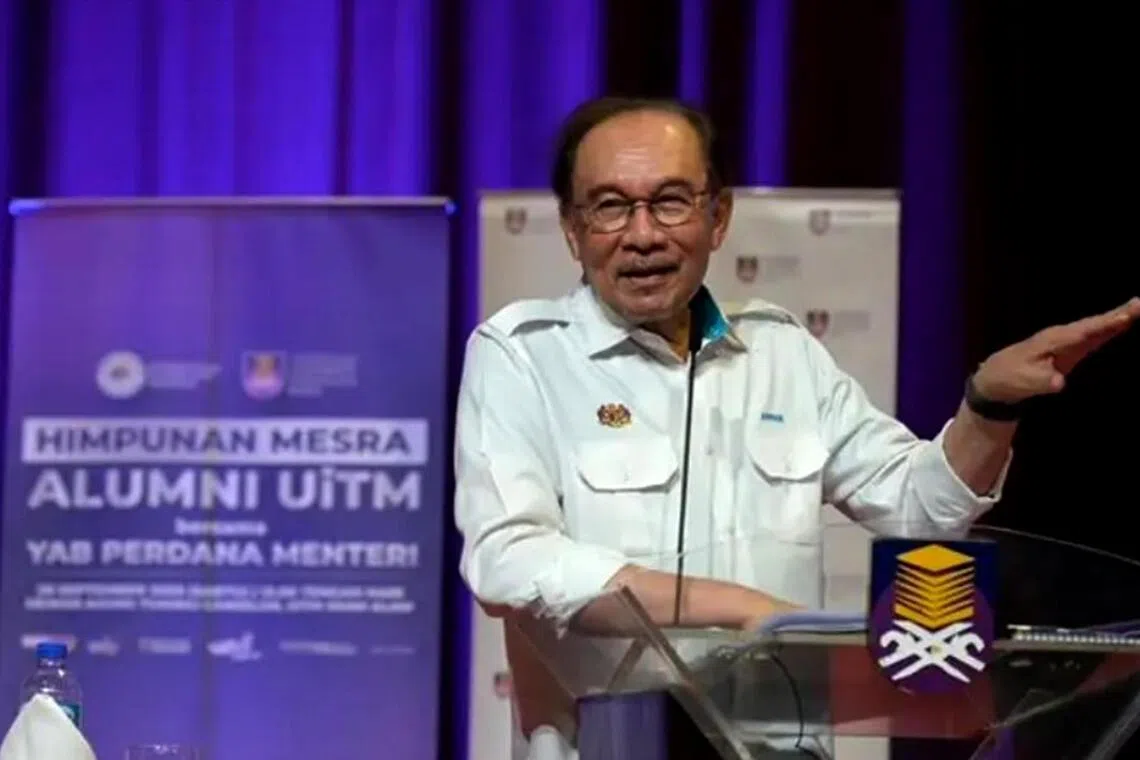
Last week at the United Nations General Assembly, Australian Prime Minister Anthony Albanese officially launched Australia’s campaign for a 2029-2030 non-permanent Security Council seat. Australia last held one of the non-permanent seats in 2013-2014, a period of geopolitics that now seems an entire era away, not just over a decade.
Given that we have now entered into a new, far more uncertain, period of international affairs, Canberra has decided that it should have a seat at the table to help shape the global environment. In his bid launch, Albanese argued that foreign conflicts – and potential conflicts – will increasingly affect Australia’s security, economy, and way of life. A seat on the Security Council would give Australia a direct role in negotiating resolutions, responding to international crises, and shaping the U.N.’s approach to emerging security challenges. It would also provide an opportunity to strengthen Australia’s diplomatic relationships within and beyond the Indo-Pacific.
Central to Australia’s campaign is its commitment to an international order governed by rules rather than the exercise of power alone. As a middle power, Australia has a strong interest in protecting the sovereignty of smaller states and ensuring that international disputes are resolved through diplomacy rather than coercion. These principles have become pronounced following Russia’s invasion of Ukraine and China’s disregard of UNCLOS in the South China Sea. Australia wants to use a Security Council seat to uphold international law, prevent conflict, and strengthen institutions that allow countries to determine their own futures without domination by larger powers.
This worldview may seem quaint. It is clear that three of the five permanent members of the Security Council – Russia, China, and the United States – have a lack of interest in upholding international law at present. A French presidential election in April 2027 may produce a new leader who likewise has a suspicion of the constraining power of international law. The ideals that Australia seeks to uphold may find little support among the Security Council’s most powerful members.
Does this make Australia’s bid for a Security Council seat futile?
It certainly makes what Australia would like to achieve more difficult. But there is now a certain pragmatism within Canberra, rather than an idealism or nostalgia for a previous era of geopolitics. The country will work with the global environment as it is to the advantage of Australia’s interests as best it can.
The most practical response to this new era is to simply be in the rooms where the changes are taking place. Australia wants to be influential in how the world responds to emerging threats that extend beyond traditional military conflict. Cybersecurity, artificial intelligence, and rapidly developing digital technologies are creating new vulnerabilities that require global responses. Many of the U.N. institutions were not designed to address such challenges, and Australia sees a role in helping shape how these institutions evolve.
Alongside this, Australia’s ambition is also to be a voice for Pacific Island countries. A Security Council seat would provide another platform through which to advance the shared concerns of Pacific Islands Forum countries, particularly the relationship between climate change and international security. Australia has already identified ocean and climate security as priorities for its prospective term, recognizing that rising sea levels, environmental degradation, and resource insecurity present serious challenges to countries in its immediate region.
Yet the most important reason for gaining a Security Council seat will be to learn more about how the disruptive members of the Permanent Five think and bargain. For a country whose strategic environment is increasingly shaped by these disruptions, the best path to successful navigation is by knowing as much as possible about how the world is shifting through the interests, attitudes, and ideologies of the great powers.
When Australia last sat on the Security Council over a decade ago its role was simply to help reinforce an order that had broad support, and particularly the support of the United States. If Australia is successful in returning to the council in 2029 it will be under significantly different circumstances. Australia’s position now is that it cannot afford to be a bystander in this period of major geopolitical change. Restoring a world more comfortable to Australia seems unlikely, but making sure Australia can exert some influence as the rules are being rewritten is now vital.