By The Rio Times | Created at 2026-10-05 08:35:11 | Updated at 2026-10-05 09:11:18
1 hour ago
By The Rio Times | Created at 2026-10-05 08:35:11 | Updated at 2026-10-05 09:11:18
1 hour ago
BOLIVIA · POLITICS
Key Facts
- —The country Bolivia, an Andean nation of about 11 million people, where Congress elects the attorney general who directs all criminal prosecutions.
- —The background On 28 September Washington accused Attorney General Roger Mariaca of taking traffickers’ bribes. Police detained him two days later.
- —Why now Congress suspended Mariaca by 113 votes to 11 on 2 October, then elected José Armando Urioste, a former judge, as interim successor.
- —What happened On Sunday night, 4 October, Vice President Edmand Lara, who presides over Congress, said he would not swear Urioste in yet.
- —Who is involved Lara, just back from a forum in Madrid, and Senate President Diego Ávila, who ran Friday’s session in his absence and set Monday’s oath.
- —What it means for you Until the new Bolivia attorney general is sworn in, leadership of the office that handles every criminal complaint stays unsettled.
- —Still open Whether Ávila holds Monday’s ceremony without Lara. Mariaca remains out of office and in custody, and no charge against him has been proven.
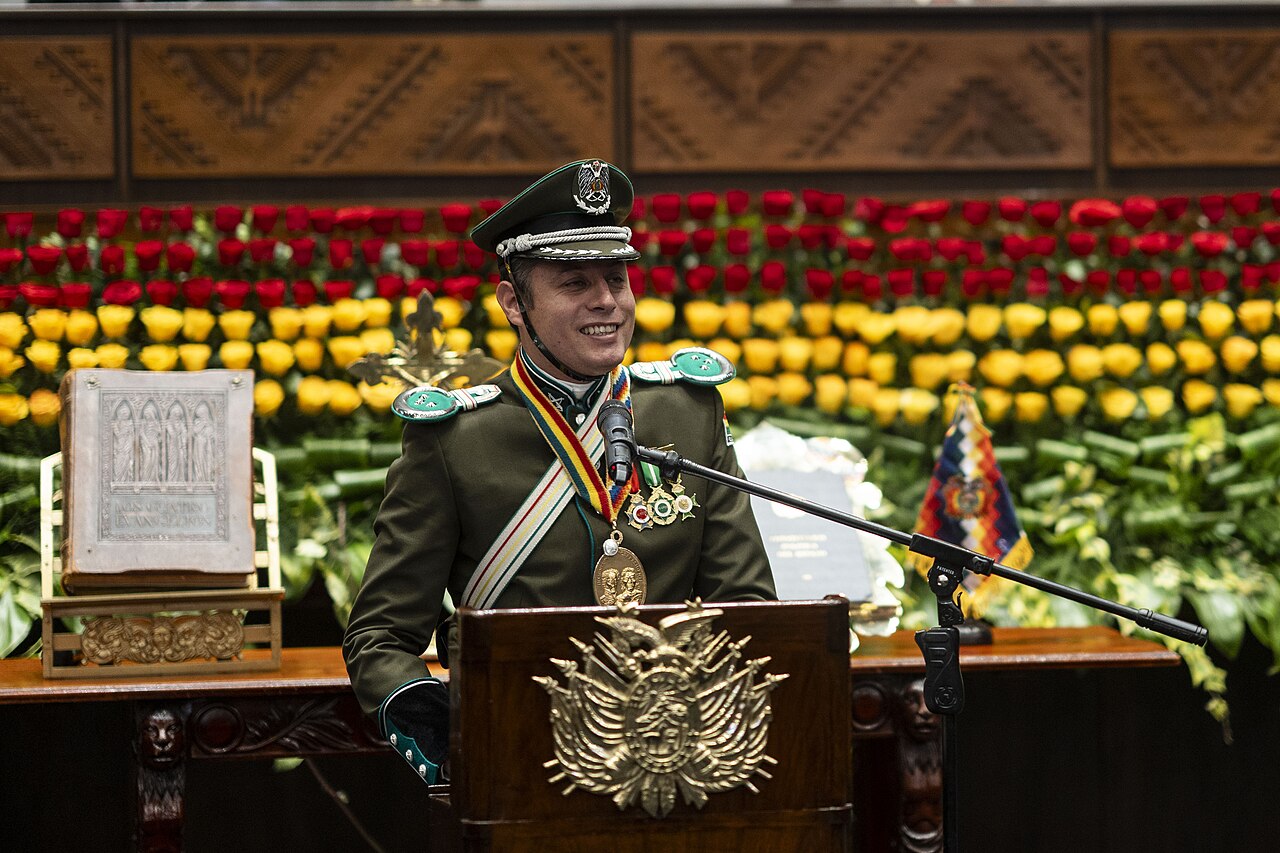
Vice President Edmand Lara said on Sunday night he will not yet swear in the new Bolivia attorney general, José Armando Urioste. Congress elected Urioste early on Saturday 3 October, hours after suspending the detained Roger Mariaca by 113 votes to 11.
Lara, who presides over Congress, also questioned whether that suspension was legal. Senate President Diego Ávila, who ran Friday’s session while Lara was in Spain, had set the oath for Monday 5 October.
What Lara Said on His Return
Lara spoke on Sunday night at Viru Viru airport in Santa Cruz, Bolivia’s largest city, on his return from Spain. He had attended an Ibero-American parliamentary forum in Madrid, the broadcaster Unitel reported.
“I personally am not going to swear him in yet,” he said, until he had taken advice and checked that everything was done correctly. Unitel and the radio network Erbol carried the same words.
He also had a message for Ávila: “If Mr Ávila wants to swear him in, that is up to him.” Violating the Constitution, Lara added, “brings problems, brings consequences” in the long run.
Follow this story
Get an email when there’s news on Bolivia
Free. One email a day at most, and only when there is news. This also signs you up to our weekday newsletter, The LatAm Brief. Nothing arrives until you click the confirmation link, and you can stop either with one click. Privacy policy.
Who Swears In the Bolivia Attorney General
Bolivia’s law on the prosecution service, Law 260 of 2012, says the president of the Legislative Assembly swears in the attorney general. The country’s vice president holds that post by right, which is why Lara says the oath is his to give.
While Lara was abroad, Ávila acted as president of the Assembly and chaired the marathon session that began on Friday. On Saturday he said the Assembly’s board would swear Urioste in on Monday, without calling a new session, El Deber reported.
According to the Cochabamba daily Opinión, Lara argues that the task returns to him now that he is back in the country. The Bolivia attorney general ceremony therefore hinges on who may administer the oath.
Why Lara Questions the Mariaca Removal
Lara argued that the reform used against Mariaca cannot apply backwards in time. The grounds for the suspension, he said, arose before Congress passed the new rule.
He also cited a constitutional ruling that, in his view, bars suspending an official over a criminal charge alone. “That is called violating the principle of the presumption of innocence,” he told reporters.
The reform is Law 1773, which President Rodrigo Paz signed on Friday 2 October. It lets Congress definitively suspend a formally charged attorney general by a two-thirds vote, Erbol reported.
Lara made a similar case from Spain on Thursday 1 October, before the vote. Removal requires a final ruling in a disciplinary process, he said, and a replacement needs a public call and a merit review.
“If today we violate the procedure to change the attorney general, tomorrow any authority can be removed by a circumstantial majority,” he wrote. Correo del Sur published the statement.
From a US Blacklist to a New Chief in a Week
Bolivian media call the trigger a “lista negra”, or blacklist. On Monday 28 September the US State Department revoked the visas of 12 Bolivians, among them judges and prosecutors.
In the same release it designated Mariaca for “significant corruption”, accusing him of taking bribes to help drug trafficking. That bars him and his close family from entering the United States.
The list was explained on 30 September in Bolivia Visa Bans: “20 More Officials” Refers to US List of 28 September. Police detained Mariaca at Viru Viru airport on Wednesday 30 September.
Congress suspended him late on Friday 2 October, with 113 of the 128 legislators present voting in favour. Visión 360 and Erbol reported the same count.
A La Paz judge then ordered six months of preventive detention, meaning jail before trial, in Cantumarca prison in Potosí. That ruling came late on Saturday, as reported on 4 October in Bolivia Judge Orders Six Months Detention for Mariaca.
On Sunday a judge added a second six-month detention order, this time for alleged money laundering, Urgente and Los Tiempos reported. It concerns cash found in an ambulance that left Mariaca’s home on 30 September.
Mariaca denies the accusations and told the judge on Sunday that he is not a drug trafficker, the Santa Cruz daily El Día reported. None of the charges has been proven in court.
Who Urioste Is and What He Promised
Urioste is a career judge from Beni, a lowland region in Bolivia’s north. He served as dean of its departmental court of justice and also taught at university, Erbol reported.
Lawmakers backed him as interim Bolivia attorney general after earlier rounds left two other lawyers short of two-thirds. That vote was described on 3 October in Bolivia Picks Interim Attorney General After Five Votes.
Urioste flew into El Alto, the airport city above La Paz, on Sunday, El Deber reported. He promised a “clean, transparent” prosecution service and said his large majority gave him legitimacy.
Beni deputy Salma Tobías said he had committed to showing results within 90 days, Red Uno reported. After the oath he is due to move to Sucre, the seat of the prosecution service, according to El Deber and Unitel.
A Vice President at Odds With the Government
Lara, a former police captain, was Paz’s running mate in 2025, and both took office on 8 November that year. He has since attacked ministers and the president’s inner circle in public, as noted in Who Is Rodrigo Paz?
On Friday 2 October he said police had warned him of a plan to plant false evidence and arrest him. He named Colonel Marcelo Ferrufino, head of police intelligence, according to the Oruro daily La Patria.
Lara’s refusal does not, on its own, reverse either vote in Congress. Mariaca remains out of office and in custody, and Urioste remains the interim Bolivia attorney general chosen by more than two-thirds of lawmakers.
What Comes Next
The first test is Monday’s ceremony in La Paz, and whether Ávila and the Assembly board go ahead without Lara. Lara has tied his own decision to legal advice and has given no date.
Whoever ends up leading the prosecution service will inherit politically charged files. Some lawmakers want former president Evo Morales arrested, as reported on 4 October in Bolivia: Lawmakers Call for Evo Morales Arrest.
For now, the Bolivia attorney general dispute turns on procedure. The questions are who may give the oath, and whether the law used against Mariaca could apply to him at all.
More: Latin America news in English, every day from The Rio Times.
Who is Edmand Lara?
Edmand Lara is Bolivia’s vice president, elected in 2025 alongside President Rodrigo Paz. He is a former police captain. As vice president he also presides over the Plurinational Legislative Assembly, Bolivia’s Congress.
Who is the Bolivia attorney general now?
Congress elected José Armando Urioste, a former judge from Beni, as interim Bolivia attorney general on 3 October. As of early Monday 5 October he had not been sworn in. Roger Mariaca, the previous holder, is out of office and in custody.
Why was Roger Mariaca removed?
The US State Department accused him on 28 September of taking bribes to help drug trafficking, and police detained him two days later. Congress then suspended him under a new law. He denies the charges, which have not been proven.
Does this affect people living in or visiting Bolivia?
Not directly. But the Bolivia attorney general leads the office that handles every criminal complaint, so pending cases may move more slowly while its leadership is disputed.
Sources: Opinión (Erbol), Lara on Urioste and Mariaca, 4 October 2026; Unitel, Lara returns, 4 October 2026; Correo del Sur, Lara returns, 4 October 2026; FM Bolivia, Lara on the oath, 4 October 2026; Correo del Sur, Lara statement from Spain, 1 October 2026; Opinión (Urgente.bo), from blacklist to new attorney general, 4 October 2026; US Department of State, visa restrictions and Mariaca designation, 28 September 2026; Erbol, Urioste elected interim attorney general, 3 October 2026; Visión 360, suspension vote, 3 October 2026; El Deber, Urioste arrives in La Paz, 4 October 2026; Red Uno, Urioste to be sworn in, 4 October 2026; Unitel, Urioste to travel to Sucre, 3 October 2026; Urgente.bo, second detention order, 4 October 2026; Los Tiempos, second detention order, 4 October 2026; El Día, Mariaca before the judge, 4 October 2026; La Patria, Lara alleges plot, 2 October 2026; Law 260 on the Public Prosecutor’s Office (Lexivox), 11 July 2012.
This article was produced by The Rio Times’ automated newsroom system. How we use AI · Report an error · Editorial responsibility: Matthias Camenzind, Editor-in-Chief
Frequently Asked Questions
The Rio Times · Power Map
See who really holds power in Latin America
Click to open the Power Map →