By The Rio Times | Created at 2026-10-05 03:26:40 | Updated at 2026-10-05 04:28:41
3 hours ago
By The Rio Times | Created at 2026-10-05 03:26:40 | Updated at 2026-10-05 04:28:41
3 hours ago
Key Facts
—Who. Brazil’s 158.7 million registered voters, 33.4 million of whom did not vote in the first round of the presidential election on Sunday 4 October 2026.
—What. Abstention is 21.08% and turnout 78.92% at 99.87% of sections counted, the Superior Electoral Court (TSE) says. That is above 2022’s 20.95%. Blank ballots are 1.84% and null ballots 2.93%.
—Why it matters. The 33.4 million who stayed home are more than 14 times the 2.3 million-vote gap between Flávio Bolsonaro (47.06% of valid votes) and Lula (45.12%). The two meet in a runoff on Sunday 25 October.
—Timing. Figures are the TSE’s at 10:16 p.m. Brasília time on Sunday 4 October (9:16 p.m. ET, 2:16 a.m. Monday in Lisbon). Totals may still move slightly.
Live tonight
Follow Brazil’s vote count live
The official TSE count for president, governors and the Senate, with every candidate’s share and the state map, updated every 20 minutes.
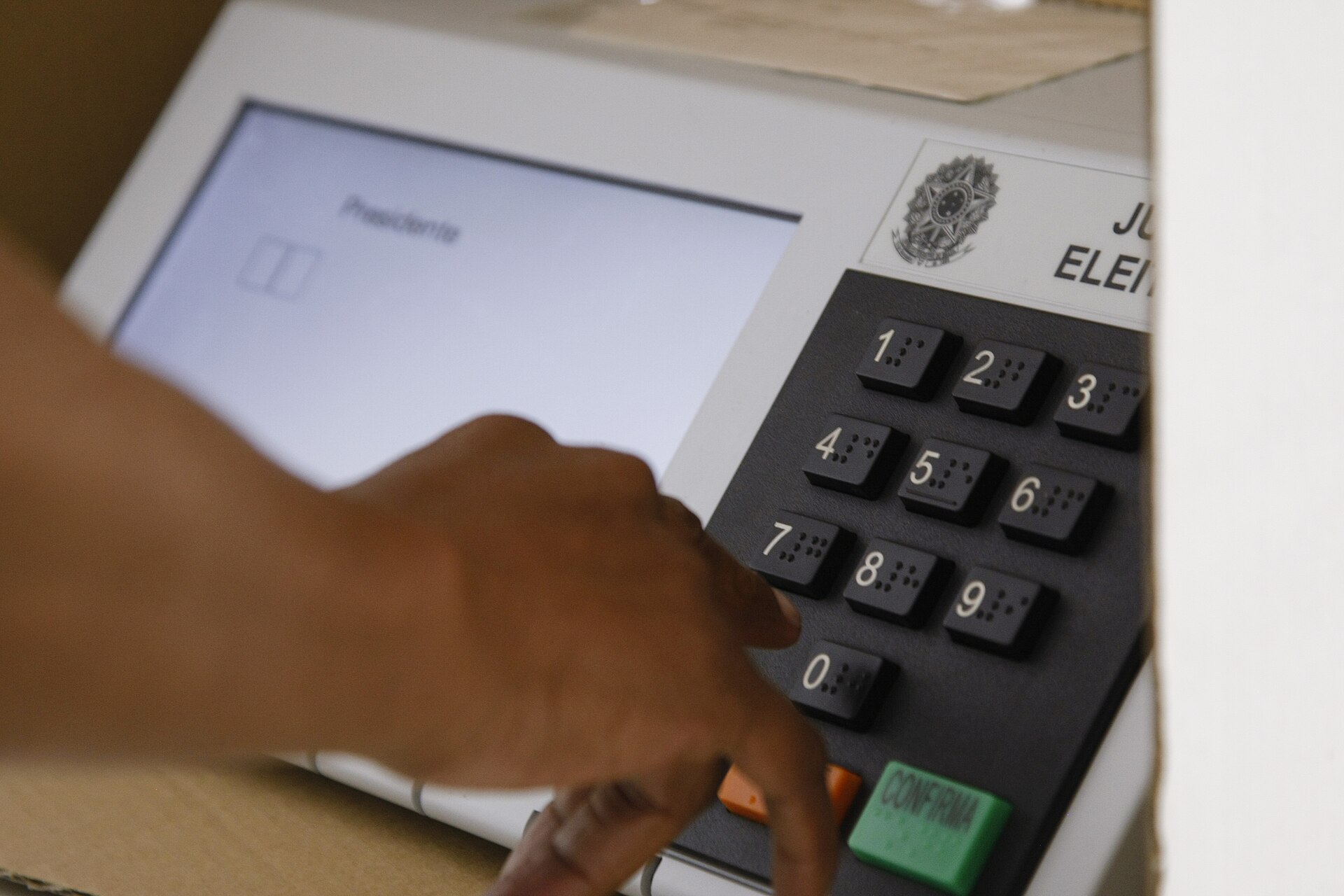
More Brazilians stayed away from the polls on Sunday than in any presidential first round since 1998. At 10:16 p.m. in Brasília (9:16 p.m. Eastern), the electoral court puts abstention at 21.08%, or 33.4 million people, up from 20.95% in 2022.
Voting is compulsory in Brazil for most adults aged 18 to 70, yet roughly one in five registered voters does not turn up. Those voters, and the 6.0 million who cast blank or null ballots, are now a large unknown in the runoff between Flávio Bolsonaro and President Lula.
The Numbers, Compared With 2022
The TSE counts 125.1 million ballots cast out of 158.7 million registered voters, so turnout is 78.92%. In the first round of 2022, 123.7 million of 156.5 million voted (79.05%), and abstention was 20.95%, the highest since 1998, when it was 21.49%. The 2026 rate is above 2022 but still below 1998.
Blank ballots are 1.84% of those cast (2.30 million) and null ballots 2.93% (3.67 million), together 4.77%. In 2022 the shares were 1.59% blank and 2.82% null, together 4.41%. Neither blank nor null votes count toward the 50% a candidate needs to win outright.
Among valid votes, the PL candidate Flávio Bolsonaro has 56.07 million (47.06%) and Lula 53.76 million (45.12%). In 2022 Lula won 57.26 million (48.43%) in the first round and Jair Bolsonaro 51.07 million (43.20%). Lula is therefore about 3.5 million votes lower than four years ago, while the Bolsonaro camp’s candidate is about 5.0 million higher. Valid votes in total rose by only 0.9 million.
Follow this story
Get an email when there’s news on Brazil Elections 2026
Free. One email a day at most, and only when there is news. This also signs you up to our weekday newsletter, The LatAm Brief. Nothing arrives until you click the confirmation link, and you can stop either with one click. Privacy policy.
Where Voters Stayed Home
The gap between regions is wide. Abstention is lowest in the Northeast and the north, and highest in the south-east and the centre-west, including the three biggest states by population.
| Ceará | 15.52% | Mato Grosso do Sul | 23.87% |
| Roraima | 17.12% | Rio de Janeiro | 23.32% |
| Piauí | 17.16% | Minas Gerais | 22.81% |
| Sergipe | 17.30% | São Paulo | 22.54% |
| Paraíba | 17.38% | Mato Grosso | 22.20% |
Abstention in the presidential first round by state, as published by the TSE at about 10:14 p.m. Brasília time on 4 October 2026. Counts in some states were still below 100%.
Ceará has 15.52%, the lowest of the 27 states, while Mato Grosso do Sul has 23.87%. Rio de Janeiro (23.32%), Minas Gerais (22.81%) and São Paulo (22.54%) are all above the national rate. Votes cast abroad count separately: 62.46% of registered overseas voters did not vote, with 98.45% of those sections counted. Our report on the vote abroad is
here.
Big Names Who Fell Short
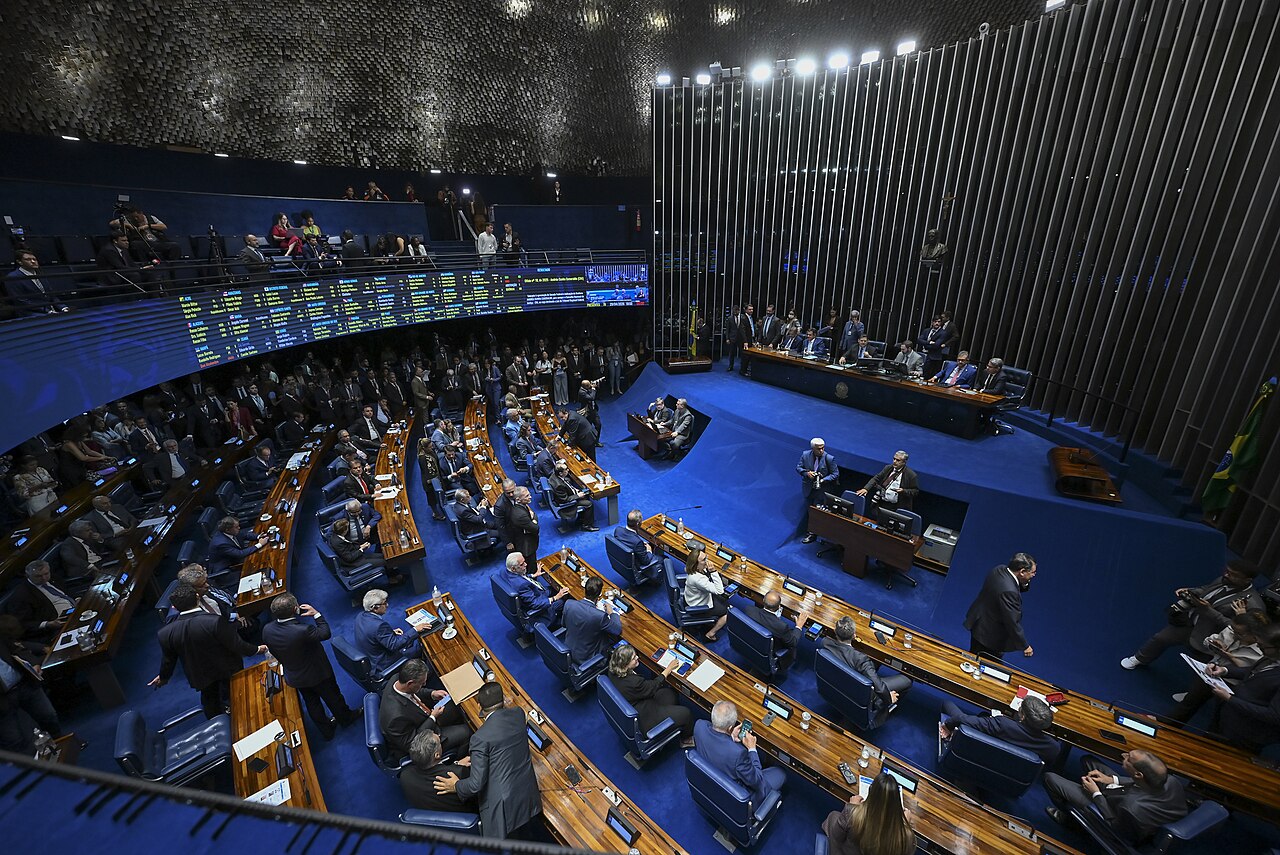
The count also shows several established politicians behind where many expected them. In São Paulo, Tarcísio de Freitas (Republicanos) has 62.65% for governor against 36.42% for Fernando Haddad (PT), the party’s 2018 presidential candidate. In the race for São Paulo’s two Senate seats, Simone Tebet (PSB) has 19.23% and Marina Silva (Rede) 18.12%, behind Guilherme Derrite (PP) at 30.59% and André do Prado (PL) at 29.28%.
In Alagoas, Renan Calheiros (MDB), a former Senate president, is third at 22.25%. In Rio de Janeiro, Benedita da Silva (PT) is third for the Senate at 20.22%. In Paraná, Gleisi Hoffmann (PT) is fourth at 13.35%. Our
Senate report and governors report cover those races in full.
Who Is Who
Flávio Bolsonaro (PL): senator and son of former president Jair Bolsonaro, leading the first round on the right.
Luiz Inácio Lula da Silva (PT): the sitting president, on the left, seeking a new term.
Superior Electoral Court (TSE): the body that runs the vote and publishes the count. It defines abstention as registered voters who did not turn up, so blank and null ballots are counted separately.
Why It Matters for the US
Brazil is the largest economy in Latin America and a major trading partner of the United States. A runoff decided by a few million votes makes turnout a market variable. If participation shifts on 25 October, even by a few points, it could decide who wins, which is why investors in Brazilian stocks and the real follow turnout as closely as the polls.
The abstainers outnumber the gap between the two finalists by more than 14 to 1, and the blank and null ballots add another 6.0 million. For US readers following tariffs, energy or the ADRs of Petrobras and Vale, the runoff outcome depends on who persuades those who stayed away, not only on the two camps already counted.
What Happens Next
The TSE will finish totalising the first round and declare the final result. The runoff between Flávio Bolsonaro and Lula is set for Sunday 25 October 2026. See our first-round results report and the election explainer for the wider picture.
What Is Not Known
The final abstention rate. The count stands at 99.87% of sections, so the rate may move slightly. It is also unknown how many absentees were unable to vote, for example because they were travelling or sick, and how many chose not to. The TSE count does not say.
Background: our doing business in brazil a complete guide.
More: Brazil news, every day from The Rio Times.
What was Brazil’s abstention rate in the 2026 first round?
The TSE count shows 21.08% abstention, or 33.4 million of 158.7 million registered voters, with 99.87% of sections counted at 10:16 p.m. Brasília time on 4 October 2026. In 2022 it was 20.95%.
Is voting compulsory in Brazil?
Yes for most citizens aged 18 to 70. Voting is optional for those aged 16 and 17, those over 70 and those who cannot read. Many registered voters still do not turn up.
How many ballots were blank or null?
The TSE count has 2.30 million blank ballots (1.84%) and 3.67 million null ballots (2.93%) among 125.1 million cast. They do not count toward a candidate’s 50%.
When is the runoff?
Sunday 25 October 2026, between Flávio Bolsonaro (PL), with 47.06% of valid votes, and President Lula (PT), with 45.12%.