By The Rio Times | Created at 2026-10-05 12:46:54 | Updated at 2026-10-05 15:26:53
3 hours ago
By The Rio Times | Created at 2026-10-05 12:46:54 | Updated at 2026-10-05 15:26:53
3 hours ago
BRAZIL · NEIGHBOURS
Key Facts
- —The country Brazil neighbours every South American country except Chile and Ecuador, and had about 214.2 million people in mid-2026, by official estimates.
- —The borders Its land frontier runs 16,885.7 km past nine independent states and French Guiana, an overseas region of France.
- —Why it matters Brazil’s economy was larger than those of its nine independent neighbours combined in 2025, according to IMF estimates, so its choices shape the whole region.
- —The numbers Neighbours bought US$34.9 billion of Brazilian goods in 2025, about 10% of exports; Argentina alone took US$18.1 billion.
- —Shared assets Itaipú, a dam Brazil owns with Paraguay, met about 7% of Brazil’s electricity use and 87% of Paraguay’s in 2025, the company said.
- —What it means for you Brazil’s borders shape car supply chains, energy prices, migration from Venezuela and new export routes to the Pacific.
- —Still open Brazil’s 25 October 2026 runoff, Itaipú’s price from 2027 and a UN court ruling on Guyana’s border are all pending.
Brazil neighbours nine South American countries and French Guiana, so events on its borders reach US companies, investors and travellers. Those frontiers carry tens of billions of dollars in trade, migrants leaving Venezuela and a dam that powers two nations.
This guide explains each neighbour, the rivers and bridges that link them, and where Brazil leads or depends on others.
Ten Neighbours Along 16,885 Kilometres
Brazil neighbours ten countries and territories, according to FUNAG, a foundation attached to Brazil’s foreign ministry. Nine are independent states, and the tenth is French Guiana, which belongs to France.
Among South America’s other countries, only Chile and Ecuador have no border with Brazil. The land frontier totals 16,885.7 kilometres, or about 10,492 miles.
About 56% of that line follows rivers, canals and lagoons, by FUNAG’s figures. The rest runs along watersheds, the high ground between river basins, or along straight survey lines.
Eleven Brazilian states touch a foreign border, from Amapá in the far north to Rio Grande do Sul in the south. A 2021 federal ordinance lists 33 Brazilian “twin towns” that face a foreign town across the line.
Here is each neighbour, with the length of its border and the Brazilian states along it:
- Bolivia: 3,423.2 km, the longest; Acre, Rondônia, Mato Grosso and Mato Grosso do Sul.
- Peru: 2,995.3 km; Acre and Amazonas.
- Venezuela: 2,199.0 km, almost all of it along watersheds; Amazonas and Roraima.
- Colombia: 1,644.2 km; Amazonas only.
- Guyana: 1,605.8 km; Roraima and Pará.
- Paraguay: 1,365.4 km, mostly rivers; Paraná and Mato Grosso do Sul.
- Argentina: 1,261.3 km, almost entirely rivers; Paraná, Santa Catarina and Rio Grande do Sul.
- Uruguay: 1,068.1 km; Rio Grande do Sul.
- French Guiana (France): 730.4 km; Amapá.
- Suriname: 593.0 km, all along watersheds; Amapá and Pará.
Argentina, Paraguay and Uruguay, the Mercosur Core
Most of Brazil’s trade with its neighbours runs south. Brazil founded Mercosur, the South American trade bloc, with Argentina, Paraguay and Uruguay in 1991.
In 2025 those three partners bought US$25.7 billion of Brazilian goods, nearly three-quarters of all sales to neighbours, government trade data show.
Argentina, the Biggest Neighbour Market
Argentina was Brazil’s third-largest trading partner in 2025, after China and the United States. Two-way trade reached US$31.0 billion that year.
Vehicles and parts made up about 43% of 2025 trade in each direction, showing how closely the two car industries are tied. Brazil also bought US$1.26 billion of Argentine wheat.
Since 1991 a joint agency based in Rio de Janeiro, ABACC, has verified the peaceful use of nuclear energy in both countries. Its full name is the Brazilian-Argentine Agency for Accounting and Control of Nuclear Materials.
Politics is cooler. Brazil’s left-wing president, Luiz Inácio Lula da Silva, has clashed in public with Argentina’s libertarian president, Javier Milei.
After Brazil’s first round on 4 October 2026, Milei called Lula a “communist”, the Argentine news site Perfil reported.
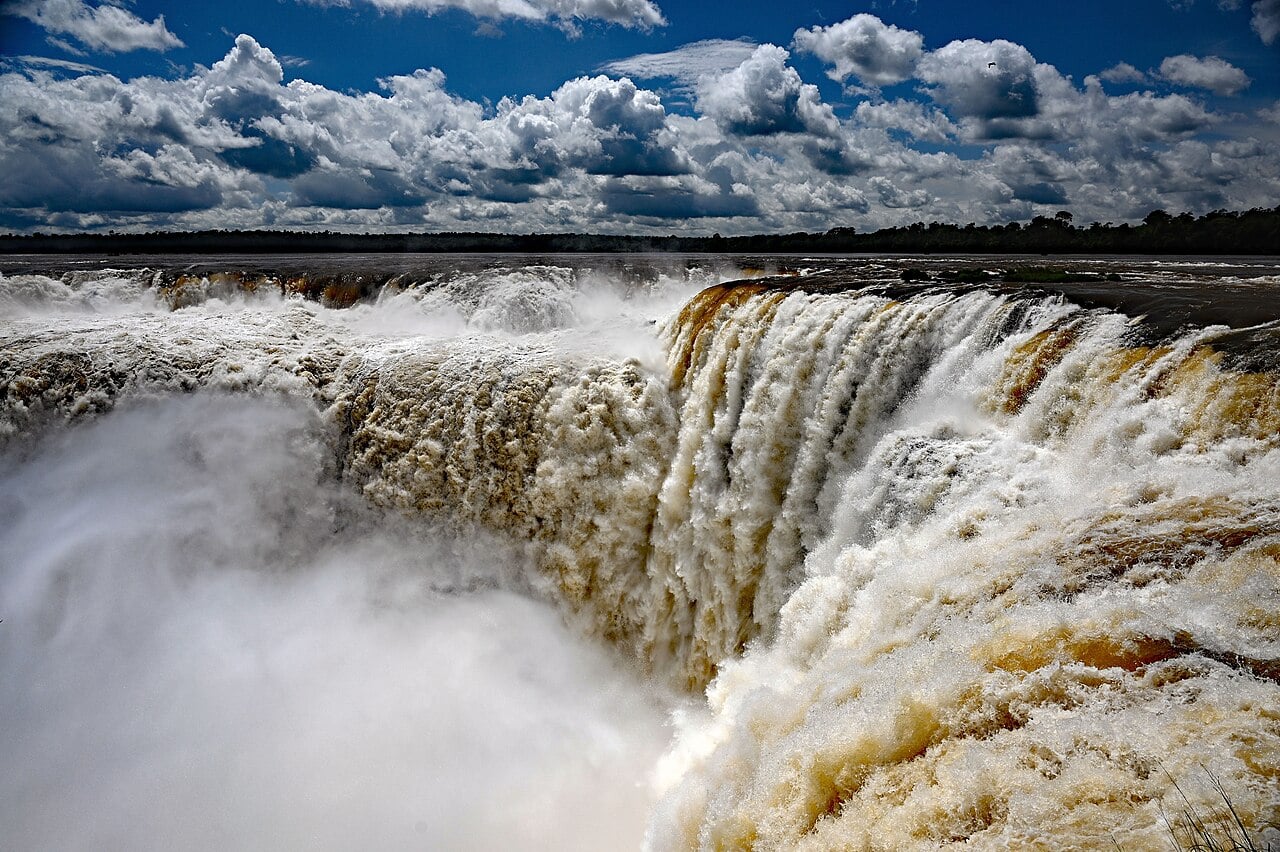
The Iguaçu Falls, nearly three kilometres wide, sit on this border. There the Iguaçu River separates Brazil’s and Argentina’s national parks, UNESCO notes.
Paraguay, Bound by a River and a Dam
Paraguay, with about 6.4 million people in 2025, is tied closely to Brazil by the Paraná River and the Itaipú dam. Electricity was Brazil’s largest import from Paraguay in 2025, worth US$900 million.
Brazil sold Paraguay US$4.0 billion of goods that year, led by machinery and vehicles. The Friendship Bridge links Paraguay’s Ciudad del Este with Foz do Iguaçu in Brazil.
A second crossing, the Integration Bridge, has opened in stages. Private cars from the border towns were due to gain limited access from 14 September 2026, Paraguayan news site RDN reported.
Paraguay’s view of the same frontier is set out in this guide to Paraguay and its neighbours.
Uruguay, the Quiet Southern Partner
Uruguay bought US$3.5 billion of Brazilian goods in 2025. Brazil’s purchases from Uruguay, worth US$2.0 billion, were led by vehicles, cereals and dairy products.
The 1,068 km border lies entirely in Rio Grande do Sul and mixes rivers, lagoons, watersheds and short survey lines. That state holds 11 of Brazil’s 33 official twin towns, facing Argentina or Uruguay.
Bolivia, Peru and Colombia, the Andean and Amazon Flank
Brazil neighbours Bolivia along its longest frontier, 3,423.2 km, most of it formed by rivers and canals. The tie that matters most is gas.
The Bolivia-Brazil gas pipeline, known as Gasbol, runs 3,150 km from near Santa Cruz de la Sierra, says TBG, its Brazilian operator. It enters Brazil at Corumbá, has carried gas since July 1999 and reaches south to Rio Grande do Sul.
In 2025 gas made up about 80% of Brazil’s US$1.26 billion in imports from Bolivia. Bolivia is also Mercosur’s newest full member, according to the bloc.
Peru’s 2,995.3 km border runs along Acre and Amazonas states. Brazil exported US$3.2 billion of goods to Peru in 2025 and imported US$1.4 billion.
Colombia meets Brazil only in Amazonas state, along a 1,644.2 km border. Brazil exported US$3.4 billion of goods to Colombia in 2025.
On the Amazon River, the Brazilian twin town of Tabatinga lies in the tri-border area around Leticia, in Colombia. Colombian public broadcaster Canal Trece describes it as the place where Colombia, Brazil and Peru meet.
Colombia’s side of these frontiers is covered in this guide to Colombia and its neighbours.
Venezuela, the Guianas and the Northern Rim
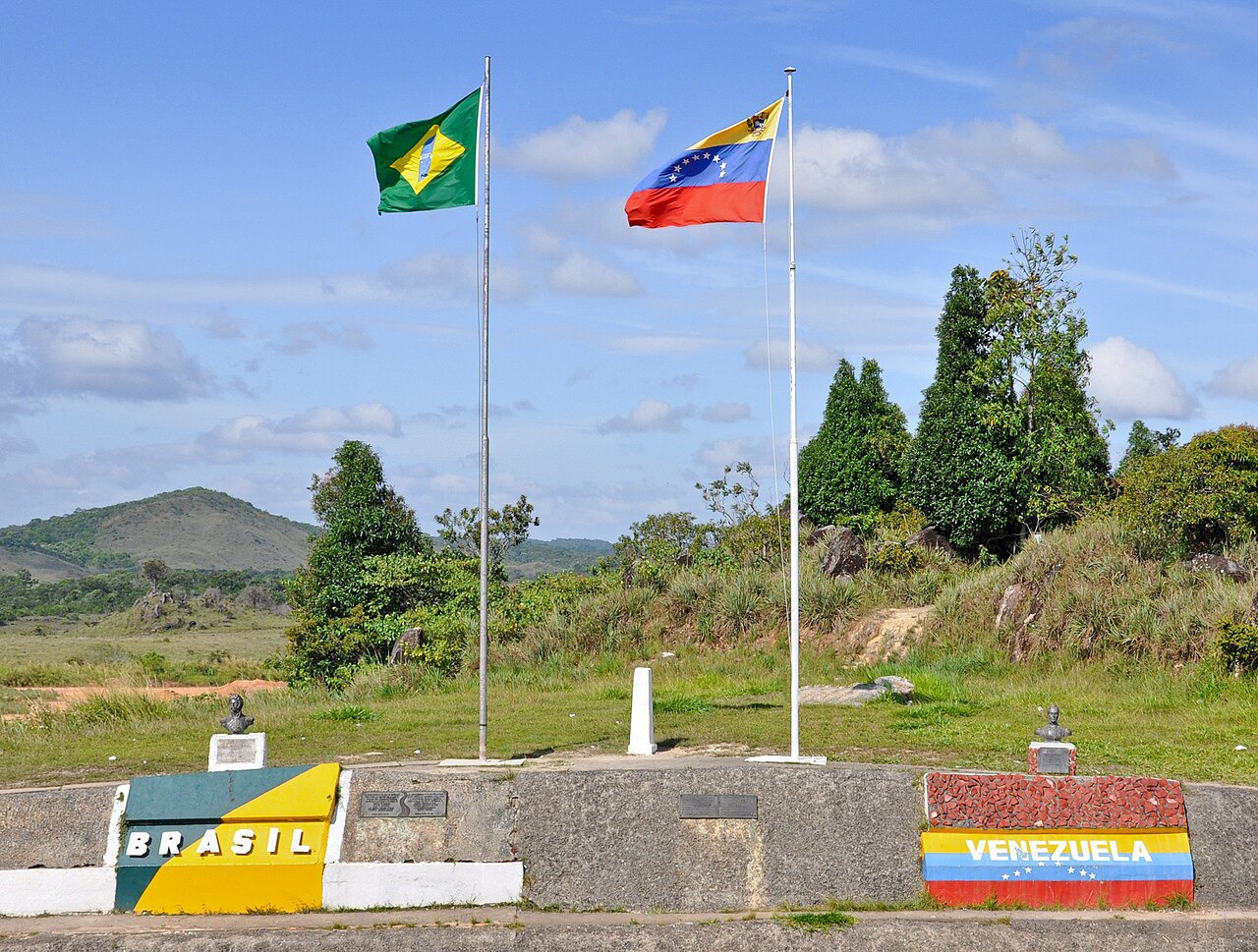
Almost all of the 2,199 km line with Venezuela follows watersheds rather than rivers, by FUNAG’s figures.
A road crossing links Pacaraima, in Roraima state, with Santa Elena de Uairén in Venezuela. Brazil exported US$838 million of goods to Venezuela in 2025.
Relations changed sharply on 3 January 2026. US forces struck Caracas, and President Donald Trump announced that Nicolás Maduro, Venezuela’s leader, had been captured, Agência Brasil reported.
Delcy Rodríguez has since governed Venezuela as acting president, Agência Brasil reported in June 2026. Caracas-based broadcaster teleSUR still called her acting president on 3 October 2026.
Lula criticised Washington in an interview published on 21 September 2026. “What the United States did to Venezuela is serious,” he said, according to Bahia daily A Tarde.
Guyana, a country of about one million people, shares 1,605.8 km of border with Roraima and Pará. Crude oil made up 99.8% of Brazil’s US$559 million in imports from Guyana in 2025.
Venezuela claims Guyana’s Essequibo region, a dispute before the International Court of Justice (ICJ), the UN’s top court. Brazil neighbours both parties to that dispute.
The court held hearings on the merits from 4 to 11 May 2026 and had not ruled by early October.
Suriname’s 593 km border with Brazil follows watersheds for its whole length. Trade is tiny: Brazil sold Suriname US$55 million of goods in 2025.
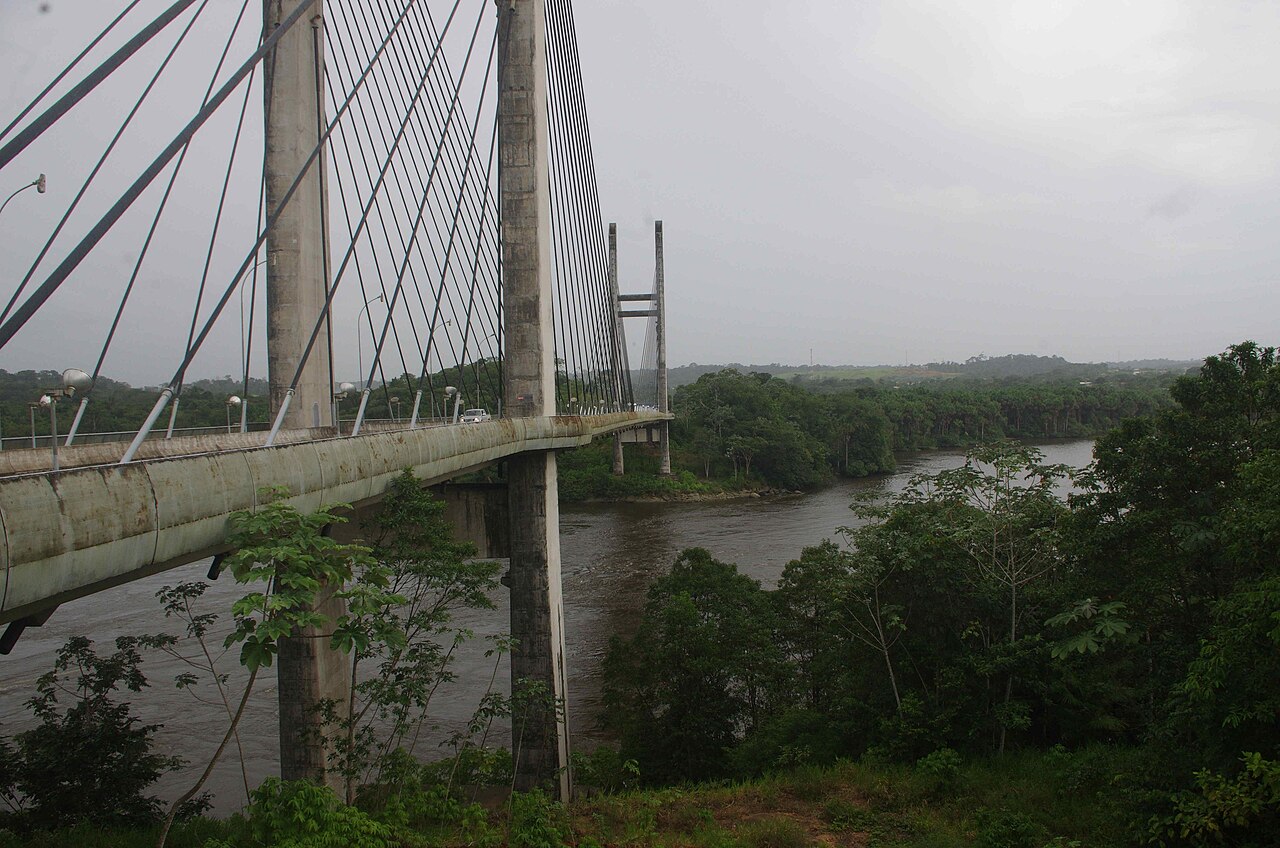
French Guiana gives Brazil a 730.4 km border with France, along Amapá state. A bridge over the Oyapock River links the Brazilian town of Oiapoque with French Guiana.
Migration Across Brazil’s Borders
Brazil neighbours Venezuela along Roraima and Amazonas states, and many Venezuelans have crossed into Brazil. The federal government set up Operação Acolhida (Operation Welcome) for them on 28 February 2018.
The programme receives Venezuelans and moves them to other Brazilian cities, the UN refugee agency UNHCR says. By January 2026 it had moved more than 157,000 people from Roraima to 1,121 municipalities.
Santa Catarina, Paraná and Rio Grande do Sul, in the south, took the most people. UNHCR says 77% of relocated families found jobs within a few weeks of arrival.
Most people moved with their families, and adults and older people made up 61% of those relocated.
The US operation in January 2026 briefly disrupted the frontier. A Brazilian traveller told Agência Brasil, the public news agency, that Venezuela then let only Brazilians leave.
Movement is easing in the far north. Since 31 July 2026, Brazilians can visit French Guiana visa-free for up to 30 days in six months, the French embassy says.
Travellers must still show a valid passport, travel insurance and a yellow fever vaccination certificate. Those arriving by land must report to the French border police post at the bridge.
Shared Rivers, Dams and Roads
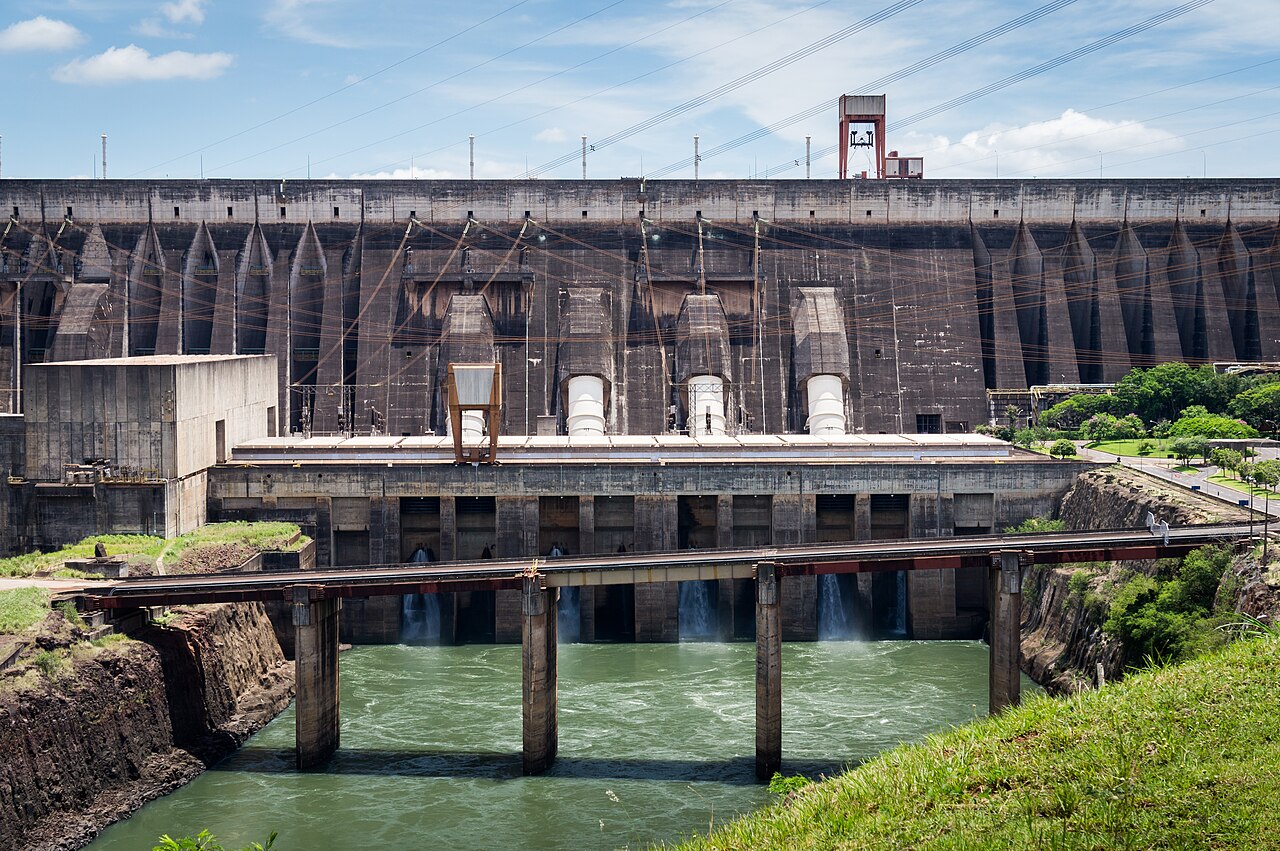
Brazil neighbours Paraguay along the Paraná River, and there the two countries built Itaipú. A treaty signed on 26 April 1973 created the plant as a joint entity, Itaipú Binacional says.
Its 20 generating units of 700 megawatts each give it 14,000 megawatts of capacity. Ten run at Paraguay’s 50 hertz and ten at Brazil’s 60 hertz.
In 2025 Itaipú met about 7% of Brazil’s power use and 87% of Paraguay’s, Paraguayan daily ABC Color reported from company data. Its history and finances are covered in this Itaipú explainer.
Its tariff stands at US$19.28 per kilowatt-month for 2024 to 2026. On 2 October 2026 Paraguay’s president, Santiago Peña, told reporters there was no news on the next price, ABC Color reported.
The newest project is the Bioceanic Route, a road corridor of more than 2,400 km across Brazil, Paraguay, Argentina and Chile. It is meant to reach the Chilean ports of Antofagasta and Iquique, according to Mato Grosso do Sul’s government.
Its key link is a 1,294-metre bridge between Porto Murtinho in Brazil and Carmelo Peralta in Paraguay. The two halves met over the Paraguay River in July 2026, regional news site Folha MS reported.
Itaipú’s Paraguayan side paid for the bridge, Paraguay’s public works ministry says. In 2025 the state government said the route could cut logistics costs by up to 30% and transport times by 15 days.
Opening will take longer. Erivelto Alencar, acting regional superintendent at the Receita Federal, Brazil’s tax and customs agency, expects commercial operation only in 2028.
The reason is a joint border control centre that has not been built, local site Campo Grande News reported in September 2026. Alencar also warned that criminal groups would try to move drugs through Porto Murtinho.
Regional Clubs and Where Brazil Leads
Mercosur, the trade bloc created by the 1991 Treaty of Asunción, remains Brazil’s main club with its neighbours. Its active full members are Argentina, Brazil, Paraguay, Uruguay and, most recently, Bolivia, according to Mercosur.
Venezuela joined in 2006 but is suspended from all rights and duties under the Ushuaia Protocol on democratic commitment. Other South American countries, and Panama since 2024, take part as associated states.
In the Amazon, Brazil works through the Amazon Cooperation Treaty Organization (ACTO), based on a treaty signed in 1978. Its eight members are Bolivia, Brazil, Colombia, Ecuador, Guyana, Peru, Suriname and Venezuela.
ACTO’s permanent secretariat has been based in Brasília since 2003. France, Argentina, Paraguay and Uruguay are not members.
Brazil leads by size. Its 2025 economy, an estimated US$2.28 trillion, was larger than its nine independent neighbours combined, International Monetary Fund (IMF) data show.
The IMF also put Brazil’s 2025 population at 213.4 million, against roughly 186 million in those nine countries combined. IBGE, Brazil’s statistics office, estimates 214.2 million for mid-2026.
Yet Brazil also depends on its neighbours for some basics. It buys Paraguay’s electricity, Bolivia’s gas and Argentina’s wheat, as set out in this guide to who runs Brazil’s economy.
The dependence runs both ways. Peña has described Brazil as Paraguay’s main trading partner and source of foreign investment, ABC Color reported.
More background is in Brazil explained, in Brazil’s role in Latin America and on the Brazil news page.
What It Means for US Readers
The United States was Brazil’s second-largest trading partner in 2025, with US$82.8 billion in two-way trade, Brazilian data show. Neighbours matter in a different way: they shape supply chains, energy and migration across the region.
For manufacturers in Brazil, Argentina is the largest export market in South America. Vehicles and parts were about 43% of Brazil’s sales there in 2025.
Venezuela is where US policy and Brazil’s border meet. Any new wave of departures would most likely arrive first in Roraima, where Brazil runs its reception operation.
Once open, the Bioceanic Route could give exporters in Brazil’s Centre-West a shorter road to Pacific ports and Asian buyers. Travellers can see the Iguaçu Falls from both Brazil and Argentina, which means two sets of entry rules to check.
What Is Not Known
Brazil’s presidential runoff on 25 October 2026 pits Lula against Senator Flávio Bolsonaro of the conservative Liberal Party (PL). Flávio is the son of former president Jair Bolsonaro, Argentine news site La Brújula 24 notes.
The winner will set Brazil’s tone with Milei, with Venezuela’s acting government and with Paraguay over Itaipú. The election guide explains the race.
Itaipú’s tariff from 2027 is undecided, and Peña has pointed to Brazil’s election as the next milestone. The ICJ has given no date for its Essequibo judgment.
It is also unclear when the Bioceanic Route’s border control centre will be built. Venezuela’s political future remains open, and with it the scale of future migration into Roraima.
Frequently Asked Questions
How many countries does Brazil border?
Brazil neighbours ten countries and territories: Argentina, Bolivia, Colombia, French Guiana, Guyana, Paraguay, Peru, Suriname, Uruguay and Venezuela. French Guiana is part of France. Only Chile and Ecuador in South America have no border with Brazil.
Which country has the longest border with Brazil?
Bolivia, with 3,423.2 km, according to FUNAG, a foundation of Brazil’s foreign ministry. Peru follows with 2,995.3 km and Venezuela with 2,199.0 km.
Which neighbour trades most with Brazil?
Argentina. Two-way trade reached US$31.0 billion in 2025, making it Brazil’s third-largest partner after China and the United States. Paraguay and Uruguay were the next-largest neighbour markets for Brazilian exports.
What is Itaipú and why does it matter?
Itaipú is a 14,000-megawatt dam on the Paraná River, owned equally by Brazil and Paraguay under a 1973 treaty. In 2025 it met about 7% of Brazil’s electricity use and 87% of Paraguay’s, the company says, and its price from 2027 is still under negotiation.
Is Venezuela still part of Mercosur?
Venezuela joined in 2006 but is suspended from all rights and obligations under the Ushuaia Protocol. The active full members are Argentina, Brazil, Paraguay, Uruguay and Bolivia.
What is the Bioceanic Route?
It is a road corridor of more than 2,400 km linking Brazil with Chile’s Pacific ports through Paraguay and Argentina. Its main bridge, between Porto Murtinho and Carmelo Peralta, was joined in July 2026, but a senior Brazilian customs official expects commercial use only in 2028.
How does Brazil handle migrants from Venezuela?
Through Operação Acolhida, a federal programme launched in February 2018. By January 2026 it had moved more than 157,000 people from Roraima to 1,121 Brazilian towns and cities, UNHCR says.
Sources: Tribunal Superior Eleitoral (TSE), Brazil’s electoral court, 5 October 2026; FUNAG/IPRI, Brasil Fronteiras Terrestres, 13 May 2015; Comex Stat, Brazil Ministry of Development, Industry, Trade and Services, data for 2025, accessed 5 October 2026; IMF World Economic Outlook database (DataMapper), accessed 5 October 2026; IBGE, population estimate 2026, 28 August 2026; Itaipú Binacional (treaty, capacity), accessed 5 October 2026; Mercosur, accessed 5 October 2026; Amazon Cooperation Treaty Organization, accessed 5 October 2026; UNHCR Brazil, 24 February 2026; Embassy of France in Brazil, 24 July 2026; Paraguay Ministry of Public Works (MOPC), 8 August 2025; Mato Grosso do Sul government (Semadesc), 31 July 2025; International Court of Justice, 11 May 2026; TBG, Gasbol technical data, accessed 5 October 2026; Ministry of Regional Development, Ordinance 2,507, 5 October 2021; UNESCO World Heritage Centre, accessed 5 October 2026; ABACC, accessed 5 October 2026; Agência Brasil (runoff date), 4 October 2026; ABC Color, Itaipú 2025 output and supply shares (company figures), 7 January 2026.
This article was produced by The Rio Times’ automated newsroom system. How we use AI · Report an error · Editorial responsibility: Matthias Camenzind, Editor-in-Chief
The Rio Times · Power Map
See who really holds power in Latin America
Click to open the Power Map →