 By The Rio Times | Created at 2026-10-19 06:11:24 | Updated at 2026-10-19 19:24:10
13 hours ago
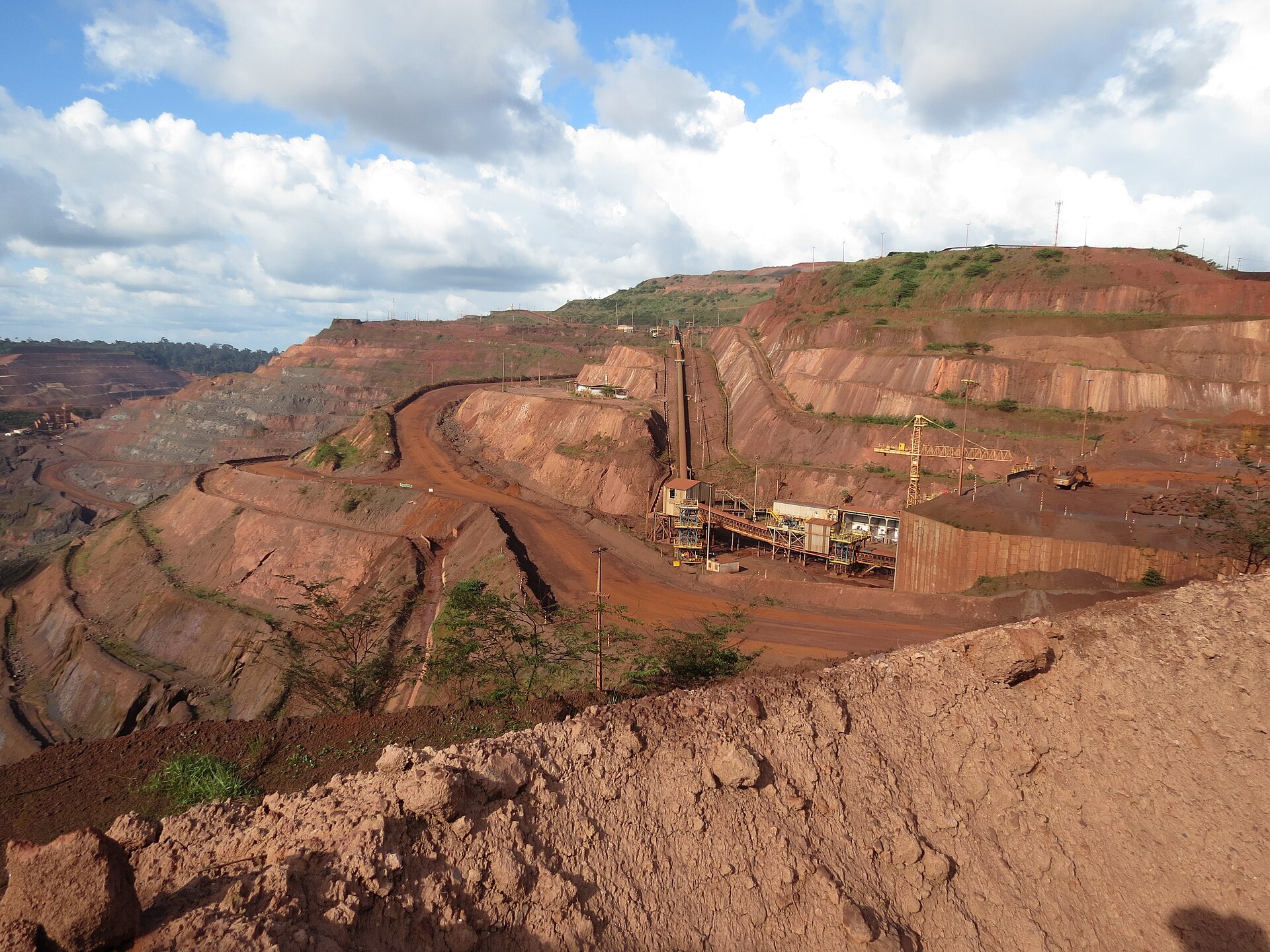
BRAZIL · MINING JOBS
Key Facts
- —The country Brazil, South America’s largest economy and a large producer of iron ore and gold, publishes official mining data through its federal mining regulator, ANM.
- —Why it matters Critical minerals feed batteries, wind turbines and electronics, and US firms are courting Brazilian rare earths, so the size of the existing workforce shows how big the sector already is.
- —Why now ANM launched its critical minerals portal on Wednesday 14 October 2026, and Agência Brasil and InfoMoney carried the jobs figures, with a state breakdown, on Sunday 18 October.
- —What happened ANM counted 129,423 jobs tied to critical and strategic minerals in 2025, equal to 57% of the 226,634 jobs in extractive mining and 8.6% above 2023.
- —The numbers Minas Gerais has 62,631 of the jobs, Pará 27,047 and Bahia 9,147. Iron mining employs 70,027 people, precious metals 21,313, and men hold 78%.
- —What it means for you US investors and miners get a public job count by state and town, and iron and gold, rather than newer minerals, drive most of the total.
- —Still open How many of the jobs sit in rare earths, lithium and graphite, and how the totals move in 2026.
- —Power Index Brazil ranks 1st of 14 in The Rio Times Latin America Power Index, with 75.0 points (October 2026 edition).
Prediction markets · who wins the runoff
Implied chance of winning Brazil’s presidency on 25 October, from traders’ prices.
Polymarket
Flávio Bolsonaro 78.5% · Lula 21.5% (US$188 million traded)
Kalshi (regulated in the US by the CFTC)
Flávio Bolsonaro 79% · Lula 21%
As of 19 October, 1:20 am ET (06:20 Lisbon), updated every 20 minutes. Prices are bets, not polls, and can move fast.
Why we show this: prediction markets turn real-money bets into a live probability that moves within minutes of the news, which is why investors, campaigns and newsrooms in the United States now follow them closely. We show them next to polls and official results, never instead of them.
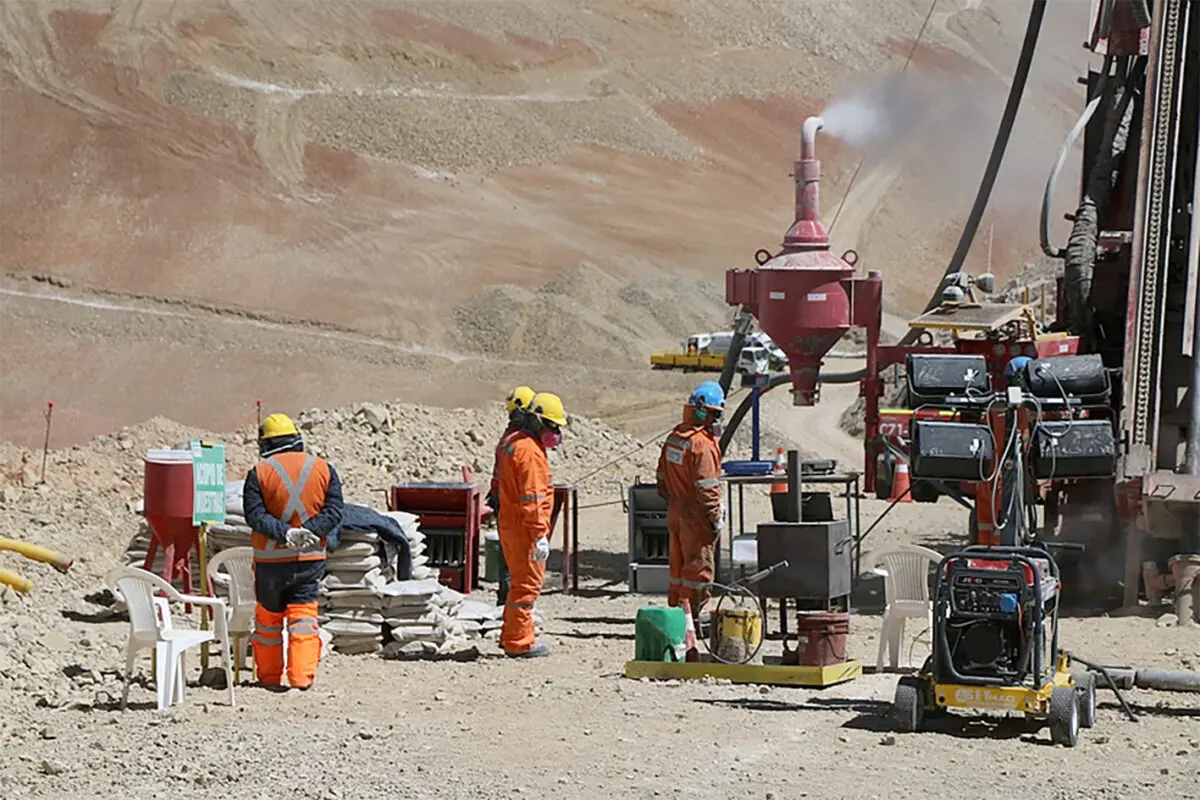
Brazil critical minerals jobs reached 129,423 in 2025, equal to 57% of all mining jobs in the country, the national mining regulator said. The Agência Nacional de Mineração (ANM) published the count on Wednesday 14 October 2026 with its new data portal, and Agência Brasil added the state breakdown on Sunday 18 October.
For US readers the figure shows how large the workforce already is behind the metals that American investors and miners are courting in Brazil. Iron ore and precious metals account for 91,340 of the jobs by our sum, while the sources give no job count for rare earths or lithium.
We have followed the sector through Brazil Rare Earths Draw 18 Foreign Firms, 3 From US and Brazil Minerals Council Idle 3 Weeks as Deals Stall. This article adds the jobs side, which the regulator’s new portal now makes public.
Brazil Critical Minerals Jobs by the Numbers
ANM counts 129,423 jobs linked to critical and strategic minerals in 2025, equal to 57% of the 226,634 jobs in Brazil’s extractive mining industry. That is 8.6% more than in 2023, the regulator says.
The employment data come from two Ministry of Labour sources, RAIS, the annual register of formal staff, and the Novo Caged, the monthly register of formal hires and dismissals. Both cover formal employment, so informal work is outside the count.
Men hold 100,765 of the jobs, or 78%, and women hold 28,658, or 22%. Skilled workers number 51,714, equal to 23% of all extractive-industry jobs.
Workers with higher education number 30,707, equal to 14% of all extractive-industry jobs. Of these, 19,060 are men and 11,647 are women.
Follow this story
Get an email when there’s news on Brazil
Free. One email a day at most, and only when there is news. This also signs you up to our weekday newsletter, The LatAm Brief. Nothing arrives until you click the confirmation link, and you can stop either with one click. Privacy policy.
Where the Jobs Are in Minas Gerais and Pará
Minas Gerais leads with 62,631 jobs, about 48% of the national total by our arithmetic, followed by Pará with 27,047 and Bahia with 9,147. The three states together hold about 76% of the jobs, again our calculation.
Among towns, Parauapebas in Pará has 8,234 jobs, Nova Lima in Minas Gerais has 8,218 and Congonhas in Minas Gerais has 7,114. In Parauapebas, 71.4% of the workers are men and 1,851 of them hold higher education.
Nova Lima has the most educated workforce of the three, with 4,776 of its 8,218 workers holding higher education. Congonhas has 1,234 such workers among 7,114, and 73.2% of its workers are men.
Live Market IntelligenceBrazil — Live Market BoardInside: market breadth, the sector heatmap, currencies & rates, the Latin America scoreboard and the full instrument board.Rio Times · Live Market Intelligence
Brazil — Live Market Board
B3 · São Paulo
Oct 19, 2026 · 02:39
Ibovespa · benchmark
205,430.33
+0.54%
L 167,142day rangeH 168,310
+21.85% over 12 months
Market breadth · 15 names
47% advancing
7 ▲ advancing8 declining ▼
Currencies, rates & key inputs
Sector heatmap · average move today
Mining
+1.16%
VALE3, CSNA3, GGBR4
Industrials
+0.20%
WEGE3, RENT3
Financials
-0.10%
ITUB4, BBDC4, BBAS3, B3SA3
Energy
-0.12%
PETR4, PRIO3
Consumer Staples
-0.80%
ABEV3
Consumer Disc.
-2.63%
AZZA3
Latin America scoreboard
IndexLastTodayStrength
IbovespaBrazil
205,430.33
+0.54%
S&P/BMV IPCMexico
68,929.72
+1.87%
S&P IPSAChile
10,970.29
-0.01%
S&P MERVALArgentina
2,848,945
-0.35%
MSCI COLCAPColombia
2,566.28
-0.55%
BVL S&P PerúPeru
60,210.69
-0.91%
Full instrument board
| IBOV | 205,430.33 | +0.54% | +21.85% | 204,324.26 | 168,310 | 167,142 | — |
| USD/BRL | 5.16 | +0.01% | -5.13% | 5.16 | 5.18 | 5.14 | — |
| SELIC | 14.00% | — | — | — | — | — | |
| PETR4 | 41.64 | -0.05% | +35.19% | 41.66 | 41.97 | 41.15 | 41,499,400 |
| VALE3 | 72.97 | +0.83% | +30.75% | 72.37 | 73.54 | 72.66 | 17,658,000 |
| ITUB4 | 38.60 | -1.03% | +4.57% | 39.00 | 39.34 | 38.39 | 29,487,800 |
| BBDC4 | 16.85 | +0.36% | +3.50% | 16.79 | 16.90 | 16.67 | 19,416,900 |
| BBAS3 | 19.37 | +0.47% | +0.73% | 19.28 | 19.44 | 19.16 | 11,069,200 |
| B3SA3 | 14.26 | -0.21% | +12.73% | 14.29 | 14.47 | 14.11 | 33,037,800 |
| ABEV3 | 14.89 | -0.80% | +21.91% | 15.01 | 15.07 | 14.81 | 16,453,100 |
| WEGE3 | 47.59 | +0.49% | +29.99% | 47.36 | 48.08 | 47.36 | 3,364,600 |
| PRIO3 | 59.14 | -0.19% | +50.67% | 59.25 | 59.81 | 58.74 | 3,325,600 |
| SUZB3 | 41.33 | +2.35% | -23.55% | 40.38 | 41.48 | 40.35 | 3,914,900 |
| RENT3 | 34.68 | -0.09% | +0.84% | 34.71 | 34.96 | 34.35 | 7,979,100 |
| AZZA3 | 15.89 | -2.63% | -53.76% | 16.32 | 16.42 | 15.82 | 1,330,300 |
| CSNA3 | 4.30 | +0.47% | -42.65% | 4.28 | 4.41 | 4.26 | 10,076,100 |
| GGBR4 | 24.69 | +2.19% | +51.38% | 24.16 | 24.85 | 24.18 | 7,047,600 |
| ENEV3 | 24.21 | -1.38% | +70.49% | 24.55 | 24.64 | 23.99 | 9,297,000 |
Largest moves today
AZZA3
15.89
-2.63%
SUZB3
41.33
+2.35%
GGBR4
24.69
+2.19%
ENEV3
24.21
-1.38%
ITUB4
38.60
-1.03%
VALE3
72.97
+0.83%
ABEV3
14.89
-0.80%
IBOV
205,430.33
+0.54%
The session read
The Ibovespa rose 0.54%, with breadth negative — 7 of 15 names higher. Materials led, while Consumer Disc. lagged.
From The Rio Times
Related coverage · 19 Oct 2026
São Paulo Daily Brief
Read →
Iron and Gold Carry Most Brazil Critical Minerals Jobs
Iron mining is the biggest employer with 70,027 jobs, followed by precious metals with 21,313 jobs. Together they make up about 71% of the total by our calculation.
Both are on Brazil’s official list, set by Resolution No. 2 of 18 June 2021 of the Ministry of Mines and Energy. The list also names manganese, copper, nickel, lithium, niobium, graphite and rare earths, among others.
Because iron and gold are on the list, the headline figure covers long-established mining as well as newer minerals such as lithium and rare earths. The sources give no split of the remaining 38,083 jobs by mineral, a figure we derived by subtraction.
Pay and Output Data in the New Portal
ANM gives 2025 pay figures by schooling: R$3,218 (about US$633) for basic education, R$4,142 (about US$815) for secondary and R$11,856 (about US$2,333) for higher education. We convert reais at the central bank’s PTAX sell rate of R$5.0826 per US$1 on Friday 16 October 2026.
The portal also holds production data, which ANM highlighted for rare earths. Brazil produced 326 tonnes of rare earth oxide concentrate in 2025 and exported US$14.9 million of it.
It also imported US$30.6 million of rare earth oxides and magnets, and four areas hold active mining rights for rare earths, all in Goiás. Research authorisations for rare earths rose 485.4% between 2021 and 2025, with 3,067 areas in the research phase.
ANM links the gap between large reserves and small output to research, environmental licensing and investment stages. For gold, the portal lists 504 active mines and 71.1 tonnes produced in 2025, worth R$41.7 billion (about US$8.2 billion).
Across all mining, the data show 1,012 areas in production in 2025 and R$250.4 billion (about US$49.3 billion) in value generated. ANM’s director-general, Mauro Sousa, said at the launch that the information had been scattered until now.
What It Means for You
Investors weighing Brazilian miners, or US-listed firms with Brazilian projects, now have a public job count by state, town and mineral in one place. It gives a first yardstick for the size of the workforce that any new rules, licences or demand swings would reach.
Any change in iron ore or gold would be felt mainly in Minas Gerais and Pará, given where the jobs are. Our guide Brazil Natural Resources Explained 2026 sets out what the country holds.
Residents and visitors in Belo Horizonte, the capital of Minas Gerais, live in the state with the most of these jobs. Our Belo Horizonte expat city guide covers daily life there.
What Is Not Known
ANM’s portal is an interactive map and dashboard that could not be read directly for this article. The national, gender, town and pay figures come from ANM’s own news release of 14 October, while the state, mineral and production-area figures come from Agência Brasil’s reading of the portal on 18 October.
ANM’s release calls the pay figures medians, while Agência Brasil calls them averages, and neither states the pay period. The sources also give no job counts for rare earths, lithium or graphite.
They do not say whether the 21 substances in the employment panel match the 20 on the ministry’s 2021 list. They also do not say whether any worker is counted in more than one job.
The figures are for 2025 and say nothing about hiring or layoffs this year. No update schedule for the portal was found.
Frequently Asked Questions
How many people work in critical and strategic minerals in Brazil?
ANM counts 129,423 jobs in 2025. That is 57% of the 226,634 jobs in extractive mining.
Which states have the most critical minerals jobs?
Minas Gerais has 62,631, Pará has 27,047 and Bahia has 9,147. Together they hold about 76% of the total.
Which minerals employ the most people?
Iron mining employs 70,027 people and precious metals employ 21,313. Together that is about 71% of the 129,423 jobs.
Does the figure mean rare earths employ 129,423 people?
No, because the count covers all minerals on Brazil’s official list, including iron and gold. The sources give no separate job count for rare earths.
What does it mean for US readers?
It shows how big Brazil’s mining workforce is as US firms court Brazilian rare earths. It also shows that iron and gold, not newer minerals, supply most of the jobs.
Sources: ANM, news release, 14 October 2026; ANM, portal launch, 15 October 2026; ANM, rare earths data, 14 October 2026; Agência Gov, 14 October 2026; Agência Brasil, 18 October 2026; Jornal do Brasil, 18 October 2026; InfoMoney, 18 October 2026; Central Bank of Brazil, PTAX rate of 16 October 2026.
Editorial responsibility: Matthias Camenzind, Editor-in-Chief · Editorial standards · Report an error
The Rio Times · Power Map
See who really holds power in Latin America
Click to open the Power Map →